
And another dandy road warrior tour of my beloved Spain. This time will remain close to the Madrid in the area known as the Comunidad de Madrid sort of a regional autonomous administrative area. In this area or community you have several important towns of historical significanse as I have several posts in my blog. This time , I am lucky to found me pictures in my cd rom vault that should be in my blog for you and me, Therefore, this is my take on curiosities of Colmenar de Oreja !!! Hope you enjoy it as I.
The town is only about 50 km from Madrid and you can only come here by car ,no train station. You come by the expressway A3 Madrid-Valencia and take the entry into the road M-404 by km 50 at Villarejo de Salvanés (see post) until Belmonte de Tajo and here take the M-303 to Colmenar de Oreja. There is another way from the A3 take the M307 at Km 21 before reaching Arganda del Rey, and by it follow continuously the M 311 road ; and before reaching Morata de Tajuña take the M 313 road to Colmenar de Oreja.
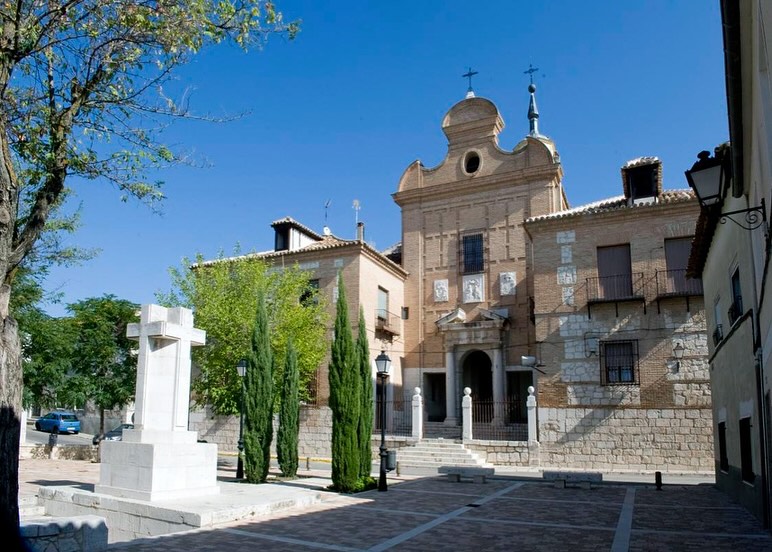
The Convento de la Encarnación del Divino Verbo located at Plaza de la Solana, It belongs to the Augustinian Recollect nuns and is known in town as the Convento de las Monjas or Convent of the Nuns. Built in the mid-17C, it was founded in 1685. Next to the convent church are the monastery itself and a palace-like house that once belonged to the Counts of Colmenar de Oreja, lords of the town and its surrounding areas, and founders of the convent. It is a significant and successful example of Madrid’s period architecture, the work of Friar Lorenzo de San Nicolás. The monumental façade is a beautiful example of Baroque with three openings leading to an atrium, from which one enters the church. The right side houses the Convent, and the left side is what was the Palace-House of the Count of Colmenar. The complex occupies an area of 6,750 m² and, in addition to the convent church, has a lower choir, chapter house, work room, 24 cells, a novitiate, a refectory, a beautiful cloister, a garden, and an orchard. As it is a cloistered convent, the convent church can only be visited during worship hours, where a collection of works by Matías de Torres can be appreciated, perhaps the finest example of Madrid Baroque painting.
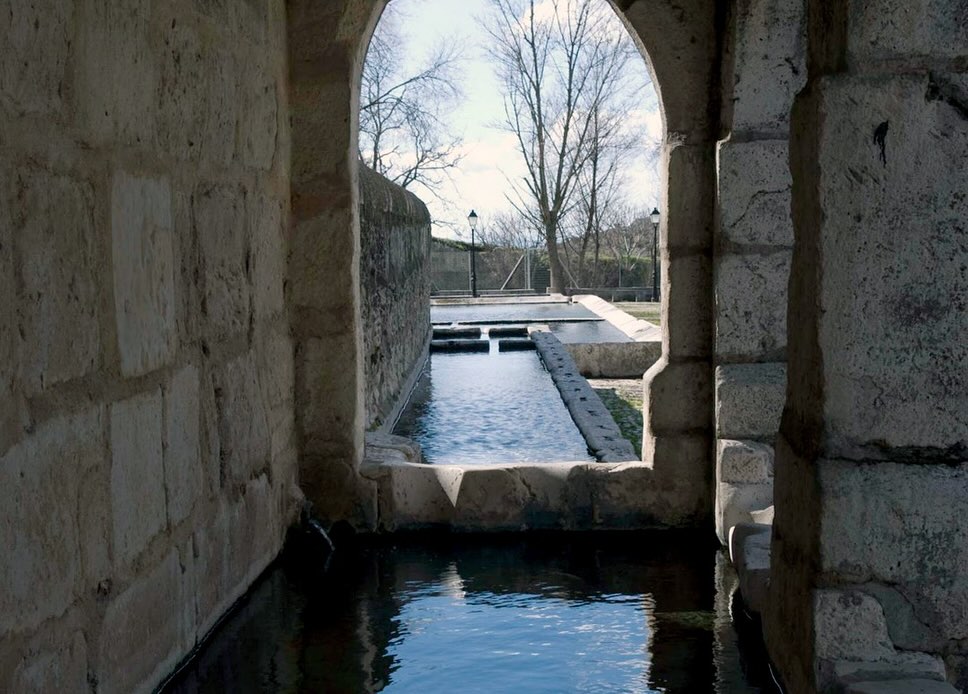
In the peaceful terraced gardens of Zacatín lies the Fuente de Zacatín Fountain, also known as the Fuente del Barranco Fountain. This fountain was built in 1779, although its water was mined during the Roman era (2C AD). Inside the Zacatín Arch, you can hear the flow of the torrent of water that flows through the channel to the fountain. It is in the vicinity of the M-318 road that leads to Aranjuez, in the foothills through which it runs, along , It consists of a long gallery of stonework through which the water runs to pour through two very abundant pipes in an uncovered box surrounded by wall at the back, and arches on the front and on the two sides, from which it passes to a long trough and from this, successively, to two large wash basins and then to a pond, called Pozo Arancón, to which it also pours, when it has water, a small spring loaded with salts. The fountain was guarded by a guard specifically assigned to it, whose excess waters, collected in the last pool, called Pozo Arancón, were used for many years to beat the clay or clay obtained in galleries in those places and form the mud necessary for the manufacture of the jars, in the twenty-something jaraices that were made in the place occupied by the orchards. Meanwhile, the troughs or laundries collected the limestone water, which was used to wash serones and implements, and although it is not used for consumption, it irrigates the small gardens that surround the place.
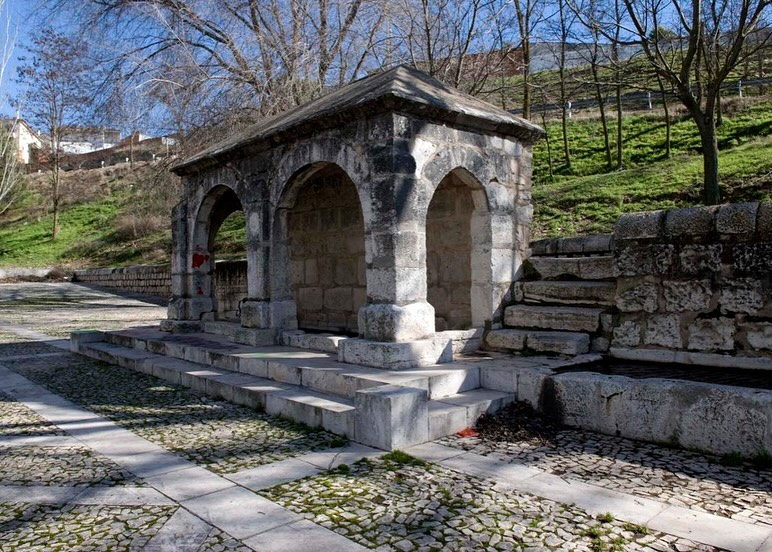
The Fuente de los Huertos or Fountain of the Orchards is located near the M-318 road that leads to Aranjuez, near the Hermitage of San Isidro. Conceived in a similar way to the Barranco or Zacatín fountain, for simultaneous uses, it consists of a long stone gallery through which the water runs to pour through two abundant spouts into an open box surrounded by a wall at the back and arches at the front and the two sides, from which it passes to a long drinking trough and from this, successively, to two large wash houses and then to a pool, called Pozo Arancón, into which a small spring also flows, when it has water. The mining of the waters of the fountain dates back to 1616, while the construction of the box and drinking trough dates back to 1779.
The City of Colmenar de Oreja on its history : https://turismo.aytocdo.com/historia/
The City of Colmenar de Oreja tourist office on the convento de la Encarnacion : https://turismo.aytocdo.com/conventodelaencarnacion/
The Comunidad de Madrid tourist office on Colmenar de Oreja: https://www.visitmadrid.es/en/where-to-go/towns-of-madrid/colmenar-oreja
The Madrid city tourist office on Colmenar de Oreja:https://www.esmadrid.com/en/colmenar-oreja
There you go folks, another gem in the off the beaten path roads of the Comunidad de Madrid, Colmenar de Oreja , an easy ride by car all worth it for a pleasant afternoon away from the City, and plenty of wonderful architecture and history,. Again, hope you enjoy this post on curiosities of Colmenar de Oreja !!! as I.
And remember, happy travels, good health, and many cheers to all !!!


