
Once again, I bring you to my dear Madrid with an ever ending monuments and lucky to have found me pictures in my cd rom vault to show in my blog for you and me , This is a wonderful museum that came in quickly in my rounds around the city a while back, and need to be back,eventually, Therefore, let me tell you my take on the Museo Nacional de Ciencias Naturales of Madrid !!! Hope you enjoy the post as I.
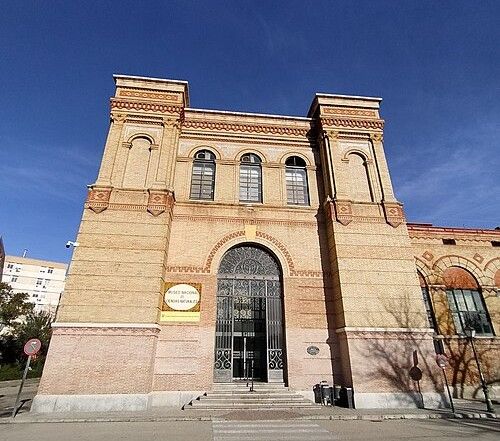
The Museo Nacional de Ciencias Naturales (MNCN) or National Museum of Natural Sciences is a center belonging to the Spanish National Research Council (CSIC) and is dedicated to the study and dissemination of natural sciences. It is located in the former Palacio de las Artes y la Industria or Palace of Arts and Industry on Calle José Gutizerrez Abascal right around the Monumento a La Legión across from Nuevo Ministerios on the Paseo de la Castellana. The MNCN is one of Spain’s oldest scientific institutions and houses the most important natural science collection in Spain, both in terms of the number of zoological and geological specimens and their scientific, historical, taxonomic, and taxidermy value. You can get here on bus lines 12 and 45 parada/stop Museo Ciencias Naturales and metro Nuevo Ministerios station on lines 6,8, and 10 also Cercanias trains C on several lines,
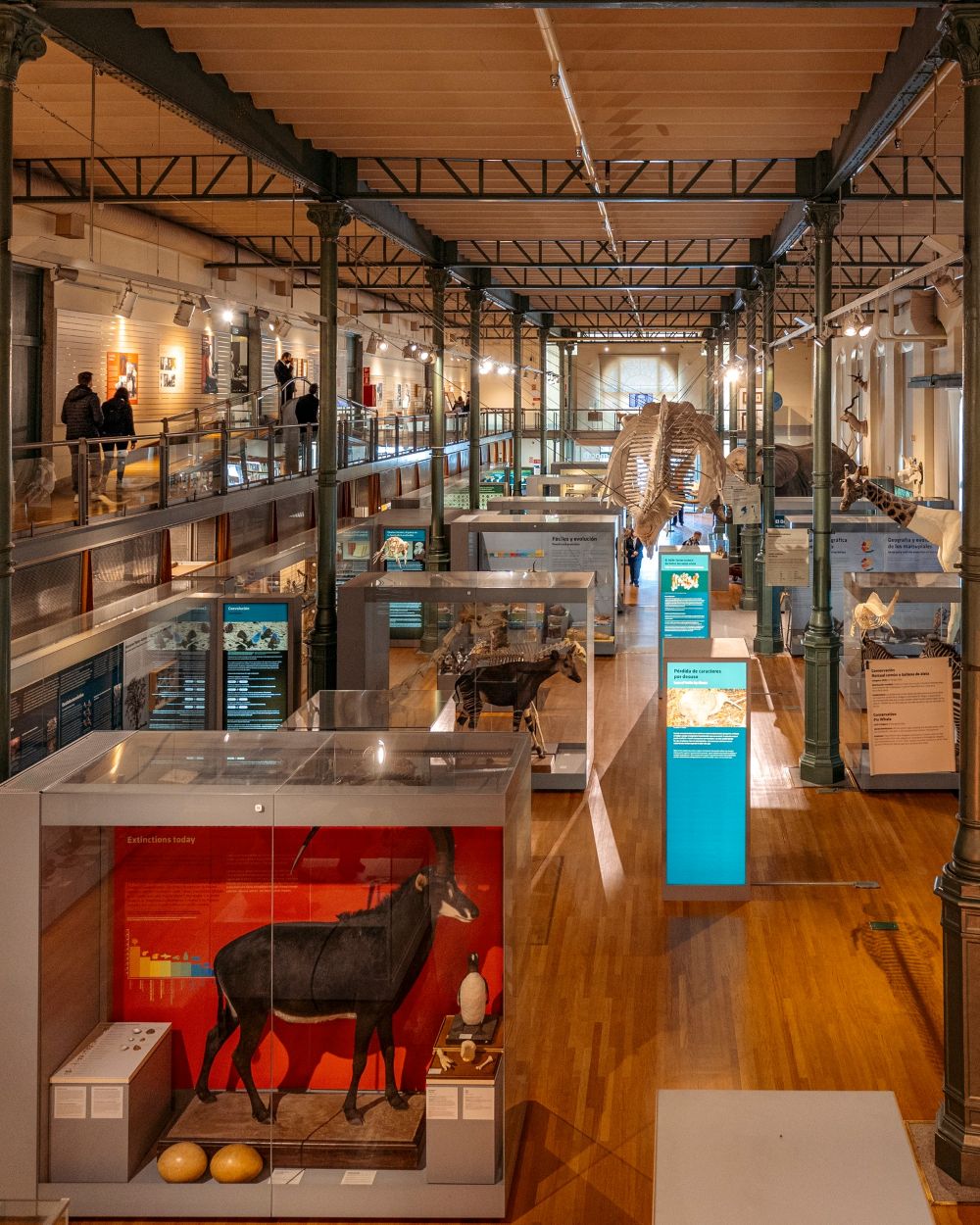
The MNCN is divided into two main areas: the Biology area and the Geology area. Room 1: Mediterranean Landscapes. Rooms 2 and 3: Space reserved for temporary exhibitions. Room 4: Biodiversity. The Geology area consists of a single room -room 5- divided into two floors. The MNCN collections have an essentially scientific purpose, although they also have museum/exhibition and educational value. One of the fundamental missions of the MNCN is the exhibition of its holdings through permanent and temporary exhibitions of its specimens and its heritage collection. It has 4,032 square meters of exhibition space: 3,176 are dedicated to permanent exhibitions and 862 to temporary exhibitions.
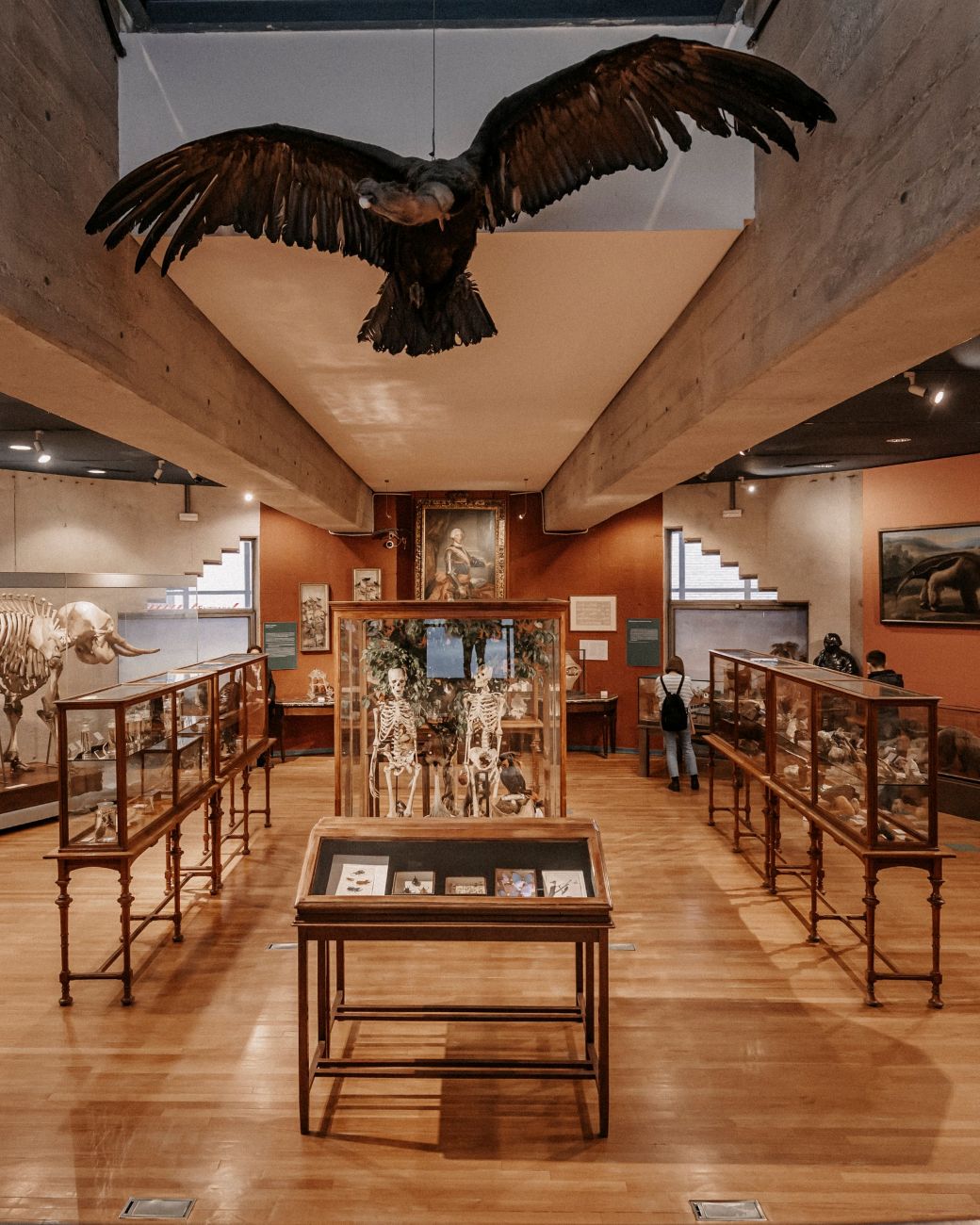
A bit of history I like tell us that the institution that preceded the MNCN was the Royal House of Geography and Cabinet of Natural History, founded by King Ferdinand VI in 1752. It was a Natural History museum, located on Calle Magdalena, at the corner of Calle Lavapiés, which served to house a Natural History collection with specimens from all the territories of the Crown, scientific instruments purchased by Antonio de Ulloa, and scientific and technical books. Despite this precedent, the origin of the MNCN is considered to lie in the acquisition by King Charles III in 1771 of the art and nature collection that Pedro Franco Dávila, an enlightened scholar from Guayaquil residing in Paris, had been compiling for twenty years. This newly acquired collection was the basis on which Charles III founded his Royal Cabinet of Natural History, which two years later… In 1773, it was augmented with items found in the Crown’s storerooms from the Royal House of Geography. These two events make the MNCN the oldest science museum in Spain and one of the first to be established in Europe. Unlike other major European museums, the MNCN does not have significant anthropology or herbarium collections. These two types of collections are housed, respectively, in the National Museum of Anthropology (see article) and the Royal Botanical Garden (see articles), both in Madrid.
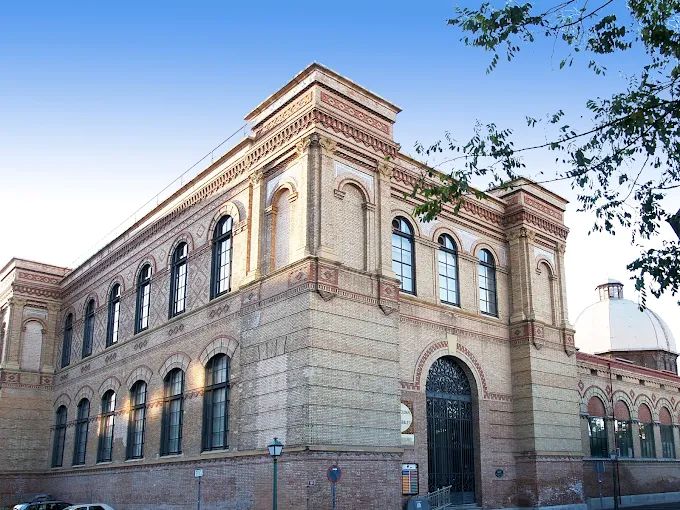
The Palacio de Artes y de la Industria or the Palace of Arts and Industry is a building that houses the National Museum of Natural Sciences (see above) , and the Higher Technical School of Industrial Engineers of the Polytechnic University of Madrid. Construction began in 1882 in the Altos del Hipódromo area. On May 21, 1887, the first National Exhibition of Fine Arts was inaugurated by Queen Regent Maria Cristina, with the last National Exhibition of Fine Arts held in 1899. It fell into disuse in 1903, until 1906 when the Entomology section of the National Museum of Natural Sciences moved there, followed by the School of Industrial Engineers in 1907. The Costume Museum, the Civil Guard barracks, and the Torres Quevedo Institute were also located there at various times. It is constructed with a metal frame, featuring cast iron columns, metal joist floors, and roof trusses using the Polonceau system (Jean-Barthélémy Camille Polonceau ). It consists of a central axis, where the main entrance is located, with a dome in the center and an apse at the rear. From this axis emerge two wings, each with a courtyard, and each has a basement, ground floor, and main floor.
The official Museo Nacional de Ciencias Naturales (MNCN): https://www.mncn.csic.es/en
The Madrid tourist office on the MNCN: https://www.esmadrid.com/en/tourist-information/museo-nacional-de-ciencias-naturales
The Comunidad de Madrid region tourist office on the MNCN: https://www.visitmadrid.es/en/what-to-do/culture-in-madrid-art-history-and-traditions/culture/museums/museums-of-history-and
There you go folks, now have it covered much better and feels great! This is not on most travel plans but it is recommended, a truly wonderful museum, worth the detour, me think, Another wonderful spot in my dear Madrid, Again, hope you enjoy this post on the Museo Nacional de Ciencias Naturales of Madrid !!! as I,
And remember, happy travels, good health, and many cheers to all !!!


