
This one was visited on a long walk warrior trail of my dear Madrid, and glad I did, we call it a hospital but inside there is a jewel chapel off the beaten path that needs to be visited more. I found me pictures in my cd rom vault that should be in my blog for you and me. Therefore, I like to tell you more of the Hospital de la VOT San Francisco de Asis of Madrid !!! Hope you enjoy the post as I.
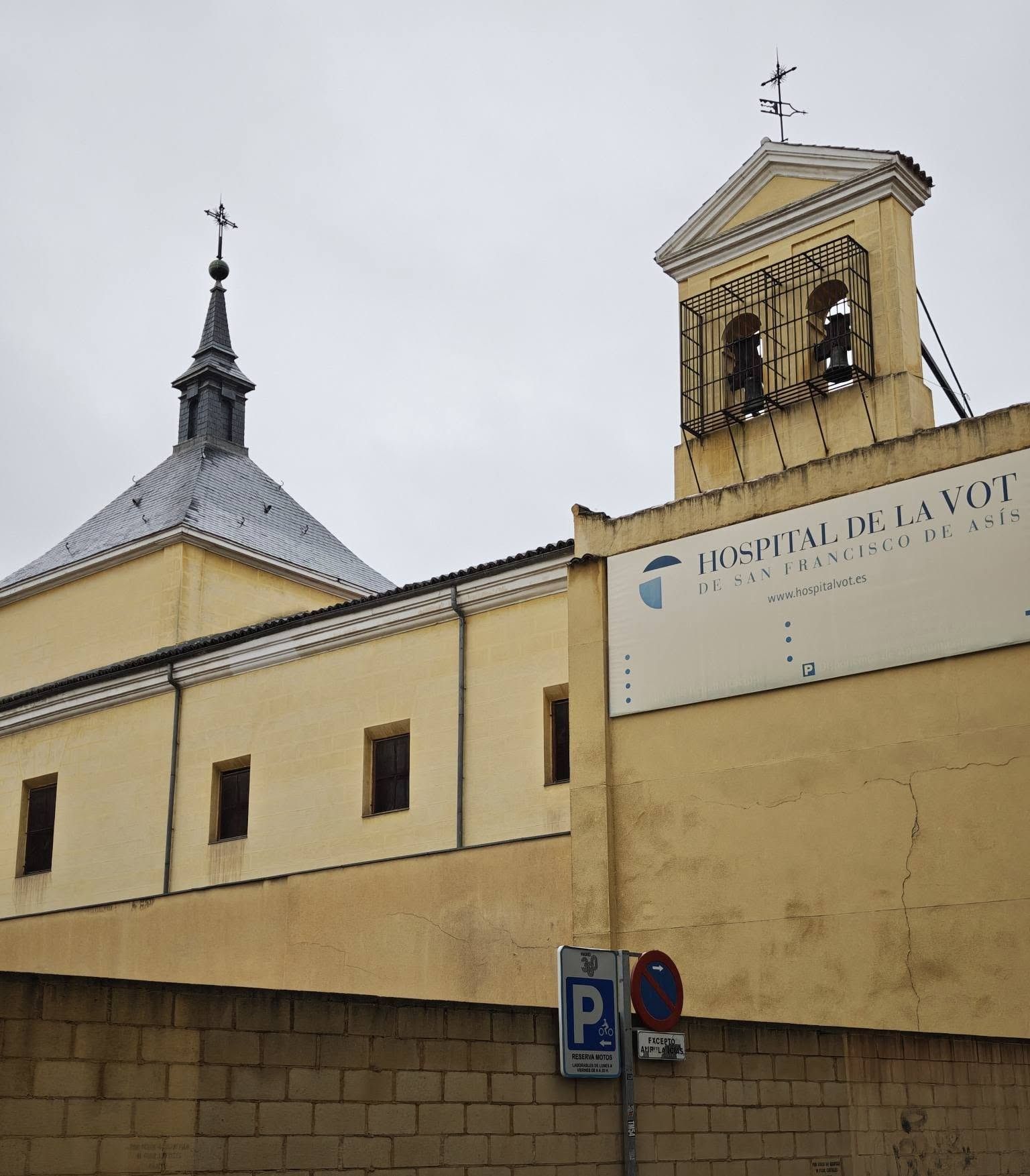
Located in the heart of Madrid, in the emblematic La Latina neighborhood, at Calle de San Bernabé, 13, the Hospital de la VOT San Francisco de Asis or Hospital of the Third Order of St. Francis of Assisi offers comprehensive coverage across a wide range of medical and surgical specialties. The VOT Hospital of the Venerable Third Order of Saint Francis is the oldest operating hospital in Madrid. If you need to come do so for the chapel a jewel off the beaten path that is a must to see, me think.
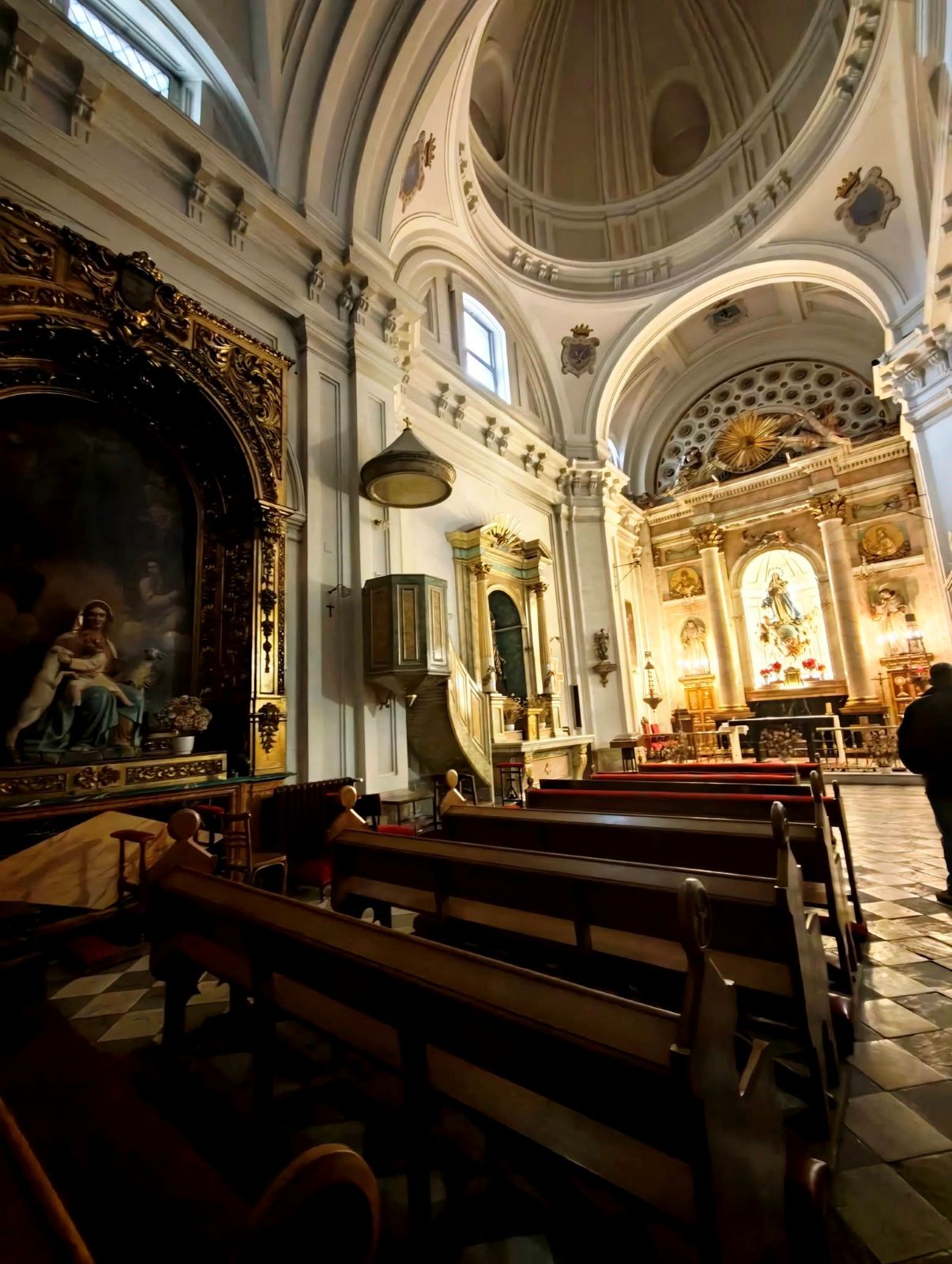
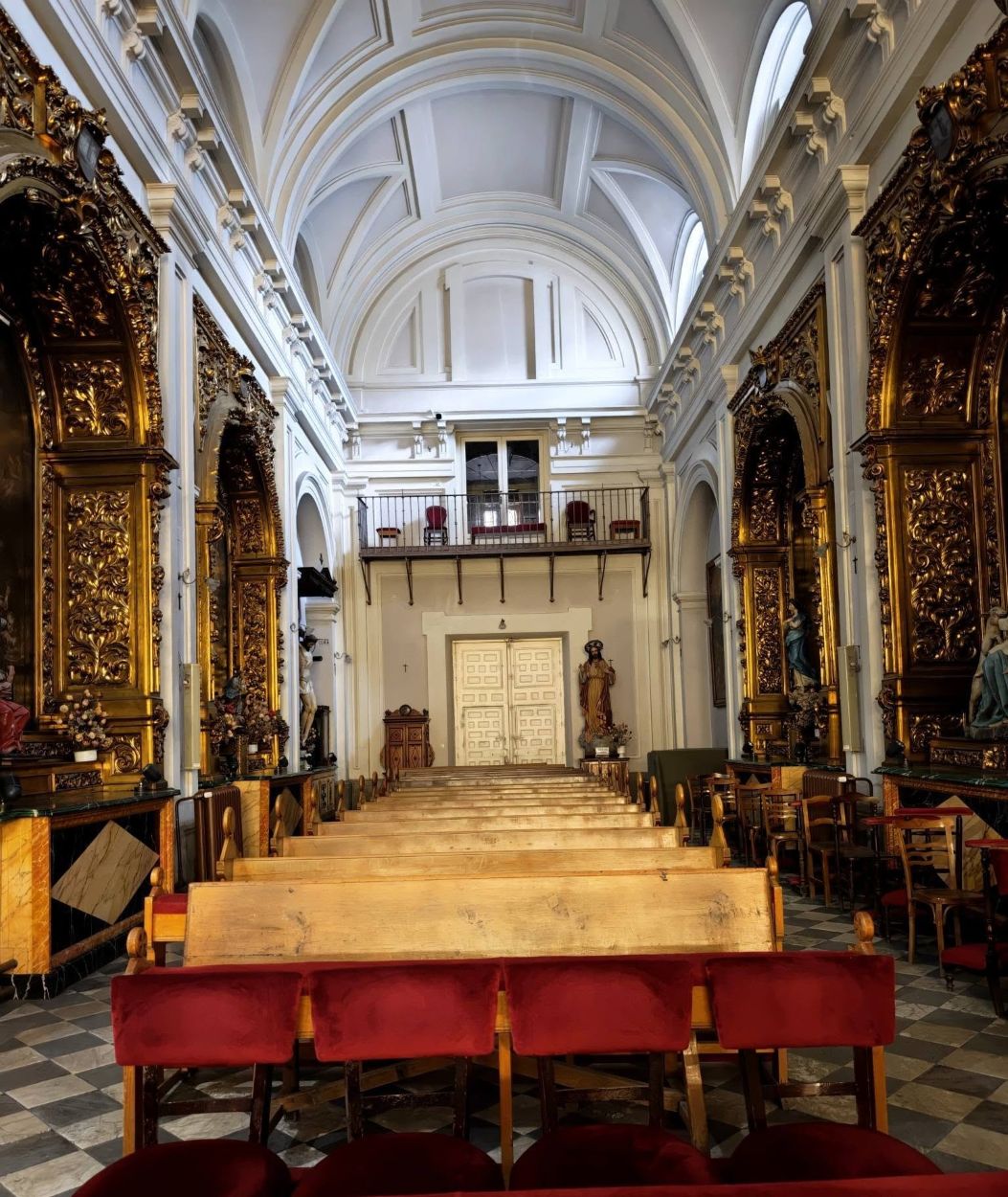
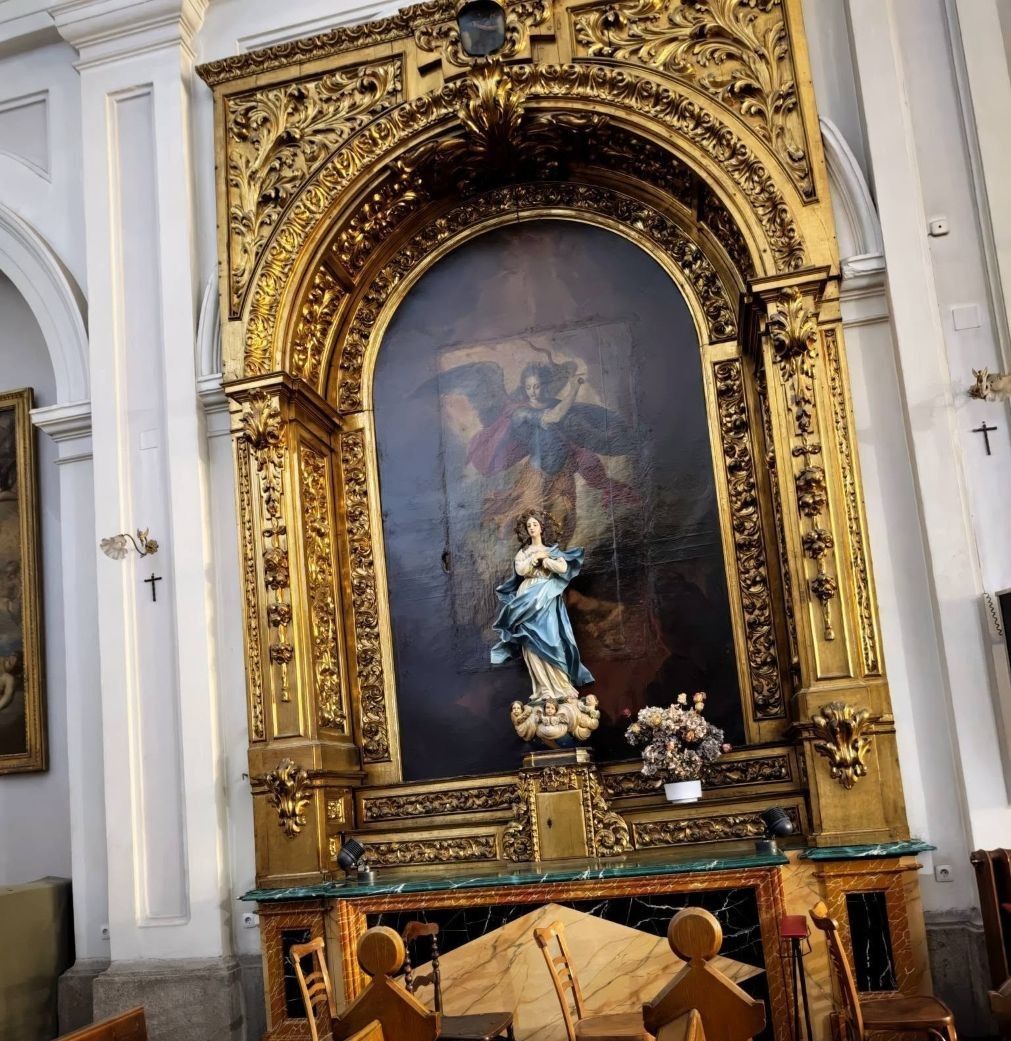
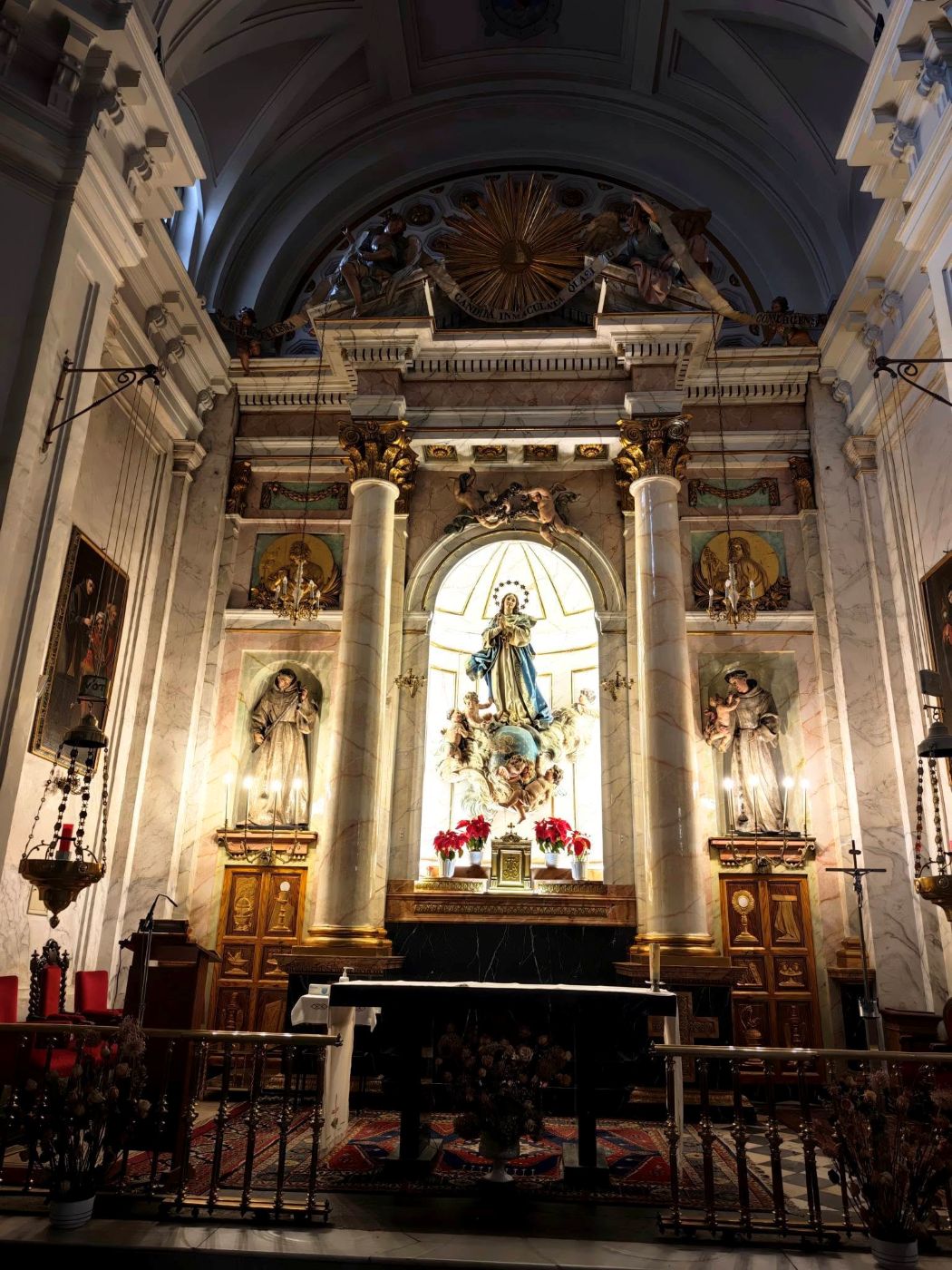
The VOT Hospital Chapel is a beautiful chapel within the Hospital of the Venerable Third Order (VOT). According to experts, this small sacred space is a true masterpiece, like the entire hospital. The hospital chapel, completed around 1699, has a Latin cross floor plan with a single nave divided into sections, the interior of which is decorated with an entablature and projecting cornice. It retains its Baroque façade with a rectangular structure divided into three sections with large concave pillars. It has a dome on a drum and pendentives, where the Franciscan coat of arms is displayed. The main altarpiece (18C): This is a stuccoed wooden altarpiece imitating marble. The altarpiece of the chapel, set between two Ionic marble columns, depicts the Immaculate Conception surrounded by cherubs and angels, a work by the artist Salvador Páramo y López (1828-1890) from 1867. On either side of the altarpiece are paintings such as Saint Clare of the Custody and Saint Anthony at the Miracle of the Mule. We also find a Crucified Christ, a sculpture by José López Pérez from 1782, and next to it a bust of Ecce Homo from a 17C workshop in Granada. Following this is the Assumption of Mary by the Sevillian artist Domingo Martínez (1688-1749), surrounded by numerous angels. Works by Pedro Ruiz González (1640-1706) include the Death of Saint Joseph. It houses several paintings and sculptures from the 18-19C. Inside, immediately upon entering, we find a double-ramp staircase built in 1683, and decorated vaults from the same year, bearing the inscription “Seraphic and Venerable Third Order.”
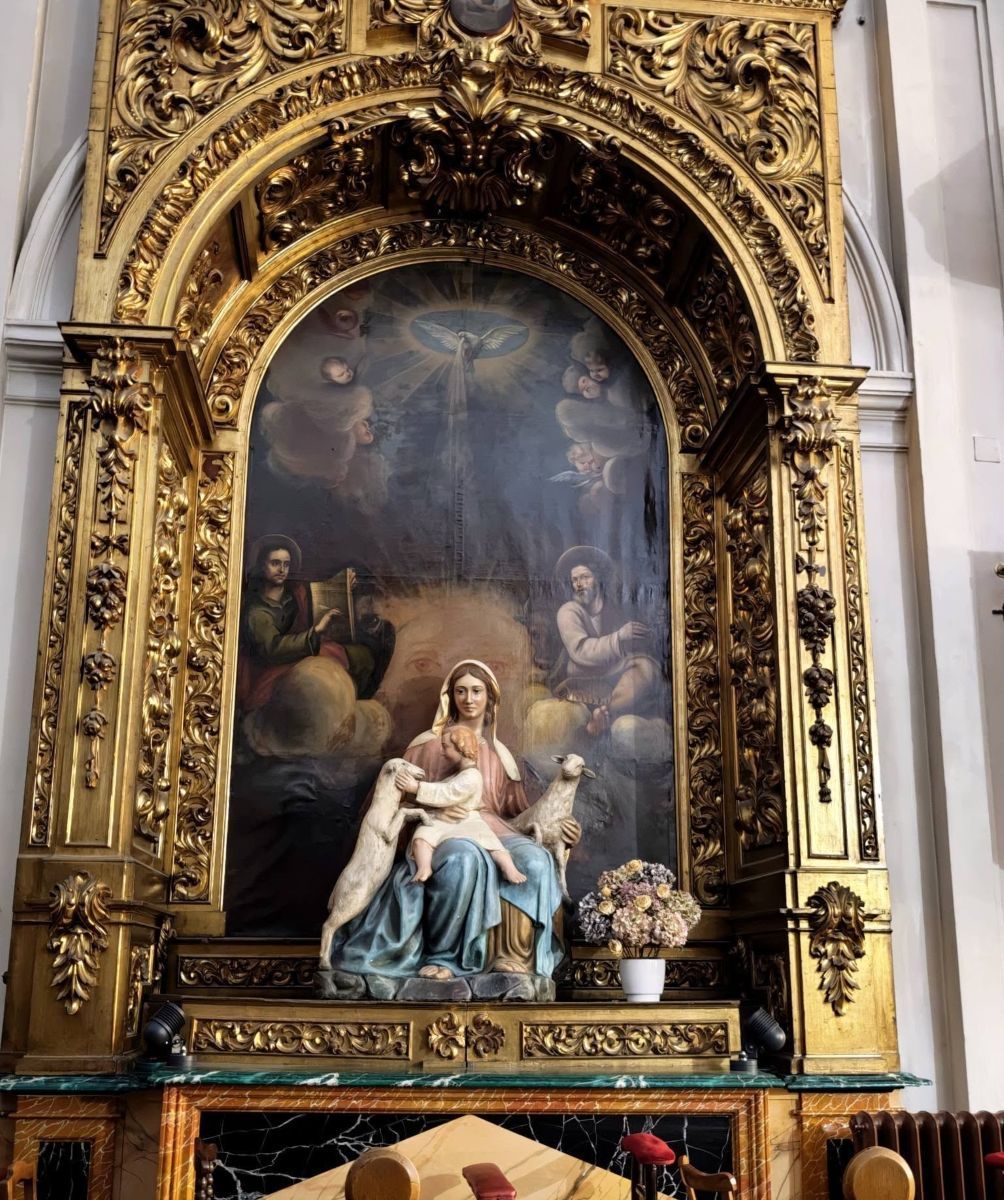
The hospital consists of a quadrangular courtyard, two floors, and a garden at the rear. The upper floor has a gallery with granite pillars that was originally open but is now covered with glass. It features an impressive double staircase with vaulted ceilings, completed in 1683. The hospital’s façade is quite dynamic, which is unusual in Madrid’s architecture. In the interior courtyard, we observe two floors with galleries featuring large windows that flood the building with light, and a garden area with a small fountain. The roof of this gallery is a piece of carpentry work, a coffered ceiling with a single tier of beams. Furthermore, the hospital is notable for the large number of works of art it houses, including sculptures such as the bust of Saint Francis by Agustín Querol, and that of Don Juan José of Austria by the Flemish artist Francisco Diesussart. Also noteworthy are paintings by artists of the stature of Carreño de Miranda, the great portraitist of the court of Charles II, Of particular note is Van Dyck’s painting of Christ and the Adulterous Woman, graces one of the flights of the hospital’s staircase; discovered and restored in 2012, which originally belonged to the sacristy of the Royal Monastery of El Escorial. We can also see other works of art such as the Annunciation and its companion piece, The Mystical Marriage of Saint Catherine, by Juan Carreño de Miranda, among the finest examples of the 17C Madrid school. Also on display is Antonio de Pereda’s Immaculate Conception from 1657.
A bit of history I like tell us that in 1221, our Seraphic Father Saint Francis of Assisi preached penance throughout Italy. Guided by a higher impulse, he composed the Rule to be observed. This was the beginning of the Venerable Third Order of Penance (VOT), as described by historians and biographers of the Franciscan Order. The VOT spread to all the kingdoms of the world. Its members have included Popes, Cardinals, Archbishops, Bishops, Kings, Princes, Aristocrats, and people of humble means and social standing. In Madrid, it has been established since time immemorial, believed to date back to the time when Saint Francis was in the city, as the association of Franciscan lay brothers generally arose alongside a First Order residence. We have evidence of its activity in the valuable archive that this Order possesses in the hospital, and the minutes of its Council meetings began in 1609. In fact, there is evidence of thousands of Franciscan lay brothers in Madrid society, such as Lope de Vega, Calderón de la Barca, Francisco de Quevedo, Miguel de Cervantes, and others. One of its projects was the hospital. The Council or Discretionary Committee of the Fraternity, in its ordinary session of September 14, 1678, agreed to the construction of an infirmary to care for the poor brothers who make up the Fraternity. Therefore, this project began after receiving approval from King Charles II on September 30, 1673, as recorded in the General Archive of Simancas (see post). Construction of the hospital began in 1679 and was completed in 1697. The hospital was constructed around a central courtyard, which provides light to the three floors, plus the basement. From the outset, wards were set aside for the patients. Each ward was dedicated to a saint associated with the Franciscan Order. The nurses were initially widowed sisters of the Secular Franciscan Order. Later, they were replaced by the Daughters of Charity of Saint Vincent de Paul. In 1919, the current Franciscan Missionary Sisters of the Mother of the Divine Shepherd joined the staff.
The Spanish Civil War of 1936 was perhaps the event that most profoundly affected the hospital. The VOT’s assets were confiscated in the name of the Madrid Socialist Group, and its staff were ordered to leave the hospital. On November 8, 1936, officers of Durruti’s Column, acting on orders from Federica Montseni, moved part of the center to the Ritz Hotel. On November 12, due to the approach of Nationalist troops, the entire hospital was moved to the town of Arganda (south of Madrid), and on February 13, 1937, to Loeches. Despite all these relocations, and thanks to the vigilance and dedication of several doctors who served at this hospital during the Civil War, almost all of the artistic and sacred objects that this Venerable Third Order possessed throughout its history in the city of Madrid have been preserved. The date of its return to this hospital is unknown because minutes and documents related to these events disappeared from the archives. A17C historical-artistic hospital that houses a huge technological advance hospital in the center of Madrid,
Of course ,you can walk here but on public transports bus lines 3 and 148 stop parada at Paloma just across from the hospital, If by car,,,,parking APK2 Plaza de Oriente between Royal Palace and Cathedral de la Almudena go out left on Calle de Bailén and walk down to hospital about 800 meters,
The official Hospital de la VOT de San Francisco de Asis on the chapel: https://www.hospitalvot.org/hospital-madrid/capilla/
The Madrid tourist office on the Hospital VOT chapel: https://www.esmadrid.com/en/tourist-information/capilla-hospital-venerable-orden-tercera
There you go folks, you should make the trek,step out down from the Royal Palace to this jewel off the beaten path that must be visited, me think, Again, hope you enjoy this post on the Hospital de la VOT San Francisco de Asis of Madrid !!! as I,
And remember, happy travels, good health, and many cheers to all !!!


