
Oh yes another wonderful old town of my dear Spain; this is deep country and our road warrior trips at its best. There are so many towns that will take you a life time to see them all, and each is unique. I like to update this post with older pics but new text and links for you and me, Therefore, this is my take on curiosities of Molina de Aragon,part I !!!. Hope you enjoy the post as I.
I go around these towns a lot on my roundtrips between France and Spain, and sometimes wish I could have spent more times in them. Molina de Aragon is in the province of Guadalajara in the Autonomous Community of Castilla La Mancha, and in my dear kingdom of Spain. It has a population of 3,280 inhabitants (INE 2024).
The Castillo de Molina de Aragón castle, aka Fortaleza de Molina de los Caballeros fortress, is in a state of consolidated ruin, and it is possible to visit it on request. The origin of this fortress goes back to an Alcazar that raised the Andalusians on an old Celtiberian castrum between the 10C and 11C, and in which they placed their residence the Kings that governed this Taifa (moors kingdom or territory). Until it was definitively snatched from the Andalusians by king Alfonso I of Aragon in the year 1129, which ordered to rebuild it, giving it its current aspect of a Romanesque castle,history goes on but I just tell you that after many change of hands finally, the fifth lady, Doña Blanca de Molina, finished giving it the size and the current aspect of today.
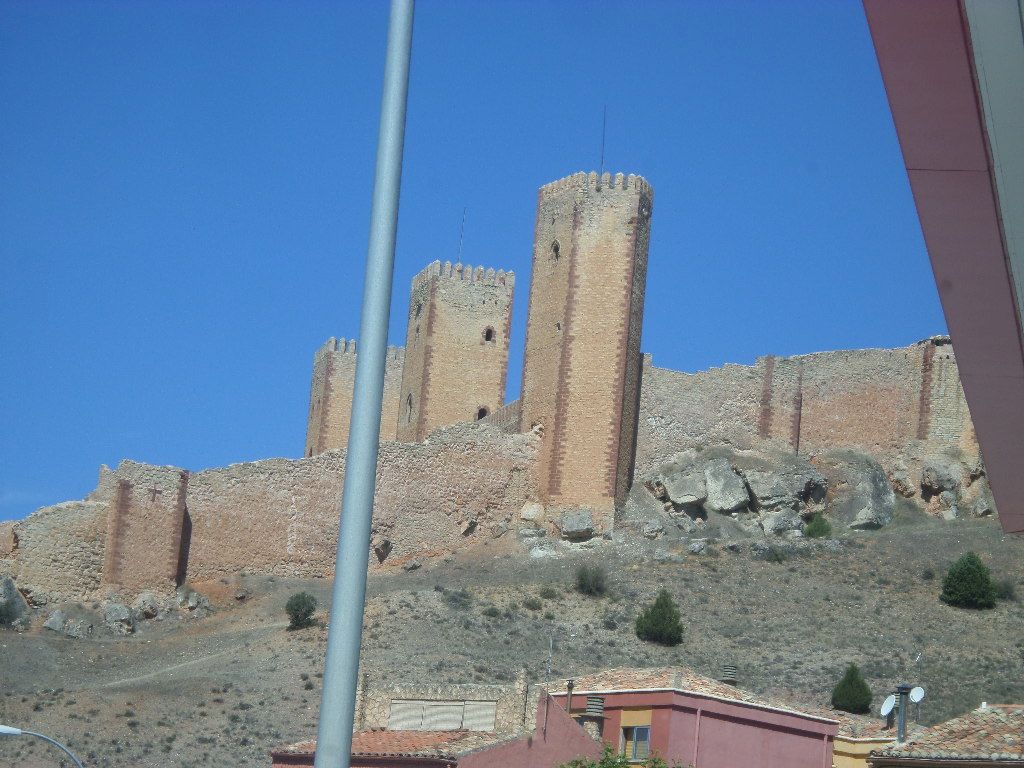
The current castle is the result of reconstruction and expansion carried out in the 12C. It is the largest castle of those that are currently in Guadalajara province. Analyzing the remains, we can imagine how impressive it must have been at its height. Although only four towers remain in good condition today, the Castle of Molina de Aragón once had no fewer than eight. Access to the fortress was through one of the five gates that connected it to the outside world. It has an outer wall, with numerous defense towers, which surrounds the perimeter and protects the fortress itself. The fortress has two enclosures: the exterior or large proportions, 80×40 meters, defended by various battlements and the interior, where the castle is raised with six towers, four in good condition or restored.
The exterior enclosure has five access doors: The north Traicion gate (betrayal), the Caballos (horses) to the south, the Campo (field) to the east and the Puertas (doors) of the clock tower and Puerta de Hogalobos gate to the west. In addition to these ,there are others on the wall that surrounded the medieval city, such as Medinaceli, Baños, Valencia and the Puente (bridge). The access to the exterior enclosure of the fortress is carried out by the door of the clock tower and to the interior, after crossing the Patio de Armas (Arms courtyard), by the door located in the tower of Veladores (lookout sailors) on the interior enclosure; Next to it are aligned the central tower or of the arms and the tower of the Homenaje (homage) or Doña Blanca. On the north wall is the Cubiertas (covered) or Caballeros (knights) tower.
The Cultural portal of the Castilla La Mancha region tourist office on the castle : https://cultura.castillalamancha.es/patrimonio/yacimientos-visitables/castillo-de-molina-de-aragon
The Castilla La Mancha region tourist office on the castle : https://en.www.turismocastillalamancha.es/patrimonio/castillo-de-molina-de-aragon-7064/descripcion/
The private site Castles of Guadalajara province on the castle of Molina de Aragon : https://www.castillosdeguadalajara.es/castillo-de-molina-de-aragon/
The former Monasterio de San Francisco, a franciscan monastery founded in the 13C ,currently used as a multi-service building, This monastery was founded in 1284 for Blanca Alfonso de Molina who was granddaughter of king Alfonso IX of Léon. In 1810 the invading French general Roquet put fire to the town with a quarter of its buildings destroyed; the Franciscan left town after been heavily damaged. By 1836 due to the laws of Mendizàbal (separation church and state!) officially declared the religious Franciscan prohibited from living in the monastery. The monastery became property of the State and a hospital was created there. Finally in 1886; the church monastery was occupied by the Hermanas de la Caridad de Santa Ana creating a hospital for the poor called Hospital de Santo Domingo.
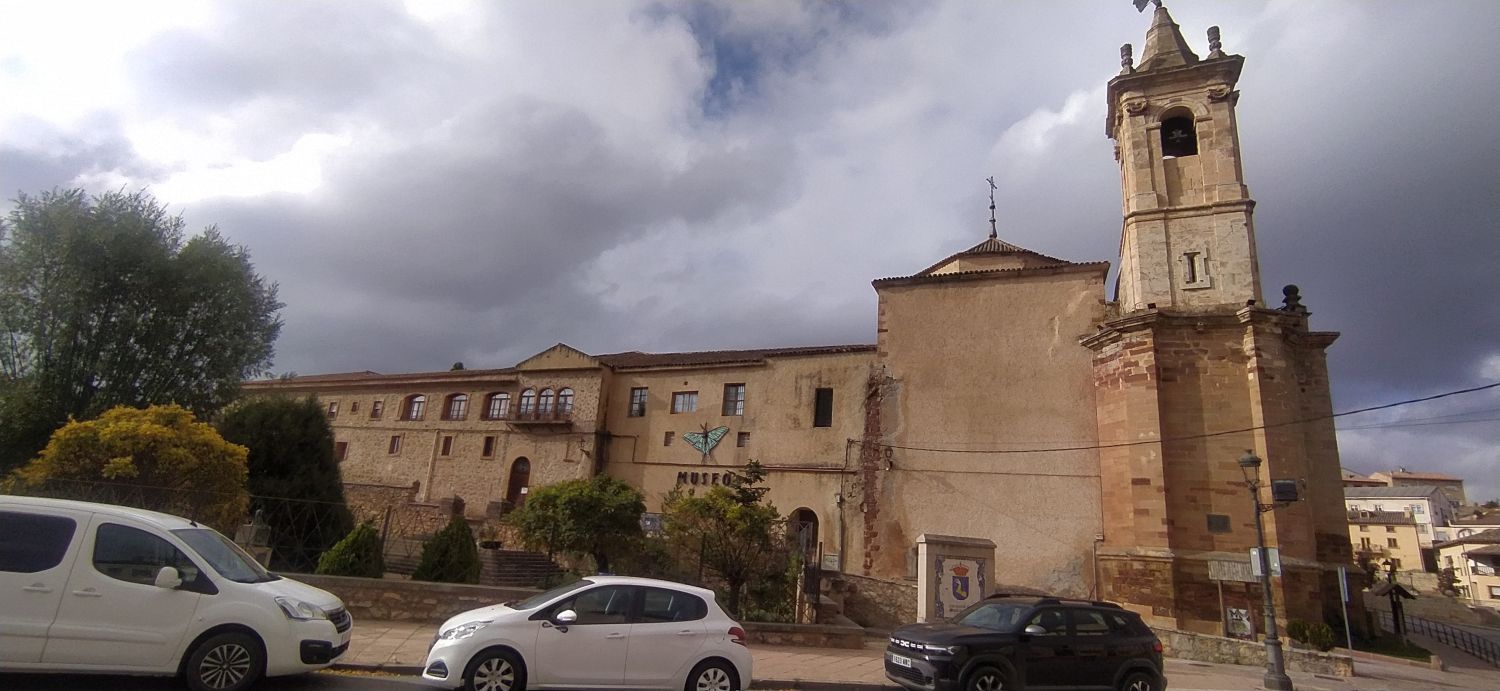
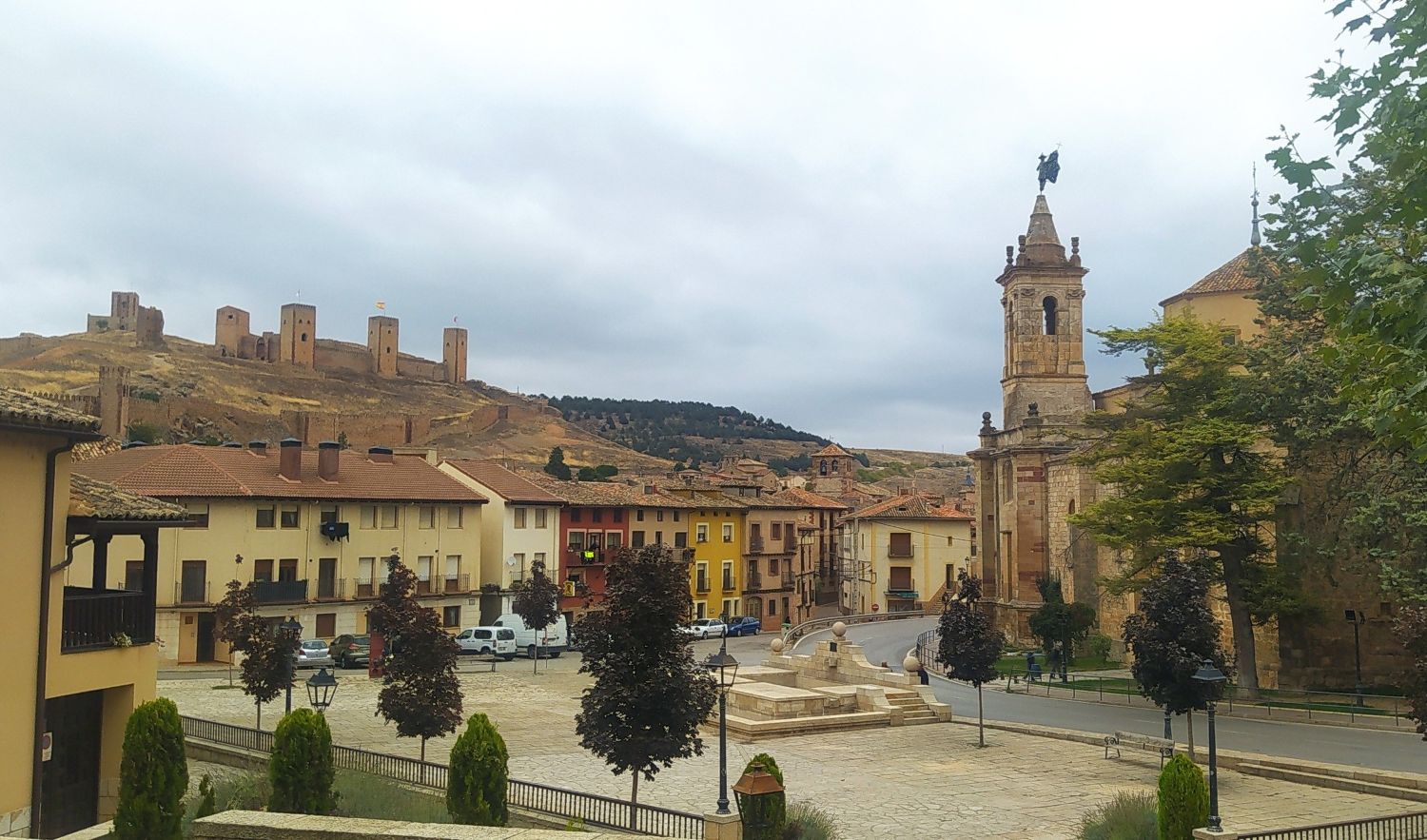
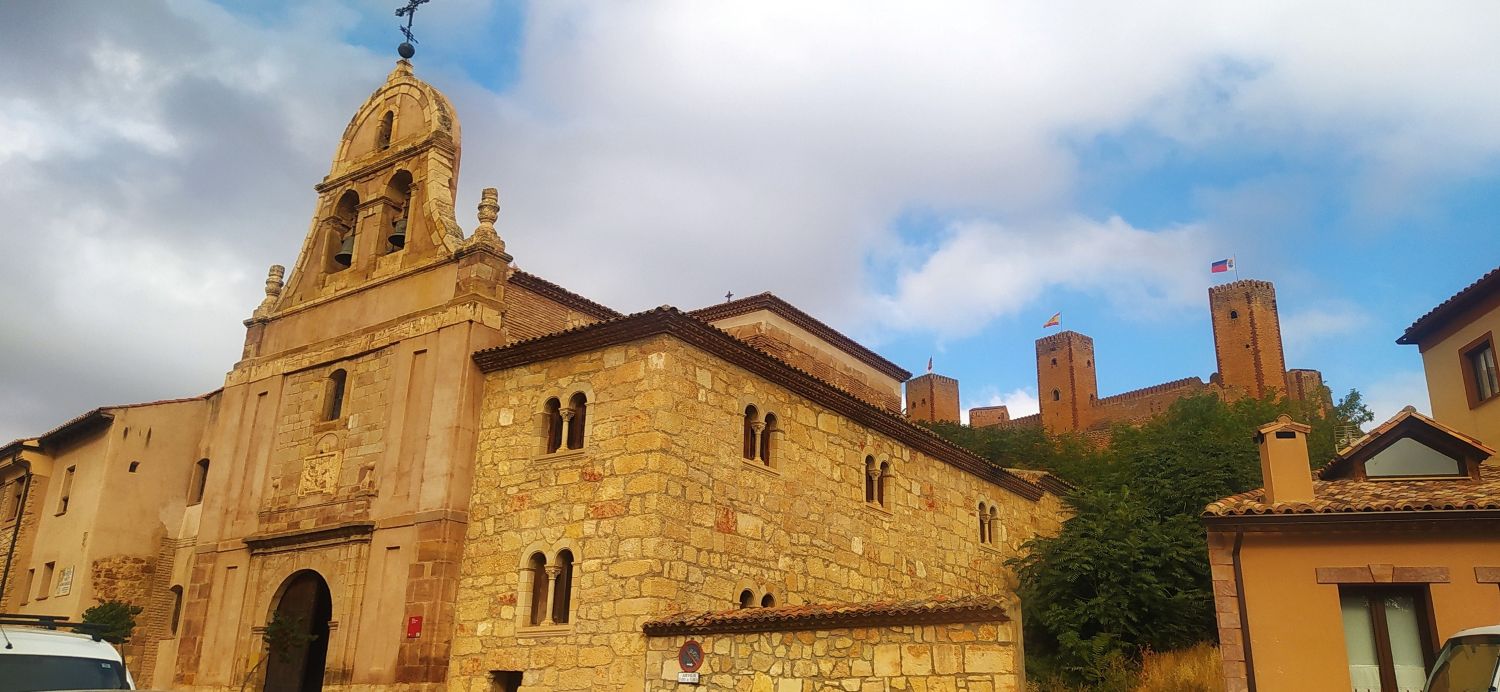
The church of the monastery was build in a Gothic style but later in the 16-17C was modified. The church has one nave, and covered with vaults that rest on columns. One each side are chapels of a renaissance style with the one of the Evangelio Chapel ,the most ornate as well as the Chapel of the Epistola. At the height of the church you see the choir of great dimensions. The founder Blanca Alfonso de Molina was buried here in the center of the monastery church. Later in the 19C due to the laws of Mendizàbal they were transferred to the Church San Gil in town. After the fire of the monastery that destroyed the church in 1915 these burials were lost. The tower of the church monastery is of a square shape with three bodies two of which are higher than the monastery, there is one with bells, one another has an archangel on top bearing a flag that is know locally as the Giraldo de Molina. See castle left on hill below pic.
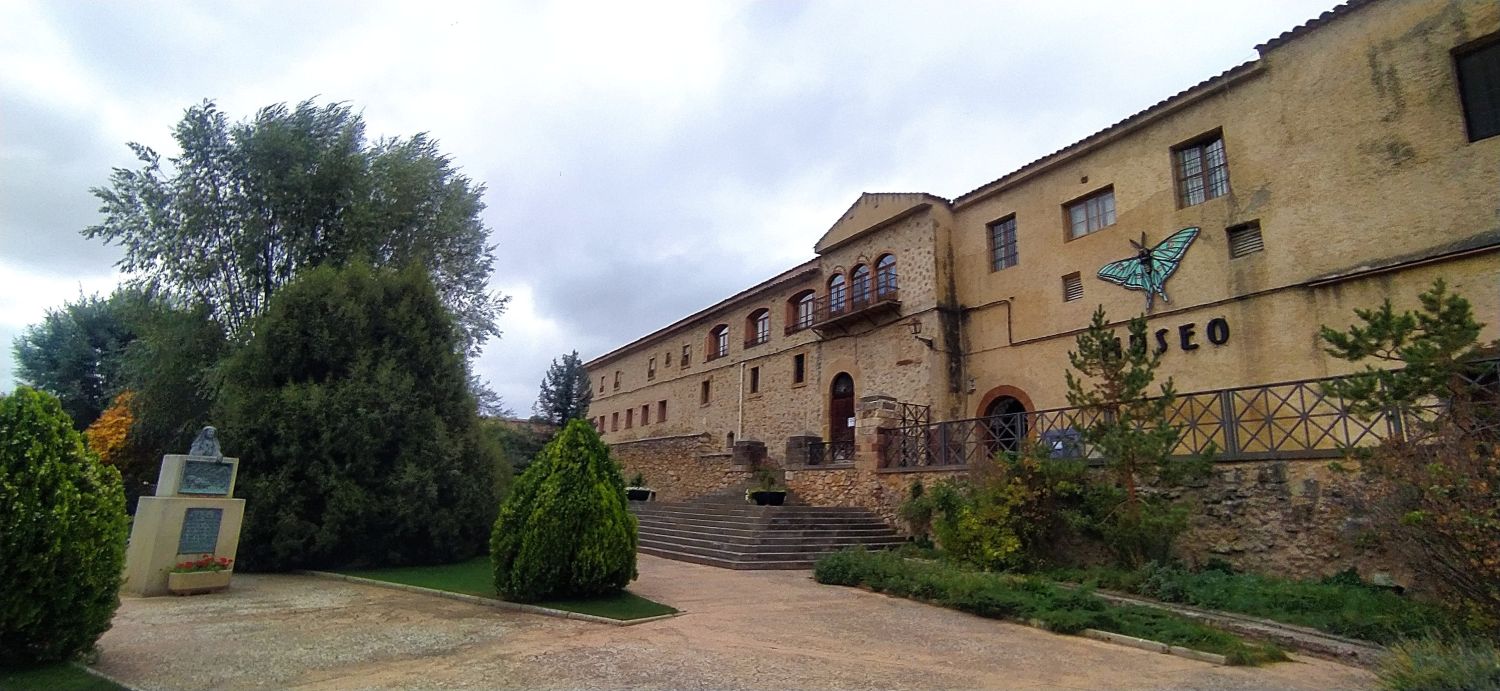
On another area of the monastery houses the Regional Museum of Molina de Aragón or town museum on its history. During a visit you can discover a collection of minerals and fossils, learn about the fauna that inhabits the region, and visit various temporary exhibitions that complement the permanent collection.
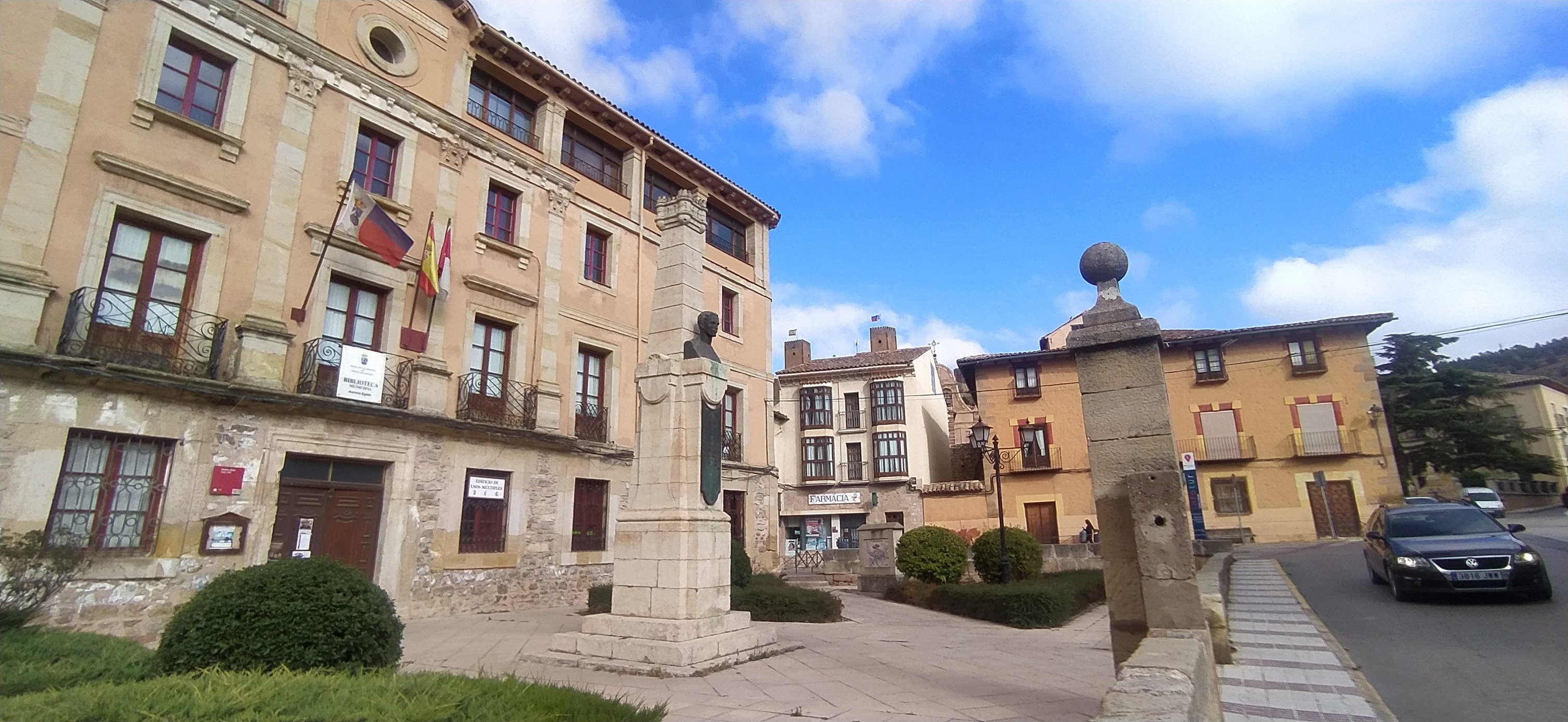
The Antiguo Colegio de los Escolapios or the Old College of the Piarists, is an 18C building located on Calle Doctor Don Antonio López Ayllón Gaona , founded in 1867 and currently used as a high school, and civic center, In front of its door there is a monument dedicated to Félix Luis Arenas Gaspar, Captain Arenas, this soldier died heroically during the Disaster of Annual (a serious Spanish military defeat in the Rif War) studied his entire childhood in this school. For his actions at the entrance to Monte Arruit (located in the province of Nador, Morocco) he was awarded the Laureda Cross of San Fernando posthumously.
The Church San Felipe is a Baroque church from from the late 17C and early 18C. dedicated to Saint Philip Neri. It was specifically built between 1680 and 1703, and it is attached to the Oratory of San Felipe. It has a neoclassical façade, the two-story façade features the entrance to the church, formed by a semicircular arch with pilasters attached to the sides. The ensemble is crowned by a relief at the top depicting the apparition of the Virgin and Child to Saint Philip. Above the upper body rises the bell gable, supported by a smooth entablature and decorated with sides based on concave-convex shapes, framed by two rosettes. Inside, you can see Baroque altarpieces, including the main altarpiece, as well as paintings and sculptures from the 18C.
A bit of history I like tell us that in the 14C, Molina became part of the Kingdom of Aragon when Henry II handed over the Lordship of Molina to the Frenchman Duguesclin. The local inhabitants, upset by this decision, handed Molina over to the King of Aragon, Pedro IV, at which point they changed the name from Molina de los Caballeros to Molina de Aragón, which has survived to this day. One reason is today in Castilla La Mancha and not in Aragon regions,
The town of Molina de Aragon for reference only: https://www.molinadearagon.es/
The Molina de Aragon tourist office on its heritage: https://www.molinadearagonturismo.es/descubre-molina-de-aragon/monumentos/
The Castilla La Mancha region tourist office on the museum of Molina de Aragon : https://en.www.turismocastillalamancha.es/patrimonio/museo-de-molina-de-aragon-7361/descripcion/
The Spain National Tourist Office on Molina de Aragon: https://www.spain.info/en/destination/molina-aragon/
There you go folks, another dandy in the wonderful dear region of Castilla La Mancha. This is quant nice Molina de Aragon , the town and the thrill of driving in mountain barren areas is good indeed. Again, hope you enjoy this post on curiosities of Molina de Aragon ,part I !!! as I
And remember, happy travels, good health, and many cheers to all !!!


