
Never amazed me in my travels the beauty of my dear Spain. This is no surprise to be the 2nd most visited country in the world (UN-WTO). As we say Spain is everything under the sun , I came here to see the famous sherry , horses, and flamenco all in one, mind you as Spanish these are not my traditions been a descendant from Tenerife. The City of Jerez de la Frontera is in the province of Cadiz, autonomous region of Andalucia , and in the kingdom of Spain, The word frontera (frontier) comes from the frontier between moors nazari Granada and the Crown of Castilla during the Reconquista, Therefore, here is my take on curiosities of Jerez de la Frontera !!! Hope you enjoy the post as I,
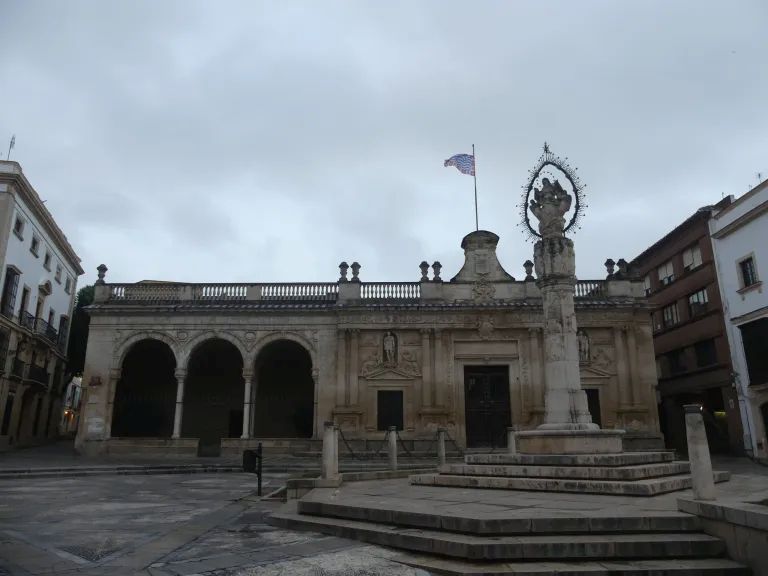
The Plaza de la Asunción is a monumental square in the San Dionisio neighborhood of Jerez de la Frontera. This square constitutes one of the most outstanding architectural and artistic complexes in Spain, where three styles come together: Renaissance, Mudejar, and Neoclassical. Previously known as Plaza de Los Escribanos (Scribes’ Square) because it was here that the city’s notaries worked, at certain times and in stalls. This location is logical considering its proximity to the Cabildo (City Hall), the old House of Justice, and Calle de los Letrados (Lettered Street). It has changed throughout its history. In the 15C, it was originally called Plaza de San Dionisio and previously Calle Letrados. At the end of the 19C, on the occasion of the inauguration of the City Hall as a Municipal Library, it was also named Doctor Revueltas y Montiel. Since the 1950s, it has maintained its current name, Plaza de la Asunción.
The Plaza de la Asunción was the center of the city’s institutions: the Old City/Town Hall, a Renaissance-style building that, since the Reconquista, has been the seat of the city’s civil power in the city, until 1873, when it became the financial headquarters of the Caja de Ahorros de Jerez (savings bank) ,and later the municipal archive, public library, and the seed of the future archaeological museum. It was originally a mosque, but later became the site of the church that honors the city’s patron saint. The site currently occupied by the palace-houses at nos 2 and 3 of the square were formerly the seat of justice and the city prison. From the 17C to the beginning of the 19C, these were two of the city’s most beautiful palace-houses. The Church of San Dionisio, dedicated to the city’s patron saint, is located in the first half of the 15C in the Gothic-Mudejar style, although it underwent Baroque transformations in the 18C. The Palace of the Countess of Casares, which was a former Inquisition prison, In the center of the square ,also, stands the monument La Asunción or the Assumption, in perfect balance with the harmonious beauty of the whole. The Assumption of Mary has been a dogma of faith since 1950, by means of the Encyclical. It is a simple white limestone column topped by an image of the Assumption of the Virgin surrounded by the apostles.
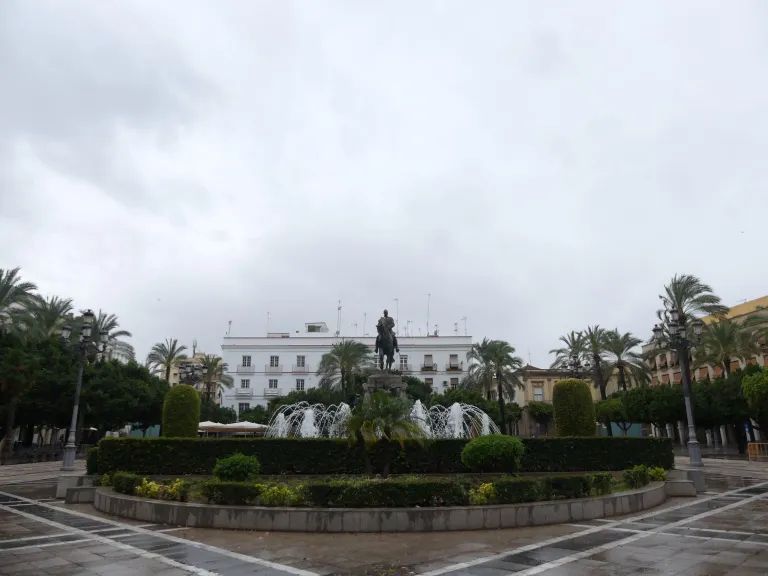
The Plaza del Arenal is located in the center of Jerez de la Frontera. A lively vibrant square, once a battlefield and scene of grandiose duels, now serves as a lively meeting place for locals and tourists. Centuries ago, it was an Andalusian shrine, and after the Reconquista, it became a scene of duels and battles, hence its name (arenarium, “place of battles”). Currently, it is the city’s main square. It was on May 31, 2004, when this central square was closed to traffic. This was due to the construction of the current underground parking lot and its final remodeling with the aim of converting it into a pedestrian zone, as it remains today. The Plaza del Arenal took shape as a plot of land on the outskirts of the walled city, on the site where Islamic burial grounds were usually held. It was located near the Alcázar of Jerez, (see post) where kings and other illustrious visitors would stay, and next to the Puerta Real, which separates a moat that would connect the square with the current Calle Consistorio. Until 1593, tournaments, duels, equestrian and bullfighting shows could be held in the Plaza del Mercado, the Llano de San Sebastián (now Alameda Cristina) or in the Plaza del Arenal square. But from that year onwards it was established that all public games and shows would be held only in the Arenal. In the 17C, spectators could enjoy these events from the city walls or from specially constructed stands. The first paid bullfighting show in the square was in 1655. In 1854 it became a promenade. Monarchs such as the Catholic Monarchs, Felipe V, Carlos III, Isabel II and Alfonso XII were received in the decorated Plaza del Arenal, Some of the interesting buildings here are the Alhóndiga, built during the reign of Carlos II in 1683 as a fruit and vegetable market and a harvest hall, it was used a year later as army barracks. It is currently the headquarters of the Urban Planning Department of the Jerez City Council. The former Palacio de Justicia or Justice Palace with a neoclassical façade, built in the 18C, it was the Palace of Justice and later, in the 19C, the mayor’s house. Next to this building, the so-called Arco del Corregidor stood until 1890, created as an access to the square. The monument to Primo de Rivera was erected in the center of the square in 1928, containing a time capsule. However, as he was dictator until 1930, he is outside the scope of the Historical Memory Law, which refers to the period from 1931 onwards. Around the monument is a fountain that was remodeled in 2017. Today, the Plaza del Arenal is an enchanting blend of history and modernity. Throughout the year, the square hosts a variety of events, from traditional festivals to modern concerts. One of the most anticipated is the Feria de Jerez, a week-long celebration of Andalusian culture featuring flamenco, horses, and sherry.
The city of Jerez de la Frontera on practical info: https://www.jerez.es/ciudad
The Jerez de la Frontera Tourist office on its heritage : https://www.turismojerez.com/conoce-jerez
The Province of Cadiz tourist office on Jerez de la Frontera: https://www.cadizturismo.com/en/municipios/jerez-de-la-frontera
The Autonomous Community of Andalucia on Jerez de la Frontera : https://en.andalucia.org/listing/jerez-de-la-frontera/19292101/
There you go folks, a dandy beautiful monument of Jerez de la Frontera. This is a must to see, me think in the whole of the City many architecturally and historically attractions, Again, hope you enjoy this post on curiosities of Jerez de la Frontera !!! as I,
And remember, happy travels, good health, and many cheers to all !!!


