
This is a very famous street and a wonderful set of architecture and history as well. Many things to see and do around here, see posts of my dear Madrid. Therefore, let me tell you on the pretty and historically great ,the Calle de Toledo of Madrid !!! Hope you enjoy the post as I.
Moving by the Plaza Mayor, you have the Calle deToledo, which was the old access of various goods and food from the province to the town. The street begins in the Plaza Mayor by the arco de Cofreros, reaches the Puerta de Toledo and continues to the Glorieta de Piràmides where it ends, linking with the Puente de Toledo in the old road that led to the city of Toledo. At the beginning of Calle de Toledo , bordering the Plaza Mayor, stands the Portal de Cofreros, a group of buildings constructed after the last fire that ravaged the square. The name Cofreros refers to the numerous chest shops that existed there in centuries past. The widest section of the street, between the Toledo gate (see post) and the Pirámides roundabout, was called Paseo de los Ocho Hilos (Walk of the Eight Threads), because of the eight rows of trees it originally had, which later disappeared, leaving only the row of Himalayan cedars in the center.I must add one of parkings over the year is under the plaza Mayor.
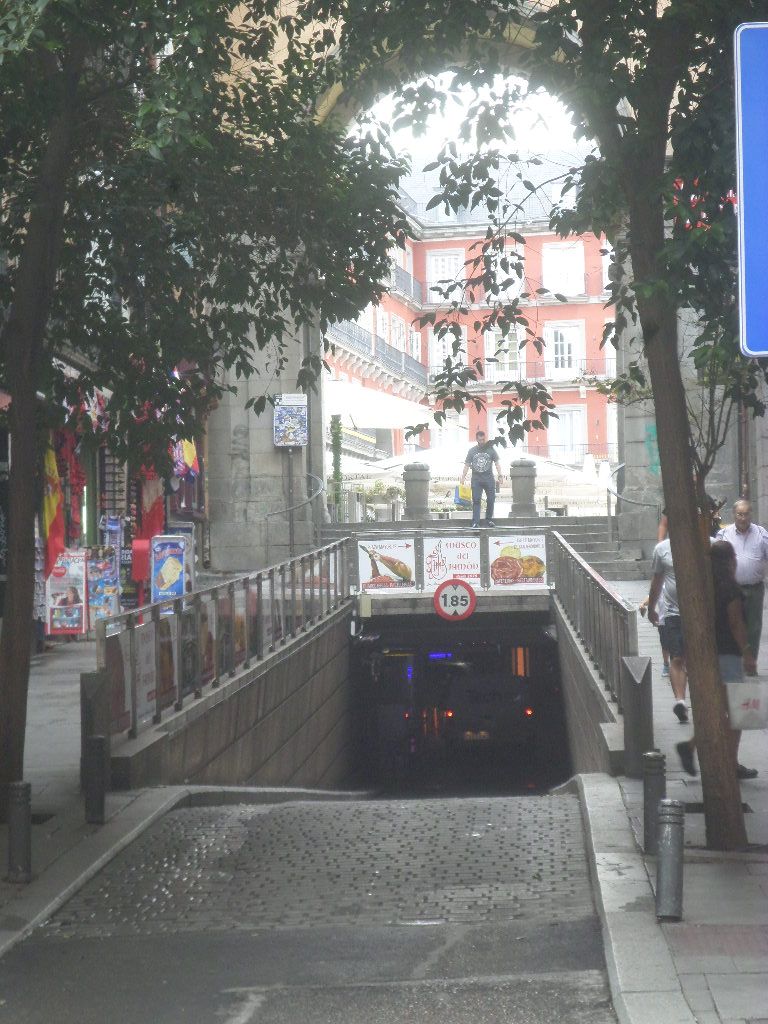
Its first section is a beautiful example of Habsburg architecture. Until the arrival of the railway in Madrid, this was the street of merchants, traders, and merchants. The arcades of the first section, built between 1470 and 1625, remain from that era, and some old shops still operate there today. In the opposite direction from the Plaza Mayor,(see post) other buildings of interest are preserved, such as the the portal of Cofreros, the Collegiate of San Isidro, and the Royal Studies of San Isidro, which occupy the old dependencies of the Imperial College, are the only buildings of historical-artistic interest of the time of the Austrias that have been conserved, in addition to “La Fuentecilla”, raised in tribute to Fernando VII of Spain in the beginning of Calle Arganzuela in 1814. Collegiate Church or Cathedral of San Isidro,(see post), the San Isidro Institute, and the Convent of La Latina. It had among its buildings the palacio de los condes de Humanes, the conde de Lerena , in 1630 lived on the street at the height of Calle de la Colegiata ,Many wonderful Bars, restaurants, and shops that we had patronise over the years such as Casa Hernánz Calle de Toledo, 18, more than a century ago, specialized in the manufacture of ropes and laces, but above all in espadrilles, which made its reputation, once reserved for peasants and workers, which today are worn on all occasions; these shoes even made a fashion show by Yves Saint Laurent in the sixties and walked the catwalks of the world, before dressing the feet of personalities like Jacqueline Kennedy or Marilyn Monroe. And my Mom Gladys and Wife Martine too! RIP
It has had various names throughout its history: Calle de la Mancebía (Brothel Street), after a famous brothel that existed in the area around the 14C; later, it was called Paseo de los Ocho Hilos (Eight-Thread Promenade), because of the trees planted in eight rows along the street. The peasants of the province accessed the street taking their merchandise to the interior markets such as the Mercados de la Cebada and San Miguel (see posts). It runs from its beginnings parallel to the Rastro of Madrid flea market. The promenade was remembered by Vicente Blasco Ibáñez in La horda. The novelist Benito Pérez Galdós, in the first book of Fortunata y Jacinta, describes the pre-Christmas atmosphere on the street on an imaginary December 20, 1873. It is also cited in Los cien mil hijos de San Luis (1877), and ,also, mentioned in El terror de 1824.
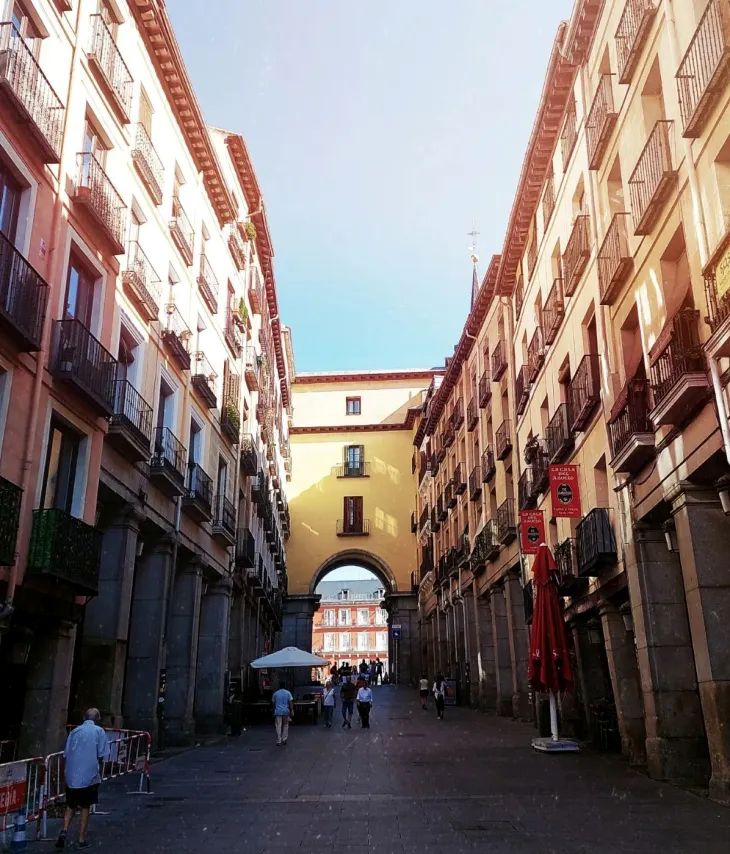
I could not leave this post without mentioning the best public market or flea market in Madrid, El Rastro, there for years and years around Plaza Cascorro and the Calle Ribera de Curtidores, this is a tradition every Sunday morning until 15h-16h, best way there is metro La Latina line 5, Puerta de Toledo line 5, or just descend from Plaza Mayor.
The Madrid tourist office on El Rastro: https://www.esmadrid.com/en/shopping-el-rastro
The Latina district is quite simply one of the best district in Madrid and also the most atypical neighborhood in Madrid. It is full of monuments to admire without moderation. Puerta de Toledo is one of the city’s oldest access points. Other monuments in the district include the Basilica of San Francesco the Great or the Church of San Pedro el Real. It is also very pleasant to rest for a few moments on the terrace on the heights of the Jardin de las Vistillas. You can admire the magnificent view of Moro Park and the Almuneda Cathedral. On Sundays, people from Madrid go to the Rastro by Plaza Cascorro, the main place of the market, to finish by strolling to the Puerta de Toledo. You can see vintage furniture shops in Calle San Cayetano , You will have the Mercado de la Cabada and many restaurants and tapas bars very close to you. You see the very nice Puente de Segovia or Segovia bridge over the Manzanares river
The Madrid tourist office on La Latina neighborhood: https://www.esmadrid.com/en/madrid-neighbourhoods/latina
The Comunidad de Madrid region tourist office on best to see around La Latina district: https://www.visitmadrid.es/en/places-to-visit-in-madrid/best-places-to-visit-in-madrid-spain/latina-rastro-madrids-historic
There you folks, a dandy wonderful street of my dear Madrid. A good walk with plenty of architecture and history, A walk on Calle de Toledo is a must to do while in Madrid, me think. Again, hope you have enjoy this post on the Calle de Toledo of Madrid !!! as I
And remember, happy travels, good health, and many cheers to all !!!


