
Riding around towns I got to know the intricate history of each place visited. More so in my beloved Spain, walking and visiting is not enough, you might want to get to know the people and the places, monuments, statues you see , Several of them caught our attention in lovely ,historical Lerma, and I like to tell you more using new pictures found in my cd rom vault that should be in my blog for you and me. Therefore, let me tell you about this is Lerma !!! Hope you enjoy it as I.
The town of Lerma is located in the province of Burgos, in the autonomous community of Castilla y León, and in the kingdom of Spain. The town has a population of 2,585 inhabitants (INE 2023), It is cataloged as one of the most beautiful towns of Spain since 2018 and has been published in the same association. It is located next to the Autovia del Norte highway, Madrid-Burgos, which is located on the exit/salidas on km pK 193-195 and 200-203. The following routes take you into/past the town: the N622 road Lerma-Quintana del Puente; the nostalgic for us N-I Madrid-Irún, and France, the BU-900 local road Lerma-Quintanilla del Coco that links with the road to Santo Domingo de Silos , and the local road BU-904 Lerma-Covarrubias. The town is 39 km from Burgos, 76 km from Palencia, 113 km from Valladolid, 206 km from Madrid, and 133 km from Velliza our rental house, dir Burgos, We took the locla VP5806 road to connect with the Autovia de Castilla A62 highway by exit/salida 135 continue past Valladolid and Palencia continue to exit/salida 56 dir Lerma on the N622 road dir Villahoz ,continue by the Arlanza river on your right hand side past the Puente de Tordomar bridge continue bear right on the N I road dir Lerma City center o Centro cross the Arlanza river bridge continue bear left onto Calle Mayor which takes you to Plaza Mayor where parking is available in front of Palacio Real parador hotel.
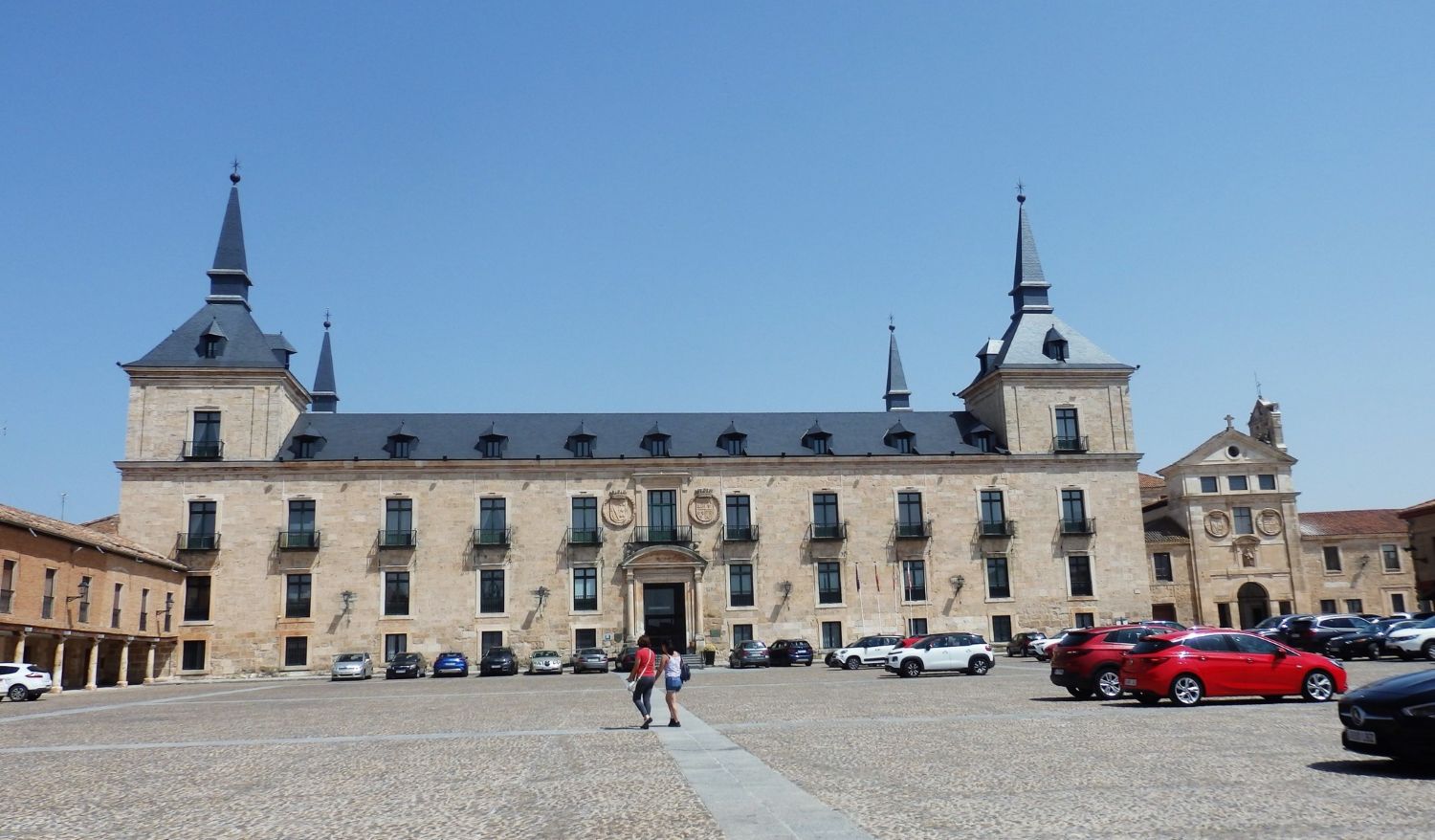
The Palacio Ducal or duke’s palace occupies one side of the plaza Mayor symbol of the political power of the duke, it was built between 1601 and 1617 by Francisco de Mora on the ruins of the old castle.The coat of arms of the Sandoval and Los Rojas families can be seen on the main gate. The lintels, walls, pedestals and columns are made of polished stone in single pieces. In total the palace has two hundred and ten balconies and thirty-five windows and in the corners there are smooth capitals on the slate towers. Here there used to be service rooms. During the Spanish Civil War the building was used as a building. Currently, it is a great national tourist attraction. As to why the four towers of the palace of Lerma is due to an ambush of the Duque de Lerma to the king. By definition, at the ducal palaces they were assigned two towers, but the duke asked to the king if he could have the towers in his palace, omit the information that he had the towers. The law concedes the permission, it is thought that it refers to the towers that can be placed and no more towers, and as if they were colocated with the four towers in their palace, they stayed ! It is now a wonderful Parador National or lodging that you can rent and stay !
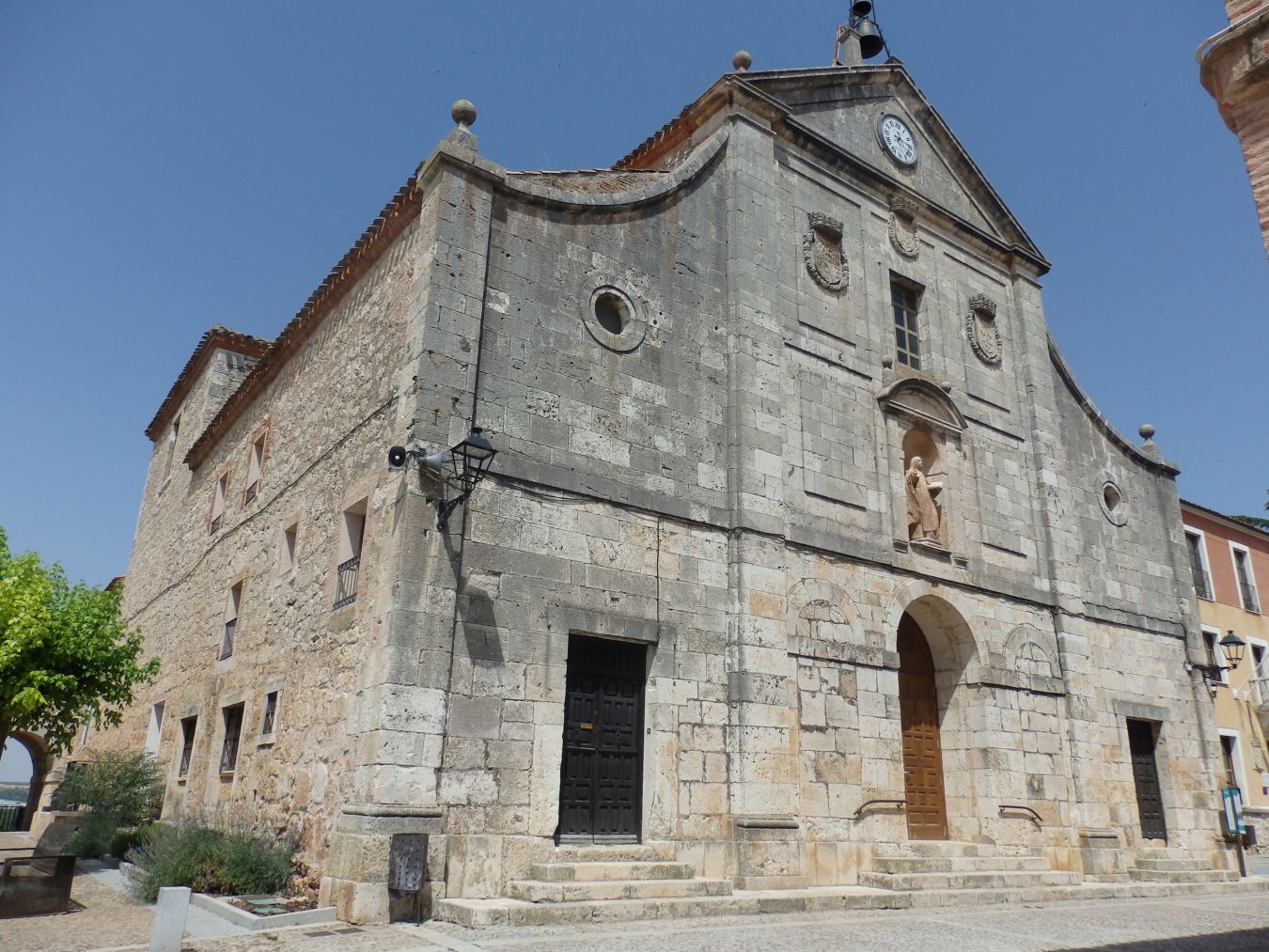
The Convento de Santa Teresa or Convent of Saint Theresa located on Calle de la Audiencia, next to Plaza Ducal. Its construction in 1617 was marked by the 19C sign, occupied by Carmelite Frailes. Today part of the cloister house the City/town Hall and on the street level the tourist office. From the same tourist office, you can access a part of the Pasadizo del Duque de Lerma, or passageway which originally joined the Palace with the convent.
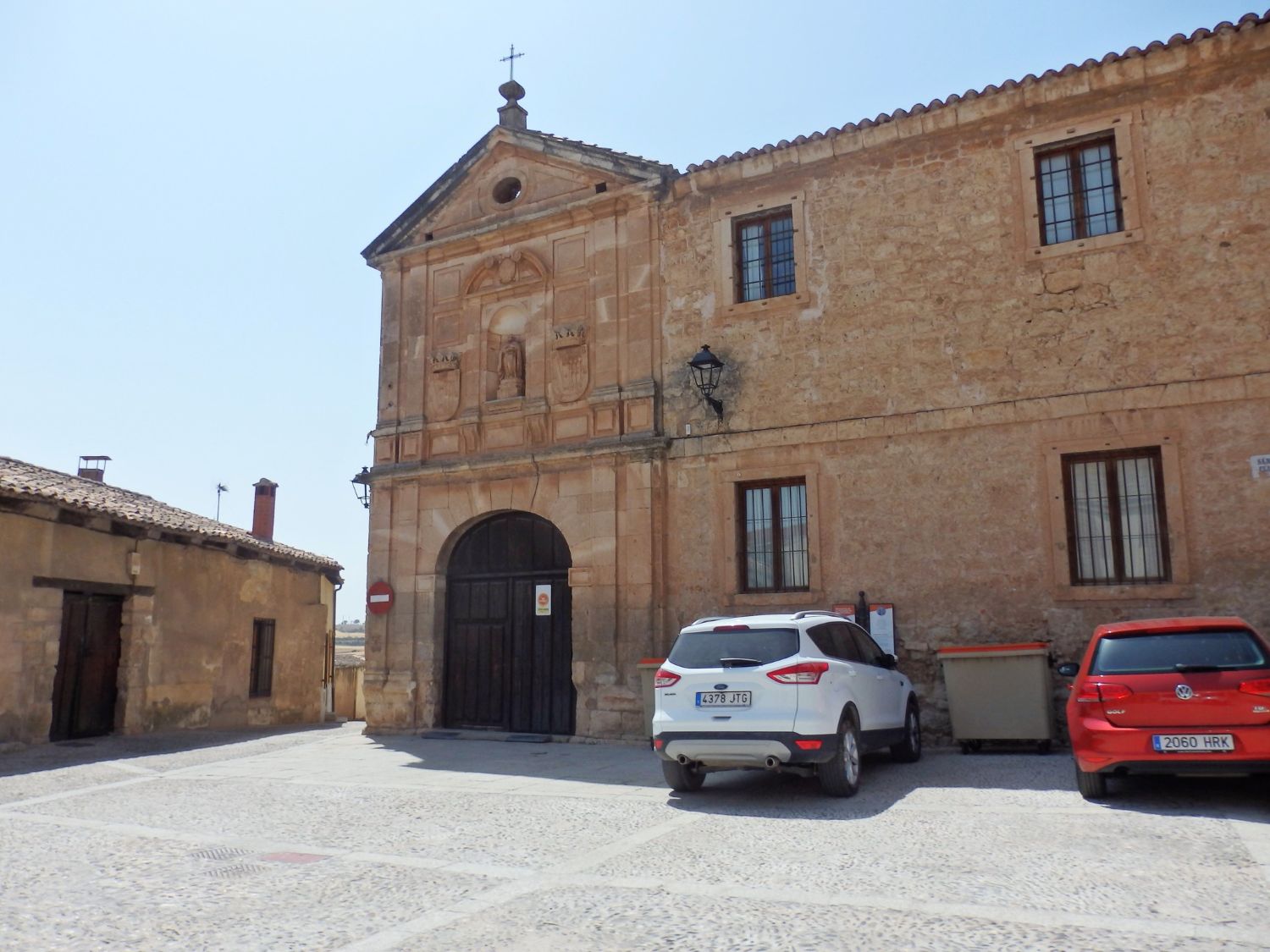
The Monasterio de la Ascensión de Nuestro Señor or the Monastery of the Ascension of Our Lord aka Convent of Santa Clara, inhabited by Franciscan nuns. Founded by the Duke of Uceda, son of the Duke of Lerma, in 1604 for Poor Clare sisters. It was the first convent to be built. The Infanta Margarita Francisca was baptized in its church in 1610. The façade is austere; it has a door with pilasters and coats of arms of the Padilla, Sandoval and Rojas families. The bell gable is Baroque with two openings and volutes. It is inhabited by Sisters of the Poor Clares with their delicious sweets.
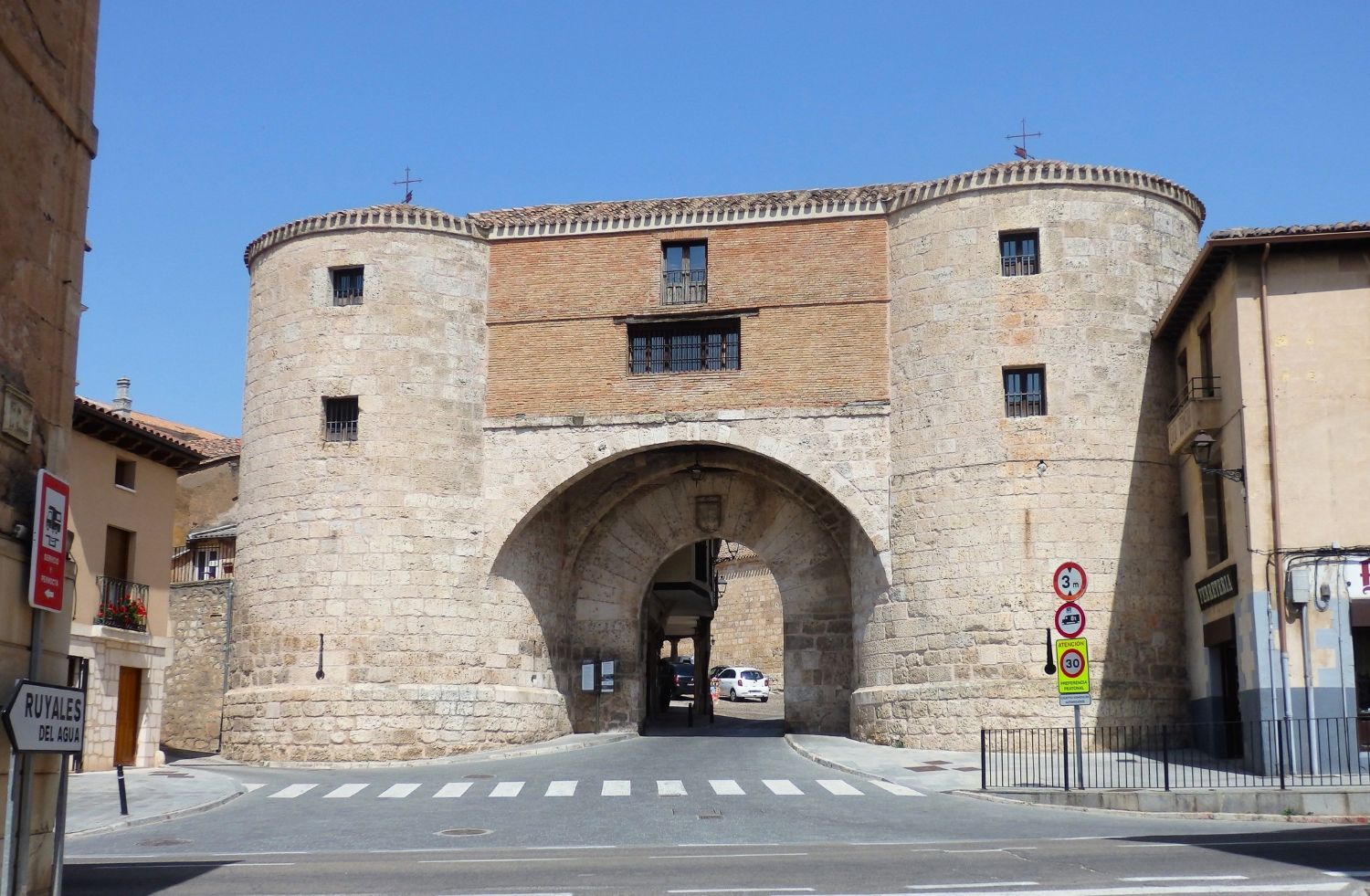
The Puerta de la Cárcel or Prison Gate aka arco de la Cárcel or Prison arch. Of the four entrances to the town, it is the only one preserved in the medieval wall. Through it you enter the historic center. The arch is flanked by two cylindrical towers with loopholes. Currently, the building is the headquarters of the Arlanza Designation of Origin. Established in 2005 for wines produced in the middle and lower valley of the Arlanza River, in the provinces of Burgos and Palencia. The wines of the Ribera del Arlanza are grown in vineyards in 63 towns, 50 in Burgos, with nine wineries, and 13 in Palencia, with two wineries.
The Mirador de los Arcos in the Plaza de Santa Clara where we can see from the vast landscape of the Arlanza region. It receives this name from the arches that are on one side of the square, although it is also known as the Pasadizo del Duque de Lerma or Pasadizo Ducal. Or Passageway of the Duke of Lerma or Ducal Passageway. This was built at the beginning of the 17C to connect the Palace of the Duke of Lerma with the Collegiate Church of San Pedro Apóstol, so that members of the nobility could move around without stepping on the public street.
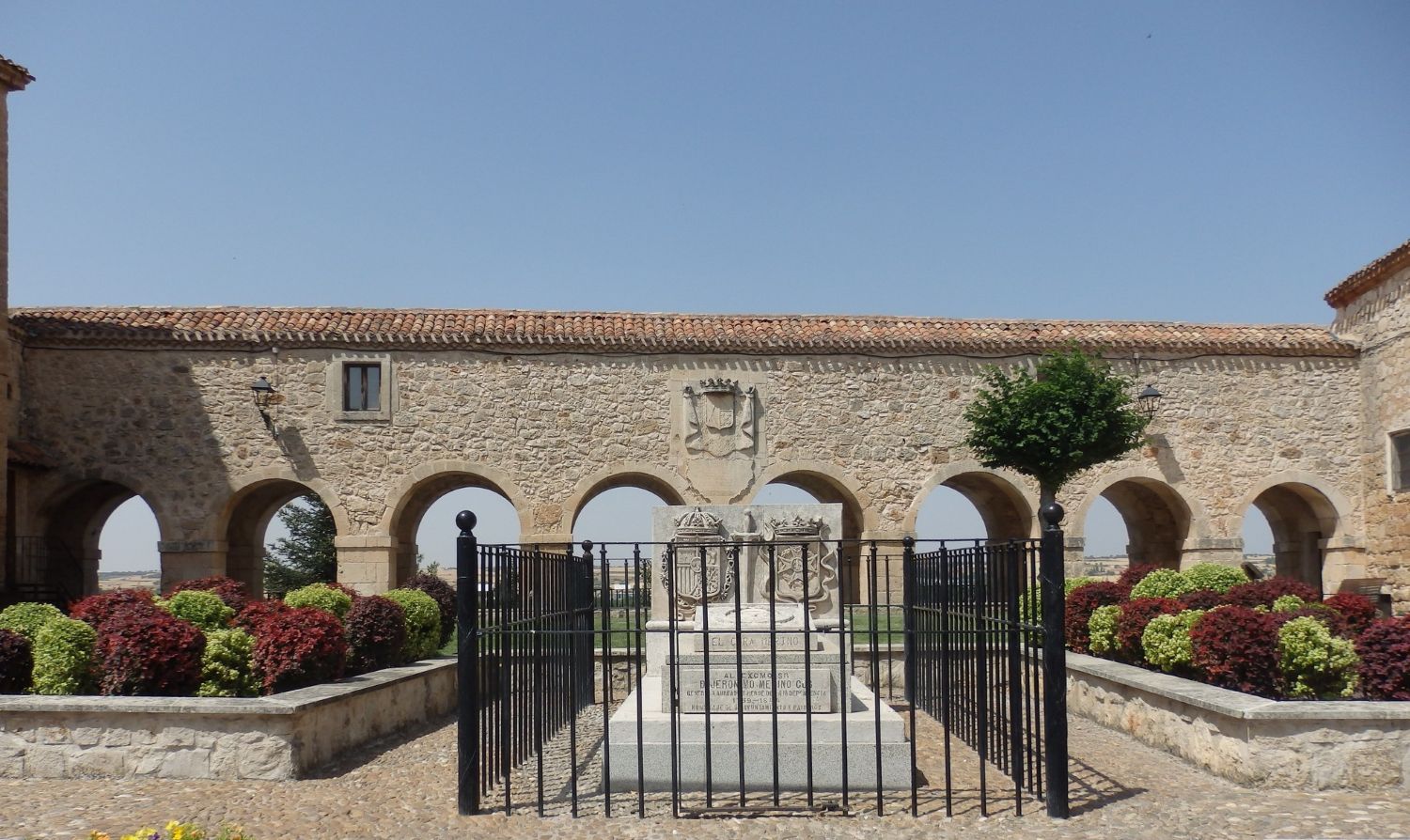
Other things to see here with more time are the its Plaza Mayor,or main square, with 6,862 m², is one of the largest in Spain. Also known as the Gran Plaza. Two important monuments are located in this square: the Ducal Palace and the Monastery of San Blas. The only tourist parador in the province, located in the Ducal Palace of Lerma, is considered one of the ten best paradors in Spain. The Collegiate Church of San Pedro, at Plaza de Santa Clara. Designed in 1613, it was consecrated in 1617 with great festivities for the Court and the nobles, which lasted 13 days. The Duke managed to make this abbey directly dependent on Rome. It has three naves in an ambulatory, but lacks a transept. The altarpiece is Baroque with six images. A valuable kneeling sepulchral statue in gilt bronze is preserved. There are two organs from 1615 and 1616, some of the oldest in the peninsula, where Baroque concerts are given. The Convent of San Blas Located in a Plaza Mayor next to the Plaza Ducal square Construction began in 1613 to house the Dominican nuns. Until the 19C, it was connected to the Royal Palace by a three-arched cantilevered passageway. The beginnings of the arches can still be seen. Today it is inhabited by Dominican Sisters who make ceramics. The Convent of San Francisco de los Reyes is a convent located outside the town walls. It was founded by Doña Leonor de Rojas, sister of the Duke, from 1606 to 1613. The Monasterio de la Madre de Dios or Monastery of the Mother of God aka Convent of Carmen, of Discalced Carmelite nuns, located opposite the gate in the wall called Puerta de la Cárcel. The Duke sponsored it for his mother-in-law. They occupied it in 1610. The façade is sober. It has a very wide nave with lunettes and a dome over the transept. The altarpiece is neoclassical with giant order columns and Corinthian capitals. In the center there is a painting of the Annunciation. The Mercado Viejo or old market also near Saint Anthony is organized by a bandstand. From here the most characteristic streets depart. You have to cross the Pasadizo-mirador or Passage-Viewpoint which connects the Ducal Palace and the Collegiate Church San Pedro Apostol at a good height above the Arlanza plain.
A bit of history tell us that the history and development of the town of Lerma are irrevocably united with the patronage of Francisco de Sandoval y Rojas, first Duke of Lerma, valid and favorite of King Felipe III, and by extension to the Duchy of Lerma, The Vacceos were the first inhabitants of this place. Its status as a crossing point made it useful to the Romans, the Suebi, the Visigoths and the Arabs until in 900, the Christians advanced to the border of the Arlanza river and were at the origin of its repopulation. The castle of Lerma was among fortresses and fortified places. The victory of Almanzor over Count Sancho Garcia at Las Peñas de Cervera was its last Muslim suffering. The struggles between the Castro and Lara families, between the domination of Aragon and Castilla dominated the history of Lerma and caused two kings ,Fernando III and Alfonso X to lay siege to the city. The extinction of the Lara lineage made it a city directly dependent on royalty until 1414, when Fernando de Antequera donated the city and all its dependencies to Diego Gomez de Sandoval y Rojas for his support in the Battle of Antequera and the struggles against the Count of Urgel. Francisco Gomez de Sandoval y Rojas received the majorat of the House as 4th Count of Lerma and 5th Marquis of Denia as his eldest son in 1574. He transformed the duchy into a title of count and established Lerma as the center of his dominions to the detriment of Denia. After the fall of the all-powerful duke in 1620, the city began a decline that would last for several centuries.
The Lerma tourist office on its heritage : https://www.citlerma.com/monumentos/
The Castilla y Léon region tourist office on Lerma : https://www.turismocastillayleon.com/en/heritage-culture/lerma
The most beautiful towns of Spain see Lerma : https://lospueblosmasbonitosdeespana.org/pueblos/
The Spain National Tourist Office on Lerma : https://www.spain.info/en/destination/lerma/
The Paradores tourist establishments on the Palacio Real de Lerma : https://paradores.es/en/blog/imperial-lerma
There you go folks ,another round in my dear Spain, and another off the beaten paths and they should be seen , me think. Again, hope you enjoy this post on this is Lerma !!! as I
And remember, happy travels, good health, and many cheers to all !!!


