
I bring you to the wonderful mountain town of Huesca . I have been by here several times and did came in with my usual road warrior trails going elsewhere. This will be another memorable post of my travels in my dear Spain, The City of Huesca is in the province of Huesca, the area of Hoya de Huesca, located in the autonomous community of Aragon and in my dear Kingdom of Spain, Therefore, let me tell you a bit on curiosities of Huesca !!! Hope you enjoy the post as I.
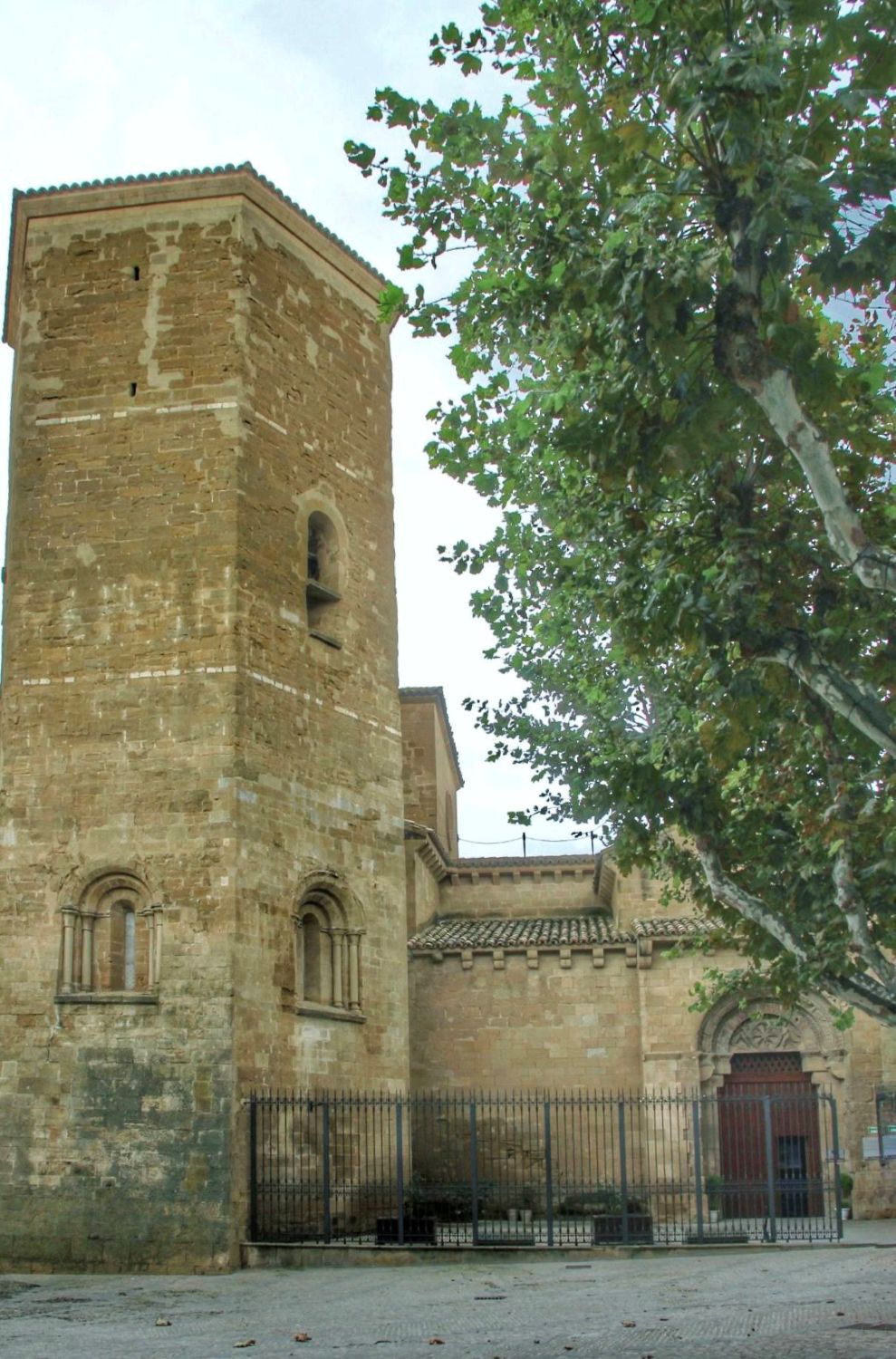
The Monasterio of San Pedro el Viejo or Monastery of Saint Peter, the old, formerly known as the Old Church of San Pedro el Viejo, is a 12C Romanesque monument located in the Plaza de San Pedro in the old town section. The church has three naves ending in a sanctuary with three staggered apses with a semicircular floor plan. All the former and transverse arches are semicircular and rest on cruciform pillars. It has a flat transept and a dome over the crossing.
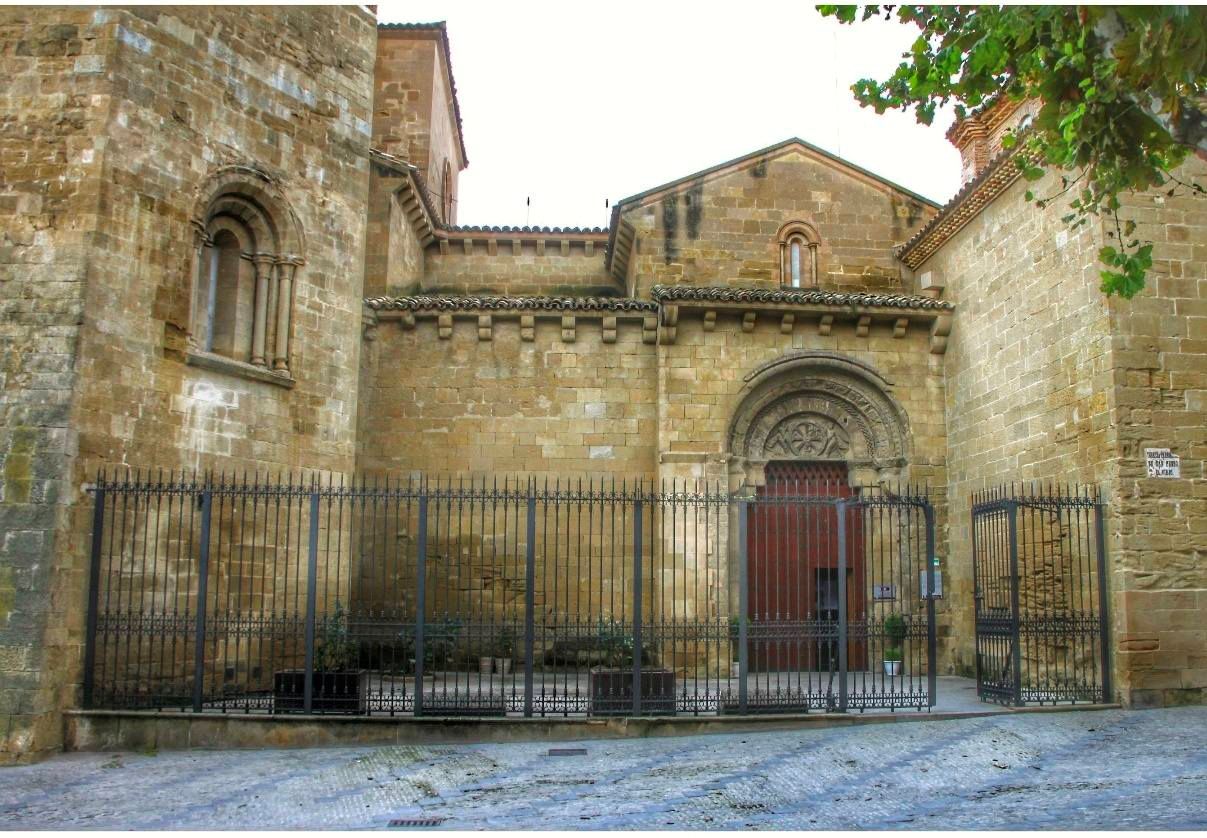
It is said to be built in the first half of the 12C in the Romanesque style. The dome was built around 1240, already in the Gothic period. At the foot of the central nave, on the north wall, there are Gothic murals dating from the 13C with the themes of David and his fight with Goliath and Moses and the burning bush. The main altarpiece is made of polychrome wood and presided over by the patron saint of the temple, Saint Peter, wearing the triple papal tiara. It dates from 1602. At the foot of the central nave is the choir stalls, dating from 1506. It is protected by a Baroque grille. The side chapels display interesting works of art: Altarpiece of the Virgin of Hope (16C). Renaissance style; Altarpiece of Saints Justus and the Shepherd (17C). Baroque style; and Altarpiece of the Annunciation (15-16C). Gothic style.
The cloister was built in the 12C, within the late Romanesque style; It has a moderately irregular rectangular floor plan, with semicircular arches topped by 38 capitals, supported by paired shafts. In the 19C, the cloister was in ruins, which led to its reconstruction. In the final phase of the work, between 1890 and 1893, the reconstruction of the cloister was carried out following the historicist criteria in force at that time, which sought to return the complex to the appearance it was supposed to have had. In the east gallery are the following chapels: Chapel of San Bartolomé, Romanesque with a barrel vault, it was the chapter house of the monastery. It is currently the pantheon of the monarchs of the Kingdom of Aragon: Alfonso I the Battler. Ramiro II the Monk, in a Roman sarcophagus from the 2C. Chapel of San Joaquín and Santa Ana (13C). I have read it is currently closed. Chapel of Saint Benedict (13C) and Chapel of Saint Agnes.
A bit of history of the monastery tell ust that archaeological evidence at this site suggests the existence of a Roman temple or necropolis. A Visigothic church was later built there, where, after the Muslim conquest of the city in 719, the Mozarabic population could practice Christian worship under the patronage of Saint Peter. This church is mentioned as such in the papal bull of Paschal II of May 25, 1107. When Huesca was reconquered in 1096, the Aragonese monarch Peter I gave the old church of San Pedro to the then prosperous Benedictine monastery of Saint-Pons-de-Thomières located in Languedoc,(France) which in 1117 began the construction of the temple, cloister and remaining monastic dependencies. The community was completely secularized by order of Fernando II of Aragon, going from being dependent on the French abbey of Thomières,
The Official Monasterio de San Pedro el Viejo : https://www.sanpedroelviejo.com/san-pedro-el-viejo.php
The Huesca tourist office on the monastery church : https://www.huescaturismo.com/en/monumental-detalle/8/the-church-and-cloister-of-san-pedro-el-viejo/
The Aragon region tourist office on the Monastery San Pedro el Viejo : https://www.turismodearagon.com/ficha/iglesia-y-claustro-del-monasterio-de-san-pedro-el-viejo-huesca/
I took a peek of the Catedral Santa Maria in the Gothic style, built in the 13C and completed in the 16C. It stands on a possible Roman temple and on the old mosque, of which only a horseshoe arch remains in the cloister area. During the 17C, the cathedral continued to be renovated, replacing medieval altarpieces, chapels and tombs with others in the Gothic and Baroque styles. In 1936, during the Spanish Civil War, the Republican siege of the city, the spire that raised the tower by a third more and gave it a more Gothic appearance was destroyed. It is the seat of the bishopric of Huesca and the Diocesan Museum of Huesca.
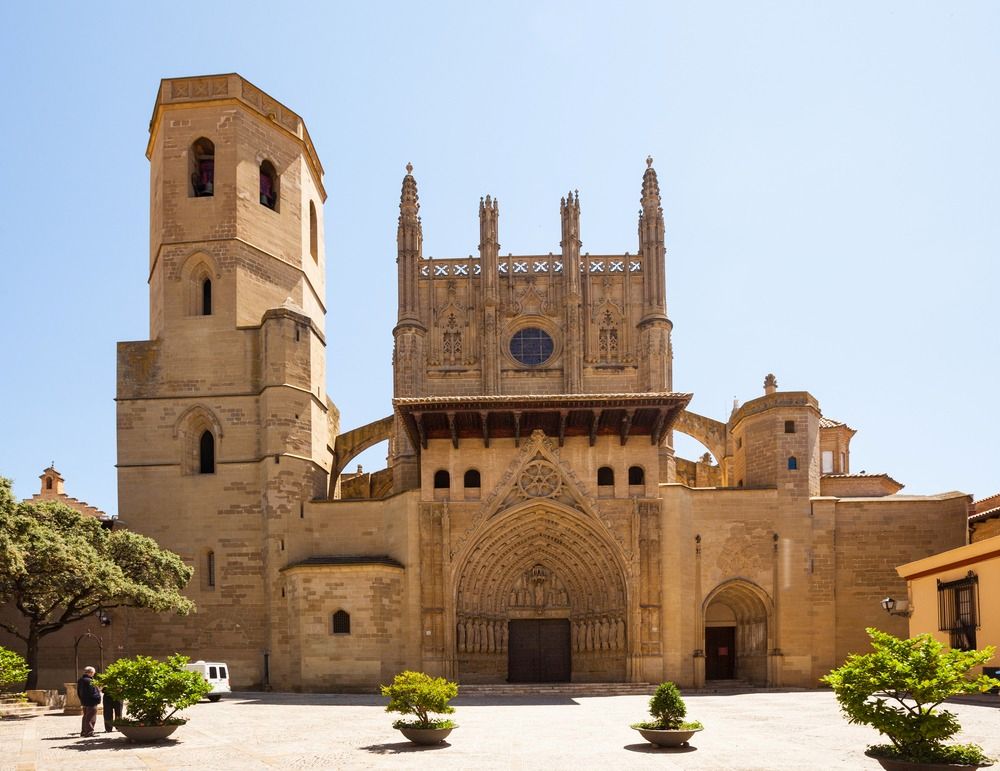
A bit on the interior as I was just passing by it has it very open with side aisles, lower than the central nave, house 14 chapels, including the Rosario Chapel, which features a Gothic altarpiece that provides access to the old sacristy, and from there to the cathedral archives, where incunabula dating from the 11C to the 16C are preserved. One of the most valuable pieces is the high altar, which contains a beautiful Renaissance altarpiece (1520 and 1534), carved in alabaster and depicting the Passion of Christ. Next to the cathedral is the Diocesan Museum, housed in the former cloister and the Episcopal Palace. It includes goldsmith rooms, located in the old chapter house, at the foot of the temple, and rooms dedicated to medieval, Renaissance and Baroque art, accessible from the crossing. Attached to the cathedral is the Diocesan Museum, which houses various collections of sacred art from both the cathedral itself and various parishes and museums in the Diocese of Huesca.
The Aragon region tourist office on the Catedral Santa Maria : https://www.turismodearagon.com/ficha/catedral-de-santa-maria-huesca/
The Huesca tourist office on the cathedral museum : https://www.huescaturismo.com/en/monumental-detalle/7/the-diocesan-cathedral-museum/
As a side trip going on N260 road past Sabiñánigo on our way to Jaca, and France, saw former Monasterio de la Virgen del Carmen now a Hotel & Spa 5* which fitting to put in this post, This was a complete renovation of the ancient monastery dating back to the 17C. Built by the Discalced Carmelite Order, the monastery was built on the site of an old hermitage dedicated to the Holy Spirit. The former Carmen Church, located just above the hermitage, is a notable example of Baroque architecture of the period, with its Latin cross plan and barrel vaults. The Mendizábal confiscation of church property in 1835-1836 forced the monks to abandon the monastery, which passed through the hands of several owners over the years. In 1910, Dr. Isaac Noguera, a renowned Barcelona surgeon and native of Sobrarbe, acquired the building and converted it into a sanatorium for tuberculosis patients. Boltaña‘s clean climate and fresh air were ideal for the treatment of this type of respiratory disease. After 70 years of service as a sanatorium, the building was converted into a hostel for tourists and youth camps. In 2005, the Boltaña Monastery was reborn thanks to a meticulous restoration that respected its original 17C architecture. The monks’ former cells and communal spaces have been transformed into elegant rooms and wellness areas, combining the charm of the past with modern comforts. Strolling through its cloisters and gardens, visitors can imagine the life of the Discalced Carmelites who once inhabited this peaceful enclave. The church, with its impressive 600 m² structure, and the former cloister with its central courtyard are silent witnesses to centuries of history. I did not stayed here but passed by it quite nice for a picture, It is located at Calle Latorrecilla, 2,Boltaña, province of Huesca, 95 km from Huesca,
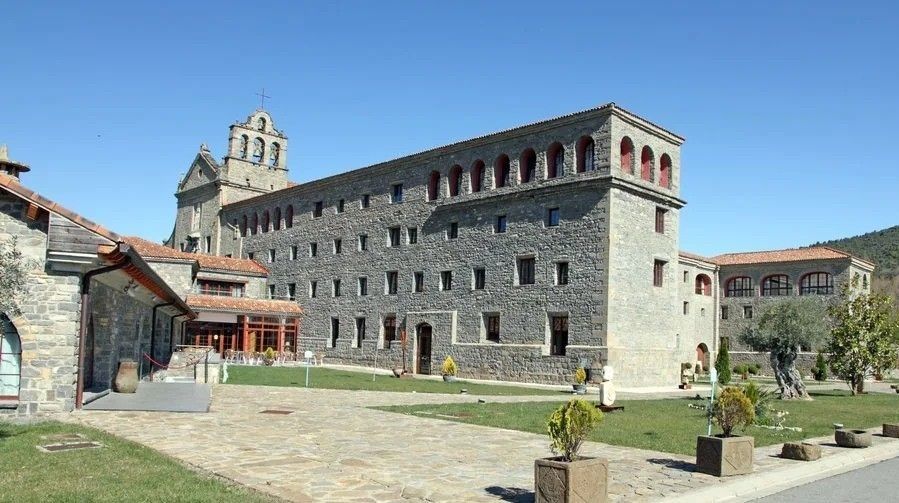
The official Hotel Monasterio de Boltaña hotel :https://hotelmonasteriodeboltana.com/en/
The town of Boltaña on its heritage ,see former monastery today hotel : https://www.xn--boltaa-0wa.es/patrimonio
There you go folks, a wonderful, terrific, glad had stop by to architecturally and historically stunning Huesca of my dear Spain, A good spot to enjoy the gorgeous Pyrénées and winter sports, Again, hope you enjoy the post on curiosities of Huesca !!! as I.
And remember, happy travels, good health,and many cheers to all !!!


On my bucket list
LikeLiked by 1 person
Another wonderful area of my dear Spain. Hope you can make it there. Cheers
LikeLiked by 1 person
La famosa Huesca, de la serie El Ministerio del Tiempo!
LikeLiked by 1 person
Ya vas de lejos jeje asi es. Gracias por comentar. Saludos
LikeLiked by 1 person