
And I was back to the venerable Chartres! Many years long ago we used to come here a lot from our home in Versailles; then we stop. Several years went by and I decided to make it a run again as a memorable trip without my dear late wife Martine. I am glad to found me pictures in my cd rom vault that should be in my blog for you and me, There is so much to see here indeed. Therefore, here is my take on the Church Saint Pierre of Chartres !!! Hope you enjoy the post as I.
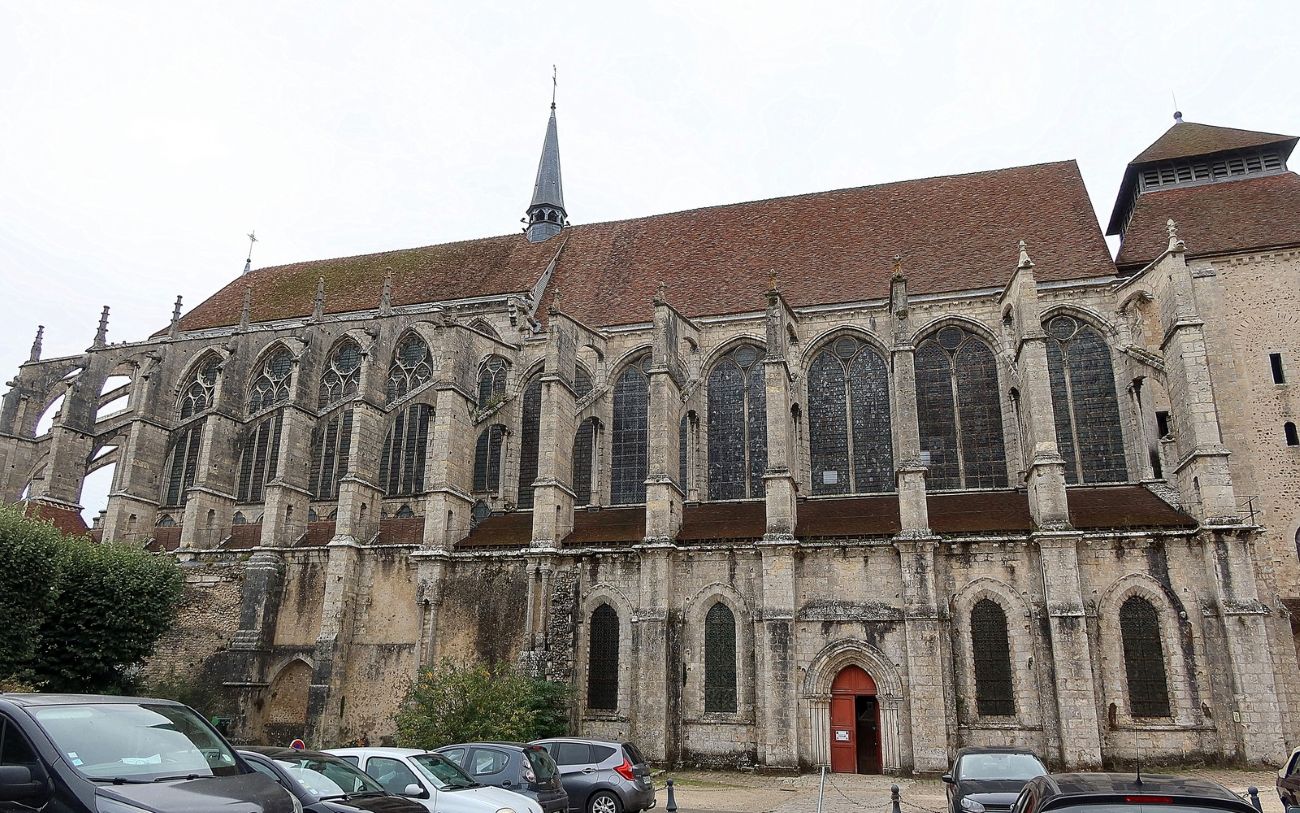
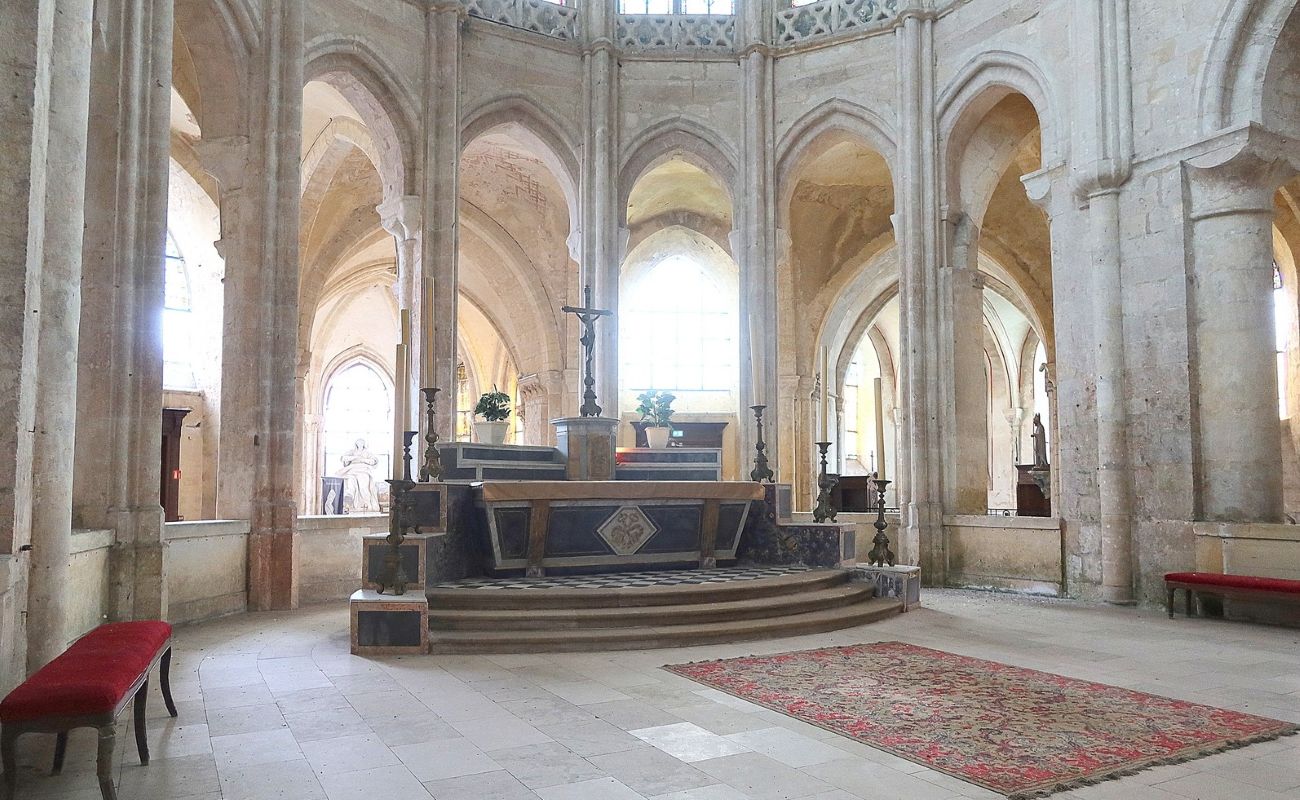
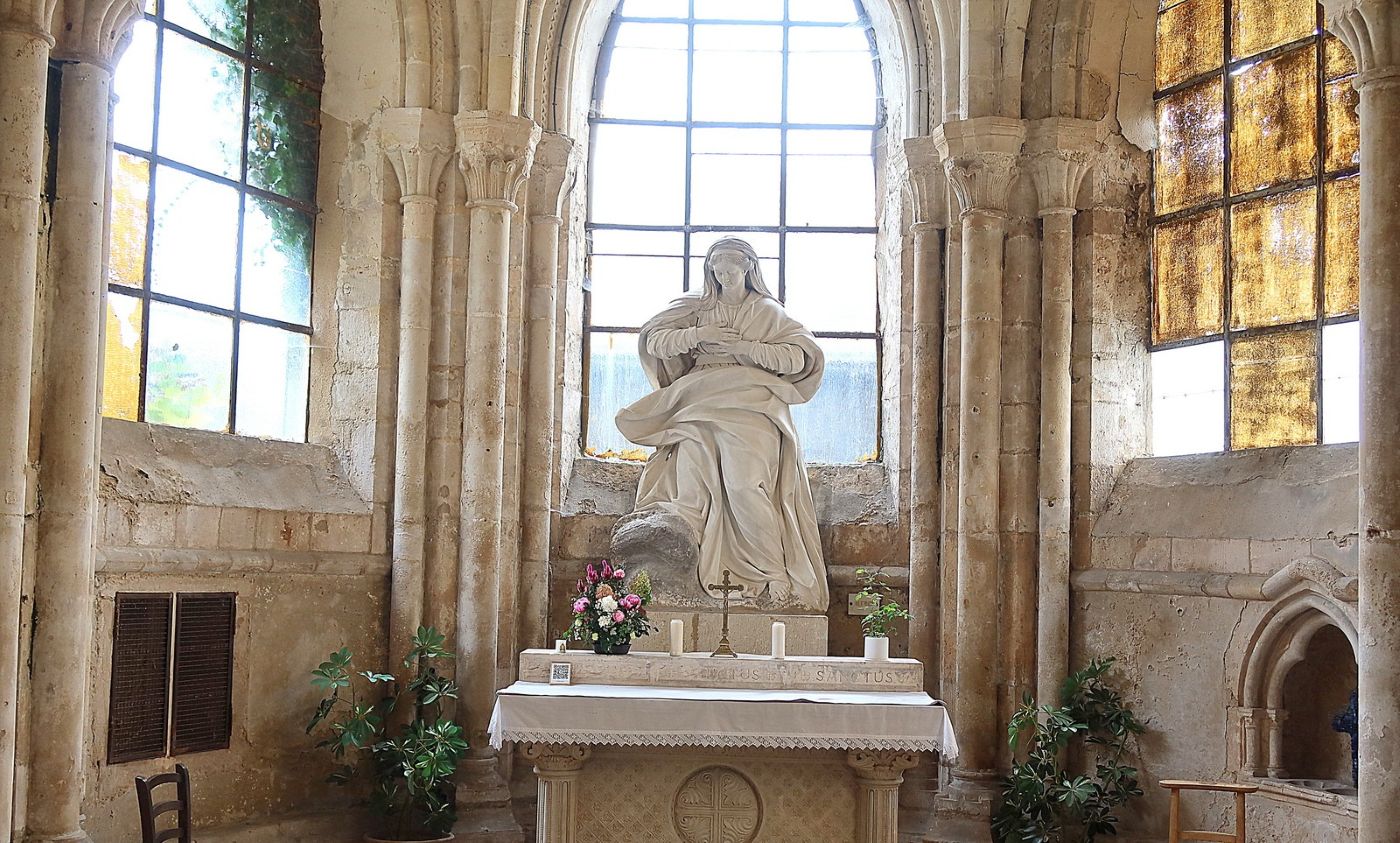
The Church Saint-Pierre before the French revolution was the church of the Saint-Père-en-Vallée abbey, whose remains date back to the 7C. The church became a parish church in 1803. When the decoration of the axial chapel, the Chapelle Notre Dame, was renewed in the second half of the 19C, it included two stained-glass windows on either side of the central window and the twelve precious enameled plaques of the apostles, commissioned in 1545 by Francis I for the Chapel of Saint-Saturnin at the Château de Fontainebleau (see posts) and executed in 1547 in Limoges by Léonard Limosin, enameller to the king, based on colored cartoons by Michel Rochetel. These plaques were given by Henry II to Diane de Poitiers for the chapel of the Château d’Anet,(see post) where they remained until the French revolution. They had been in the axial chapel of Saint-Pierre since 1802. These works are now part of the permanent collection of the Musée des Beaux-Arts de Chartres. The axial chapel of the church features a statue of the Virgin Mary created by Charles Antoine Bridan in the 18C. The church regularly hosts concerts during the Organ Festival.
The Church Saint-Pierre has forty-six stained-glass windows, with paintings: Lamentation, oil on wood from the French School after Annibale Carracci, probably via the engraving by Agostino Carracci (circa 1597), borderline 16-17C; The Adoration of the Shepherds, anonymous, oil on canvas from the first half of the 17C, located in the Chapelle Sainte-Anne; Nativity, oil on canvas by Jean Mosnier, from the decoration of the former episcopal palace of Chartres; The Baptism of Christ, anonymous from the 17C, Chapelle Saint-Jean; and The Wedding at Cana, oil on canvas by Coypel, 17C, restored in 2010, from the refectory of the former Saint-Père-en-Vallée Abbey, located against the bell tower wall, Five elements from the rood screen of the former Benedictine Abbey of Saint-Père-en-Vallée depicting scenes from the lives of Saint Peter and Saint Paul. Four other scenes are in the Louvre Museum in the Renaissance sculpture rooms. A 17C commemorative plaque in engraved stone mentions that the church was a burial place for bishops in 955 (Ragenfroy, Bishop of Chartres), 1028 (Fulbert, also Bishop of Chartres) and 1244 (Clement of Vitré, Bishop of Dol). The organ, still used today for many concerts but also for worship, dates from the 16C.
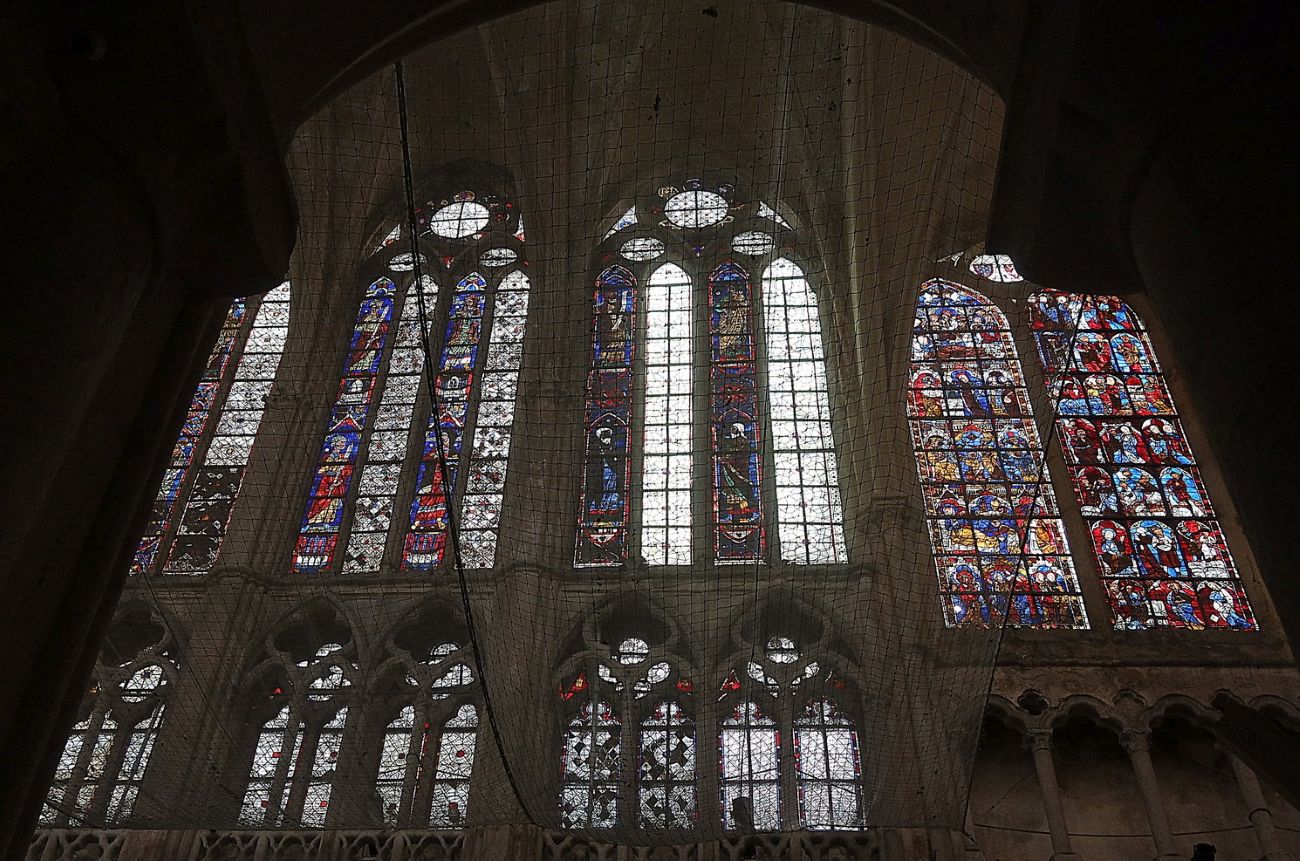
A bit of history I like tell us that it was destroyed by the Normans in 858 and again in 911, the abbey was completely rebuilt around 930 by the Bishop of Chartres, Aganon, who was buried there. The Abbey of Saint-Père(Pierre/Peter), founded by Queen Bathilde, wife of Clovis II, successor to Dagobert, was enclosed by walls built between 1033 and 1069; in the 12C, it was included within the city walls. The abbey church was equipped in the 10C or 11C with a bell tower-porch that could serve as a refuge in the event of a siege and which withstood the fires of 1077 and 1134. The pre-Romanesque church, contemporary with this bell tower, was damaged by the fire of 1077. It was replaced by the current church, built in several stages towards the end of the 12C and beginning of the 13C with the lower parts of the choir (1100-1170), nave (1200-1250), upper parts of the choir (after 1250). The ensemble constitutes a remarkable masterpiece of Gothic art. The church possesses a precious set of stained-glass windows, dating from the 13C. It has collected 16C glasswork from other churches destroyed during the French revolution, which present an extremely rich color. The convent buildings were, for a time, transformed into cavalry barracks (Rapp barracks) and are currently annexed to the Lycée Marceau high school 18C buildings such as dormitory, chapter house, and archives. In 1803, at the time of the restoration of worship in France, a parish was established. The church then took the name of Saint-Pierre. Next to the monastery of Saint-Père-en-Vallée, on the site of the current square, stood the church of Saint-Hilaire for the use of the local residents. This medieval church was demolished in 1804 under the pretext of facilitating access to the Church Saint-Pierre.
The City of Chartres on the Church Saint Pierre : https://www.chartres.fr/patrimoine-historique/eglise-saint-pierre
The official Notre Dame Cathedral on the Church Saint Pierre : https://www.cathedrale-chartres.org/paroisse/clochers/paroisse-saint-pierre/
The Chartres tourist office on the Church Saint Pierre : https://www.chartres-tourisme.com/explorez/patrimoine-religieux/eglise-saint-pierre
There you go folks, a wonderful re visit to a great town of my belle France, Chartres! There is more to take you several days here me think, we will be back ,eventually, For now enjoy this wonderful church as we did. Again, hope you enjoy this post on the Church Saint Pierre of Chartres !!! as I.
And remember, happy travels, good health , and many cheers to all !!!


