
We have driven and walked in my eternal Paris, and would like to have an imprint in my blog on the wonderful family times we had there, There is so much to see , doing my best, and glad found me these pictures in my cd rom vault ,which now transposing in my blog for you and me, This was my former worked city, so glad to post more memorable spots on it, I thank you for your readership over the years and to bear with my rants! After all, Paris is to rant, shout and yelled about, me think. Therefore, here is my take on curiosities of Paris, part LXXIX !!! Hope you enjoy the post as I.
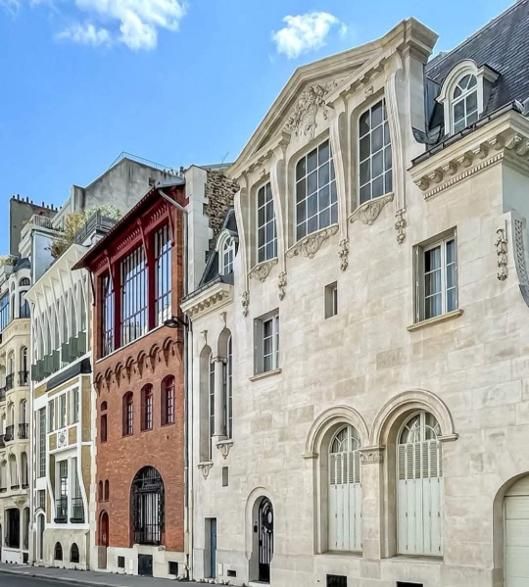
The Rue Cassini is located in the Montparnasse quartier/neighborhood of the 14éme district/arrondissement of Paris. It is 200 meters long, and begins at 34 Rue du Faubourg-Saint-Jacques and ends at 63 Avenue Denfert-Rochereau. It is accessible via the Saint-Jacques station on metro line 6 and the Port-Royal station on RER line B. The first names of this street, located next to the Observatory, were “rue Maillet”, “rue du Maillet”, “rue des Deux-Maillets”, “rue des Charbonniers” in 1620, then “rue des Deux-Anges” until 1790, when it took the name Rue Cassini, The street owes its name to a family of astronomers: Jean-Dominique Cassini, of Italian origin, who directed the Paris Observatory from 1671. His son, Jacques Cassini, a member of the Academy of Sciences from 1712, abandoned science in 1740. His grandson, César-François Cassini, took over the direction of the Observatory after him and was tasked with creating the map of France. Notable buildings here are at No. 1 (and No. 34, rue du Faubourg-Saint-Jacques): apartment building (1900); Honoré de Balzac’s main address from March 1828 to September 1837. He lived there under the name Monsieur Surville, the name of his brother-in-law and his sister Laure.(to hide from creditors) ; It was there that he transformed into a renowned writer and where he began, in particular, La Comédie Humaine. No. 2: Alain-Fournier lived for four years on the fourth floor. It was there, on March 26, 1910, that Monsieur and Madame Fournier, schoolteachers in Paris, moved in with their son Henri, who would soon become known under the pseudonym Alain-Fournier by publishing his first and only novel, *Le Grand Meaulnes*, which he wrote between 1910 and 1913. No. 3: building occupied by the Maison des sœurs de Notre-Dame des femmes enaccouchements (House of the Sisters of Our Lady of Women in Childbirth), an institution founded in 1856 through which 40 nuns assisted poor women during their maternity leave. In 1903, the architect Claude François Saulnier bought the plot and had a building constructed which would remain his property and also his place of residence, at least until 1927. No. 4: carriage entrance equipped with wheel guards curiously preceded by a small platform of four steps and therefore not suitable for vehicles. This gateway leads to a paved courtyard around which three buildings are arranged (18C): a main building perpendicular to the street (to the left of the gateway) and two lower wings, one at the back of the courtyard, the other extending at a right angle to the street (to the right of the gateway). The main building and its two projecting corner pavilions have three stories above the ground floor and attics lit by dormer windows. Nos 3bis, 5, and 7 Rue Cassini, (see pic) these buildings were designed by the architectural duo Louis Süe and Paul Huillard between 1903 and 1906. The house at No. 7 Hôtel Czernichowski (on the right, in light-colored stone) was built in 1903 for the painter Pol de Czernichowski; it is the most classical in appearance, featuring pilasters and a pediment, while nonetheless presenting an asymmetrical façade. The house at No. 5 (in the center, constructed of red brick with a metal framework) is notable for its brick structure and large red-iron glass roof, inspired by the industrial architecture and workshops of that era. The house at No. 3bis (on the left): Built for the painter Lucien Simon, it completes this iconic complex, which bears witness to the artistic golden age of Montparnasse and the proximity of the Paris Observatory. During archaeological excavations carried out in 1903, graves, skeletons, and a fragment of a stele were discovered. The latter depicts a blacksmith. It is kept at the Carnavalet Museum. No. 8: Robert-Jean Longuet, lawyer and journalist, great-grandson of Karl Marx, companion of General de De Gaulle lived here during the Second World War until his death in 1987. Nos. 12-14: This building, constructed between 1930 and 1931, is representative of 1930s architecture, with its rooftop pergola, large bay windows, rounded corner overlooking the street, and especially its stairwell, identifiable from the outside by its small, stepped windows. The chamfered bow windows of the artists’ studios (on two floors) also characterize the architecture and mark the era of construction. The building features a large frieze on the ground floor, visible from the outside. Several prominent figures lived at this address, including Jean Moulin, a few months before his arrest, in the studio on the second and third floors; the English painter Stanley Hayter had his studio here. Nos. 14 and 16: Between these numbers is the passage of the Avenue de l’Observatoire and the Paris Meridian. The avenue ends to the south, a few meters from Rue Cassini, opposite the gate of the metal fence preceding the Paris Observatory (17C), whose central axis is precisely positioned on the meridian. On the opposite side, the avenue follows the line of buildings northward, through and beyond which the silhouette of the Sacré-Cœur Basilica appears in the distance. Nos. 15 and 17 (and 42, Avenue de l’Observatoire): the wall bordering the sidewalk along the entire length of the last section of the street conceals the former Fountain Keeper’s House (1619) and inspection chamber no. 27 of the Medici Aqueduct.
The Paris tourist office on the 14éme arrondissement de Paris : https://parisjetaime.com/eng/article/explore-paris-s-14th-arrondissement-a836
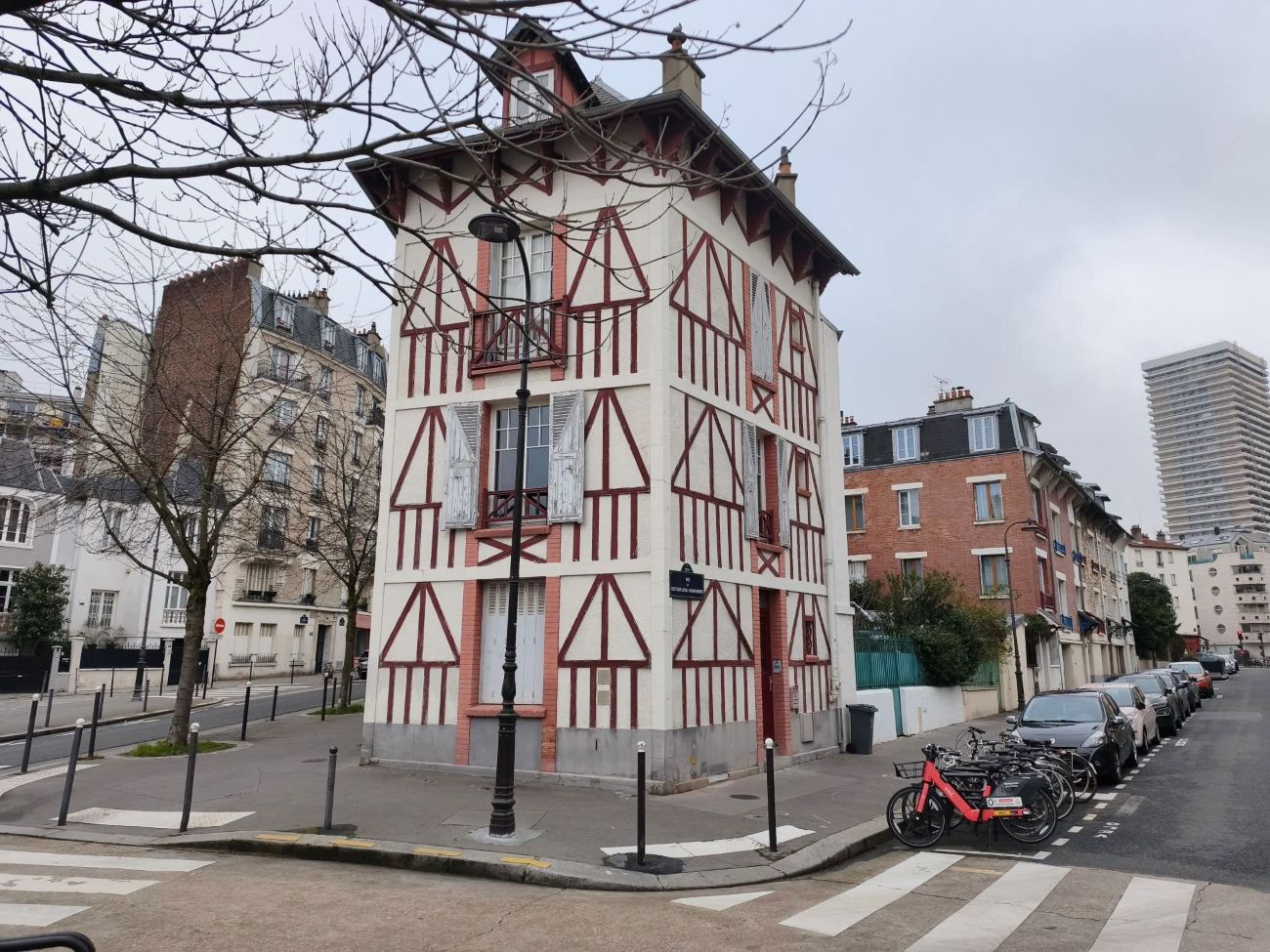
The Place Jean-Delay is located in the Maison-Blanche quartier/neighborhood of the 13éme district/arrondissement of Paris. It is served by metro lines 7 and 14 at the Maison Blanche station, and T3a tramway at the Poterne des Peupliers stop. It is named after the French psychiatrist, neurologist, and writer Jean Delay. The square was created and given its current name on July 25, 2007, on the land bordered by the railway tracks. Since the end of 2011, the square has featured a Wallace fountain. The corner you have the Rue du Docteur-Lucas-Championnière ; like many other streets named after doctors in this area near the former Red Cross Hospital, now the Peupliers Private Hospital, it takes its name from the French physician and surgeon Just Lucas-Championnière, a pioneer of antisepsis in France. This street, which began to be opened in 1926, extending for approximately 50 meters from Rue du Docteur-Leray, received its current name on April 13, 1927, and was fully completed in 1930. Notable buildings :No. 1 building facing the square,(see pic),
The Paris tourist office on the 13éme arrondissement de Paris : https://parisjetaime.com/eng/article/a-walk-through-the%20villages-of-the-13th-arrondissement-a775
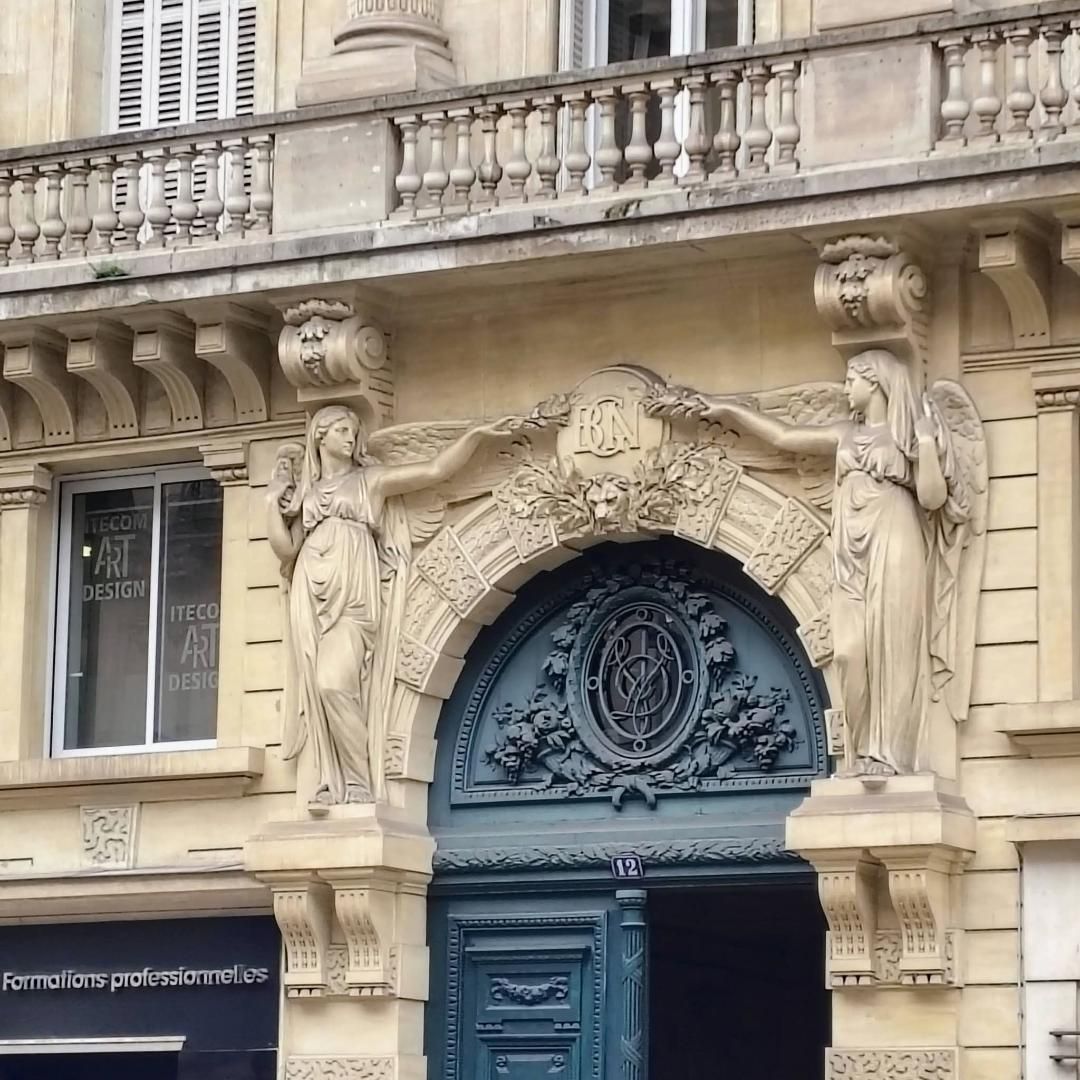
The Rue du Quatre-Septembre is in the 2éme arrondissement of Paris. It is 520 meters long, and begins at Rue des Filles-Saint-Thomas and Rue Vivienne and ends at Place de l’Opéra. The street is served by metro line 3 at the Quatre-Septembre station. This thoroughfare was named in honor of the date of the proclamation of the Third Republic on September 4, 1870. The construction work on this street, initially called “Rue Réaumur Prolongée” was carried out in 1868. By decree of August 18, 1869, the new street was named “Rue du Dix-Décembre” , thus celebrating December 10, 1848, the day of the triumphant election of Prince Louis-Napoléon Bonaparte to the presidency of the French Republic. After the announcement of the Emperor’s captivity and the proclamation of the French Republic, it was renamed “Rue du Quatre-Septembre” by order of the mayor of Paris, Étienne Arago, on September 12, 1870. It was then called “Rue du Dix-Huit-Mars” to celebrate the beginning of the Paris Commune, and then, after its fall, the ” rue sans nom” or a street without a name, before later receiving its current name, Rue du Quatre-Septembre. Notable buildings here are at No. 1: A Bouillon Duval restaurant stood here in the 19C, on the corner with Rue des Filles-Saint-Thomas (No. 7). No. 12: Façade adorned with caryatids (see pic). Nos. 16-18: Le Centorial, former headquarters of Crédit Lyonnais, built between 1875 and 1913; the façade facing Rue du Quatre-Septembre dates from 1912. No. 24: Sheathed caryatids above the entrance. No. 25: Façade adorned with bust-shaped caryatids.
The Paris tourist office on Paris Centre (arrond 1-4) of Paris : https://parisjetaime.com/eng/article/explore-the-centre-of-paris-a846
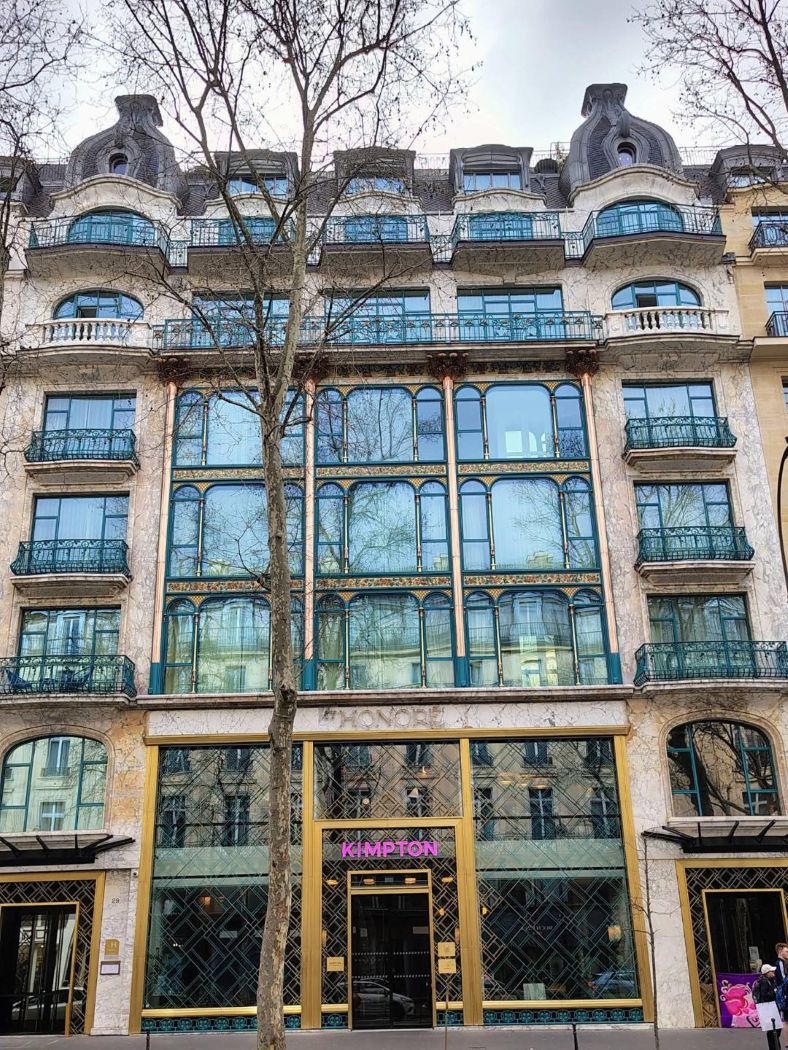
The Boulevard des Capucines forms the boundary between the 2éme and 9éme arrondissements of Paris. It is part of the chain of Grands Boulevards,(see posts) which, from west to east, consists of the Boulevards de la Madeleine, des Capucines, des Italiens, Montmartre, Poissonnière, Bonne-Nouvelle, Saint-Denis, Saint-Martin, du Temple, des Filles-du-Calvaire, and Beaumarchais. The boulevard owes its current name to the Capuchin convent, whose gardens once ran along its southern side. It is served by metro lines 3, 7, and 8 at the Opéra station, as well as by RER line A (Gare d’Auber) and lines 8, 12 , and 14 at the Madeleine station. The boulevard was created after the obsolete Louis XIII city wall was demolished in 1670, extending in front of bastion 5 or the “Saint-Fiacre bastion” of the rampart, through market gardens. This thoroughfare was officially opened by letters patent in July 1676. Rue Louis-le-Grand was laid out in 1703, and the gardens of the Capuchin convent, relocated from Rue Saint-Honoré to the north of Rue Neuve des Petits-Champs (now Rue des Capucines), expanded into the space between the boulevard and the rampart, and onto the grounds of the former fortification, roughly corresponding to the current location of Rue Daunou. Until the French revolution, it was called “Rue Neuve-des-Capucines” before being renamed boulevard des Capucines. During the French revolution, this was part of Boulevard Cerutti. At the beginning of the nazis occupation, in August 1940, female signal auxiliaries marched on Boulevard des Capucines. Notable buildings here are at No 1, the Café Napolitain, famous for the writers, journalists, and actors who frequented it: Catulle Mendès, Jean Moréas, Armand Silvestre, Laurent Tailhade… No 2: site of the former Hôtel de Montmorency, which became the Théâtre du Vaudeville in 1869, then the Paramount Opéra cinema in 1927. Its main hall corresponds to the foundations of the grand salon of the 18C hôtel, whose rotunda façade has been preserved. No. 3: site of the first Parisian Starbucks, formerly a London store, then a travel agency, and finally an American café-restaurant since 2004. It was the first of the chain to open within the city limits of Paris. No. 5: site of the photographic studio of Pierre-Louis Pierson, later partnered with the Mayer brothers, who was the official photographer of the Countess of Castiglione. No. 12: the Grand-Hôtel, built on a former vegetable garden. No. 14: the Hôtel Scribe and site of the Grand Café, where the first public screenings of Auguste and Louis Lumière’s cinematograph took place in the Indian Room in the basement on December 28, 1895. Experiments with X-rays, discovered by Dr. Wilhelm Röntgen, were also conducted there. From No. 16 to No. 22: site of the headquarters of L’Événement, a newspaper founded by Victor Hugo, his two sons, and Auguste Vacquerie. It was published from 1848 to 1851. No. 17: former Charles Jourdan shoe shop. No. 24: from 1905 to 1956, residence of Mistinguett, a French revue leader, singer and actress. No. 25: former site of the Cognacq-Jay Museum, established in 1931. Nos. 27-29: (see pic) former luxury Samaritaine department store (annex of La Samaritaine), including its facades and roofs, the interior staircase with its railing, and the elevator (all designed by the Art Nouveau master, Frantz Jourdain). Since 2021, a luxury hotel belonging to the American chain Kimpton, curiously named the Kimpton Saint-Honoré, has been located at this address. No. 28: site in 1889 of the “roller coaster,” replaced in 1893 by the Olympia music hall, a famous music hall founded in 1888. No. 29: formerly the home of Pélagie Sepiaha, née Countess Potocka, who was painted several times by Élisabeth Vigée Le Brun, and where the Polish princess, exiled in Paris, died on March 12, 1846. No. 35 The Bisson brothers had their shop there under the name “General Photographic Depot.” In April 1874, a group of young painters, including Renoir, Pissarro, Claude Monet, and Sisley, held the first exhibition of their canvases there. Claude Monet’s painting, Impression, Sunrise, was to give these exhibitors the name Impressionists. Nos 37 to 43 (odd numbers) and Nos 22 and 24 rue des Capucines (formerly rue Neuve-des-Capucines): the current corner building (mid-19C) partially covers the site of a former private mansion known by various names. The “Hôtel Legendre Armini,” built in 1726; the “Hôtel Bertin,” acquired by the tax farmer Reuilly, who had it restored, embellished, and given it the following name; the “Hôtel de la Colonnade,” inhabited by General Napoleon Bonaparte from October 5, 1795, until his marriage to Josephine de Beauharnais in 1796; the “Hôtel Berthier,” also known as the “Hôtel de Wagram” during the First Empire, names derived from Marshal Berthier, Prince of Wagram, who acquired it in 1807. Emperor Francis I of Austria stayed there in 1814-1815. In 1820, the hôtel was sold to the State. The “Foreign Affairs building” from 1816 to 1853. The Ministry of Foreign Affairs, to which the Hôtel de Gallifet, the property of an émigré, had been assigned in 1795, thus vacated the latter location during the Second Restoration with a view to its restitution to the heirs of the Marquis de Gallifet. It was upon leaving the ministry that the writer Stendhal, French consul for all the Papal States from 1831 to 1842, suffered the stroke that would claim his life a few hours later, on March 22, 1842. At this point on the boulevard, on February 23, 1848, a battalion of the 14th Line Infantry Regiment blocked the road to protect the head of government, François Guizot, who was then residing at the ministry. The crowd charged and called Paris to arms. This event triggered the Revolution of 1848, which ended the reign of Louis-Philippe the following day and ushered in the Second Republic. Number 39: a Bouillon Duval restaurant was located there in the second half of the 19th century. Between 1866 and 1867, Jules Talrich operated a wax museum at this address.
The Paris tourist office on Paris Centre (arrond 1-4) of Paris : https://parisjetaime.com/eng/article/explore-the-centre-of-paris-a846
The Paris tourist office on the 9éme arrondissement de Paris : https://parisjetaime.com/eng/article/explore-paris-s-9th-arrondissement-a828
There you go folks, a dandy city to explore and enjoy with the family, Memorable moments in my eternal Paris, driving and walking all over in my road warrior trails brings out sublime awesome spots with nice memorable family visits of yesteryear always remember and always looking forward to be back, eventually. Again hope you enjoy the post on curiosities of Paris , part LXXIX !!! as I.
And remember, happy travels, good health, and many cheers to all !!!


