
I like to have memories and nowdays even more. I remember Fontainebleau as it is in the Seine et Marne dept 77 that my dear late wife Martine, took me first to show me her department/region back in 1990. We have come here ever since,and it is one of my favorite cities in my belle France. I have written many posts on it before, so peruse my blog and see beauty before your eyes. These are new pictures found again in my cd rom vaults that should be in my blog for you and me, Therefore, here is my take on curiosities of Fontainebleau !!! Hope you enjoy the post as I
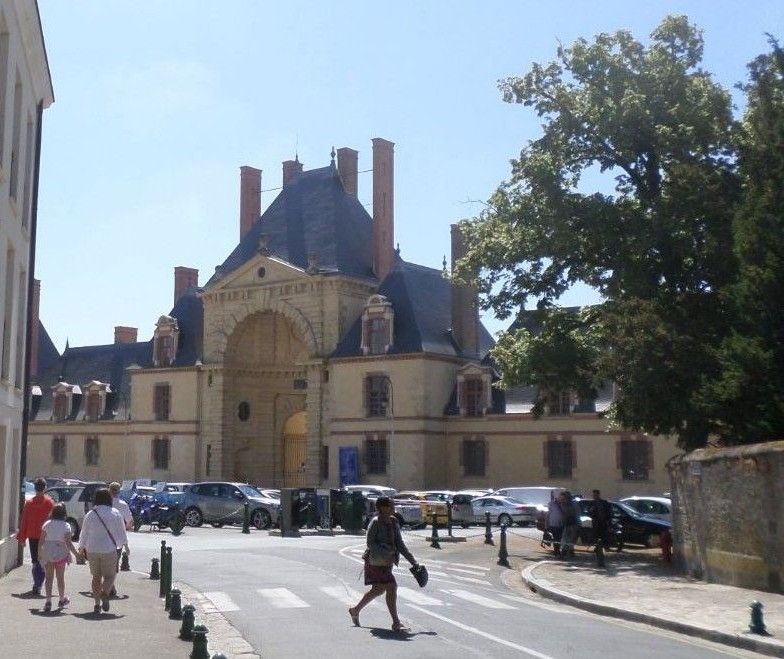
A unique spot at least by us is the Place d’Armes, which is in the neighborhood of Henri IV. The square is dominated by the Grand Portail, worthy of a royal entrance. The Oval Court of François Ier , built on the medieval site, was the heart of the Castle. Henry IV decided to precede it with a forecourt to house his kitchens, hence the name of the Cour des Offices or the Uffizi Court. But since it also provided space for the mounts and cars of its guests, he made it the main entrance to the castle. The ensemble was built between 1606 and 1609. This majestic entrance deserved the creation of a royal square, largely open to the city and surrounded by beautiful, orderly houses. The king’s death in 1610 halted work and the place envisaged was not really marked out but simply cleared. To the left of the Henri IV façade, a gate allows you to reach the Grand Parterre, the largest in Europe, the work of the gardener André Le Nôtre . On your right, continuing along rue de la Chancellerie, you will reach the city center.
The Place Napoléon-Bonaparte is bordered by Rue Denecourt and Rue de France, and opens onto Passage Ronsin. It is located opposite the Jardin de Diane of the Château de Fontainebleau. It was built under Napoleon III, who had to cede part of the Jardin de Diane to the city in order to widen it.The square was renamed Place Napoléon-Bonaparte on April 23, 1969. An underground car park was built in 1989. The carrousel occupies Place Napoléon Bonaparte, It dates from the 1900s The retro carrousel for children and adults. More than forty different themes await you: wooden horses of all sizes, tigers, pigs, a 1900s jalopy, a vintage motorcycle, and more.
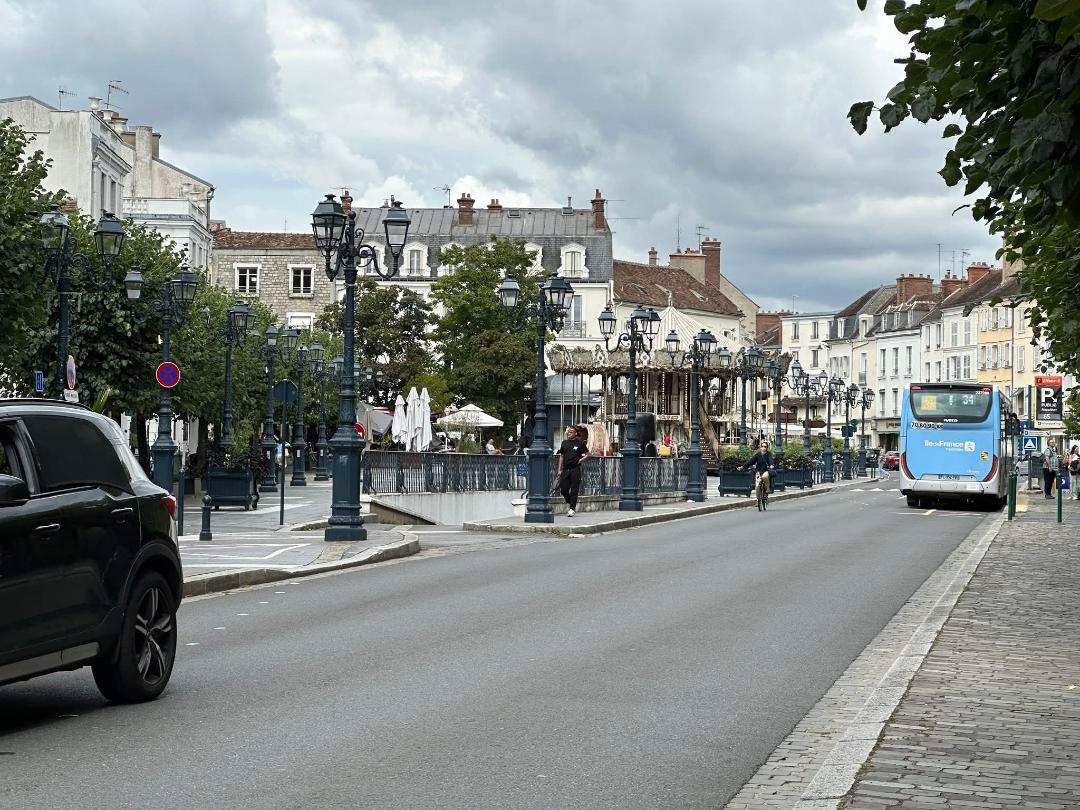
A bit of history I like tell us that a small urban space was first named Place au Charbon. The square formed then took the names Place de la Réunion, Place Napoléon-III. It was finally adopted, by the municipal decree dated April 25, 1881 Place Denecourt, The current name of Place Napoléon-Bonaparte is in honor of Napoleon I, an illustrious citizen of the city of Fontainebleau who stayed at the château on several occasions in which he abdicated. There was a kiosk here installed in 1884, then replaced by a new rectangular one. The foundation stone was laid in April 1914. It disappeared in 1947 after an accident in which a truck crashed into it at a bend. In 1949, the city decided to build a new, larger one. It then served as a shelter for tram users, information offices for tourists, a point of sale for the press, transport tickets and for local events. The monument to Rosa Bonheur, dating from 1900 was erected in the center of the square on May 19, 1901, You have by here the Hôtel de l’Aigle Noir at No. 27, The former Hôtel du Lion d’Or (1850), Hôtel Mercédès (1905), then du Palais (1925) at No 25, today an integral part of the Aigle Noir hotel,
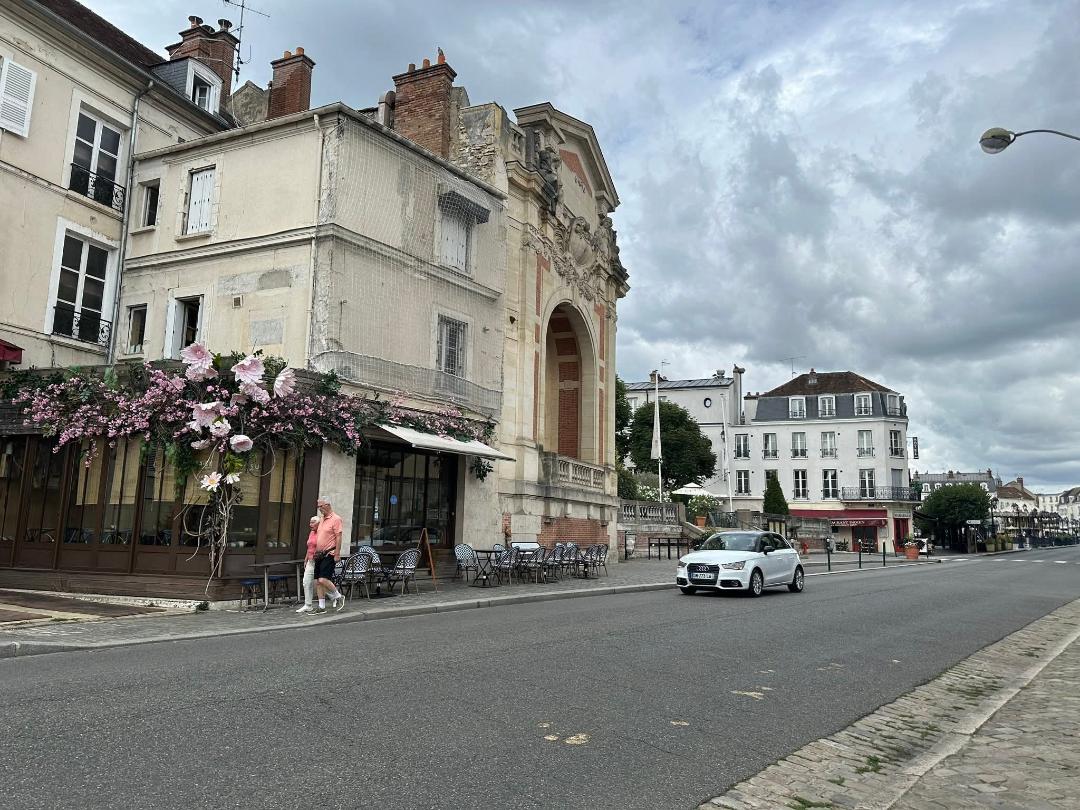
You have the wonderful Municipal Theater or Théatre Municipal (see post) located at 6, rue Dénecourt, corner of rue de Richelieu, The rue Dénecourt that continues to Rue Grande It was built from 1905 in a Louis XIII style combining brick and stone, the theater is inaugurated in 1912. Outside of Paris, it is one of the few Italian theaters and one of the most beautiful in the whole Île de France region. The Municipal theater has a 650-seat capacity Concert Hall and a Ballroom. Classical and imposing, strongly integrated in the urban landscape, the theater is a major pole of attraction and cultural and artistic identity within the city , Claude-François Denecourt is considered the founding father of green tourism in the forest. Today, several places are still marked by the imprint of this men: The Denecourt Tower in the north of the city, Rue Denecourt, the Rue du Théâtre, the plaque inscribed with his image at 27 Rue de France, the place of his death, and his tomb in the Fontainebleau cemetery, an impressive sandstone building. The Hôtel des Postes, in the long form of the former Hôtel des Postes et Télégraphes. It houses the city’s main post office. The building is located at the intersection of Rue Denecourt and rue de la Chancellerie. Construction work began on August 28, 1893 and finished on November 29, 1894.
The Priory of Notre-Dame de Franchard, or Hermitage of Franchard, is a chapel located in the Fontainebleau Forest. It belongs to the Trinitarian Order, following the Rule of Saint Augustine. This place has long attracted cenobites. The first chapel was dedicated to Saint Alexis of Rome, then to the Virgin Mary. The presence of hermits at Franchard is documented as early as the 11C. The chapel was rebuilt after 1676 by the Mathurins of Fontainebleau, who celebrated a public Mass there on Whit Tuesday, making Franchard a popular pilgrimage site at that time of year and, the rest of the time, an isolated and dangerous place.
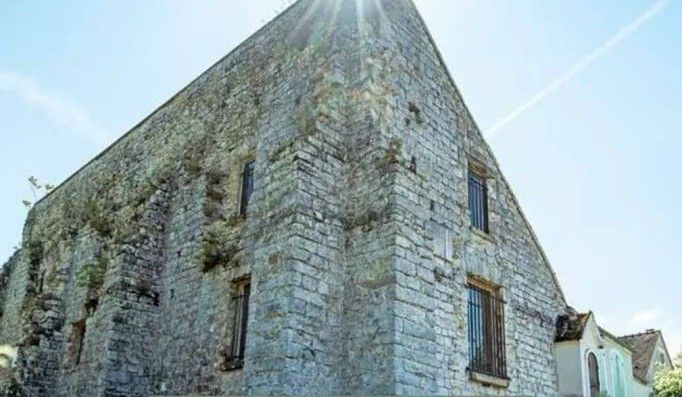
The first hermit was murdered around 1180, and the second also between 1180 and 1194. A third, named Guillaume (William), a canon regular of the church of Saint-Euverte in Orléans, settled there. He brought other monks, and soon the hermitage became a monastery. In 1197, King Philip Augustus demanded that two monks be maintained to pray for the king and confirmed the ownership of this hermitage to the Abbey of Saint-Euverte in Orléans. After Guillaume’s death, he was replaced by Brother Richard, and in 1209 the hermitage became a priory. The Hundred Years’ War saw the destruction of the monastery. According to legend, the monks hid their treasure in the forest. The priory was destroyed in 1354 and rebuilt in the 15C. In 1676, Louis XIV gave the ruins of the priory to the Mathurins of Fontainebleau. They were then called the Donkey Brothers. They could only use donkeys for their travels, which is why they were formerly called the Donkey Brothers. It was only after several murders, the last in 1712, that a decree of the Regency Council dated February 15, 1717, ordered the demolition of the chapel. Following this, the first forester’s house was built under Louis XV. An oratory was added to it in the 19C., Claude-François Denecourt was a veteran of the Napoleonic army who devoted most of his life to developing and promoting the riches of the Fontainebleau forest ,and serve as guide. escorted Duchess Hélène d’Orléans (Hélène Louise Élisabeth of Mecklenburg-Schwerin, wife of Ferdinand-Philippe of Orléans, royal prince and Duke of Orléans, eldest son of King Louis-Philippe, is a personality of the July Monarchy), and her two sons, Philippe d’Orléans, aged 9, and Robert d’Orléans, aged 7, to this site on May 14, 1847.
The Fontainebleau tourist office on the hermitage of Franchard : https://www.fontainebleau-tourisme.com/en/file/4887018/lermitage-de-franchard/
The Chapelle Notre Dame de Bon-Secours or Our Lady of Good Help, aka the Chapel of the Good Lady, pays homage to a legend according to which, in the 17C, a rider’s runaway horse stopped after he invoked the Virgin Mary. Due to local and religious tradition, its location is a place of pilgrimage. In 1690, an oratory was built. The image of the Virgin was placed on the altar, thus exposed for the veneration of the faithful; a depiction of the legend was painted on the pediment of the monument. The French revolution passed through Fontainebleau, and this oratory was destroyed in 1793. In 1821, Marie-Thérèse, Duchess of Angoulême, aka Madame Royale, she was the surviving daughter of Louis XVI and Marie Antoinette, during her first trip to Fontainebleau, knelt on the site and expressed her wish for the rebuilding of a new chapel. She was supported by king Louis XVIII (her uncle) and parishioners. A canvas depicting the story was painted by Merry-Joseph Blondel, a painter who also worked at the Galerie de Diane in the Château de Fontainebleau and the Louvre Palace. The chapel was consecrated on September 30, 1821, in the presence of civil and military authorities and parishioners. Since then, every first Sunday in October, the parish clergy have gone there in procession. In early summer 1864, Emperor Napoleon III ordered that major repairs be carried out immediately on the chapel. Furthermore, on the occasion of the Emperor’s feast day, Saint Napoleon, on August 15 of the same year, the building, along with other public buildings and the Boulevard de Melun (now Boulevard du Maréchal-Foch), was illuminated as part of an evening celebration in the forest. In 1865, the chapel was restored under Napoleon III. With the 1905 law separating Church and State, the association was dissolved and the chapel became State property. An association “of Our Lady of Good Help” was founded. In 1819, Pope Pius VII granted it plenary indulgences. The chapel is located at the end of Boulevard Maréchal-Foch (D 606 road), at the intersection with the Route de Notre-Dame-de-Bon-Secours, on the edge of the Fontainebleau forest, north of the city of Fontainebleau.
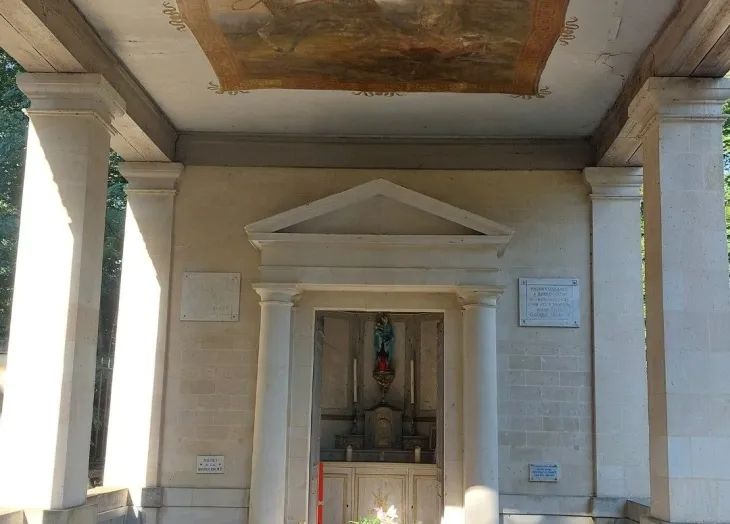
The Pole Catholic Missionary of Fountainebleau on the chapel : https://polefontainebleau.fr/patrimoine/chapelle-notre-dame-de-secours/
The Seine et Marne dept 77 tourist office on the Fontainebleau forest: https://www.tourisme-seine-et-marne.fr/en/explore-the-area/727483-fontainebleau-forest/
The City of Fontainebleau on its history/heritage : https://www.fontainebleau.fr/bouger-et-sortir/decouvrir-fontainebleau/fontainebleau-ville-imperiale-aux-portes-de-paris-520.html
The Fontainebleau tourist office on the Municipal Theater :https://www.fontainebleau-tourisme.com/en/file/734616/theatre-municipal/
The City of Fontainebleau on the Municipal Theater : https://www.fontainebleau.fr/bouger-et-sortir/decouvrir-fontainebleau/symbole-de-l-identite-culturelle-de-fontainebleau-464.html
The Fontainebleau tourist office on the Carrousel : https://www.fontainebleau-tourisme.com/en/file/726461/manege-les-chevaux-de-bois-1900/
In addition, some of the main streets in town are the rue Grande long of almost 3 km and the most the visitor will like to walk on. Others are the Place Solférino, Place Denecourt opening to the grill door of the garden or Jardin de Diane, the famous Place d’Armes , Place François Ier, place de l’Hôtel de Ville, place de l’Etape aux vins and the Place de la République. By the road ,which how I always go there from Versailles you take the A86 towards the A6 by exit/sortie 7, for Fontainebleau
. Rather than drive around for a parking spot, I have become used to park at the same parking each time and never a problem. Parking Château on Rue Ferrare just on the other side of the main entrance to the castle ,next street over. Another route I take from family and could be useful for those coming from Disneyland is to get on the A4 direction Paris and get off at exit/sortie 15 on the N36 direction Melun and there take the D606 direction Fontainebleau right into the rue Grande.
There you go folks, enjoy Fontainebleau as we always do. The city has history architecture and more to show you around outside the famous castle property, Do walk the town and be amazed of its beauty, Again, hope you enjoy this post on curiosities of Fontainebleau !!! as I
And remember, happy travels, good health, and many cheers to all !!!


