
It’s time to tell you again my other love, Madrid. Let’s take you on a brief tour of the other parks of Madrid for the memories of always in my dear Madrid . A city that is invigorating to the soul, active, modern, no taboos, free, open, lively, enthusiastic , and welcoming, its Madrid , all worth it a million times. I will show you here on the Parque de la Fuente del Berro of Madrid !!! Hope you enjoy them as I.
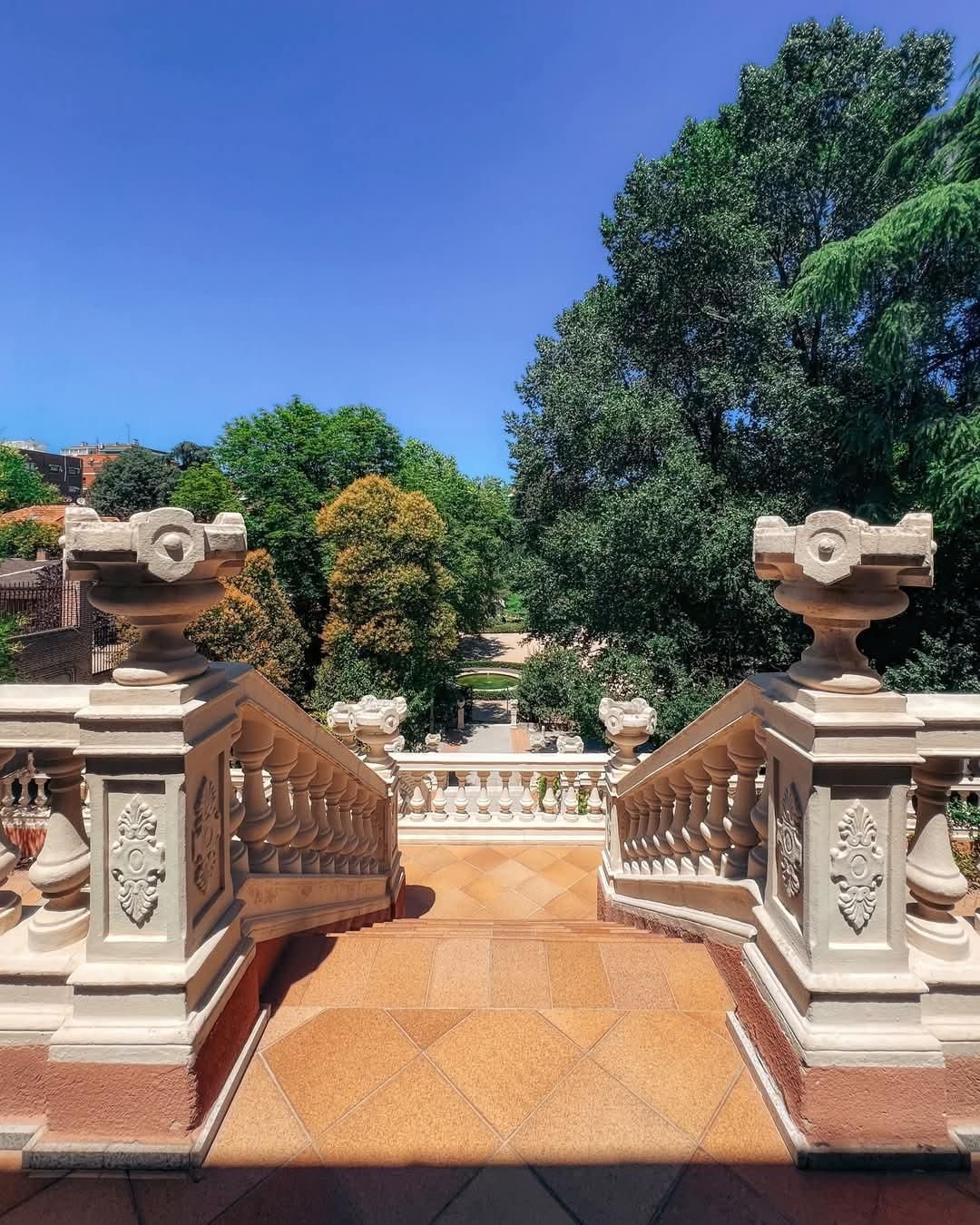
The Parque de la Fuente del Berro It is on the limits of the Calle Enrique D’Almonte, Avenida de Alcalde Saenz de Baranda, and the M-30 (first beltway of Madrid) until reaching the Calle de Alcalà and the bridge or Puente de Ventas parallel to the M-30 to join up with the Jardines Sancho Davila; all total about 53K m2 of green. It is not far from the Monumental Ventas bullring (see post). You can get to the park on metro O’Donnell line 6 or circular and bus lines 2, 15, 28, 56, 69, 71, 143, The entrance on Calle Enrique D’Almonte consists of two small crenellated towers that open up the brick wall, to which some buildings of the same material are attached. As you enter through this gate, you can see the old mansion, the only remaining feature of its past. The park, landscaped with various slopes, is made up of meadows crisscrossed by winding walkways and rustic stone steps, and is home to a rich variety of trees. Currently, the garden has six entrances: two connecting it to the Fuente del Berro neighborhood; three connecting it to Sancho Dávila Park; and one on Calle O’Donnell .
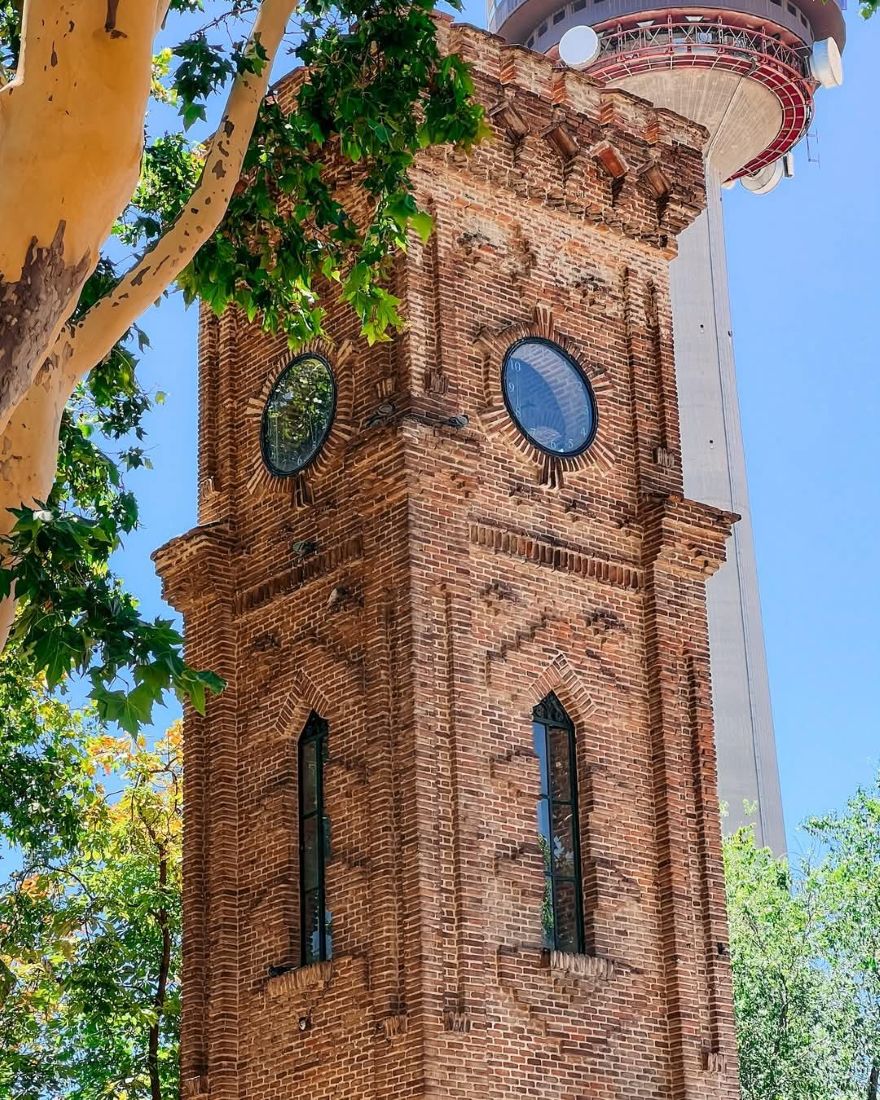
The Casita del Reloj or Clock House, is the former guards’ pavilion integrated into the mansion on Quinta de la Fuente del Berro, it houses the “Rafael Altamira” cultural center. The single-story building has a surface area of 80 m², of which 66 m² are usable. It is a Mudejar-style brick construction attached to the wall of the entrance to the Parque de la Fuente del Berro on Calle de Enrique D’Almonte, 1, and is part of the former mansion. In the distance you see the Torrespaña tower of Spain commonly call the El Pirulí given to Calle de O’Donnell, 77, This is the RTVE (Radio and TV of Spain) communications tower is one of Madrid’s icons and a landmark of its skyline in the northern part of the city. Standing 220 meters tall, several television and radio stations broadcast from this center.
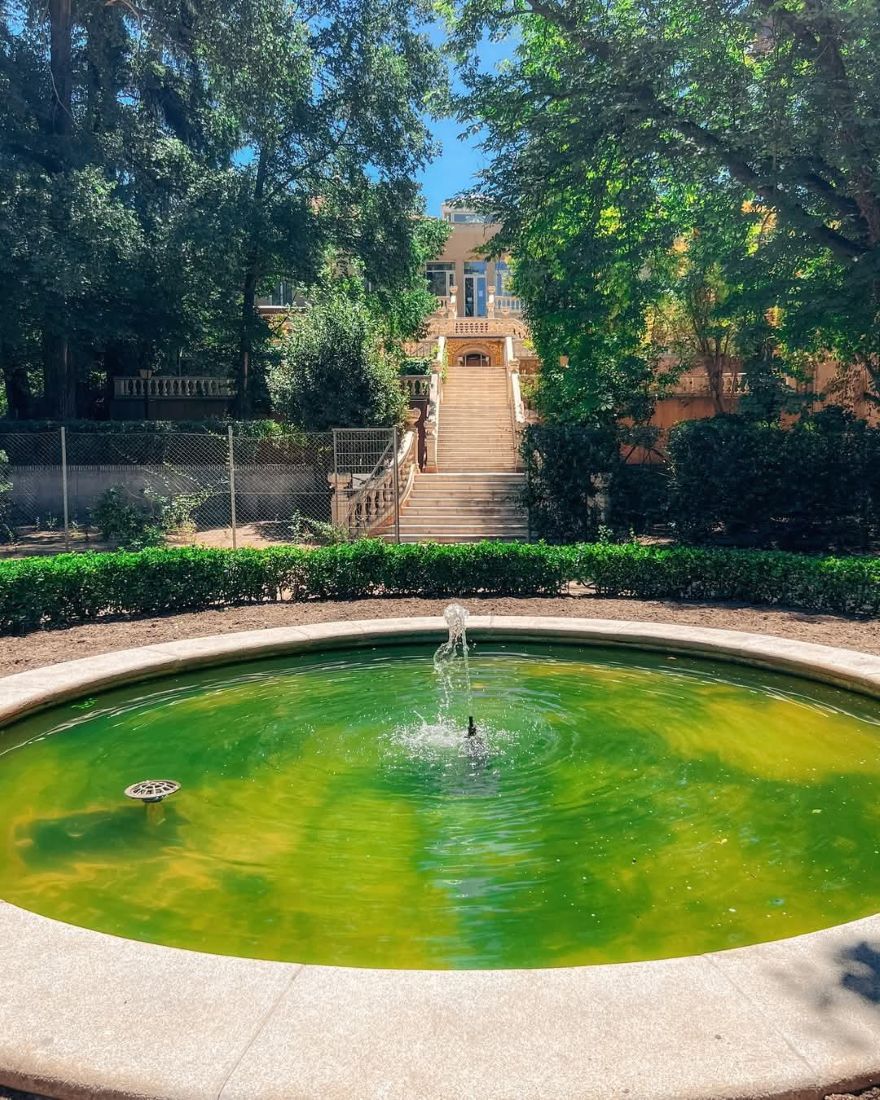
You can see there other than the above the Fuente del Berro or Watercress Fountain. Located outside the estate, on Calle Peñascales with a mid-20C design, is the water fountain that gives the garden its name. You see a pond, estuary, waterfall, and lake divide the garden and give it a romantic character. The Monument to Bécquer. On the left side of the estuary is a romantic monument honoring the poet Gustavo Adolfo Bécquer. The Pushkin Monument. On the central esplanade is a statue dedicated to the Russian writer Alexander Sergeevich Pushkin.
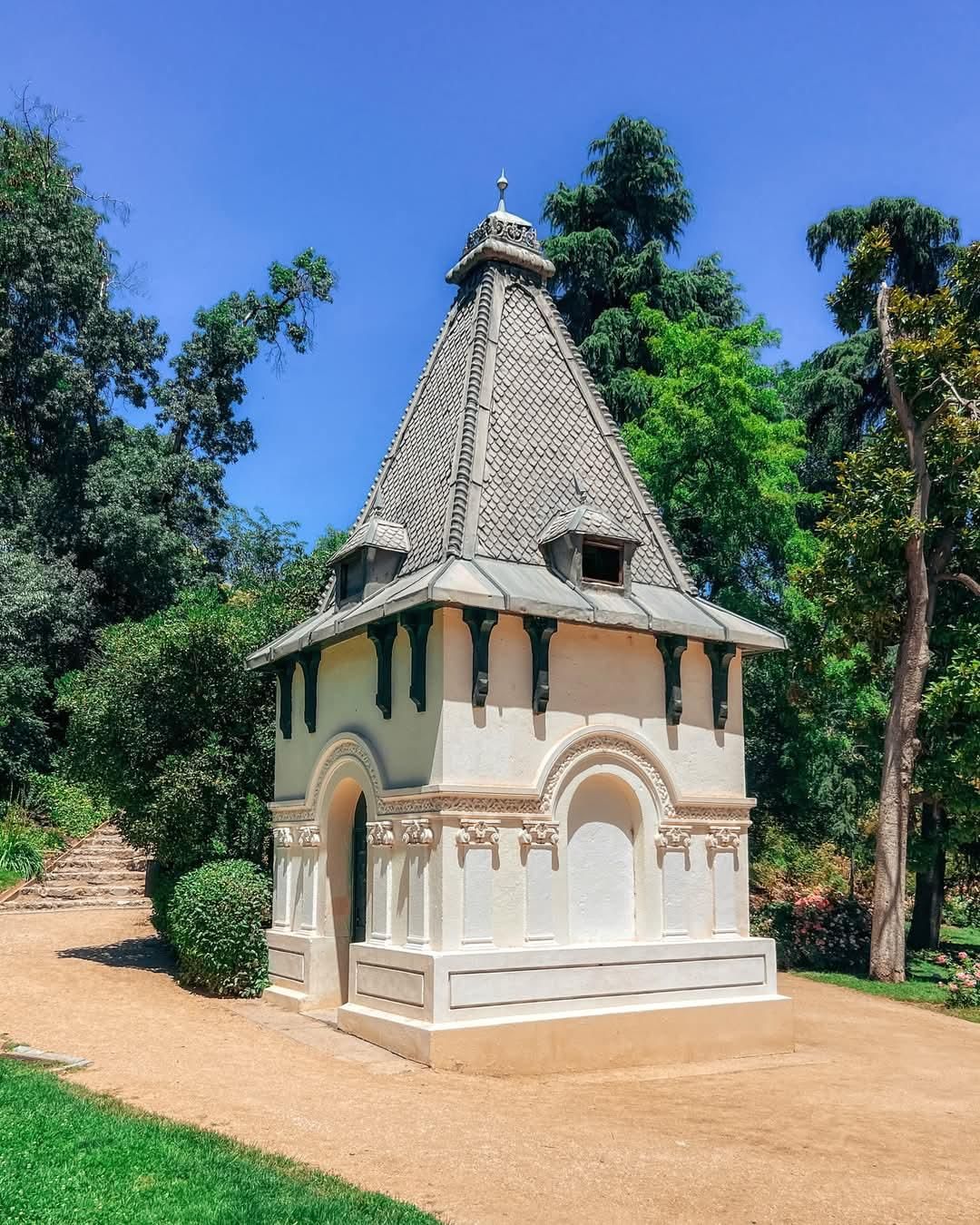
A bit of history tell us that the park was early on it was a farm or Quinta de Miraflores ordered by king Felipe IV as a new royal site with more than 13 hectares (adding the gardens or Jardines Sancho Davila). The park’s origins lie in a property located next to the Abroñigal stream,known since the 17C. Bernardino Fernández de Velasco, Duke of Frías and Count of Haro (Constable of Castile), purchased various lands to form a country estate that would be called Miraflores, Frías, or the Condestable’s Orchard. In December 1630, Felipe IV acquired the aforementioned estate. It contained a house with gardens, orchards, farmland, vineyards, and leafy groves composed of a large number of fruit trees, cypresses, poplars, and mulberry trees. The estate was ceded in 1640 to Castilian Benedictine monks expelled from the monastery of Montserrat due to the uprising against royal power, although the crown reserved the right to use the water that was transported to the palace on donkeys. In 1703, it was purchased by a rich Costa Rican who made improvements to the water and irrigation pipelines, primarily to water the orchards. Years later, it bequeathed the estate to the the Royal and Military Order of Our Lady of Mercy and the Redemption of Captives although the crown continued to reserve the right to its waters and the maintenance of the fountain. King Carlos III ordered the fountain to be protected with a box, and thus it began to be called the King’s Fountain. The water from the Berro Fountain was considered by the Spanish royal family, since Mariana of Austria, to be one of the best in Madrid. It underwent a radical transformation to become a recreational park called the Campos Eliseos or Champs-Élysées. The new Campos Éliseos, opened in 1900. From that moment on, the land passed through numerous owners. In 1948, it was acquired by the Madrid City Council, and for a while the Municipal Archaeological Museum opened to the public in 1954 there.
The Madrid tourist office on the Parque de la Fuente del Berro: https://www.esmadrid.com/en/tourist-information/parque-de-la-fuente-del-berro
There you go folks, wonderful walks and rides into my Madrid parks/gardens. A great memory lane post, hope you enjoy this ride into the Berro park. Glorious memories forever, visited several times and will be back eventually, Again, hope you enjoy the post on the Parque de la Fuente del Berro of Madrid as I
And remember, happy travels, good health, and many cheers to all !!!


