
I am again to tell you about more streets of my eternal Paris. I have many many posts on Paris and several on the streets of the most beautiful city in the world. I have come up with pictures from cd rom vault that should be here for you and me. As always thank you for following my blog some since Nov 26, 2010. Therefore, here is my take on the streets of Paris, part XXXV !!! Hope you enjoy it as I.
The Rue du Pont-Neuf is located in the 1er arrondissement of Paris, divided between the Les Halles quartier, and the Saint-Germain-l’Auxerrois quartier or neighborhoods. It was built in the second half of the 19C. It bears this name because it ends at the Pont Neuf.(see post), The street provides access to the Pont Neuf from the right bank to the south, and to the Forum des Halles from its other end to the north. The road continues from this end and becomes Rue Baltard, closed to motor traffic since the closure of the old Paris market halls, then Rue Montorgueil, Rue des Petits-Carreaux, Rue Poissonnière, and Rue du Faubourg-Poissonnière, ending at the Barrière Poissonnière. The current street is an important crossing point as it intersects several arteries such as the Seine quays, Rue de Rivoli, and Rue Saint-Honoré. There was previously an entrance to the Forum des Halles parking lot, now filled in and converted into a sidewalk. On June 21, 1854, a decree approved the plan for the restructuring of the central market halls. In 1867, the new road was named Rue du Pont-Neuf. Notable buildings here are at No. 1, at the corner with the Quai du Louvre: La Samaritaine department store. On the top floor, the Kong, a restaurant designed in 2003 by the designer Philippe Starck, whose glass roof is in line with Pont Neuf At No. 2, at the corner with the Quai de la Mégisserie: former site of the store À la Belle Jardinière (1867-1972), At No. 31: Molière is said to have been born in a house that stood on this site; a bust above an engraved inscription pays homage to him. No. 33: Au chien qui fume bar-restaurant , See on the Pont Neuf the equestrian statue of Henri IV, It was inaugurated in 1818. This bronze statue by the sculptor François-Frédéric Lemot represents Henri IV in armor, crowned with laurel and holding a fleur-de-lis scepter in his right hand. Henry IV looks towards the Quai des Orfèvres, while the horse looks towards the Quai de l’Horloge. It replaces a first equestrian statue from 1614, commissioned by Marie de Médicis and demolished in 1792, as well as a second temporary statue erected in 1814.
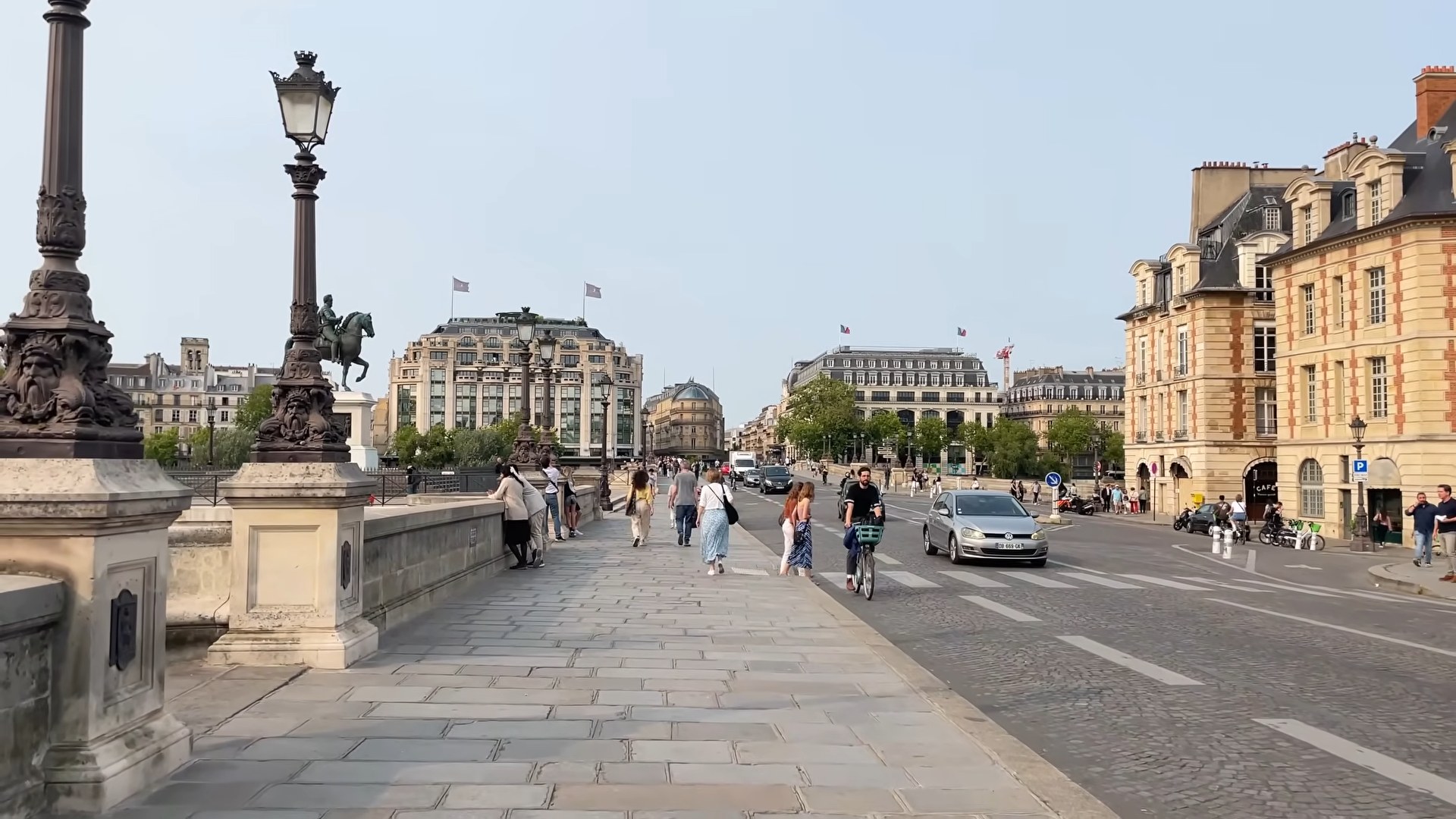
The Paris tourist office on the Pont Neuf : https://parisjetaime.com/eng/transport/pont-neuf-p1877
The Paris tourist office on Paris Centre (arrond 1-4) of Paris : https://parisjetaime.com/eng/article/explore-the-centre-of-paris-a846
The Rue de Rohan is located in the 1er arrondissement of Paris. It begins at 172 Rue de Rivoli and ends at 157 Rue Saint-Honoré. When it was created in the late 18C, it began at Rue de Chartres-Saint-Honoré. The quartier is served by Metro lines 1 and 7 at the Palais Royal – Musée du Louvre station. It is named after Louis-René de Rohan, Grand Almoner of France, administrator of the Quinze-Vingts Hospital, who decided to transfer it to the Faubourg Saint-Antoine. The street was opened by letters patent dated December 16, 1779, under the name “Rue de Rohan,” on the site of the Quinze-Vingts Hospital. 136 meters long, it is established in the continuity of the rue de Richelieu and connects the rue Saint-Honoré to the rue de Chartres-Saint-Honoré, created by the same letters patent From 1796 to 1814, it was renamed “rue Marceau” in honor of General François Séverin Marceau , A majority of the buildings on the west side of the street were demolished to allow the extension of the rue de Rivoli and the formation of the place du Carrousel, The street was the scene of heavy fighting on July 29, 1830 during the Trois Glorieuses (Parisian popular uprising against Charles X, July 27, 28 and 29, 1830). This event was illustrated by the painter Hippolyte Lecomte (Combat de la rue de Rohan on July 29, 1830). On May 31, 1905, President Émile Loubet and King Alfonso XIII of Spain, then on an official visit to Paris, escaped unharmed from a hand-held bomb attack targeting their procession, which was at the corner of Rue de Rohan and Rue de Rivoli. The section between Rue de Chartres-Saint-Honoré and Rue de Rivoli was removed when the Louvre Palace was completed. Notable buildings here are at Nos. 20 and 22: site of Rue des Quinze-Vingts, which disappeared when the Louvre and Tuileries Palaces were merged and Rue de Rivoli was created.
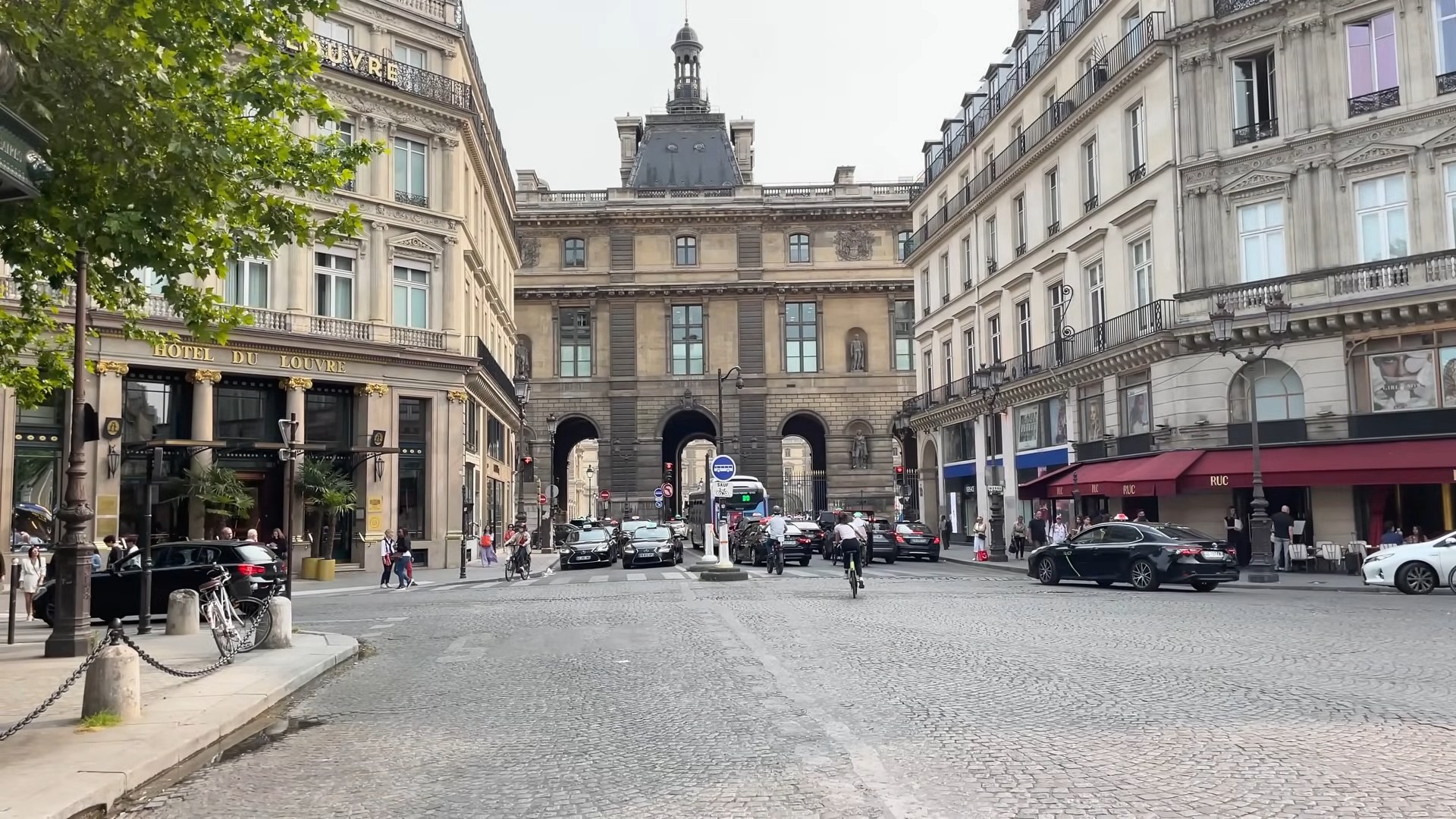
The Paris tourist office on Paris Centre (arrond 1-4) of Paris : https://parisjetaime.com/eng/article/explore-the-centre-of-paris-a846
The Rue du Four is located in the 6éme arrondissement of Paris. Several metro stations serve this street: Mabillon and Croix-Rouge on line 10; Saint-Germain-des-Prés and Saint-Sulpice on line 4. Its name comes from the communal oven, located at the current intersection of Rue du Four and Rue de Rennes and owned by the Abbey of Saint-Germain-des-Prés, where residents were required to bake their bread under penalty of a fine. This street is a section of the old road from Paris to Issy and Sèvres, located in the extension of Rue Saint-André-des-Arts and Rue de Buci. It is mentioned under the name Rue du Four in a 1636 manuscript, including the official report of the visit, dated April 22, 1636. It previously ended at Place Sainte-Marguerite (Place Gozlin after 1864), which was absorbed by Boulevard Saint-Germain in 1877. Notable buildings here are at No. 12 location of the Passage de l’Abbaye, as it was near the Prison de l’Abbaye. Destroyed in 1897, this passage ended at Rue Sainte-Marguerite and then at 137 Boulevard Saint-Germain after the opening of this boulevard. No. 13: University of Paris I Sorbonne; Institute of History and Philosophy of Science and Technology. No. 15: the painter Clément Gontier, born in Lavaur (Tarn 81 ), lived there from 1895 to 1907. No. 22: this is the former location of Chez Moineau, the bistro where members of the Lettrist International met in the early 1950s. No. 48: it was in an apartment on the first floor that the first plenary meeting of the National Council of the Resistance (CNR) was held on May 27, 1943, bringing together all the leaders of the Resistance, who recognized Jean Moulin as the leader of the National Council of the Resistance. In 1956, Régine created her first nightclub on rue du Four.
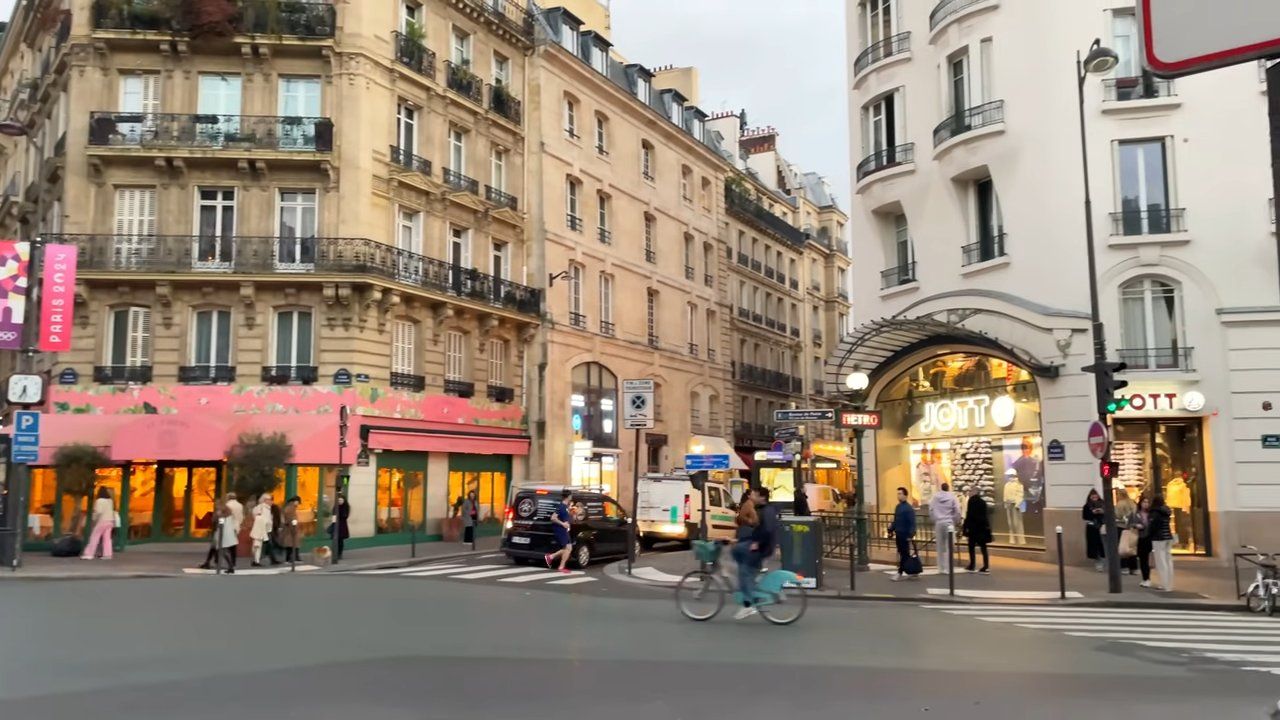
The Paris tourist office on the 6éme arrondissement de Paris : https://parisjetaime.com/eng/article/explore-paris-s-6th-arrondissement-a823
The Rue de Buci is located in the Saint-Germain-des-Prés and La Monnaie quartiers or neightborhoods of the 6éme arrondissement of Paris. It is 190 meters long, and it begins at 84 Rue Mazarine and 2 Rue de l’Ancienne-Comédie and ends at 160 Boulevard Saint-Germain. The street is served by metro lines 4 and 10 at the Odéon station. From the Rue de Buci meets the following roads, beginning: Rue Mazarine; Place Louise-Catherine-Breslau-et-Madeleine-Zillhardt; Rue Grégoire-de-Tours; Rue de Seine; Rue de Bourbon-le-Château and end Boulevard Saint-Germain , It is named “Buci” in honor of Simon de Buci, originally from Bucy-le-Long and first president of the Parliament of Paris in 1341, who purchased the Porte Saint-Germain, which opened onto this street, in 1350. This road was opened in the 13C. It took the name of “Buci” from 1352 and was also called: “street which tends from the Pilori to the Porte de Buci”, because a pillory existed next to the abbey of Saint-Germain-des-Prés by virtue of a charter granted by Philip the Bold to this abbey , Notable buildings here are Alfred de Montesquiou lived at an unknown number in the 2000s. The Café de Buci, located at the corner of the streets of Buci, Mazarine and Dauphine, at the level of the place Louise-Catherine-Breslau-et-Madeleine-Zillhardt, No. 10: home of Henri Théophile Hildibrand, the French wood engraver, one of the main interpreters of Gustave Doré and illustrators of the Hetzel and Hachette editions. No. 12: Le Molière, a few meters away was the tennis court of the Croix Blanche; moreover, it was the place where Jean-Baptiste Poquelin took his famous pseudonym, Molière. It was also at this address that the first Parisian Masonic lodge was founded in 1732. A reminder of this Saint-Thomas lodge is found in the flaming star sculpted on the facade of Nos. 23, 25, and 27: the facade of the Hôtel La Louisiane and the rooms where Jean-Paul Sartre and Simone de Beauvoir lived. In Le Flâneur des deux rives (1918), the poet Guillaume Apollinaire titles a chapter “Christmas on the Rue de Buci.” Jacques Prévert wrote a poem entitled La Rue de Buci maintenant… in his collection Paroles, first published in 1946 by Éditions du Point du jour.
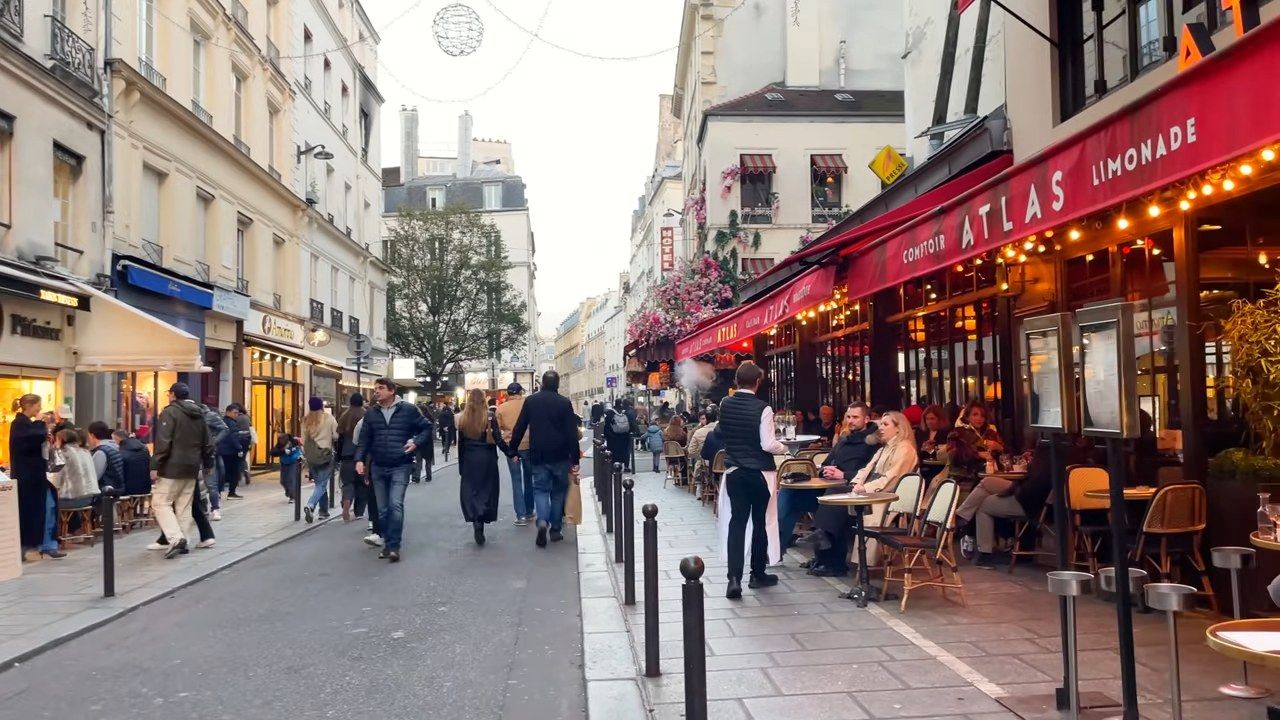
The Paris tourist office on the 6éme arrondissement de Paris : https://parisjetaime.com/eng/article/explore-paris-s-6th-arrondissement-a823
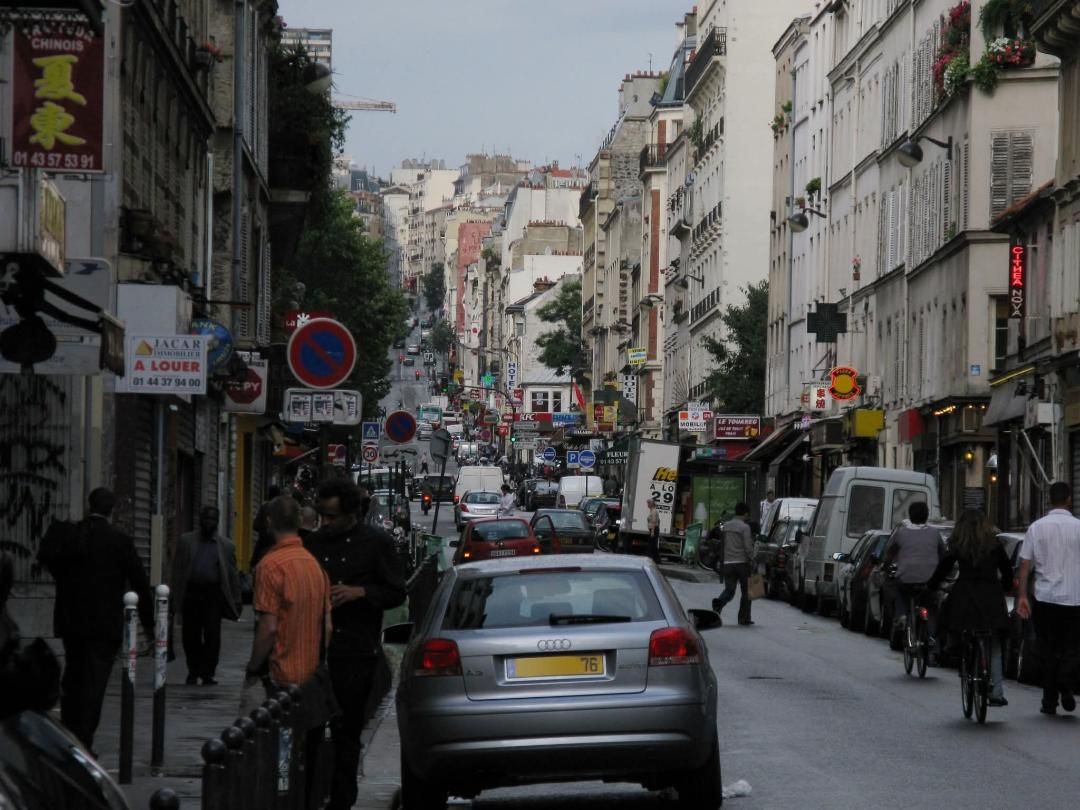
The Rue Oberkampf is located in the 11éme arrondissement of Paris, which it crosses from its border with the 3éme to the west to its border with the 20éme to the east. Numerous cafés and restaurants, nightclubs, and concert halls have opened on the street, particularly in its eastern half, near Ménilmontant and its surrounding areas, such as Rue Saint-Maur and Rue Jean-Pierre-Timbaud. Most of the former workshops have been converted into art galleries or offices housing architects, artists, or designers. The street is named after Christophe-Philippe Oberkampf, famous for founding the Royal Printed Canvas Factory of Jouy-en-Josas, where toile de Jouy was produced. The street is served by several metro stations such as the Filles du Calvaire on line 8, to the first third by Oberkampf on lines 5 and 9, to the two-thirds by Parmentier on line 3, and by Ménilmontant on line 2. The Rue Oberkampf was a former rural road that runs from the ditches, on a backwater of the Seine, before climbing the first slopes of Ménilmontant. From Boulevard du Temple, on the route of the Charles V rampart, to Boulevard de Ménilmontant, corresponding to the Fermiers Généraux barrier, the street was formed by gradual urbanization starting in the late 18C. On the outskirts of the Faubourg Saint-Antoine, the street also accommodates carpenters, joiners, and parquet floorers. The working of hides and skins is also very well represented, because Rue Oberkampf is located in the heart of the old industrial districts of Paris. Notable buildings here are at No. 24: Michel Polnareff spent his childhood in an apartment at this address. French singer-songwriter. No. 87: residence of the French sculptor and medalist Ernest Auguste Révillon from 1883 to 1885. Rue Oberkampf is home to three remarkable cul-de-sac housing projects: the Cité du Figuier at Nos. 104-106. A former workers’ housing project with a paved road. It is home to many plants including a fig tree; a house with a sculpted turquoise facade, decorated with frescoes depicting elephants; this is a former pavilion of the 1900 World’s Fair; the Cité Griset at No 125; the Cité Durmar at No. 154. Formerly a market gardening cul-de-sac, the farmers built “gloriettes” on their plots, small houses later transformed into workshops, particularly metalworking workshops, with housing on the upper floor. No. 160: the Piscine Oberkampf or swimming pool , whose premises, not visible from the street, are located within a building, was opened in 1886 under the name “Les Grands Bains Parisiens” and modernized in the 1920s; it is in the Art Deco style. Under a glass roof, its pool is L-shaped. This establishment, which today operates as a private fitness club, is however also used by children from local schools to learn to swim. The street gave its name to a Parisian punk band from the 1980s: Oberkampf. The group became famous with a first 45 rpm maxi entitled Couleur sur Paris, which featured an original cover of Poupée de cire, poupée de son originally written by Serge Gainsbourg for France Gall.
The Paris tourist office on the 11éme arrondissement de Paris: https://parisjetaime.com/eng/article/explore-paris-s-11th-arrondissement-a829
There you go folks, another dandy beautiful set of glorious streets of my eternal Paris. I have criss cross them many and have many in my blog already, Again, hope you enjoy this post on the streets of Paris, part XXXV !!! as I.
And remember happy travels, good health, and many cheers to all !!!

 Paris1972-Versailles2003