
A wonderful area of my eternal Paris and great for walks to see this beautiful monument gladly, worth the detour me think, The fact the area is romantic and quant, and nostalgic for me as Paris can be. I have found me again pictures in my cd rom vault and should be in my blog for you and me. Therefore, here is my take on the Chapelle Saint-Louis de la Salpêtrière Hospital of Paris !!! Hope you enjoy the post as I.
The Chapelle Saint-Louis de la Salpêtrière Chapel is located at 47-83 boulevard de l’Hôpital in the 13éme arrondissement of Paris, The Pitié-Salpêtrière Hospital was in 2013 the largest hospital in Europe, with more than 90 buildings spread over 33 hectares, Located in the heart of France’s largest hospital, the Saint-Louis de la Salpêtrière Chapel, boasting over three centuries of history, reveals its magnificent dome, majestically overlooking the buildings of the Pitié-Salpêtrière Hospital. It is a religious building built at the request of Louis XIV for the Salpêtrière hospital. The Saint Louis Chapel at La Salpêtrière, designed between 1670 and 1679 by Louis Le Vau, stands elegantly in the heart of Europe’s largest hospital Pitié-Salpêtrière. It is distinguished by the majesty of its octagonal dome, which rises to a height of 65 meters, topped by a modest lantern. A sundial is engraved on the south arm.
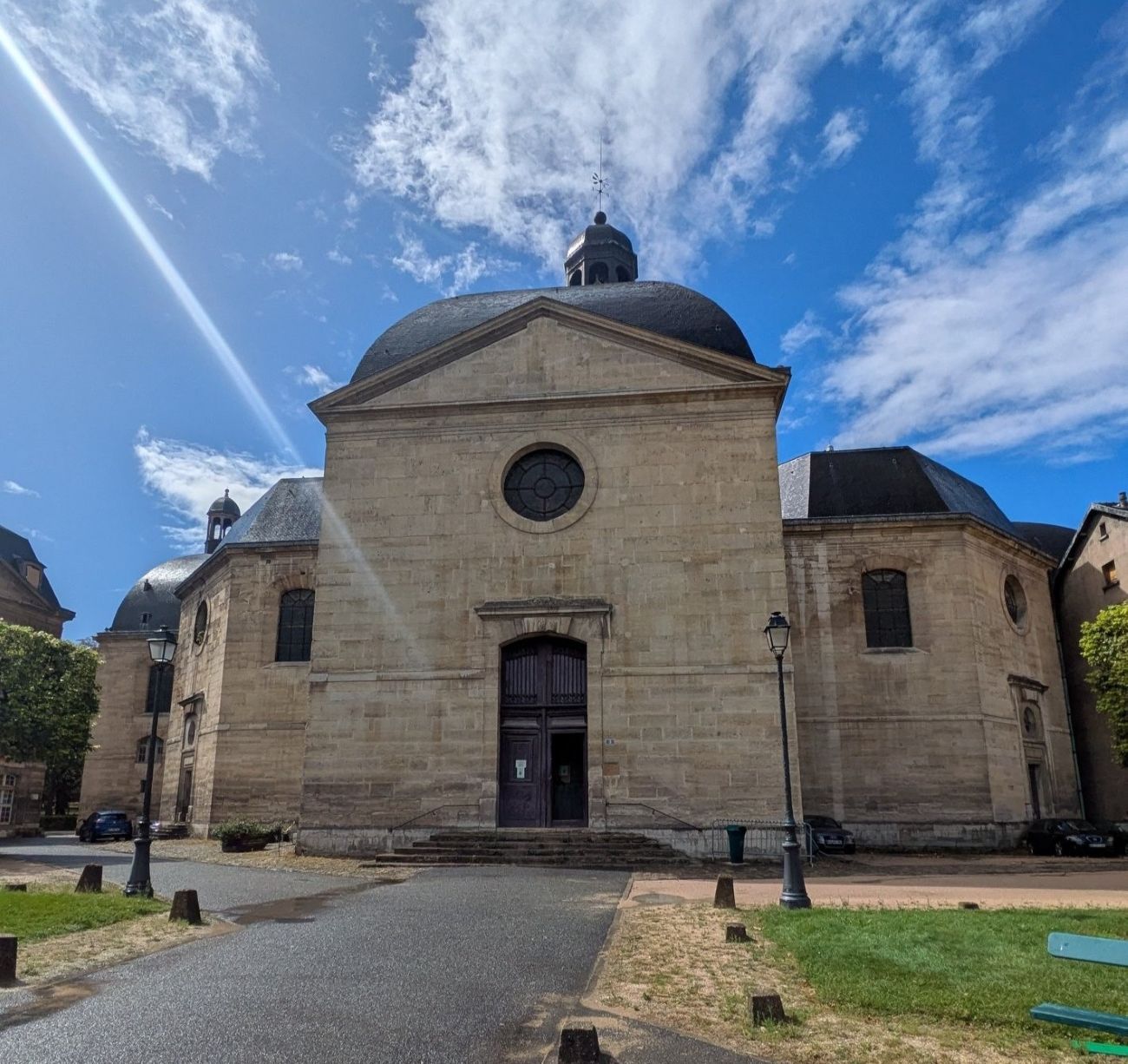
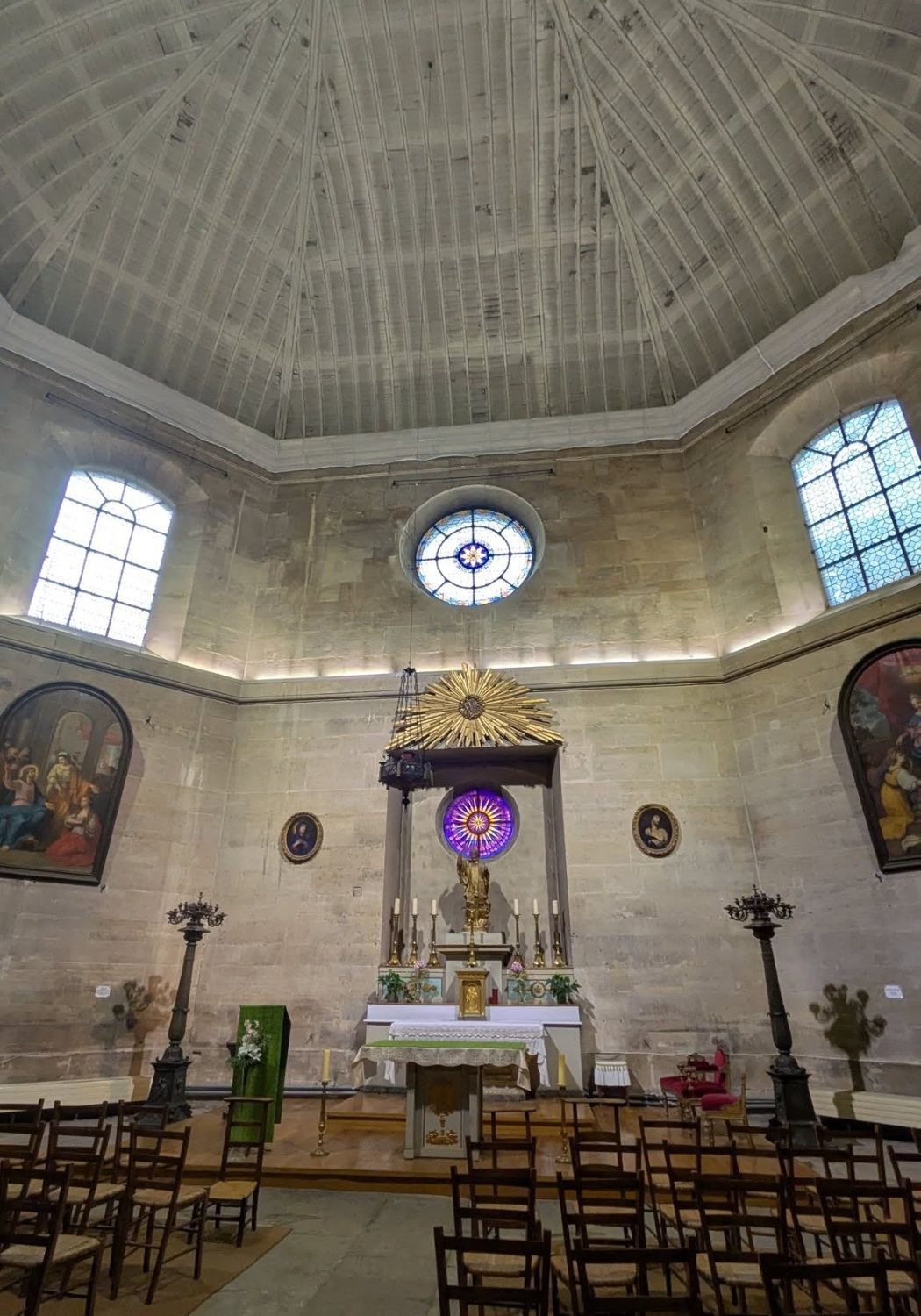
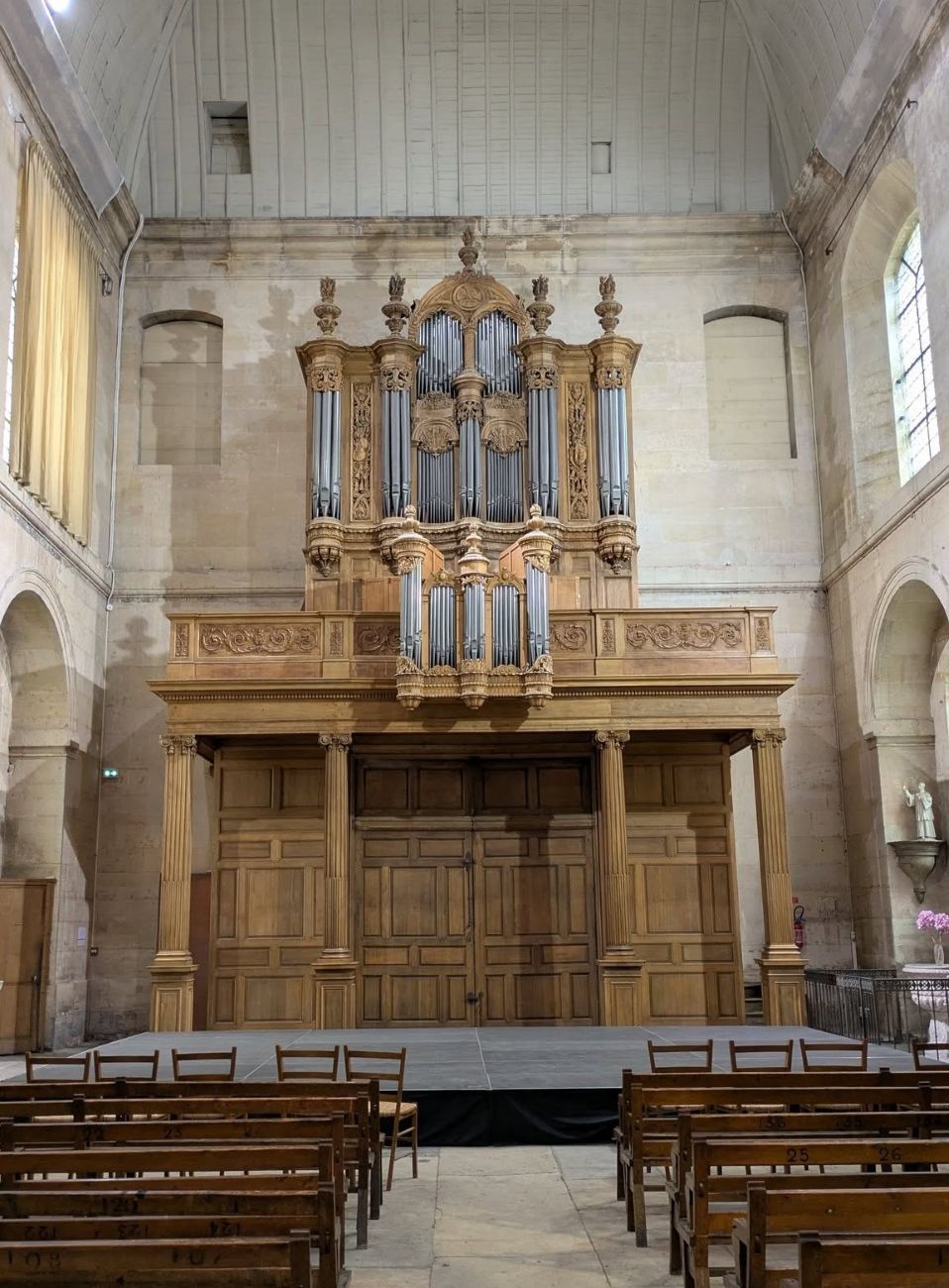
Inside, the work seduces with its great sobriety, the absence of sculpted decoration and a purely architectural purity. The dome pierced by a summit oculus and equipped with a glass roof surmounts the central chapel. The Saint-Louis Chapel embraces a Greek cross plan. The high altar is located at the intersection of the arms. It has four rectangular naves, the main nave, the Lassay nave, the cut nave, and the Mazarin nave, between which are inserted the four chapels: Saint-Vincent, the Virgin, the Good Shepherd, and Sainte-Geneviève. This chapel is built on the model of a Greek cross; it has four chapels and four naves ,main nave, Lassay nave, cut nave, and Mazarin nave, all connected to a central chapel with an octagonal dome topped by a bell tower illuminated by stained-glass windows and a summit oculus. The organ case dates from the 18-19C. Organ: Brieu (1789), Suret (1861), and Muller (1978). Three pavilions, the Petites Loges, where the “madwomen” were imprisoned. There were fourteen Lodges in the 17C. They were rebuilt between 1786 and 1789. In this place, Pinel studied the mentally ill and freed them from their chains.
A bit of history I like tell us that as soon as the Salpêtrière was created in 1636, a chapel dedicated to Saint Denis was built. Bishop Bossuet (see post Meaux) delivered the panegyric of Saint Paul there in 1659. In 1656, three years after the beginning of his personal reign, King Louis XIV signed a royal edict proclaiming the foundation of an institution uniting under its banner several charitable houses scattered throughout the city under the name of the Hôpital Général. The implementation of this project was not easy since the Parliament of Paris rejected it for the first time, despite the fervent support of Vincent de Paul, the future Saint Vincent de Paul. The Hôpital Général was therefore created on April 27, 1656, by the royal edict promulgated by the very young King Louis XIV, under the impetus of the Queen Regent Anne of Austria and Cardinal Mazarin. The genesis of the General Hospital was then made up of five establishments: Bicêtre, La Pitié, Maison Scipion, the Chaillot soap factory and La Salpêtrière. This last hospice was located outside Paris in the former buildings of the Petit Arsenal, commonly called the “Salpêtrière” because of its production of saltpeter used in the manufacture of gunpowder. When the manufacture of gunpowder was relocated to Vincennes on the orders of Louis XIV, the latter reclaimed the land to donate it to the Duchess of Aiguillon who decided to establish a hospice there. This welcomed women, girls, elderly couples and boys up to seven years old.
The funeral of the Duchess of Aiguillon was celebrated in 1675. In December 1669, King Louis XIV asked his architect Louis Le Vau to build, under the supervision of Jean-Baptiste Colbert, Comptroller General of Finances and Superintendent of the King’s Buildings, a chapel for the Salpêtrière Hospital. And from 1684 with the construction of La Force prison, La Salpêtrière was home to criminals, some famous like the Countess of La Motte, famous for the “Affair of the Necklace”. On November 7, 1793, during the French revolution, the church’s silverware was seized, the reliquaries, the sacred vessels, and three of the four bells were sent to be cast because, as in all the churches of France, one must be kept to ring the tocsin and the victories of the Republic. The great organ was seized in 1794. On November 15, the chapel was closed and transformed into a granary and store for “several kinds of livestock.” The Saint-Louis Chapel narrowly escaped the ravages of the German bombardments. On June 14, 1940, Paris fell under the Nazis occupation. Despite the dangers, the staff of Parisian hospitals remained largely at their posts, including during the terrible bombings of June 3, 1940. La Pitié, for its part, was among the four large Parisian hospitals requisitioned: it was occupied for two years by the Wehrmacht, then two more years by the Schutzstaffel. The Saint-Louis Chapel, fortunately, escaped the Occupation and damage.
Today, the Saint-Louis Chapel is still animated by Catholic worship in the Saint-Vincent-de-Paul Chapel where Mass is held every day. After a long period of abandonment, this place has regained religious activity while now hosting numerous artistic events, including exhibitions and concerts. It hosts contemporary art exhibitions, concerts, shows, conferences, exhibitions, receptions, and filming are held there throughout the year, enriching the cultural life of the hospital community and outside visitors. An eclectic program supported in particular by the Friends of the Saint Louis Chapel at La Salpêtrière, a volunteer association founded in 1972. The next two programmed activities are:
From June 16 to 22, 2025 La Pitié-Salpêtrière Hospital invites you to the 4th edition of Fièvres Musicales, an annual piano and chamber music festival held in the hospital buildings and gardens. During the day, you will find concerts by amateur musicians open to all throughout the hospital. In the evening, you will find concerts presented by professional musicians in the Saint-Louis Chapel of La Salpêtrière Hospital.
From June 24, 2025 to September 22, 2025 , La Pitié-Salpêtrière Hospital invites you to discover the major exhibition “Vulnerables” (Vulnerable), an initiative by Professor David Cohen, throughout the Saint-Louis Chapel of La Salpêtrière Hospital. This exhibition, at the intersection of medicine, art history, and contemporary visual arts, seeks to explore human fragility and vulnerability, such as mental illness and the end of life. It highlights the power of art and invites us to reflect on well-being in our contemporary world, through different artistic mediums, such as painting, photography, video, sculpture and interactive installations. This exhibition will also highlight the artistic work of patients from the child psychiatry unit.
The official Catholic Chaplaincy of the La Pitié-Salpêtrière : https://www.aumoneriecatholiquesalpetriere.fr/a-propos
The official Hospital Pitié-Salpêtriére on its history : https://pitiesalpetriere.aphp.fr/chapelle-saint-louis-histoire-de-la-chapelle-de-la-pitie-salpetriere/
The Paris tourist office on the Hospital Pitié-Salpêtriére : https://parisjetaime.com/eng/pro/hopital-de-la-pitie-salpetriere-p2696
The Paris tourist office on the Chapelle Saint Louis de la Salpêtriére : https://parisjetaime.com/eng/culture/eglise-saint-louis-de-la-salpetriere-p957
This is another dandy monument that gladly was able to see and find pictures ! This is Paris at its best and architecture and history all around you, Again, hope you enjoy this post on the Chapelle Saint-Louis de la Salpêtrière Hospital of Paris !!! as I.
And remember, happy travels, good health, and many cheers to all !!!

 Paris1972-Versailles2003