
This is one of those towns we came in my local road warrior trails while living in Versailles, the choices are endless just here alone. It is worth the detour for the quant pretty real towns and villages of my belle France, I am glad to have found me these pictures in my cd rom vault that made me do it for you and me. Therefore, here is my take on this is Brueil en Vexin !!! Hope you enjoy the post as I.
The village of Brueil-en-Vexin is located in the Yvelines department no 78, in the Île-de-France region of my belle France. It is within the perimeter of the French Vexin Regional Natural Park. The village is 10 km from Les Mureaux, 14 km from Mantes-la-Jolie, 28 km from Cergy, 40 km from Versailles, and 504 km from my current city. The access are by the D 913 road, which follows the course of the Montcient and by the D 130 road, which merges with the previous one between Brueil-en-Vexin and Sailly. We came here from Versailles, from rue de la Paroisse turn right onto Rue des Reservoirs (D186) continue Bd du roi to trafic circle place de la Loi turning left onto Bd Saint Antoine continues Route de Saint Germain which becomes N186 same road to connect with the A13 autoroute de Normandie dir Rouen to exit/sortie 10 on the D130 road thru City center Gargenville continue on D130 to City center Brueil en Vexin turning left on Rue de l’église to the Church Saint Denis.
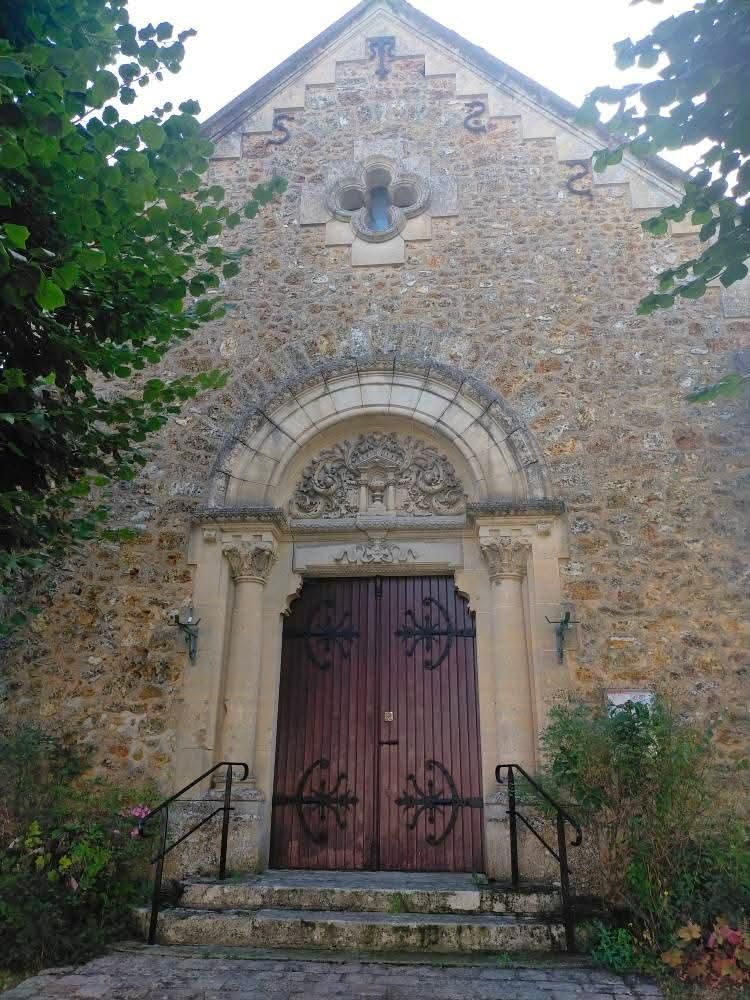
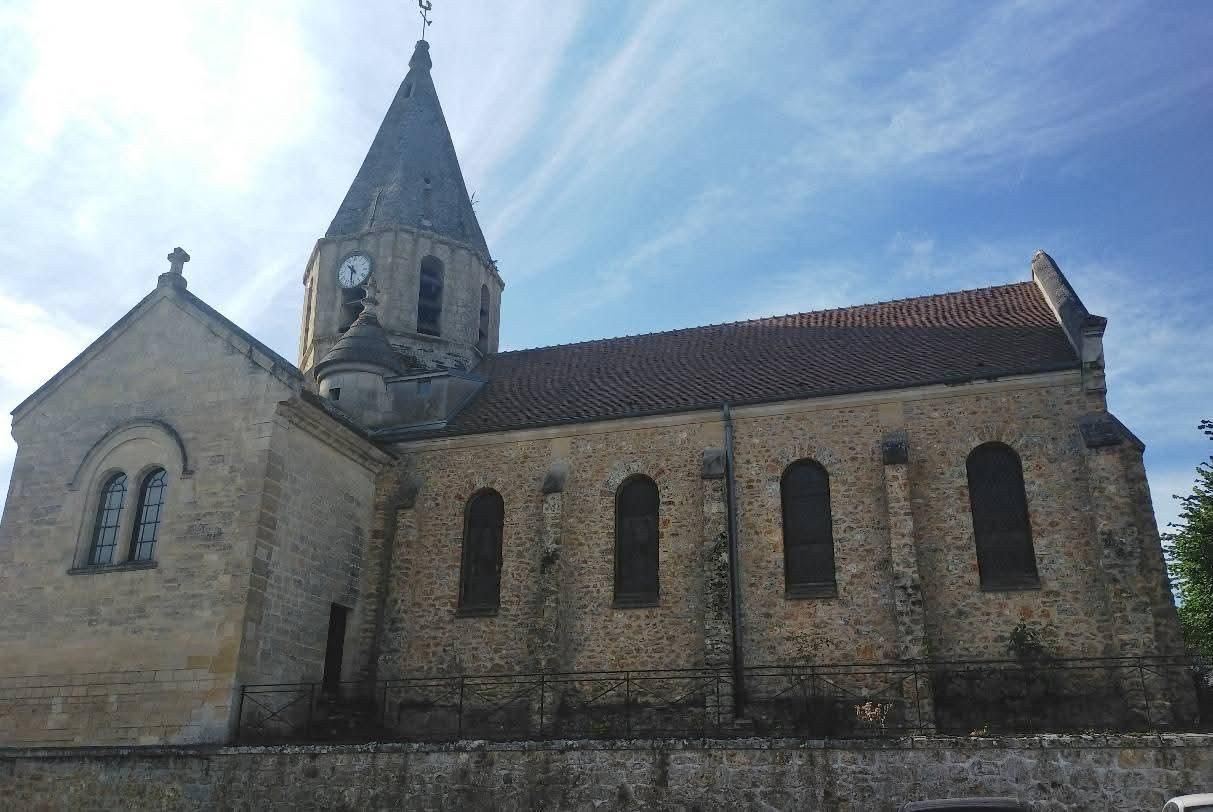
The Church Saint Denis is a stone and millstone church in the Romanesque style dating from the 12C or 13C. Only the bell tower, with its cornice with grimacing modillions, crowned by an eight-sided stone spire supported by an octagonal floor, pierced on each of its faces by a small semi-circular opening, dates from the original church. The nave, the portal and the original Romanesque porch were destroyed at the beginning of the 20C following poorly conducted restoration work. Composed of a single nave, lit by six semi-circular windows. In places on the south exterior wall of the nave, a herringbone pattern can still be seen, as well as the trace of a small opening with a monolithic lintel, in the Romanesque style.
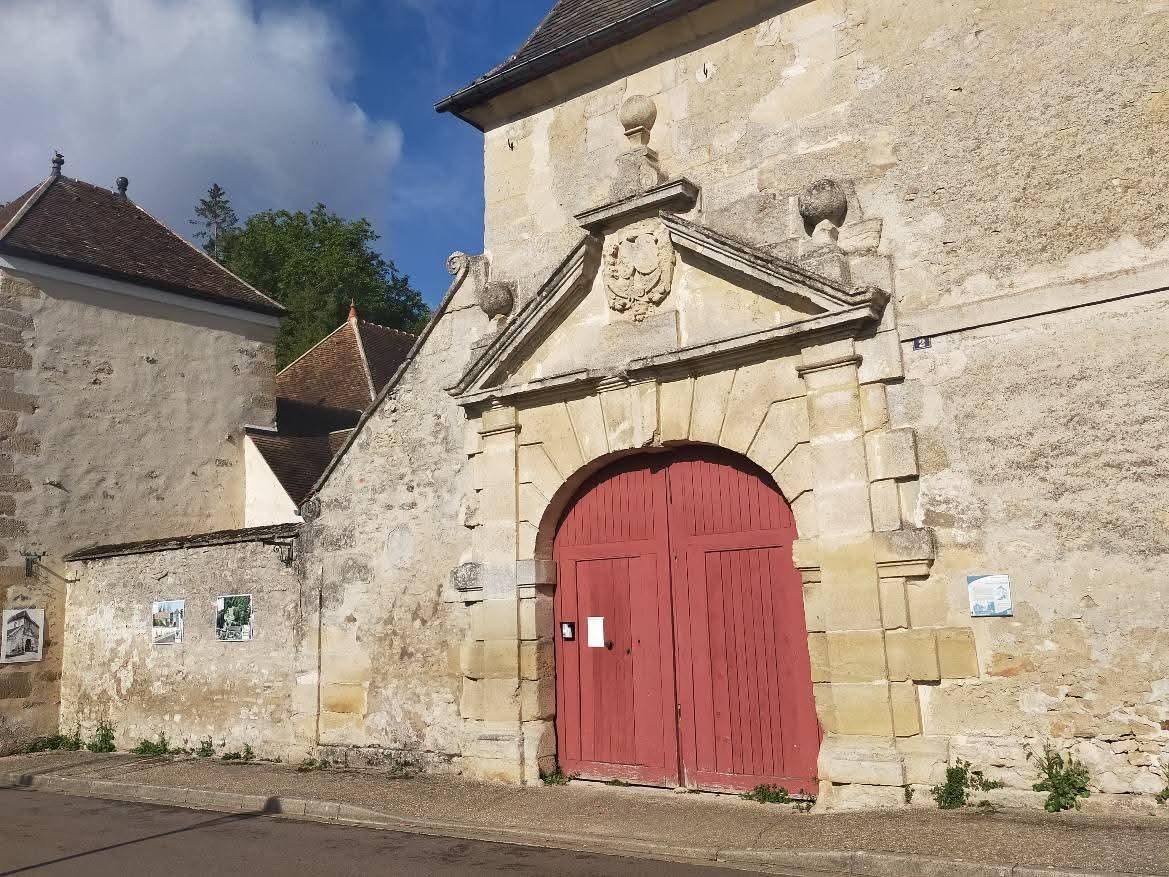
The Château de Brueil-en-Vexin located at 37-49 Rue du Vexin has a magnificent portal whose pediment with acroteria is surmounted by balls, and includes a double coat of arms surrounded by a collar. This dwelling belonged to the former domain of the lords of Brueil. The buildings of the former lordship lodge consist of four distinct elements: A chicken coop dating from the late 19C. A long main building – late 16C early 17C on two levels plus an attic, converted into a farmhouse around the mid-18C. A dovecote from the 17-18C, and a former barn, also from the 17-18C. These elements, as well as the surrounding wall, are open to the public.
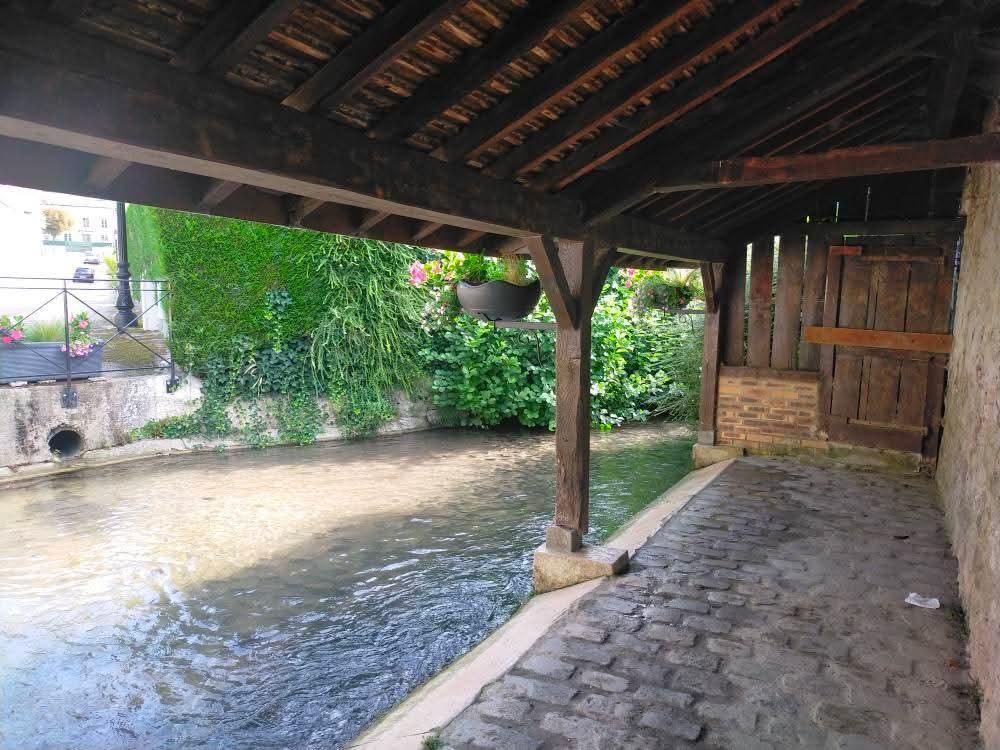
In 1882, the village built this lavoir or washhouse of pont Madame on the Montcient river by rue de pont madame. It then runs past the castle and under the road, before flowing into the Aubette de Meulan. It drove many mills in Brueil-en-Vexin, Oinville-sur-Moncient, Gaillon-sur-Moncient… The place where the lavoir was beaten can be seen from the parapet of la rue du Pont Madame. This washhouse has one stone wall, with two walls made of wood and bricks on either side, the result of recent restoration work. The entrance is through an open side facing the street. The top of the wall is slatted, closed by wooden beams. A center beam and two side beams support the roof.
Other things to see here are the covered walkway of the Cave aux Fées: this is a semi-buried megalithic covered walkway, a collective burial dating from the end of the Neolithic period (2220 BC). The fontaine Saint-Gaucher fountain: located in the hamlet of La Chartre below the D 130 road, it houses a statue of Saint Gaucher who was raised as a wet nurse in the hamlet at the beginning of the 11C. The statue is actually a copy, the original kept in the city/town hall, The Saint-Laurent Priory, founded in the 11C under the name of Saint-Laurent-de-Conservin or Saint-Laurent-la-Garenne. Today in ruins, only vestiges remain: engaged columns, Romanesque capitals, walls, and a portal. It depended on the abbey of Josaphat and is not open to the public last I read.
A bit of history tell us that the site has been occupied since prehistoric times, as evidenced by the covered alley of the Cave aux Fées discovered in the village in the 17C. In a charter of 832 concerning the royalties owed to the Abbey of Saint-Denis, the village of Brueil is mentioned for the first time. In 1204, Philippe Auguste definitively reunited the County of Meulan (which included Brueil) to the crown. Hugues, knight and lord of Brueil, paid homage to the king. In the 16C, religious wars followed foreign wars, but the struggles were not bloody in the Meulan region, where the majority of the population remained Catholic. In 1636, the inhabitants of the village of Brueil had to go and work on forced labor on the fortifications of the town of Meulan and serve in the guard. In the 17C, the lordship of Brueil was attached to the deanery of Magny-en-Vexin , During the French revolution, life in the village was less difficult than in Paris, but it was disrupted by the mobilization of young people, the requisitions on March 24, 1795, the government decreed the requisition of all grain and flour within a radius of 20 leagues around Paris to feed the capital. This caused famine throughout the Meulan region. Animals, straw, fodder, and oats were also requisitioned. Winegrowers uprooted part of their vines to plant potatoes. Erected as a village during the French revolution, Brueil has been attached to the canton of Limay since 1803, The village was authorized to be called Brueil-en-Vexin by decree of June 14, 1890, In 1940, many inhabitants left for the unoccupied zone. They gradually returned and suffered the nazis occupation. In August 1944, the villagers received orders from the nazis authorities to evacuate the village and take refuge in the Damply quarry. They stayed there for a week while the Battle of Vexin unfolded throughout the region. In 1967, after the abolition of the Seine-et-Oise river, Brueil became a town in the Yvelines department 78. The village was part of the French Vexin Regional Natural Park from its creation in May 1995.
The village of Breuil en Vexin on its heritage : https://www.brueil-en-vexin.fr/decouvrir-brueil-en-vexin/patrimoine/
The parc naturel régional du Vexin Français on Breuil en Vexin: http://www.pnr-vexin-francais.fr/fr/carte-des-activites-touristiques/bdd/activite/363
There you go folks, enjoy this wonderful ride into the French soul, and the countryside of the Yvelines dept 78 at quant nice off the beaten path village of Brueil en Vexin, there is a lot more to see around here ! Again ,hope you enjoy this post on this is Brueil en Vexin !!! as I.
And remember, happy travels, good health, and many cheers to all !!!

 Paris1972-Versailles2003