
Coming back at you with more pictures found in my cd rom vaults that should be in my blog for you and me, This is another off the beaten path jewel of my former home near Versailles, The village of L’Étang-la-Ville is located in the Yvelines dept 78 of the Île de France region of my belle France, I like to tell you about this off the beaten path wonder with lots of history indeed, Therefore, here is my take on thisis L’Étang-la-Ville !!! Hope you enjoy the post as I.
L’Etang La Ville is a charming village with a population of 4,644 ;It sits on the edge of the Marly-le-Roi national forest. The village is crossby D161 road , which leads north to Saint-Germain-en-Laye (N 13) and south to Noisy-le-Roi (D 307), as well as to the main roads served by the A13. L’Etang la Ville is served by the Transilien line L, which connects Paris Saint-Lazare, via La Défense. Two train stations are within walking distance: L’Etang la Ville station, located above the town center, and Saint Nom la Bretèche station, located at the end of the village. A Tram 13 line connecting Saint Germain en Laye RER A, on one side and Saint Cyr L’Ecole RER C on the other, passing through the towns of Bailly, Noisy Le Roi, Mareil Marly, xith bus lilne 15 Saint Germain en laye with several stops in the village The village of L’Étang-la-Ville is located 24 km from the center of Paris, in the heart of the Marly national forest, 5 km from Saint-Germain-en-Laye.11 km from Versailles , 2 km from Marly le Roi, and 463 km from our current home, We came here from Versailles, on the Bd du Roi (D186) to Place de la Loi bearing left into Bd Saint Antoine dir St Germain en Laye but passing Le Chesnay before the A13 autoroute bear left onto the D307 dir St Cyr l’école and then bear right into the D7 road dir Marly le Roi but before the town bear left into the Domaine Marly le Roi forest road Route Plantée, same road changes name to Route de Noisy,or D161 coming into the village and bear left on Rue de Fronton to the castle/city hall of L’Étang-la-Ville,
The Church Sainte-Anne has been documented since the 12C. A stone building in the Romanesque and Gothic styles. The choir surmounted by a bell tower and a simple nave, At the end of the 15C, Blaise Séguier, who became Lord of L’Étang-la-Ville, had a Gothic-style chapel erected on the north side of the choir. Until the 17C, the presbytery was located to the south of the church, before being subsequently rebuilt on its current site. During this century, the lateral side to the right of the choir was added (chapel of the Virgin) and the church was entrusted to the protection of SainteAnne. In the middle of the 19C, demolished the porch built in the 13C to have it rebuilt . This porch, much criticized by the parishioners because of its heaviness which threatened the church with collapse, was removed in 1887.The choir dates from the 12th century. the nave was rebuilt in the 16C, as was the choir vault. The south aisle dates from the 17C, and the west facade was redone in 1888. The high relief “The Dispersion of the Apostles” is a work comprising a high relief carved in alabaster dating from the 17C and a wooden frame, probably executed and added in the 19C. The ensemble has been preserved in the church since at least 1886.
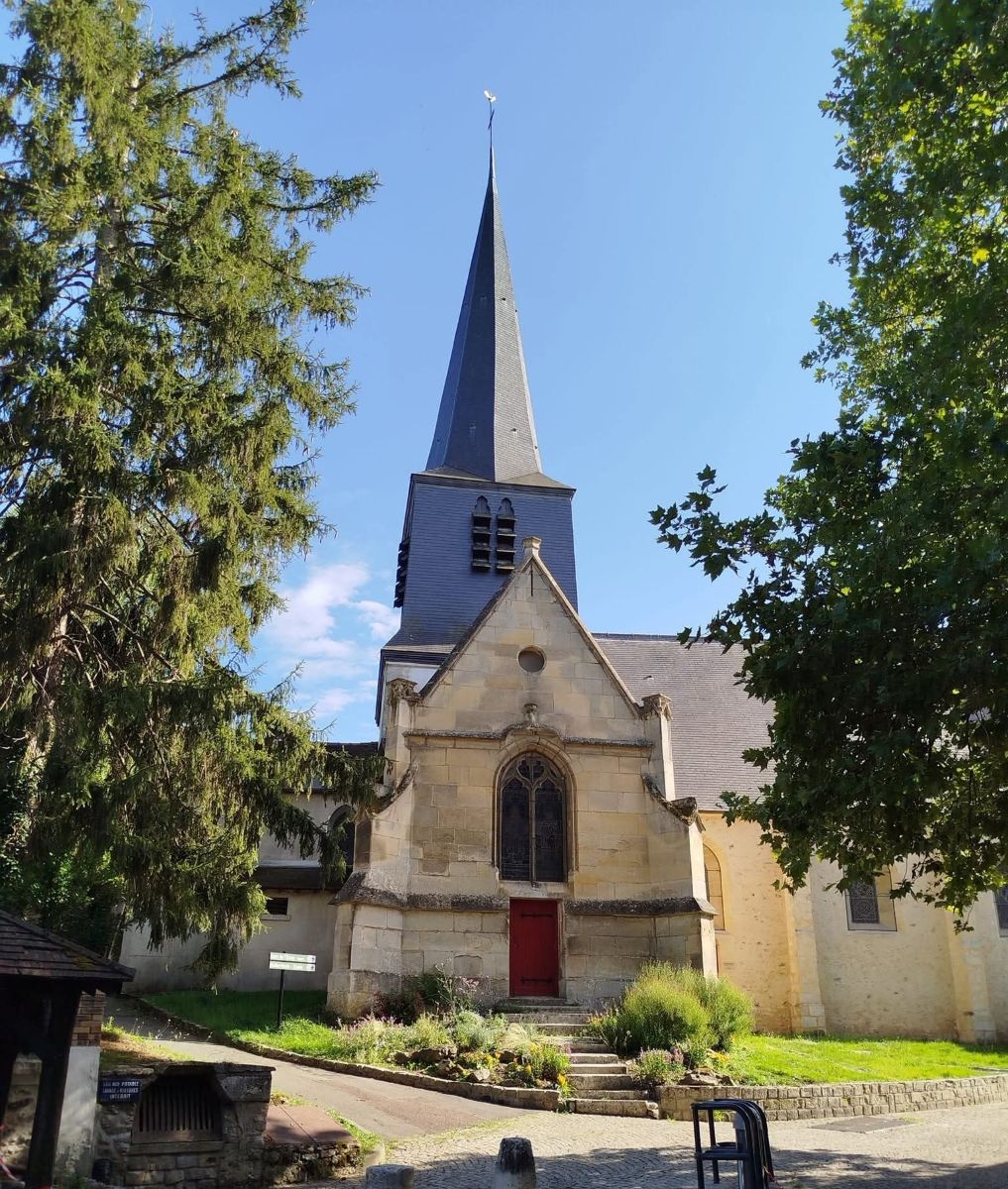
The Château L’Etang-la-ville castle, 8 rue Fonton, was built in the 17C by Pierre Séguier, Chancellor under Louis XIII, who made him a peer and Duke of Villemaur, then Chancellor and Keeper of the Seals under Louis XIV. Pierre Séguier was one of the founding members of the Académie française. The castle is currently occupied by the city hall. It houses the remains of the castle of Pierre Séguier, The castle was later acquired by several families. Occupied by the nazis during WWII, the castle was devastated and the estate dismembered. It served as a filming location for H.G. Clouzot’s 1954 film Les Diaboliques. Destined for demolition, the castle was saved by the mobilization of the locals residents and renovated from 1967 to 1969 to house the City/town hall
As early as the 12C, a fortified house housed the first lords of Etang-la-Ville. It was the Manoir de la Salle. After the construction of the castle by the Séguier family, the manor was abandoned for many years and later became the “castle farm.” In 1924, the farm was transformed into the beautiful dwelling that can be seen today at 10 rue de Fonton. Recently renovated, it has also regained its former name, Manoir de la Salle. 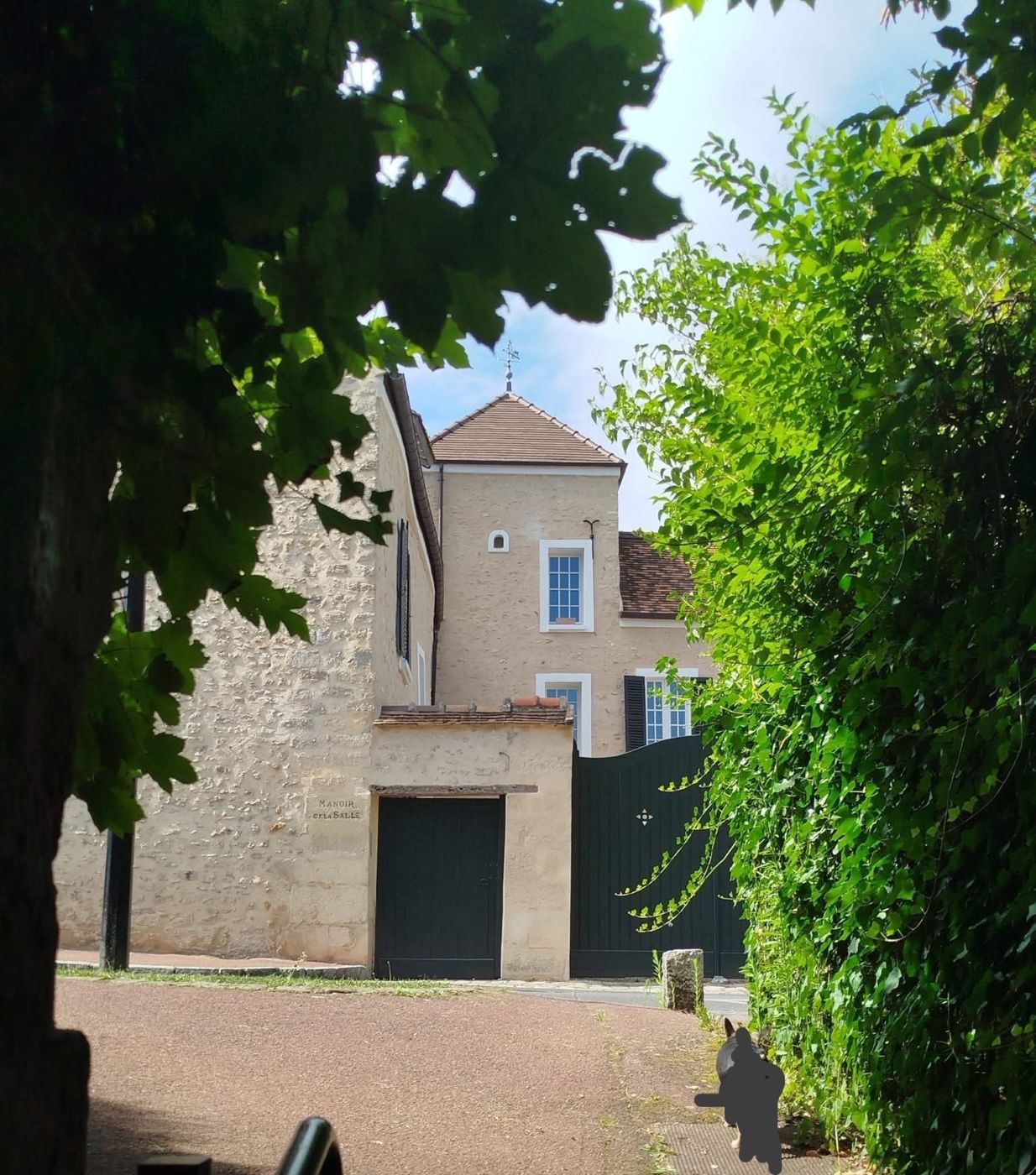
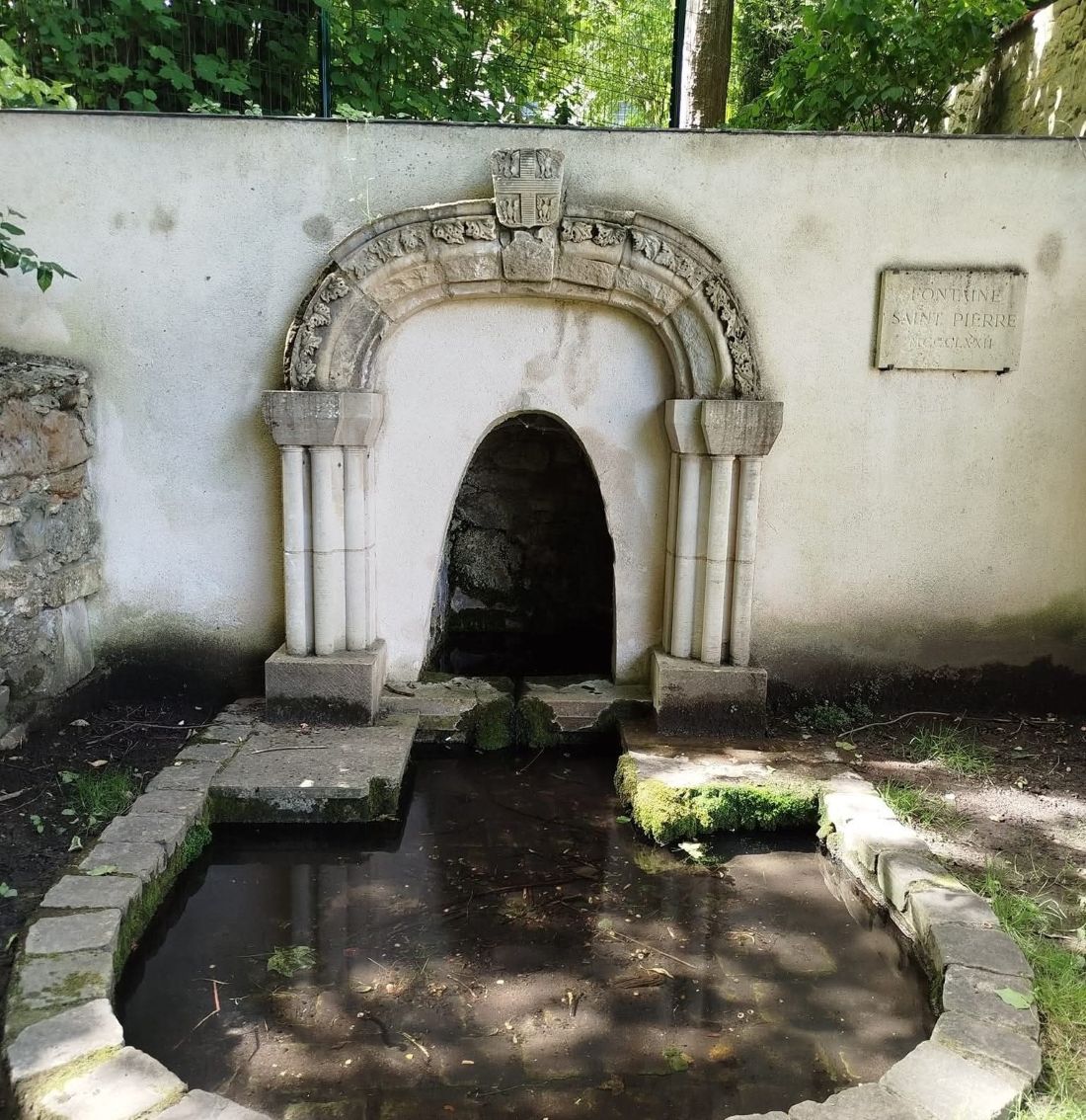
The fontaine Saint-Pierre fountain It is located next to the city hall roundabout. Its original location, as could still be seen at the beginning of the 20C, was in the park of the castle, now the town hall. It is surmounted by the sculpted coat of arms of the Montaigu, the first Lords of L’Étang-la-Ville, as well as the date “1372”. This fountain was subsequently destroyed during the construction of the buildings of the Parc residence. The pieces, collected by the village residents, allowed the Stagnovillois Defense and Protection Committee to reconstruct the original fountain, with the help of the stonemason school of the Paris chamber of apprenticeship. It was erected in its current location by the village on October 26, 1985.
Other things to see here with more time are the Saint-Jacques cross, erected in the center of the village, has the distinction of having been destroyed during the revolutionary unrest of 1789-1790, then rebuilt. According to local tradition, this is where the witch “Gonbaud” was burned at the stake. There is a wonderful path walks of impressionists tradition which I did partially but worth the detour for more, This is the main Impressionist paths in L’Etang-la-Ville, follow in the footsteps of the Nabis to discover the village and its orchards. From the train station (Transilien L – Saint-Lazare), turn right onto Rue de la Station, then right again onto Rue de Marly. Here you will find the first reproduction: Landscape at Étang-la-Ville, 1900 Edouard Vuillard oil on paper mounted on cardboard Bequest of Carle Dreyfus, 1953, Musée d’Orsay, Paris, Then go down the ruelle de la Coulette to find the second reproduction: The House in the Trees or Roussel’s House at La Montagne, circa 1900 Édouard Vuillard, oil on cardboard Bequest of Lucie Schmidheiny, 1998, Fondation de l’Hermitage, Lausanne, Switzerland,Turn left on the Chemin de la Coulette and continue on the Rue de la Montagne to observe the third reproduction: Landscape with the Church of Étang-la-Ville, circa 1907/1927 Ker Xavier Roussel, pastel and charcoal on gray paper Musée d’Orsay, Paris, Continue straight ahead and then turn right on Rue Emile Guinard, and right again on Chemin de la Chancellerie. Then go down the path on the left and go around the Sainte-Anne Church, pass in front of the War Memorial, rue Jean Mermoz. Once you arrive in front of the Saint-Jacques Cross, turn right towards the town hall. You arrive in front of the fourth reproduction: “Les Marronniers”, circa 1920 Ker Xavier-Roussel, pastel on paper Private collection,At the roundabout opposite the Saint-Pierre fountain, take the bucolic allée de la Niche on the left. Turn right at the end of the alley, then right again on rue de Saint-Nom and left on rue de Mareil. You arrive at the tram13 station – L’Etang – Les Sablons stop. Turn right then left on the chemin des Sablons de la Brosse. Then the first right, chemin de la Bosse Brûlée to arrive at the fifth reproduction: In the Orchard at L’Etang-la-Ville, 1928 Ker-Xavier Roussel, glue painting on canvas French private collection,Then continue on the right and go up the chemin des Boulins on the left to find the sixth and last reproduction: Woman in a landscape of Ile-de-France, around 1928-1930 Ker Xavier Roussel oil on canvas Don Alain Verney, Musée départemental Maurice Denis, Saint-Germain-en-Laye, You can stop there and go back down the path to the L’Etang – Les Sablons station (Tram 13) or continue along the forest paths to the Etoile de la Maison Rouge to reach the Saint-Nom-la-Bretèche station (Transilien L and Tram 13).
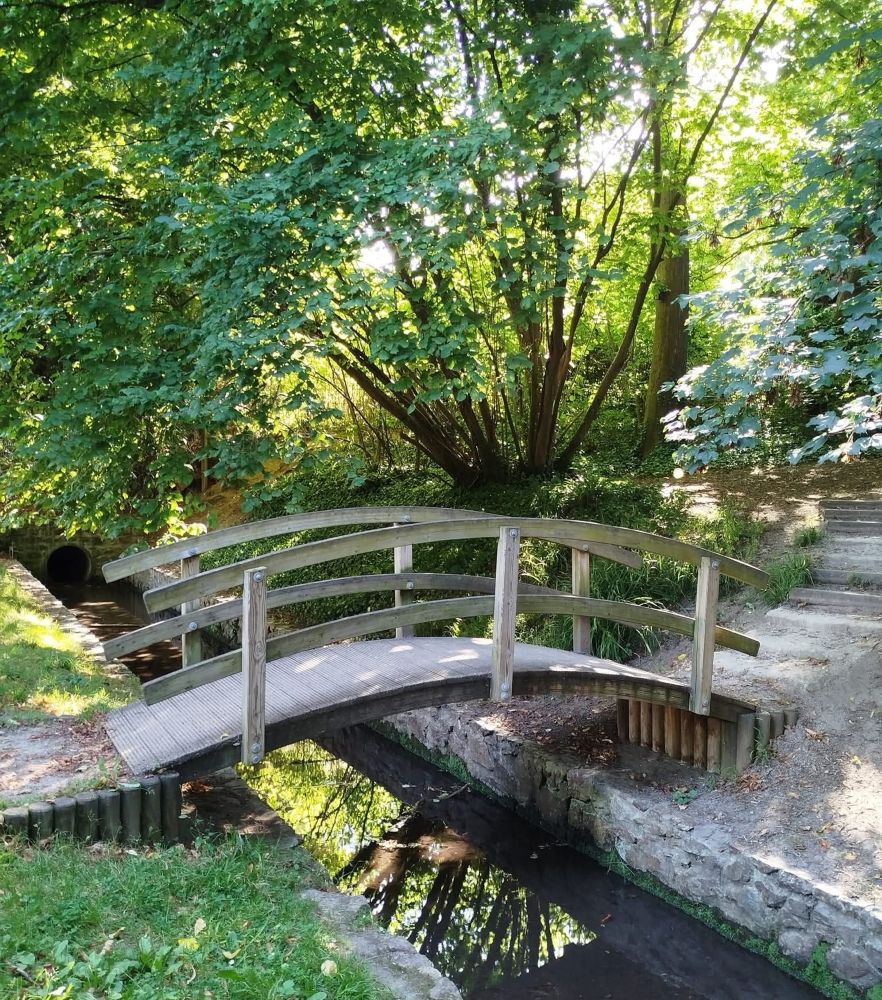
A bit of history I like tell us that the village wasoccupied by the Prussians during the Franco-Prussian War of 1870 and in 1871. At the end of the century, several painters of the Nabis movement ; Ker-Xavier Roussel, Edouard Vuillard ,lived in and visited the village, which is depicted in several paintings. From the 1960s onwards, the village welcomed new inhabitants, living in the village,and working in Paris and then in the La Défense business centre, quadrupling the population in 30 years.
The village of L’étang La Ville on its heritage : https://www.letanglaville.fr/Histoire-&-Patrimoine/2161/
The local Saint Germain Boucles de Seine tourist office on the impressionists paths of l’Etang La Ville : https://www.seine-saintgermain.fr/offres/chemin-des-impressionnistes-a-letang-la-ville-l-etang-la-ville-fr-5357217/
The Yvelines dept 78 tourist office on the Impressionists paths of l’Etang La Ville : https://www.destination-yvelines.fr/randos-a-pied/chemin-des-impressionnistes-a-letang-la-ville/
There you go folks, a historical wonderful area we love from our former hunting ground. The area of l’Etang La Ville is tops to visit for its history and architecture all surrounded by lush surrounding in noble French traditions. Again, hope you enjoy this post on this is LÉtang-la-Ville !!! as I .
And remember, happy travels, good health, and many cheers to all !!!

 Paris1972-Versailles2003
L’étang-La-Ville – the name takes me back to the time when I visited that small, very residential town on several occasions. I’d been told that Johnny Hallyday lived there, but I never actually bumped into him.
LikeLiked by 1 person
He was secluded there! Thanks for stopping by. Cheers
LikeLiked by 1 person