
I continue to dig deep into my cd rom vault and got me more pictures that makes writing this post for you and me, This one was closed by and several road warrior trails blaze thru it over the years , Therefore, let me tell you a bit on this is Chanteloupe les Vignes !!! Hope you enjoy the post as I.
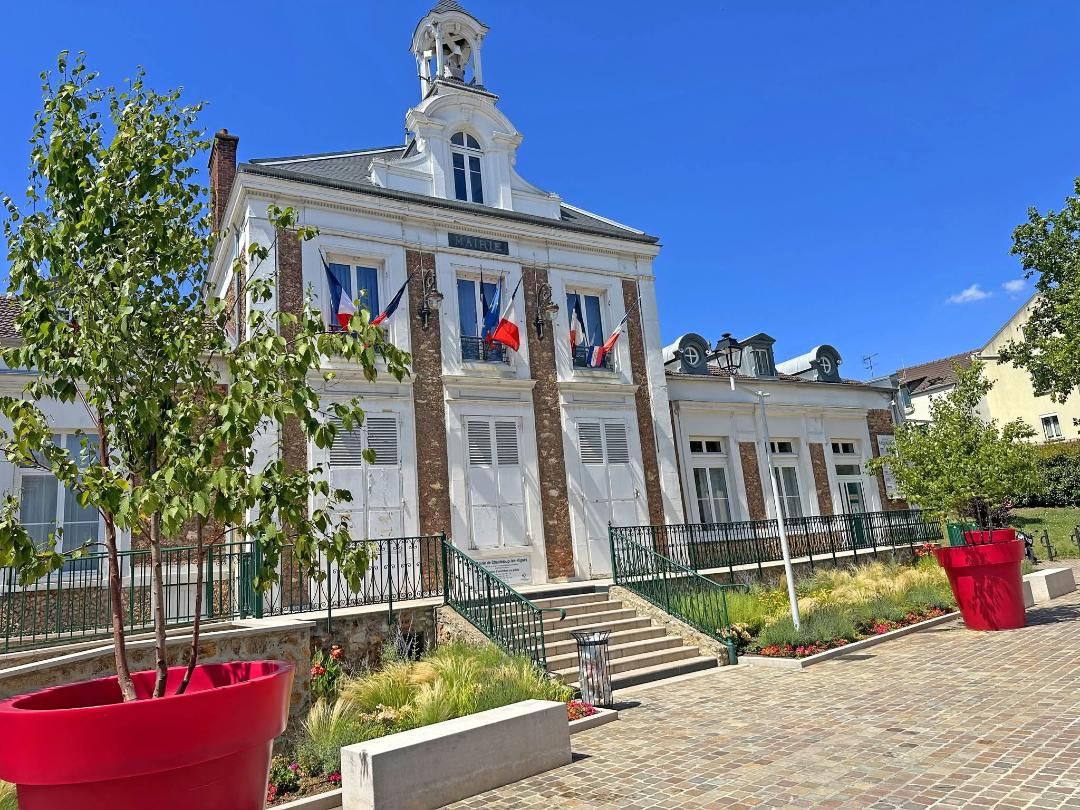
The town of Chanteloup-les-Vignes is located in the Yvelines department no, 78 in the Île-de-France region of my belle France. To the north, the Hautil massif or Hautil forest extends over the towns of Chanteloup-les-Vignes, Triel-sur-Seine and Andrésy. On the edge of the forest, a panorama extends beyond the Saint-Germain-en-Laye forest to Paris, where you can see the main monuments (Eiffel Tower, La Défense, Montparnasse Tower), and several panoramic viewpoints. The town is 10 km from Cergy, 11 km from Saint Germain en Laye, 6 km from Poissy, 30 km from Paris, 23 km from Versailles, and 435 km from my current home, I did come here from Versailles along the Rue de Reservoirs (D186) same road continues as Bd Saint Antoine, same road becomes the Route de Saint Germain en Laye then same road Route de Versailles where the road is numbered N186 going over the A13 autoroute de Normandie stay on the N186 which by the trafic circle of Marly le Roi becomes the Route de Mary ( D386) dir Saint Germain en Laye on the D190 past Poissy, and Carriere sur Seine to final destination Chanteloup les Vignes, As it is on a pouch of the Seine river needs driving skills or a gps,,,, From Paris easier on public transport on the Transilien line J which serves Chanteloup-les-Vignes station and provides access to Paris Saint-Lazare.
The Church Saint-Roch is located at 34 rue du Général Leclerc, The church has a longitudinal layoute. Access is via a bell tower-porch. The single-aisled nave ends in a semicircular chevet. The high altarpiece, dating from the late 17C, is a testament to a transitional style between Flamboyant Gothic and Renaissance. The porch opening beneath the rock is Gothic, with stone benches where one could rest after long pilgrimage journeys. This porch of Saint-Roch,has a double portal, two doors separated by a trumeau and surmounted by a tympanum. The beautiful proportions of the single nave, in Gothic style according to the taste of this early Renaissance, the two side chapels with on the left, that of Saint Vincent patron of winegrowers; and on the right, that of the Virgin give the plan of the church the classic form of a Latin cross. Near the entrance door, on the left, there is a small chapel traditionally reserved for baptismal fonts. From last March 10, 2025, the church is closed to the public until further notice due to filtration and damage found in its structure, a pity.
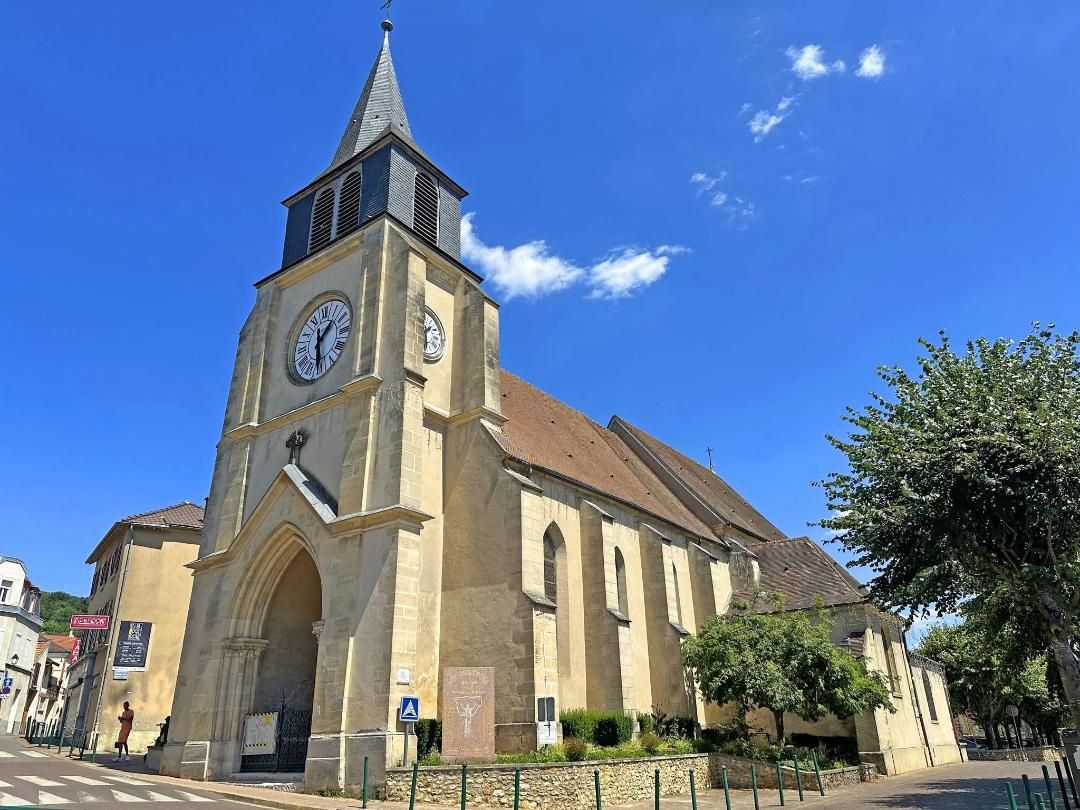
A bit of history on the Church Saint Roch tell us that it was from March 1514 to October 1518 that the city’s faithful were able to build a chapel, which was completed in several stages; the choir was built on land donated in 1535 between 1550 and 1555; the side chapels were rebuilt in the 17C. The population affected by plague epidemics, the church was placed under the protection of Saint Roch, protector of contagious diseases, including for animals. Many regional pilgrimages were made. Saint Roch was, at the end of the 13C, a noble bourgeois of Montpellier, son of the city’s governor. He abandoned his possessions and went to Rome as a pilgrim. On the way, he cared for and cured plague victims. Having himself contracted the plague and suffered a horrible wound on his thigh, he withdrew as a hermit in the woods near Piacenza. Legend even says that it was there that an angel came to console him and that the dog of a wealthy bourgeois from Piacenza named Gothard brought him bread and licked his wound! Gothard was converted by Saint Roch and became a hermit himself. At the end of the Middle Ages, Saint Roch was known for being the one who “saved” men and animals from the plague.
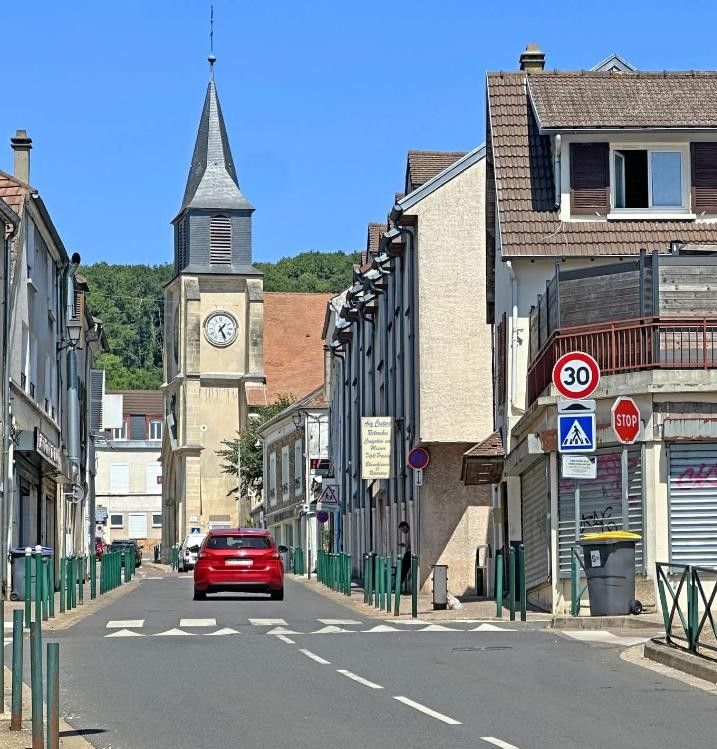
Anecdotes of this town tell us that the world’s second car hill climb took place on the slopes of Chanteloup on 27 November 1898 and was won by Belgian engineer and racing driver Camille Jenatzy in a Jenatzy Electric. It was organised by Paul Méyan, then director of La France Automobile. The current street is named after him. A small monument is visible at the top of the hill, On April 23, 1922, the Polymultipliée (Climbers’ Trophy or Polymultipliée, as it was called until 1970, is a French cycling race created in 1913 in Chanteloup-les-Vignes) took place. It was won by Fernand Canteloube. The route, which started in Chanteloup, climbed the Côte de l’Hautil to reach the plateau via the Hermitage and the Gueule Rouge crossroads, then descended via the Barbannerie farm and crossed Maurecourt and Andrésy before returning to Chanteloup.
A bit of history of Chanteloup les Vignes tell us that until 1789, Chanteloup was a hamlet of Triel and it was only from this time that it was formed into a town. Its territory was taken from that of Triel but also from a hamlet of Andrésy, Le Chapitre, which depended on the parish of Andrésy. During the siege of Paris, during the Franco-Prussian War of 1870, the village only had to endure one passage of the Prussians armies and the requisitions resulting from this passage. During their stay, the archives which had been hidden in the quarry were set on fire by the Prussians.
The Parish Carriéres -Chanteloup on the churches and Saint Roch : https://paroisses-carrieres-chanteloup.fr/home/notre-paroisse/#lieux-de-culte
The town of Chanteloup les Vignes on the church : https://chanteloup-les-vignes.fr/ma-ville/vos-services/annuaire-des-equipements/eglise-saint-roch
The Yvelines dept 78 tourist office for general info, : https://www.destination-yvelines.fr/visites-et-decouvertes/
There you go folks, a dandy spot in my sentimental Yvelines 78. Many memories of old in my early road warrior tours, a memorable region for us, and always looking forward to be back, eventually. There is so much choices that time is ticking, Again, hope you enjoy the post on this is Chanteloupe les Vignes as I.
And remember, happy travels, good health ,and many cheers to all !!!

 Paris1972-Versailles2003