
We have driven and walked in my eternal Paris, and would like to have an imprint in my blog on the wonderful family times we had there, There is so much to see , doing my best, and glad found me these pictures in my cd rom vault ,which now transposing in my blog for you and me, This was my former worked city, so glad to post more memorable spots on it, I thank you for your readership over the years and to bear with my rants! After all, Paris is to rant, shout and yelled about, me think. Therefore, here is my take on curiosities of Paris, part XLVI !!! Hope you enjoy the post as I.
During the Second Empire,(Napoléon III) Paris boasted up to 150 passages and galleries. Most often with apartments on the upper floors, they housed luxury shops, toy stores, theaters, booksellers, and restaurants. Today, only about thirty remain. See my posts on several of them,
The Passage des Petites-Écuries is located in the Porte-Saint-Denis quartier / neighborhood of the 10éme district or arrondissement of Paris. It is served by metro line 4 at the Château d’Eau station. This passageway owes its name to its proximity to the street of the same name. It occupies the site of the former Royal Stables or Petites Écuries royales in the 18C. Before 2001, this section was entirely incorporated into the passage that connected Rue d’Enghien to Rue des Petites-Écuries.
The Cour des Petites-Écuries begins under the archway of 61 bis Rue du Faubourg-Saint-Denis and ends under that of 18 Rue d’Enghien. It takes its name from its proximity to Rue des Petites-Écuries, which was close to the Royal Stables. Opened in 1780 as the “Rue des Petites Écuries du Roi” , the Rue des Petites-Écuries is associated with a courtyard that was reportedly laid out on the former estate of Ninon de Lenclos, a renowned 17C salonnière and writer. Originally opening onto the Faubourg Saint-Denis and the Rue des Petites Écuries, this street was equipped with Versailles-style annexes during the reign of Louis XV, which housed carriage horses, coaches, and wagons – hence the name of the place. At the corner of this street and the Rue du Faubourg Saint-Denis, the Petites Écuries du Roi were established in 1755, during the reign of Louis XV, and originally had only two entrances. In 1819, a third entrance was added on the Rue d’Enghien. Before 2001, the section of the Passage des Petites-Écuries connecting the courtyard to Rue d’Enghien was part of the courtyard itself. In 2001, the construction of unattractive buildings on a plot of land within the courtyard created the Passage des Petites-Écuries, a narrow, windowless passageway between the courtyard and Rue des Petites-Écuries. Since October 2015, the ground floor of No 16 has housed the Free French Foundation. It was in these premises that the sculptor Louis-Denis Caillouette, along with two others, opened a drawing and sculpture school for workers in the Faubourg Saint-Denis in 1836. The instructors trained decorative painters, car advertising artists, porcelain painters, jewelry engravers, and ornamental sculptors. At No 7 was the Brasserie Flo , now known as Floderer. The establishment, taken over in 1901 by Robert Flöderer, an Alsatian who had fled his native region annexed by Prussia in 1870, became “Brasserie Hans” and then “Brasserie Floderer” in 1909. The 1900s decor, created between 1910 and 1913, gives the place its unique atmosphere of an Alsatian tavern, with wood paneling, stained glass windows, and painted scenes glorifying Gambrinus, the king of beer. In 1918, in the aftermath of the Great War or WWI, names with Germanic sounds aroused dislike. The establishment was renamed “Brasserie Flo” to avoid scandals and regain favor with customers. In 2018, the new director, Jean-Noël Dron, head of the Les Grandes Brasseries de l’Est group, restored its original name of Brasserie Floderer.
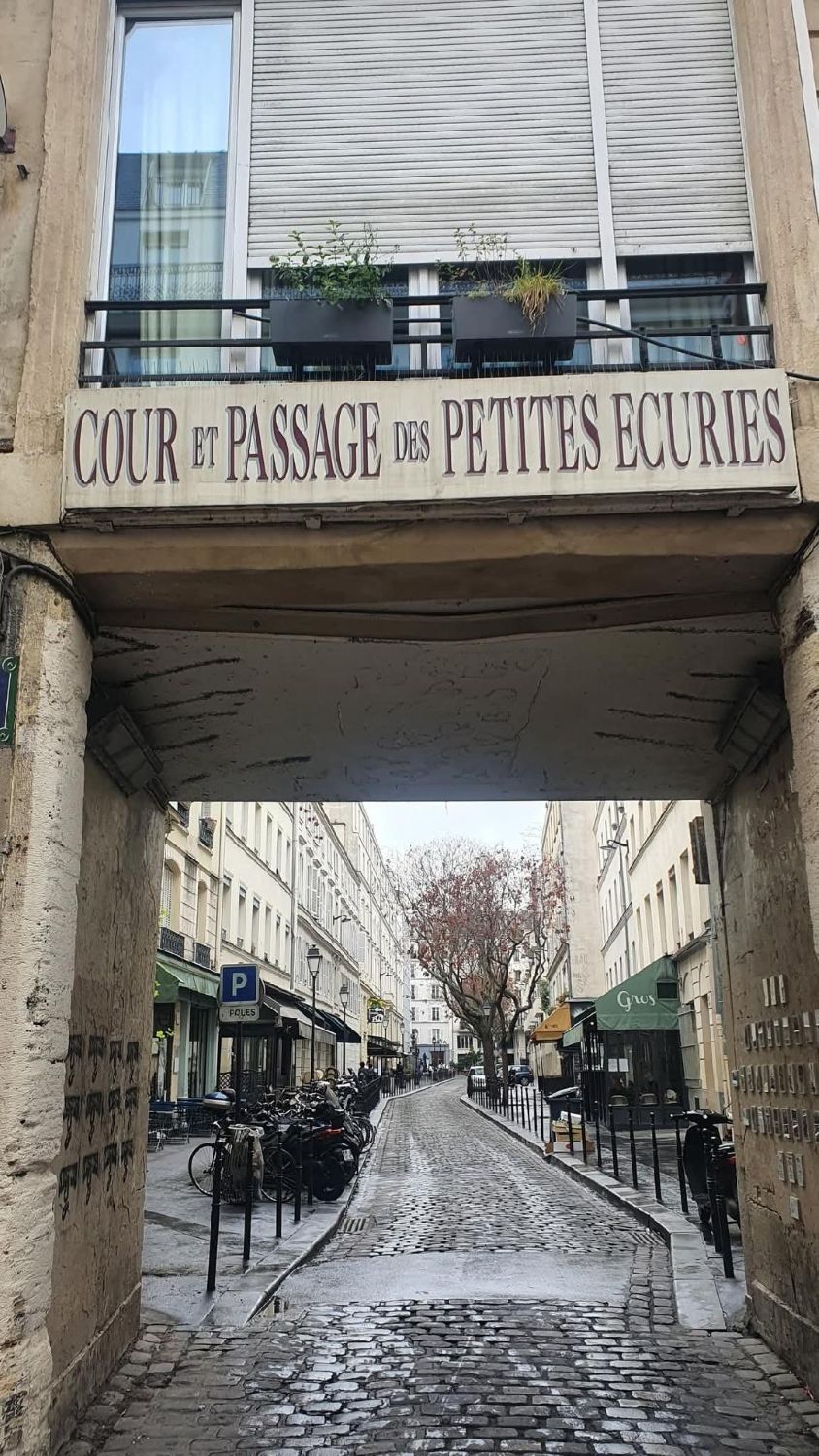
The Rue des Petites-Écuries begins at the Rue du Faubourg-Saint-Denis and ends at the Rue du Faubourg-Poissonnière. Before 1780, when it was created, it was an old path running alongside the Grand Égout de Ceinture (Great Belt Sewer). This street was opened in 1780, under the name “Rue des Petites-Écuries-du-Roi” , over the Grand Égout de Ceinture, which was channeled in 1740 and covered over in this section in 1769. During the French revolution, the “Rue des Petites-Écuries-du-Roi” became the Rue des Petites-Écuries . Notable buildings here are at Nos. 7 and 9: New Morning, jazz club. No. 10: Paul Verlaine lived at this address with his family before moving to Batignolles. No. 15: British actress Lucy Gordon (Russian Dolls, Gainsbourg: A Heroic Life) hanged herself in her apartment on May 20, 2009. No. 44: Hôtel de Botterel-Quintin d’Aumont is one of the main remaining vestiges of the golden age of the Poissonnière quartier or neighborhood. The building was constructed in 1782; the Count of Botterel-Quintin commissioned the sumptuous oval dining room, illuminated by a glass dome, decorated with marble and stucco. The decoration includes sphinxes, various animals, vases of flowers and fruit, and a bacchanalian scene on the ceiling. The hôtel also retains a staircase with Pompeian-style paintings.
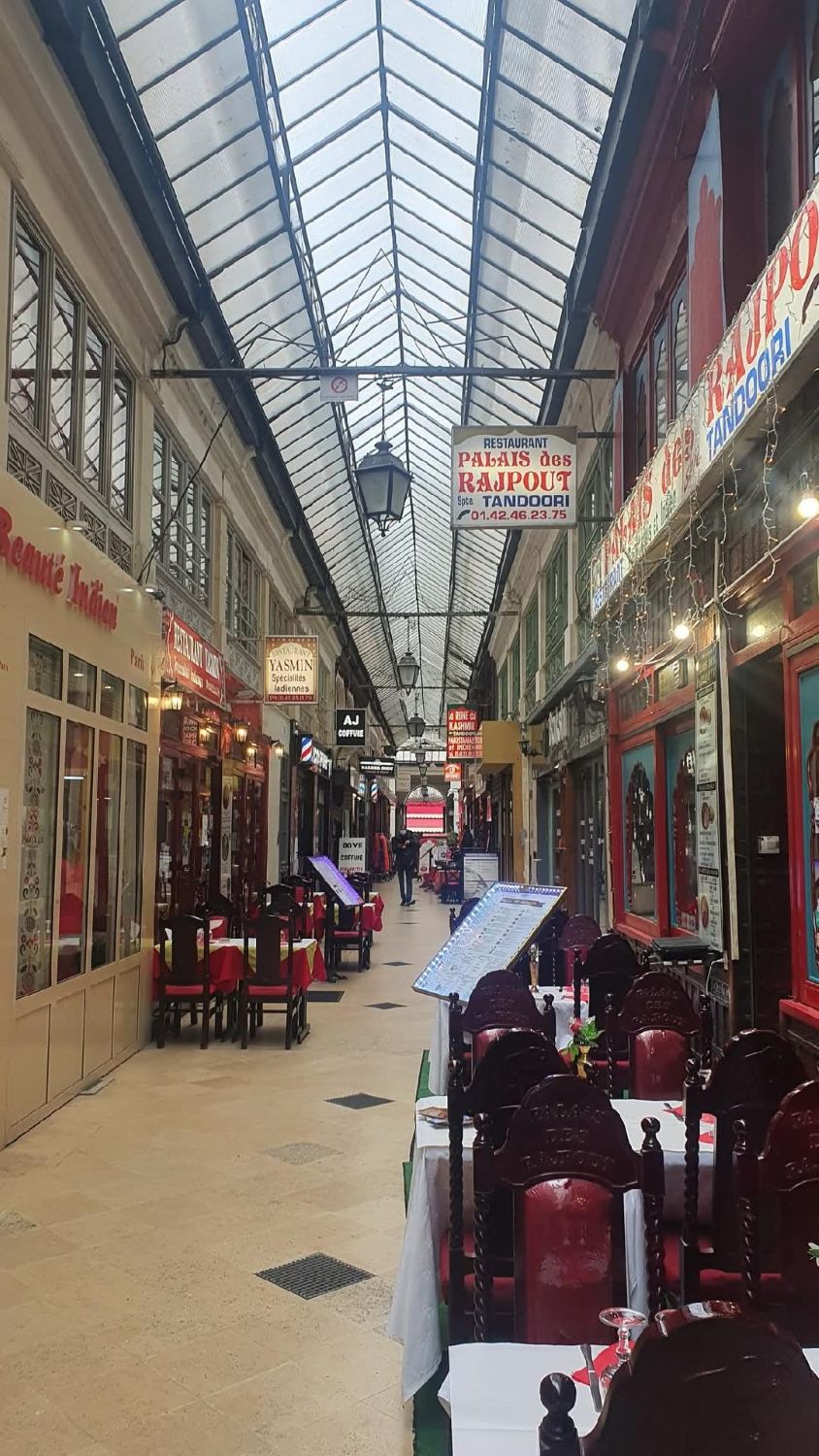
The Passage Brady (see post) located on a block covering 43 rue du Faubourg-Saint-Martin / 22 boulevard de Strasbourg / 33 boulevard de Strasbourg / 46 rue du Faubourg-Saint-Denis in the 10éme arrondissement. One part is covered by a glass roof while the other is in the open. The Passage Brady originally linked Faubourg Saint-Denis to Faubourg Saint-Martin. But in 1852, the creation of the Boulevard de Strasbourg cut the passage in two. It is therefore one of the few Parisian passages to be divided into two parts. The part that connects the Boulevard Saint-Denis and the Boulevard de Strasbourg is covered and home to numerous Indo-Pakistani, Mauritian and Reunionese restaurants and shops. If you’re craving naan with cheese and butter chicken, you know where to go! As for the section between Boulevard de Strasbourg and Faubourg Saint-Martin, it’s open-air and home to many costume rental companies.
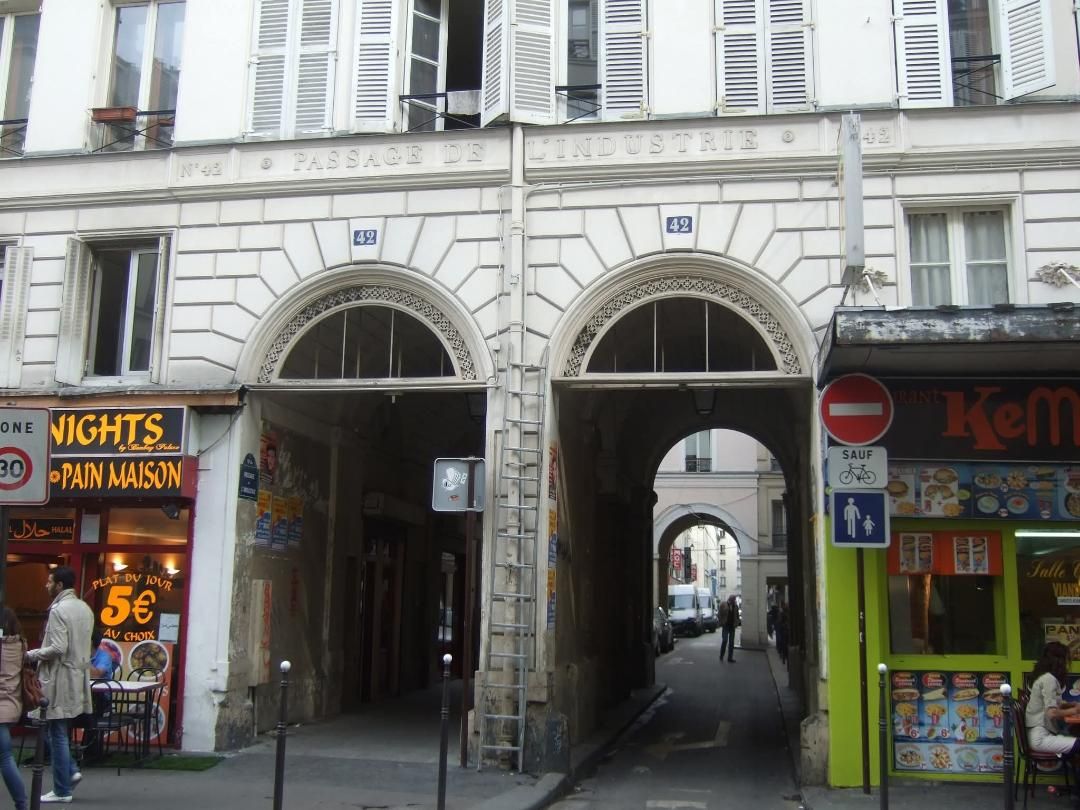
The Passage de l’Industrie is located in the Porte-Saint-Denis quartier or neighborhood of the 10éme district or arrondissement of Paris. Its name was given by the owner because the passageway was lined with shops and workshops related to small businesses and Parisian industry. The passage opened in 1827 between the Rue du Faubourg-Saint-Denis and the Rue du Faubourg-Saint-Martin; the section between the Rue du Faubourg-Saint-Martin and the Boulevard de Strasbourg was renamed Rue Gustave-Goublier in 1936.
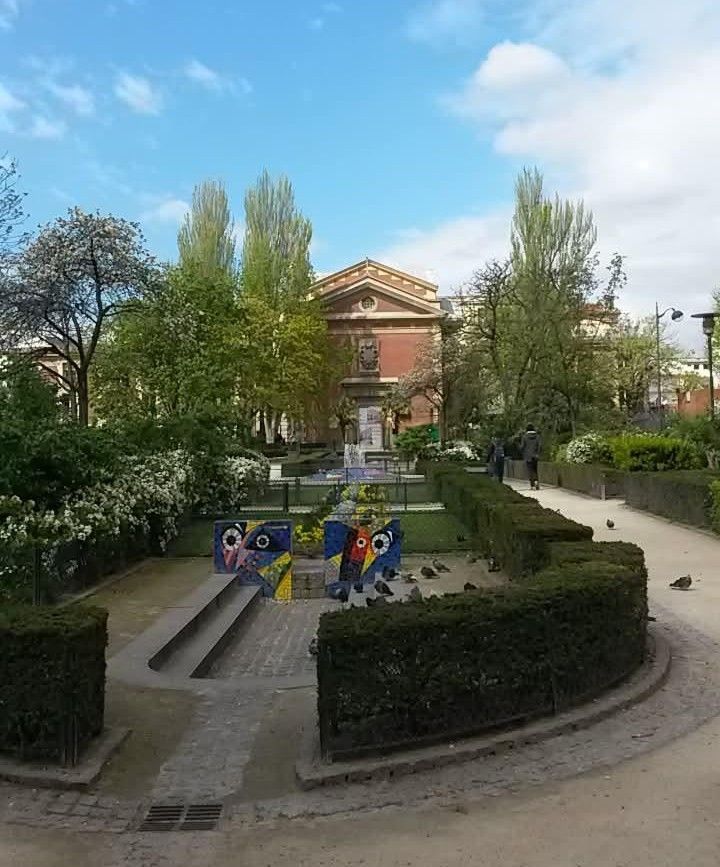
The Square Alban-Satragne is a green space in the 10éme arrondissement of Paris. This square is located at 107 bis, rue du Faubourg-Saint-Denis. It is served by metro lines 4, 5 and 7 at the Gare de l’Est station. It is named after Alban Satragne, the city councilor for the district and borough from 1937 to 1954. The square was opened in 1963 by the City of Paris on part of the former Saint-Lazare prison, located in the enclosure of the same name,(see pic) demolished in 1935 and replaced by the Saint-Lazare hospital, which closed at the end of 1998. Currently, only the infirmary and the chapel remain of the prison and the Saint-Lazare hospital, both built in 1834 by the architect Louis-Pierre Baltard, father of the renowned Victor Baltard, who worked alongside Baron Haussmann during the major urban renewal projects in Paris under the Second Empire. The buildings, which can be seen at the back of the square, where a granite stele with a bronze medallion of Saint Vincent de Paul stands ,made in 1974, The rest of the prison grounds are occupied by a nursery and a post office; the garden is located above an underground parking lot. The garden was redesigned and enlarged in 2020, and the former Saint-Lazare chapel was renovated in 2022-2023. The convent founded by Saint Vincent de Paul was converted into a prison in 1791, specifically housing women in 1794. The old Gothic chapel was demolished in 1823, and the old prison building was razed around 1824. The prison closed in July 1932, and the actual demolition took place between 1935 and 1940. Part of the former and vast Clos Saint-Lazare, the garden’s history is closely linked to that of the Françoise Sagan Media Library. Originally a leper colony in the 12C, the site was acquired in the 17C by the Congregation of the Mission of the Lazarists and its founder, Saint Vincent de Paul. A prison during the French revolution, a hospital-prison for women until 1930, then Saint-Lazare Hospital until 1998, the building was renovated into the Françoise Sagan Media Library in 2015.
The Paris tourist office on the 10éme arrondissement de Paris : https://parisjetaime.com/eng/article/explore-paris-s-10th-arrondissement-a843
The official Brasserie Floreder : https://www.floderer-paris.com/
The Paris tourist office on the covered passages: https://parisjetaime.com/eng/article/unusual-paris-the-covered-passages-a1801
The Association of passages et galeries of Paris :h http://passagesetgaleries.fr/passages-parisiens/
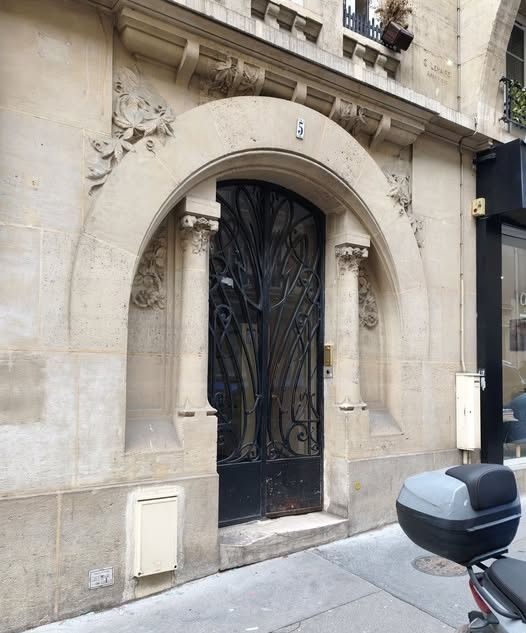
The Rue de Capri is located in the 12éme arrondissement of Paris. It is served by metro line 8 at the Michel-Bizot station. The street is named after the village of Capri on the Italian island of Capri in the Gulf of Naples. It was opened in 1909 under its current name and subsequently incorporated into the Parisian street network by decree of June 9, 1931. The buildings constructed in 1910 are unique in that they are the exclusive work of a single architect, Ch. A. or Charles Achille Lemaire.Éclectisme They are numbered from 1 to 14. A concentration of artisans, particularly in the furniture sector, is also noteworthy. No. 2: A plaque commemorates Jean-Pierre Dudraisil-Élie, a member of the Young Christian Fighters resistance, executed on August 16, 1944. No 5 see pic nice front door me think took the pic do not know why lol ! No. 11 bis: Numbered in place of No. 13, thus presenting a case of triskaidekaphobia (fear of No. 13). Even if most by this architect were done in the rue de Cadix and Rue Olivier de Serres
The Paris tourist office on the 12éme arrondissement de Paris : https://parisjetaime.com/eng/article/explore-paris-s-12th-arrondissement-a824
There you go folks, a dandy city to explore and enjoy with the family, Memorable moments in my eternal Paris, driving and walking all over in my road warrior trails brings out sublime awesome spots with nice memorable family visits of yesteryear always remember and always looking forward to be back, eventually. Again hope you enjoy the post on curiosities of Paris , part XLVI !!! as I.
And remember, happy travels, good health, and many cheers to all !!!

 Paris1972-Versailles2003