
I drove by here a lot as well as walking all over, near my working areas for several years, The area having wonderful historical monuments if still some well known museums needs to be visited more in my eternal Paris, such as the Musée Delacroix, This is my luck to find me pictures in my cd rom vault that should be in my blog for you and me. Therefore, let me tell you about the Musée National Eugène-Delacroix of Paris !!! Hope you enjoy it as I.
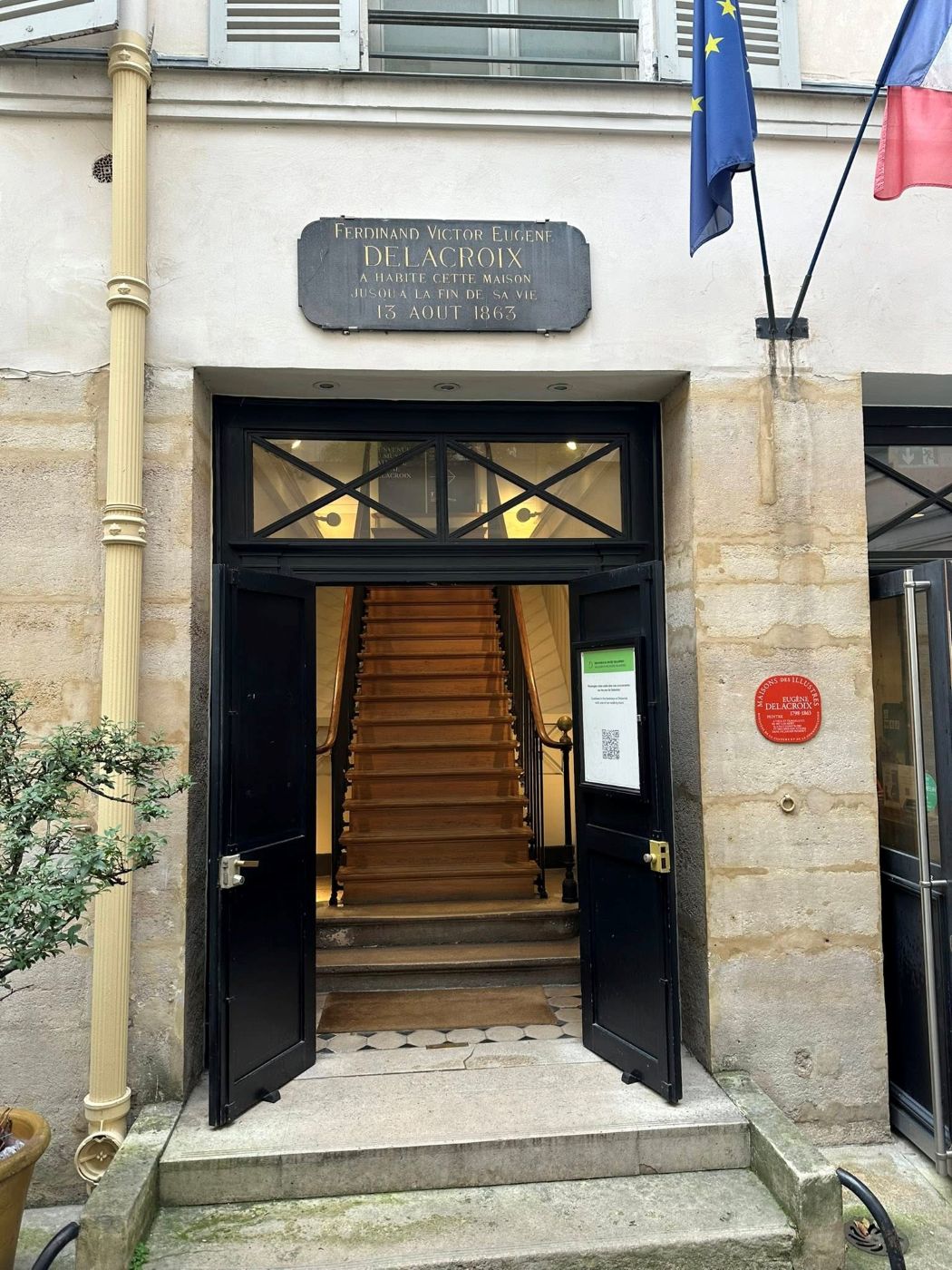
The Musée National Eugène-Delacroix was founded in the late 1920s by the Society of Friends of Eugène Delacroix, which became a national museum in 1971. It first opened in June 1932 with an inaugural exhibition dedicated to the painter and his circle, Delacroix and his friends. The Musée Delacroix is a unique space in the artist’s former home, a place of remembrance, created in homage to Delacroix by some of the greatest artists of the 1920s, such as Maurice Denis, Paul Signac, Édouard Vuillard, and Ker-Xavier Roussel, to name a few. It is a testament to their admiration for the painter and his work. Taking most of the text from the official museum site,
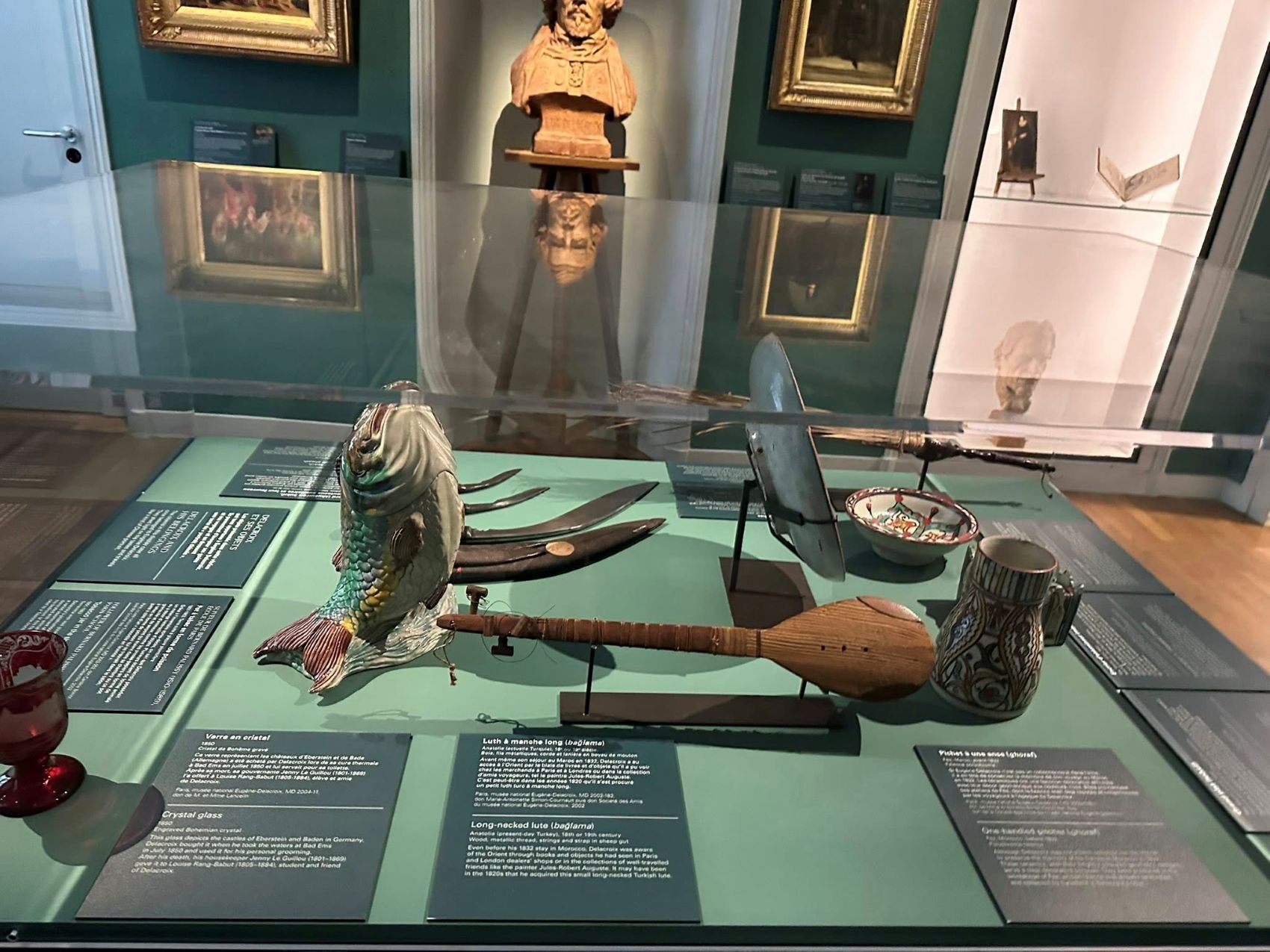
The Musée National Eugène-Delacroix is a unique and fascinating museum space, a rare gem at the heart of Paris. The museum collection, assembled with the creation of the museum in 1932, boasts over a thousand artworks by Delacroix ; paintings, drawings, prints, writings, and objects that belonged to him, as well as artworks created by artists who admired him. Called L’Atelier Delacroix when it first opened in 1932, the museum was championed and supported by a group of painters, collectors, and curators who were saddened by the thought of the artist’s final place of creation being demolished some seventy years after his death. None of them had known the artist or were related to him; they were motivated by a profound admiration for his art. Delacroix’s Journal remained a strong inspiration through to the late 1920s with the founding of the Société des Amis d’Eugène Delacroix presided by Maurice Denis (see post). The painter also frequently travelled to his house in Champrosay, a village near the Sénart forest and now part of the town of Draveil (Essonne 91)
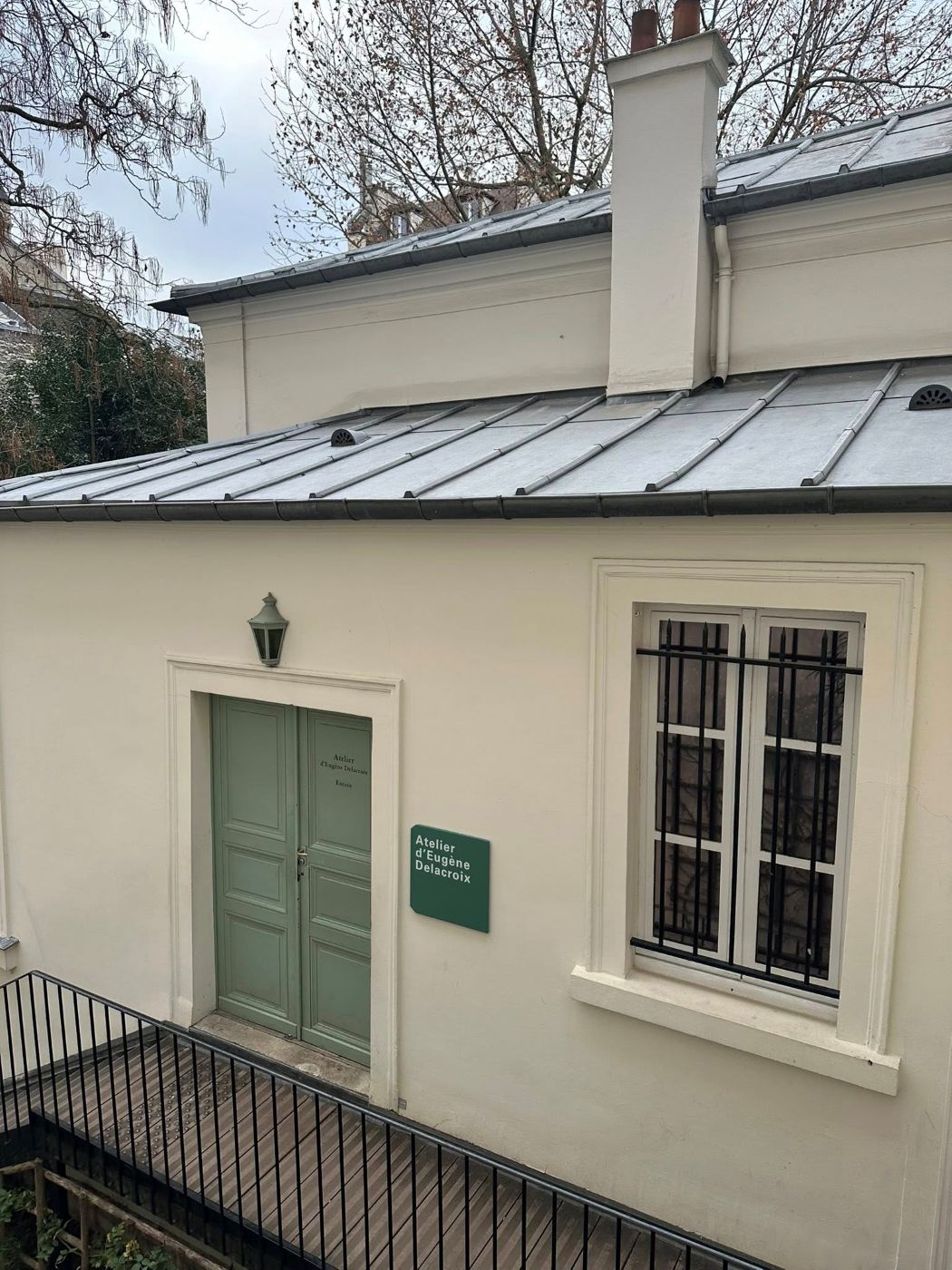
Eugène Delacroix moved to Rue de Furstemberg on December 28, 1857 and gave up his studio on Rue Notre-Dame-de-Lorette. It was too far from the Saint-Sulpice Church and the chapel he had been commissioned to decorate in 1847. Eugène Delacroix lived in this apartment until his death on August 13, 1863. His devoted housekeeper, Jenny Le Guillou, entered into his service around 1835 and was the only one who lived by his side, shielding him from the worries of everyday life. Eugène Delacroix died on August 13, 1863 in his apartment on Rue de Furstemberg. Jenny Le Guillou remained faithful to his last breath, watching over him until the wee hours of the morning. His choice of Rue Furstemberg was largely due to the existence of a small garden for his exclusive use with the possibility of building a studio there. He would therefore be able to live and work in a peaceful oasis of greenery at the heart of a vibrant neighborhood. The artist thus had his studio built in this garden of around 400 m2, hidden from view of the street.
Eugène Delacroix was born on April 26, 1798, near Paris, in Charenton-Saint-Maurice. The house of his birth has become a media library in the city of Saint-Maurice (in what is now the Val-de-Marne department 94. Eugène was the youngest of a family of four children The Delacroix family served the French revolution and the First Empire that followed it , When his father passed away, he and his mother moved to Rue de l’Université in Paris. The young Eugène went to the Lycée Impérial (now the Lycée Louis-le-Grand), where he formed loyal, life-long friendships, The death of his mother in 1814 left him feeling lost and alone, despite the presence of his older siblings, Charles and Henriette. With the help of his uncle, the painter Henri-François Riesener, Eugène Delacroix entered the studio of painter Pierre-Narcisse Guérin in 1815. It was one of the biggest studios in Paris at the time, frequented by many artists, At only twenty-four years of age, Delacroix submitted his first work to the Salon of 1822, inspired by Dante’s Inferno, Dante and Virgil in Hell (Musée du Louvre). The artwork immediately caught the attention of critics For the Salon of 1824, he presented a large painting depicting events of the Greek War of Independence, The Massacre at Scio (Louvre). In 1827, Delacroix exhibited several other paintings, including the masterful Death of Sardanapalus (Louvre). Inspired by Lord Byron’s tragedy, the painting portrays the Assyrian ruler upon a pyre, surrounded by his horses, his treasures, his wives, all the possessions he wanted destroyed with him, sentenced to death for treason On July 27, 28 and 29, 1830, the people of Paris revolted Eugène Delacroix drew inspiration from the events of 1830 for a painting that he submitted to the Salon of 1831: Liberty Leading the People, a monumental canvas that mixes classical allegory with contemporary realism. The following year, the massacre by police of residents of Rue Transnonain in Paris complicated the public display of the Barricades, as Delacroix referred to the painting. It was in fact returned to the artist, who nevertheless managed to show it in a retrospective of his work at the 1855 World Fair. Put on display in the Louvre in 1874, along with other works by Delacroix acquired by the State, Liberty Leading the People became an iconic work of art under the Third Republic. In January 1832, Delacroix accompanied King Louis-Philippe’s envoy, the Comte de Mornay, to Morocco Delacroix’s memories of Morocco stayed with him his entire life. The notes he took, the watercolors he painted, and the objects he brought back from his travels and kept in his studio, went on to inspire over 72 paintings on Morocco during his lifetime.
A large share of Eugène Delacroix’s work is dedicated to monumental decoration of both secular and religious buildings in Paris. In 1826, he had already been commissioned for Christ in the Garden of Olives for the Church Saint-Paul-Saint-Louis in the Marais quartier or neighborhood. In 1834, Delacroix received the backing of Adolphe Thiers and was commissioned for a fresco painting in the Salon du Roi of the Palais Bourbon (Chambre des Députés then National Assembly); in 1837, he received a commission to decorate the library ceiling of the Chambre des Députés celebrating arts and science. In the mid-1840s, he also painted the decor of the Palais du Luxembourg library, currently the Senate. In the early 1850s, Delacroix was honored to receive a commission for the central ceiling of the Galerie d’Apollon at the Louvre, which was designed in the 17C and left unfinished by painter Charles Le Brun. The City of Paris commissioned decorative paintings for the Salon de la Paix in the Hôtel de Ville, which were unfortunately destroyed by fire in the uprising of the Commune of 1871. Delacroix painted a moving Pietà for the Church Saint-Denis-du-Saint-Sacrement, on what is now Rue Turenne. In 1849, he was commissioned for the decor of the Saints-Anges Chapel in the one of the largest churches in Paris, Saint-Sulpice; his majestic work remained there until 1861. He produced two large mural paintings opposite one another, Jacob Wrestling with the Angel and Heliodorus Driven from the Temple, as well as Saint-Michael Slaying the Dragon on the ceiling. The 1855 Exposition Universelle in Paris, organized at the request of Emperor Napoleon III, provided an opportunity for Eugène Delacroix to receive recognition. Delacroix was thus designated one of the greatest French painters of his time. in January 1857, on his seventh attempt, the painter was finally accepted into the Academy of Fine Arts.
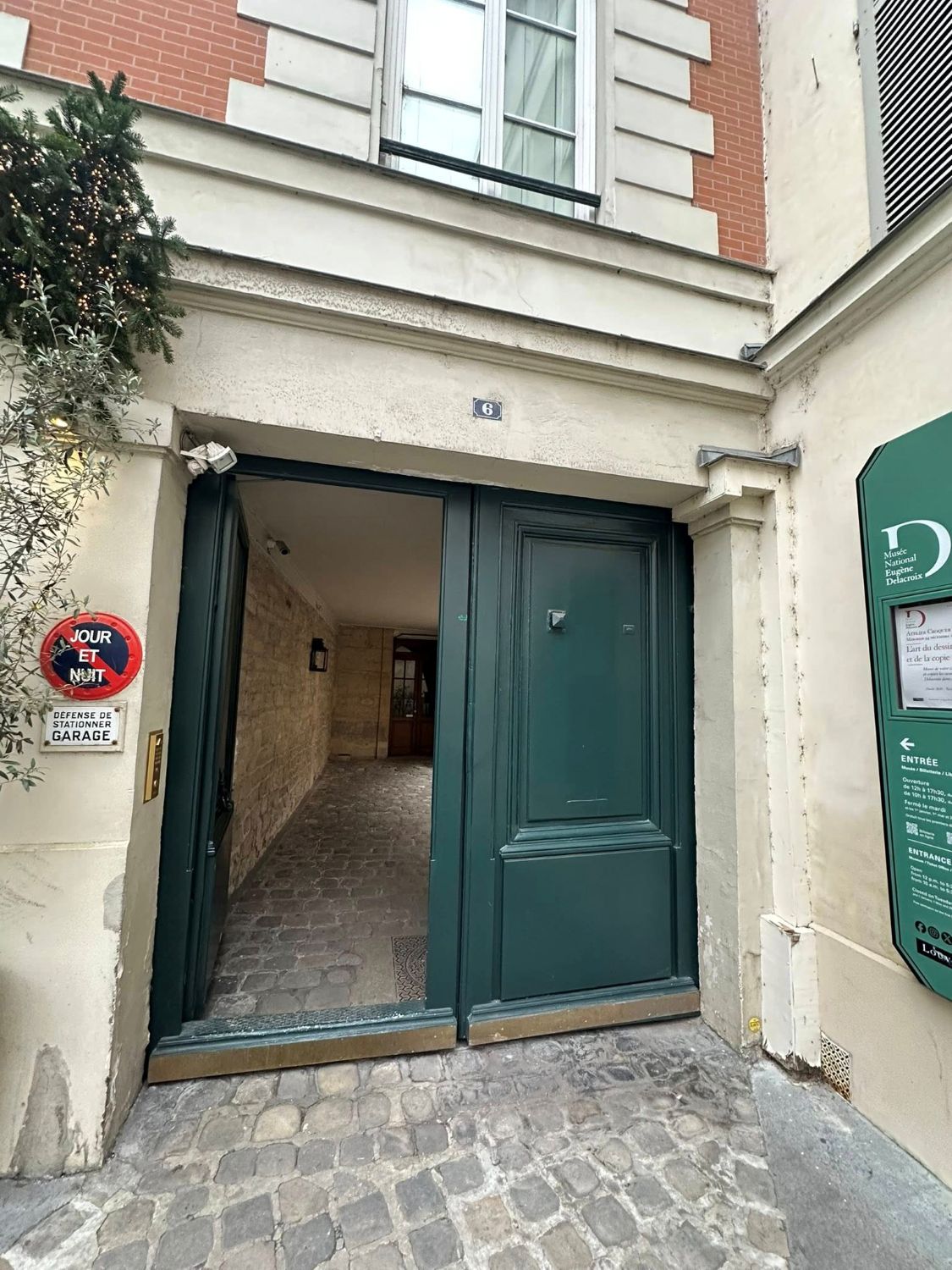
The Musée National Eugène-Delacroix is located at 6 Rue de Furstemberg, 6éme arrondissement de Paris, You can reach on the Saint-Germain-des-Prés Station of metro line 4 ; upon exiting the metro, cross the square in front of the Saint-Germain-des-Prés Church and head right on Rue de l’Abbaye. Take the first street on your left, which will be Rue de Furstemberg. The museum is directly in front of you, on the left. Also, on the Mabillon Station of metro line 10 ; upon exiting the metro, cross Boulevard Saint Germain and head down Rue de l’Échaudé. Take a left on Rue de l’Abbaye and then right on Rue de Furstemberg. The museum is directly in front of you, on the left. By bus it can be reach on lines 39, 63, 70, 86, 95, and 96 at Saint-Germain-des-Prés arrêt/stop, I have come by car with parking Indigo at 169 Boulevard Saint-Germain.
The official Musée Delacroix : https://www.musee-delacroix.fr/en/
The Paris tourist office on the musee Delacroix : https://parisjetaime.com/eng/culture/musee-national-eugene-delacroix-p3507
The Paris museum Pass on the musée Delacroix : https://www.parismuseumpass.fr/en/musees/musee-eugene-delacroix
The Île de France region tourist office on the musée Delacroix : https://www.visitparisregion.com/en/musee-eugene-delacroix
There you go folks, you are set to go to a lovely area of Paris and a nice well worth the visit museum. Again, hope you enjoy this post on the Musée National Eugène-Delacroix of Paris !!! as I.
And remember, happy travels, good health, and many cheers to all !!!

 Paris1972-Versailles2003
I really enjoyed our recent visit
LikeLiked by 1 person
I enjoy all of them lol! Thanks for stopping by. Cheers
LikeLiked by 1 person