
We have driven and walked in my eternal Paris, and would like to have an imprint in my blog on the wonderful family times we had there, There is so much to see , doing my best, and glad found me these pictures in my cd rom vault ,which now transposing in my blog for you and me, This was my former worked city, so glad to post more memorable spots on it, I thank you for your readership over the years and to bear with my rants! After Paris is to rant, shout and yelled about, me think. Therefore, here is my take on curiosities of Paris, part XLIV !!! Hope you enjoy the post as I.
The Pont Notre-Dame bridge is located in the former 4éme arrondissement de Paris now part of Paris Centre, connecting the Quai de Gesvres on the right bank to the Quai de la Corse and the Flower Market on the Île de la Cité. The bridge, built in 1853 during the Haussmannian transformations, is 105 meters long and 20 meters wide, its five initial arches having been reduced to three in 1912, including a central metal arch of 60 meters. It occupies the site of one of the very first bridges in the capital. In the axis of the bridge, south of the Rue de la Cité, the Petit-Pont connects the island to the left bank. This site is served by the metro stations Cité line 4 and Hôtel de Ville lines 1 and 11. The former Voie Pompidou road opened in 1967 and closed in 2016 (see photo).
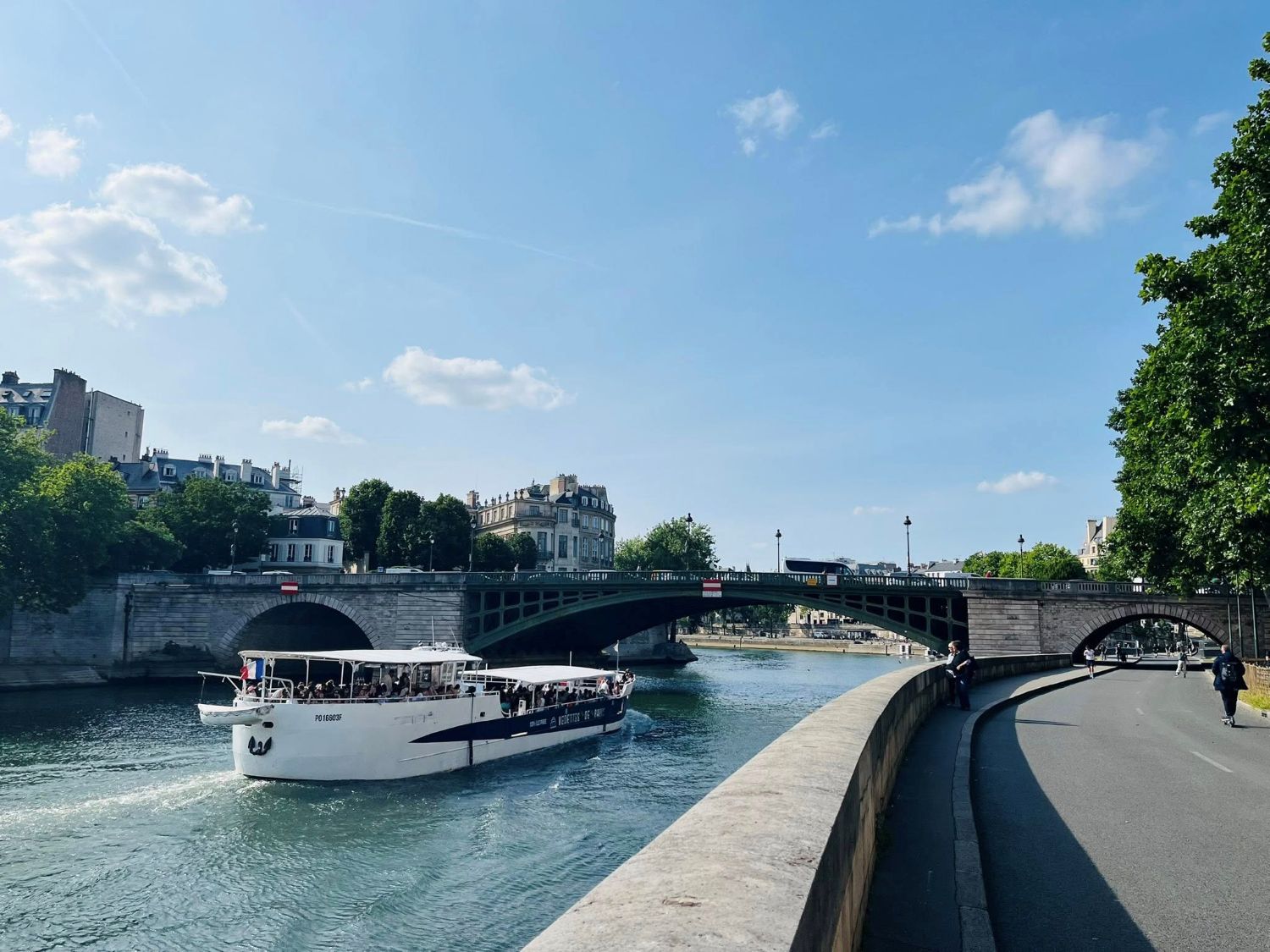
A bit of history tell us that it was on this site that one of the first two Parisian bridges was located, which, since antiquity, allowed the axis of the cardo maximus to cross the Seine on its large arm, in the extension of the Petit-Pont. In 886, the siege of Paris and the Norman attacks condemned it, and it was replaced by a plank bridge thrown over the old wooden piles to which grain mills were fixed: it was called the “bridge that one crosses on a plank”, the “bridge of the Mibray plank” , which would hold until the floods of 1406. Thus on May 30, 1413, Charles VI baptized the new Pont de Notre-Dame, a solid wooden structure connecting the Île de la Cité to the rue de la Planche-Mibray on seventeen rows of piles. On October 25, 1499, during a flood of the Seine, the Notre-Dame bridge opened and the houses collapsed with a horrible crash. While waiting for its completion, a ferry was built despite the obstacles raised by the abbot of Saint-Germain-des-Prés. The structure, completed in 1512, was still overlooked by houses and shops and quickly became a very busy and prestigious commercial center: Francis I made his triumphant entry into Paris there in 1515. In 1659, the bridge was repaired and redecorated to honor the arrival in Paris of the daughter of the King of Spain Felipe IV, Maria Theresa of Austria, who then became Queen of France and Navarre by marrying Louis XIV, in accordance with the Treaty of the Pyrenees. As part of dechristianization, the bridge was renamed “Pont de la Raison” during the French revolution. The bridge that succeeded it in 1853 on the same foundations was built in masonry in line with Haussmann’s transformations and following the decision to lower the level of Rue Saint-Martin. It has only five arches with an opening of 17 m to 19 m, its deck is lowered by 2.7 m. Following numerous river accidents that occurred there , it was nicknamed “Devil’s Bridge”. The current Notre Dame Bridge, 106 meters long and 20 m wide, was inaugurated in 1919. It has a central steel arch of 60 meters. The two side arches in basket handle reused the old arches and piers dating from the Renaissance. In 1720, Antoine Watteau painted the painting L’Enseigne de Gersaint for his art dealer friend Edmé-François Gersaint, which was installed on the Pont Notre-Dame. In Victor Hugo’s Les Misérables, Inspector Javert commits suicide by jumping from this bridge; a precise description of the turbulence of the Seine at this point (in Part 5 “Jean Valjean”, Book 4, Chapter 1: “Javert Derailed”).
The Paris tourist office on Paris Centre (incl arrond 1-4) : https://parisjetaime.com/eng/article/explore-the-centre-of-paris-a846
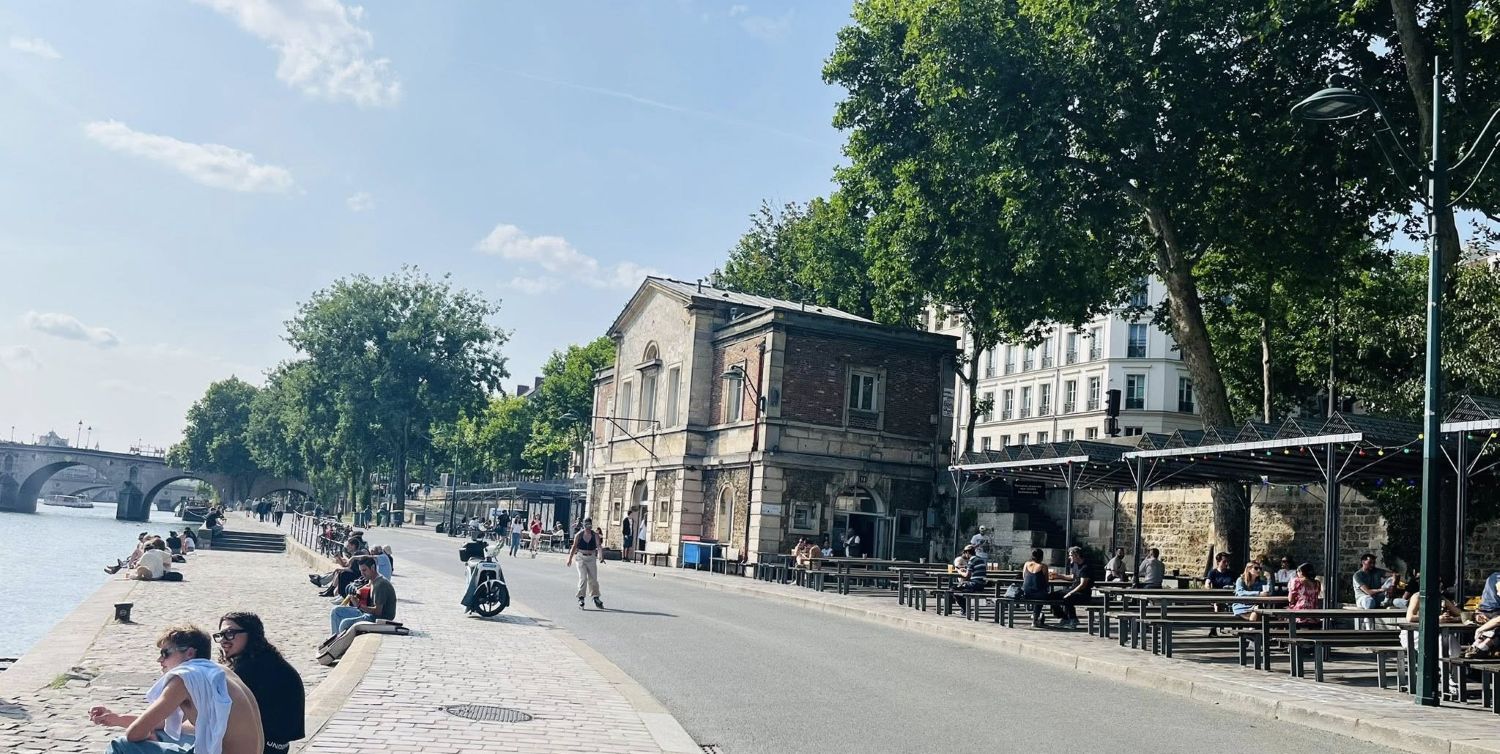
The Quai des Célestins is a road located along the Seine, in the former 4éme arrondissement now Paris Centre. The quay is an almost straight boulevard of about 400 meters which runs along the northern part of the Seine overlooking it, located on the right bank of the river. It is extended upstream by the Quai Henri-IV and downstream by the Quai de l’Hôtel-de-Ville. A single dwelling is located on the odd-numbered side: the Maison des Célestins, (see pic) built on the Port des Célestins and which has an entrance at the level of the quay. The quay takes its name from the Convent of the Célestins which was established there. The Quai des Célestins is served nearby by metro line 7 of Pont Marie and Sully – Morland stations. In 1352, the Celestines established a convent there, which is now replaced by the Celestine barracks of the Republican Guard. The quay was rebuilt and paved in 1705. At this location the Port Saint-Paul, a former port of Paris, present on the maps of Paris from 1760 to 1771. This Port Saint-Paul, at the end of Rue Saint-Paul, is sometimes indicated as Quai Saint-Paul, or Quai and Port Saint-Paul. It is mentioned in Zola’s Rougon-Macquart on the baptism of the son of Napoleon III, Louis-Napoleon, Prince Imperial, on June 14, 1856 in His Excellency Eugène Rougon, chapter IV). Notable buildings here are at the level of Boulevard Henri-IV is the Square Henri-Galli which notably contains the (moved) remains of one of the eight towers of the Bastille prison. At the exit of Rue Saint-Paul and Rue du Petit-Musc: site of the former Port Saint-Paul. No. 32: History of Paris sign indicating the site of the former Barbeau tower destroyed at the end of the 16C or at the very beginning of the 17C, Site of the “La Croix-Noire” tennis court where Molière and the troupe of the Illustre Théâtre performed in 1645. The playwright was arrested and taken to the Grand Châtelet for a debt he owed to his candle snuffer, The Maison des Célestins, formerly the Port Saint-Paul guardhouse. A small building backing onto the Quai des Célestins. Abandoned in the 1960s, when cars took over the new Voie Georges Pompidou, it became a restaurant and bistro after its closure to trafic in 2016, Built in 1861 at the request of the Public Relief Department of the Police Prefecture for the needs of the navigation service. In reality, its construction is older, established in 1837, during the development work on the Seine .It was a guardhouse (a police station). It is now a trendy spot called Les Nautes, in memory of this brotherhood of boatmen, a vestige of which is housed in the Cluny Museum: the pillar of the Nautes, erected in homage to Jupiter. Your feet in the water, gaze lost on the Île Saint-Louis, Parisians come here to sip a drink. The building, on two levels – quai side below and city side above – is a throwback to a time when river traffic in Paris was mucher denser.
The Paris tourist office on Paris Centre (incl arrond 1-4): https://parisjetaime.com/eng/article/explore-the-centre-of-paris-a846
The Rue Danton is located in the La Monnaie quartier or neighborhood in the 6éme arrondissement or district of Paris. It is 180 meters long, and begins at Place Saint-André-des-Arts and 1 Rue Suger and ends at 116 Boulevard Saint-Germain and Rue de l’Éperon. It is served by metro line 4 at the Saint-Michel station. Since its origin in 1890, the street has been named after Danton, who lived nearby. It was only opened between 1888 between Suger and Serpente streets and, in 1895, between Serpente street and Saint-Germain boulevard. Notable buildings here are at No. 1: building constructed in 1900 by the engineer François Hennebique and the architect Édouard Arnaud, the first Parisian building using the Hennebique System reinforced concrete technique (see below). The background of the building’s facade was decorated with Art Nouveau ceramics or mosaics by the ceramist Alexandre Bigot. No. 5: “rental house” The dancer and choreographer Isadora Duncan moved to this address in 1909, where she had both a dance studio and her private apartments. No. 8: Hôtel des sociétés savantes, occupied by the Faculty of Arts, built in 1900, in stone and brick on the site of the Hôtel de Thou (whose address was then 13, rue des Poitevins). It was called Hôtel Mesgrigny when it was inhabited by the bookseller Buisson, publisher of the Cabinet des modes. At the beginning of the 19C, it was the Hôtel Panckoucke, The building known as Maison Hennebique built in 1901, this astonishing building resembles the Art Nouveau style with its decorative elements, notably the ceramics and mosaics. It is difficult to guess behind the plaster imitating stone that the building is constructed of reinforced cement. At the corner of rue Danton and place Saint André des Arts, it showcases by example the qualities of the “Hennebique System”, a construction process devised by this pioneer of reinforced concrete, author of a series of patents filed between 1889 and 1892. François Hennebique entrusted the realization of the plans for 1 rue Danton to the Lyon architect Edouard Arnaud . Built between 1898 and 1901, the prototype building demonstrates the aesthetic potential of the new material, the fruit of cutting-edge technical innovations. Covered with a coating imitating the color of stone, the concrete reveals its potential for classic adaptation and meets the canons of the late 19C. It displays a relatively sober Art Nouveau style. Both the Parisian headquarters of the Hennebique company and private apartments on four floors, the building meets plastic criteria, reflecting the taste for Art Nouveau. See one of my favorite restaurants street level Le Clou de Paris (see post).

The Paris tourist office on the 6éme arrondissement de Paris : https://parisjetaime.com/eng/article/explore-paris-s-6th-arrondissement-a823
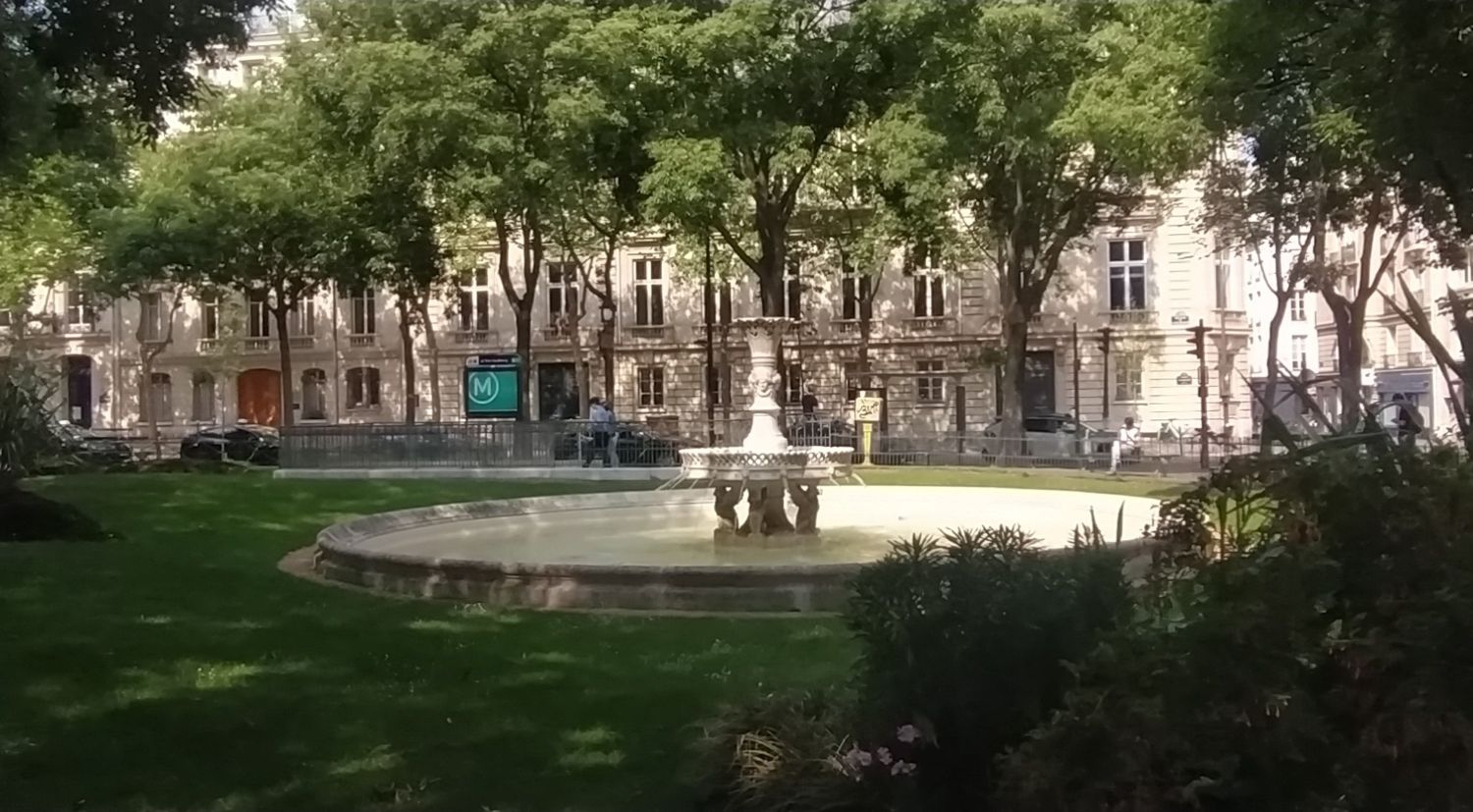
The Place Salvador Allende square inaugurated under Napoleon III in 1865 (known as Square Santiago de Chile (see below) until September 11, 2003) is a square in the 7eme arrondissement of Paris. The square is located at the intersection of Boulevard de La Tour-Maubourg, Avenue de La Motte-Picquet, and Rue de Grenelle. This square honors Salvador Allende, a physician and President of the Republic of Chile. The square was originally named after Santiago de Chile, the capital of Chile, named after the nearby Embassy of Chile in France. In 2003, despite opposition from local residents and the negative opinion of the borough council and the mayor of the 7éme arrondissement, was renamed Place Salvador-Allende. The Square Santiago-du-Chili is still located opposite this one, on the other side of Avenue de la Motte-Picquet ,the square inaugurated under Napoleon III in 1865, nevertheless retained its name. Notable buildings are the La Tour-Maubourg metro station entrance. Statue of Vauban. Since 1902, the square has been home to a white marble fountain created by the architect Gabriel Davioud in 1864 and sculpted by Théophile Murguet. It originally comes from the Place de la Madeleine, its counterpart being on Place François-Ier. On the other side, Square Santiago du Chili. The Square Santiago-du-Chili and the Square d’Ajaccio frame the Hôtel des Invalides on either side. There is a statue of Antoine de Saint-Exupéry, 37 meters, a work by Madeleine de Tézenas, painter of the Air.
The Paris tourist office on the 7éme arrondissement de Paris : https://parisjetaime.com/eng/article/explore-paris-s-7th-arrondissement-a825
There you go folks, a dandy city to explore and enjoy with the family, Memorable moments in my eternal Paris, driving and walking all over in my road warrior trails brings out sublime awesome spots with nice memorable family visits of yesteryear always remember and always looking forward to be back, eventually. Again hope you enjoy the post on curiosities of Paris , part XLIV !!! as I.
And remember, happy travels, good health, and many cheers to all !!!

 Paris1972-Versailles2003