
The town of Beynes is in the Yvelines department 78 , in the Île-de-France region of my belle France. The town extends into the Mauldre valley,and is 25 km from Versailles, 25 km from Mantes-la-Jolie, 29 km from Rambouillet, 71 km from Chartres, with closer towns already mentioned in my blog as Montainville, Créspieres, and Vicq, The town is 463 km from my current home, Again found me several pictures in my cd rom vaults that should be in my blog for you and me, Therefore, this is my take on the Château de Beynes !!! Hope you enjoy the post as I
Another of my memorable times while living in Versailles was coming to these quant towns off the beaten path such as Beynes. Went by it on the D191 many times on my way south to France and Spain to avoid tolls !
The château de Beynes is an ancient fortified castle. It constitutes a partially preserved medieval ruined complex. Beynes Castle was first mention in the 11C and must correspond to a feudal mound. Around the 12C the fortified castle was equipped with a nine-towered enclosure. In the 15C the castle adapted to the new conditions of artillery with a casemated circular corridor. The building was abandoned in the 18C. It was in a state of ruins at the beginning of the 20C.
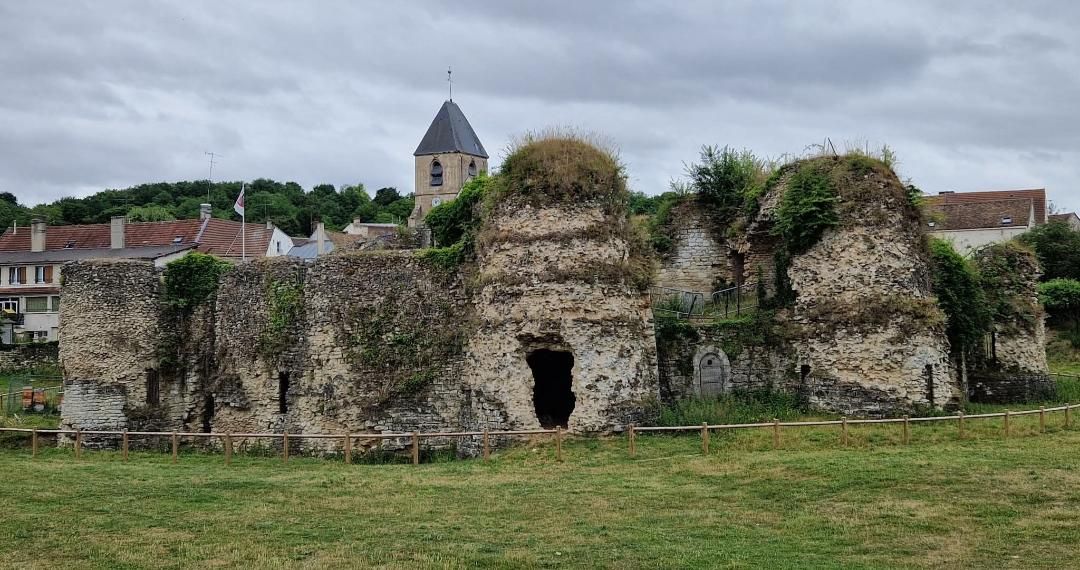
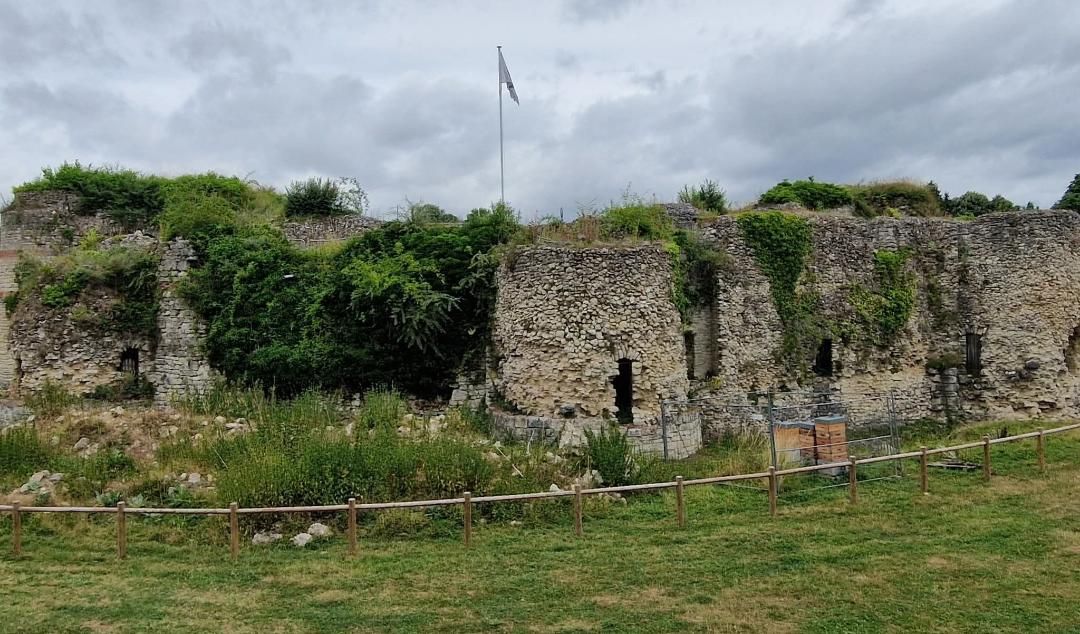
A bit of history I like tell us that the lordship of Beynes was passed on to Amaury I of Montfort and his grandson Amaury II of Montfort. Then Richard de Montfort completed the fortification of this first castrum between 1087 and 1092. This fortification would serve Simon II of Montfort, brother of Richard I, to resist the assaults of the King of England William Rufus in 1092, who, moreover, would not succeed in taking the towns of Montfort l’Amaury, Neauphle, Maule and Beynes. The castle then consisted of an ovoid tower with a 2.20 meters thick rubble base, a tower lined with an enclosure and accessed through a porch tower. The keep gate is located opposite the castle entrance to prevent anyone from forcing their way into it. The wall surrounding the village was still visible in 1714 and still appears on the 1818 land registry. Completed by a moat, it was pierced by three gates called “Paris”, “Mantes” and “Castle”.
With the Hundred Years’ War and the development of artillery, the castle underwent major alterations: the keep was razed, and two-story living quarters were added. The original enclosure was doubled with a second one punctuated by nine semicircular towers. The moats were widened, and the space between the two enclosures was filled to accommodate a casemate gallery topped by an artillery boulevard. Two gatehouses with two fortified towers controlled access to the village and the river. The castle was then a garrison, playing its role in defending the royal domain during the Hundred Years’ Wars. In the 15C, the castle lost its strategic importance due to the expansion of the royal domain. Robert d’Estouteville, chamberlain to King Charles VII and owner of the property, undertook some modifications, razing the keep and adapting the fortifications to the emerging artillery. The estate was given to Anne de Pisseleu, and in 1536 was ceded to Diane de Poitiers (Madame de Valentinois) by Henry II, her royal lover. She had a new home built by Philibert Delorme, designer of the Château des Tuileries, the Château d’Anet and part of Chenonceau.
In the 17C, in 1688, ladies of the high aristocracy gathered there around the mystic Madame Guyon. On October 4, they organized a meeting at the castle between Madame Guyon and their spiritual director, the Abbé de Fénelon. He became one of Madame Guyon’s most fervent disciples. In the 18C, the ruins of the castle served for a time as a backdrop for the English park laid out by the Phélyppeaux de Pontchartrain who then owned it. In 1967, the Château de Beynes was bought by the town, which took charge of saving the estate, which was then buried by vegetation. The fortified castle, now in ruins, has a circular plan, taking the form of the 11C motte-and-bailey. It is crossed by a central alley leading to two main buildings. It was surrounded by a deep moat and its drawbridge was protected by a barbican, the latter of which has now been restored.
The town of Beynes on its history/heritage : https://beynes.fr/article/histoire-de-beynes
The local Coeur d’Yvelines tourist office on the heritage of Beynes : https://www.coeur-yvelines.fr/patrimoine/nos-communes/beynes/
The Beynes history and heritage association : https://beyneshistoirepatrimoine.fr/
The Yvelines dept 78 tourist office on the route of castles see Beynes : https://www.destination-yvelines.fr/sur-la-route-des-chateaux/
There you go folks, another quant off the beaten path trip in my old backyard. Oh yes there is more to see an ever ending source of wonderful architecture and history in my belle France, I am working on it ! Beynes is nice and sentimental as passed by it many times on my short road warriors trails south. Again, hope you enjoy the post on the Château de Beynes !!! as I.
And remember, happy travels, good health, and many cheers to all !!!

 Paris1972-Versailles2003