
I am again to tell you about more streets of my eternal Paris. I have many many posts on Paris and several on the streets of the most beautiful city in the world. I have come up with pictures from cd rom vault that should be here for you and me. As always thank you for following my blog some since Nov 26, 2010. Therefore, here is my take on the streets of Paris, part XXV !!! Hope you enjoy it as I.
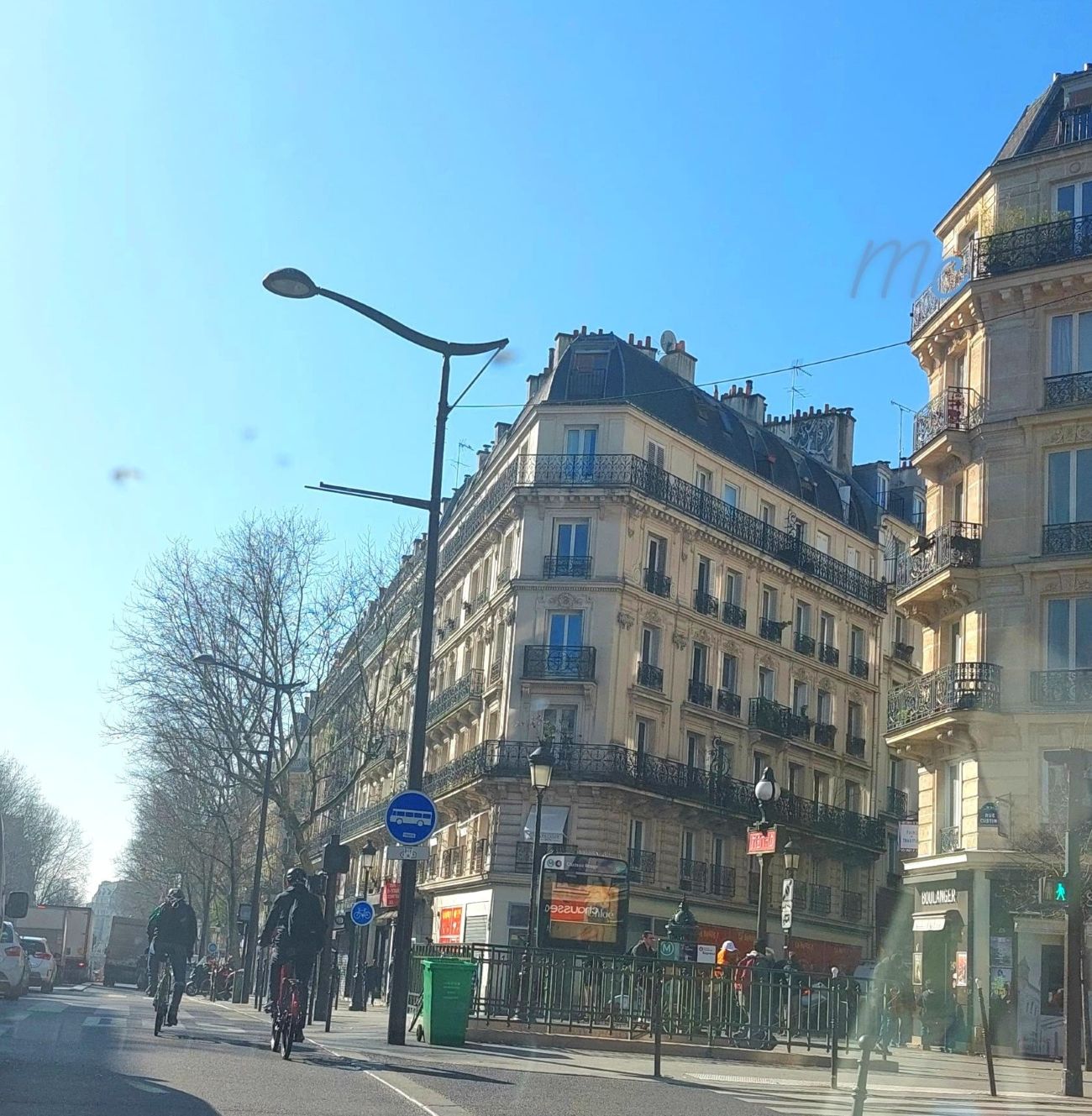
The Bd Barbès is in the 18éme arrondissement of Paris, created in 1867 as part of the transformations of Paris under the Second Empire (Napoléon III). The Metro line 4 follows the route of the boulevard underground, stopping at three stations along it: Marcadet – Poissonniers at the northern end of the boulevard (a station also served by line 12), Château Rouge (see pic) in its center, and Barbès – Rochechouart at its southern end (a station also served by line 2, which crosses the boulevard by means of a viaduct). The boulevard is an artery of the Goutte-d’Or, one of the main working-class quartiers or neighborhoods of Paris. This road was named in honor of Armand Barbès, a French politician born in Pointe-à-Pitre, Guadeloupe. From 1844, a large part of the Château-Rouge park located in the village of Montmartre was developed. While the width of the other streets was set at 12 meters, that of this new road, which connected Rue des Poissonniers, which connected with Rue du Faubourg-Poissonnière located south of Boulevard Marguerite-de-Rochechouart, to Rue Marcadet, was increased to 14 meters in width. Called “Rue Neuve-Poissonnière” on the 1850 land registry, it was renamed “Rue Lévisse” before 1860. After the annexation of the village of Montmartre to Paris by the law of June 16, 1859, Rue Lévisse was officially classified as a Parisian street by a decree of May 23, 1863. On May 23, 1863, another decree declared the extension of Boulevard de Magenta from the old Poissonnière barrier to Porte de Clignancourt to be of public utility. This 30-meter-wide road, designed as part of Haussmann’s renovations, encompassed Rue Lévisse, which was thus doubled in width, and the southern section of Rue des Poissonniers. It also encompassed Place du Château-Rouge. On March 2, 1867, this street, still under construction, was renamed Boulevard d’Ornano. In 1882, the section of Boulevard d’Ornano south of Rue Ordener was renamed Boulevard Barbès. Notable buildings here are at no, 10, La Fourmi, inaugurated on January 12, 1894: this concert café hosted performances by, among others, the young Maurice Chevalier, then barely 14 years old. Demolished in 1927, La Fourmi was rebuilt at the current no 114 Boulevard Marguerite-de-Rochechouart. From numbers 11 to 15 are the buildings of the former Dufayel Department Stores. The department stores closed in 1930. At no 90 is the Lutheran church of Saint-Paul de Montmartre, a member of the United Protestant Church of France and inaugurated on November 21, 1897. The formerTati store was from 1948 to 2020.
The Paris tourist office on the 18éme arrondissement de Paris : https://parisjetaime.com/eng/article/explore-paris-s-18th-arrondissement-a832
The RATP Paris transports on the metro line 4: https://www.ratp.fr/plans-lignes/metro/4
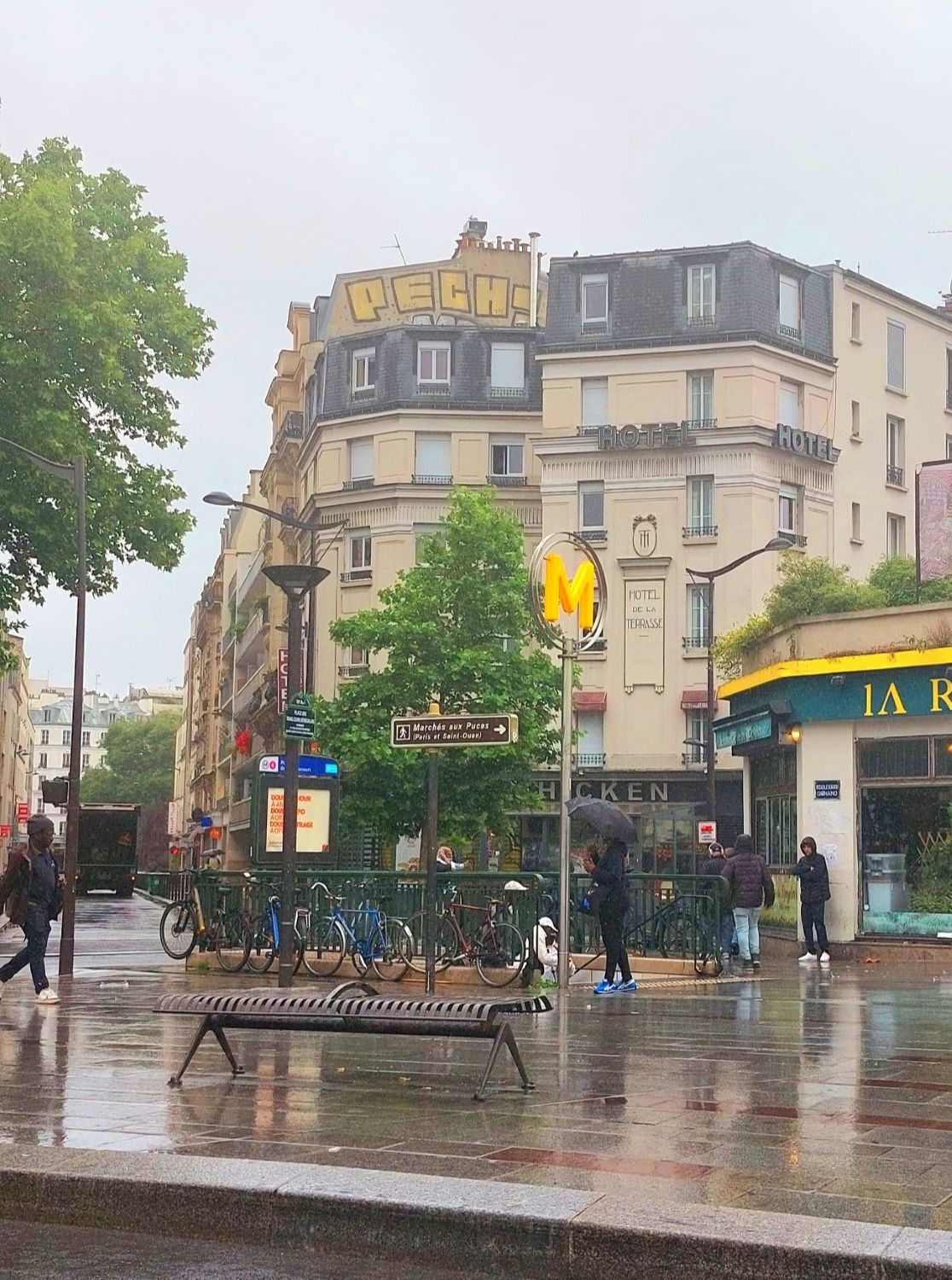
The Bd Ornano is located in the Clignancourt quartier or neighborhood of the 18éme arrondissement or district of Paris. The Metro line 4 follows the route of the boulevard underground, serving three stations along it: Marcadet – Poissonniers ,end of the boulevard (an interchange station also served by line 12), Simplon in its center, and Porte de Clignancourt (see pic) at its northern end. To the north, Place Albert Khan connects Boulevard Ornano to Rue Championnet, Rue Duhesme, and Rue du Mont-Cenis, the latter of which leads to Place du Tertre. The boulevard was opened in 1863 during Haussmann’s construction work. It originally extended as far as Boulevard de Rochechouart, but its southern section was renamed Boulevard Barbès in 1882. It crosses the former village of Clignancourt, annexed to Paris in 1860. Today, it is one of the main entry routes into Paris from the north of the city, passing through the Porte de Clignancourt. It takes its name from Philippe Antoine d’Ornano, a general of the Empire and Marshal of France, elevated to this latter rank by Emperor Napoleon III. The notable buildings here are at No. 34: La Gaîté Parisienne performance hall, boxing gym of the “Paris Boxing Club.” No. 36: birthplace of Germaine Pichot, a figure of Montmartre in the 1900s, close to Pablo Picasso, muse of Carles Casagemas, and wife of Ramon Pichot, manager of the cabaret La Maison Rose. No. 41 (now 39 bis): Dora Bruder lived here with her parents, notably in 1941. No. 43: former Ornano 43 cinema, active from 1908 to 1981, whose facade, dating from the early 1930s, is in Art Deco style. No. 61: the villa Ornano is in Haussmann style. The Boulevard d’Ornano and the area around the Porte de Clignancourt occupy an important place in Patrick Modiano’s novel, Dora Bruder, reconstructing the life of a Parisian girl of Jewish faith, Dora Bruder, who disappeared in Paris one day in 1941. published in 1997, where the eponymous main character and her family live at no. 41 (now 39 bis)
The Paris tourist office on the 18éme arrondissement de Paris : https://parisjetaime.com/eng/article/explore-paris-s-18th-arrondissement-a832
The RATP Paris transports on the metro line 4: https://www.ratp.fr/plans-lignes/metro/4
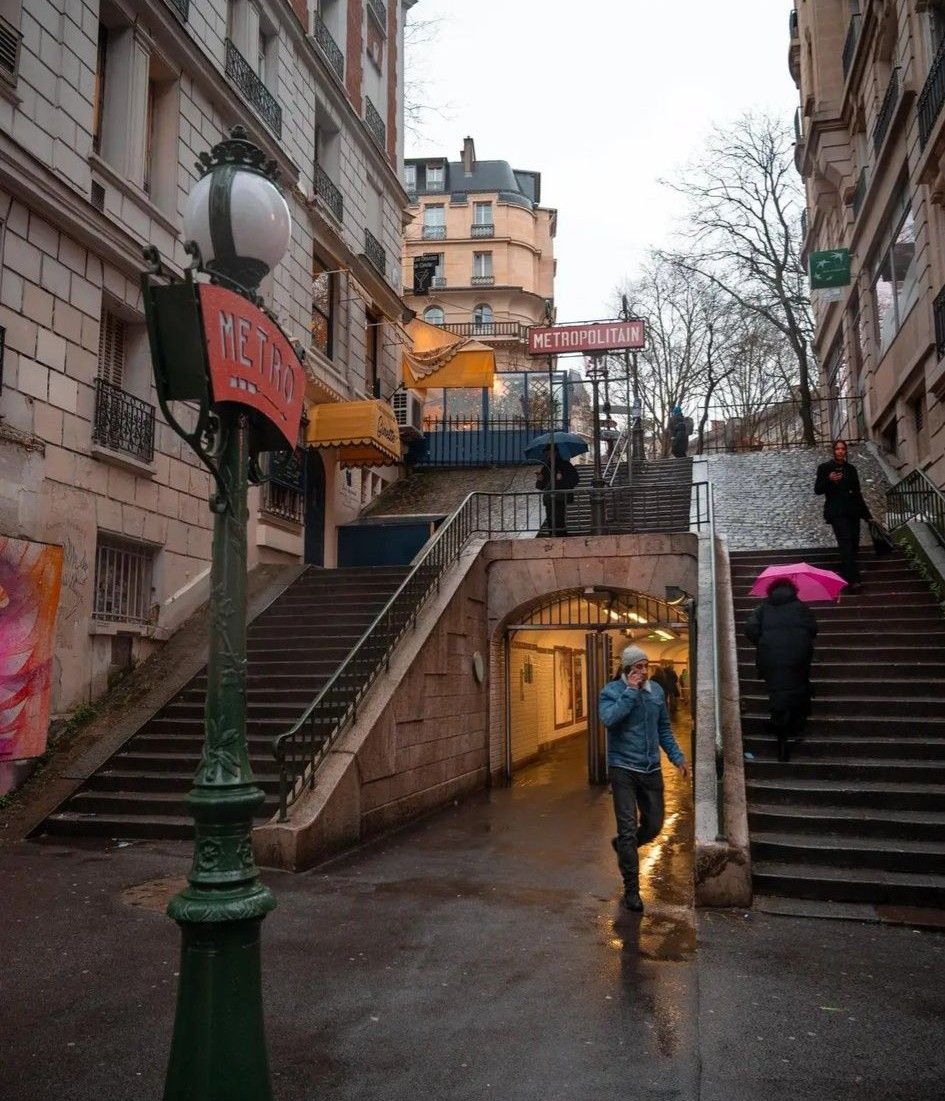
The Lamarck – Caulaincourt is a metro station on line 12 , located in the 18éme arrondissement of Paris. The station, which is at the highest point of the line, is located north of the Butte Montmartre, on the administrative boundary between the quartiers or neighborhoods of Grandes-Carrières and Clignancourt. It is established in a curve under the Place Constantin-Pecqueur, along the axis of the Rue Pierre-Dac. The only access to the station, entitled “Rue Lamarck”, is located at the exit of the Rue Pierre-Dac onto the Rue Lamarck. It is framed by the two staircases of the first street mentioned above, which lead to the Rue Caulaincourt, testifying to the uneven terrain around the Butte Montmartre. Given the significant depth of the platforms, access to them is via four elevator cabins two for going down, two for going up or a series of spiral staircases. The station opened on October 31, 1912 with the commissioning of the second extension of line A of the so-called Nord-Sud Company, from the temporary terminus at Pigalle to the Jules Joffrin metro station. It was planned in the initial projects that the station would be called Pecqueur, due to its location under the Place Constantin-Pecqueur. It was finally named Lamarck at its inauguration, because the access kiosk opens onto rue Lamarck, named in homage to the French naturalist Jean-Baptiste de Lamarck. Then it was named Lamarck-Caulaincourt because of its proximity to rue Caulaincourt, which pays homage to General Armand de Caulaincourt, Duke of Vicenza, defender of the district in 1814. The entrance to the station on rue Lamarck and rue Pierre-Dac is visible in the film Le Fabuleux Destin d’Amélie Poulain, but it is presented at the end of rue Lepic, where the Blanche station is actually located on metro line 2.
The Paris tourist office on the 18éme arrondissement de Paris : https://parisjetaime.com/eng/article/explore-paris-s-18th-arrondissement-a832
The RATP Paris transports on the metro line 12: https://www.ratp.fr/plans-lignes/metro/12
There you go folks, another dandy beautiful set of glorious streets of my eternal Paris. I have criss cross them many and have many in my blog already, Again, hope you enjoy this post on the streets of Paris, part XXV !!! as I.
And remember happy travels, good health, and many cheers to all !!!

 Paris1972-Versailles2003