
We have driven and walked in my eternal Paris, and would like to have an imprint in my blog on the wonderful family times we had there, There is so much to see , doing my best, and glad found me these pictures in my cd rom vault ,which now transposing in my blog for you and me, This was my former worked city, so glad to post more memorable spots on it, I thank you for your readership over the years and to bear with my rants! After Paris is to rant, shout and yelled about, me think. Therefore, here is my take on curiosities of Paris , part XXXI !!! Hope you enjoy the post as I.
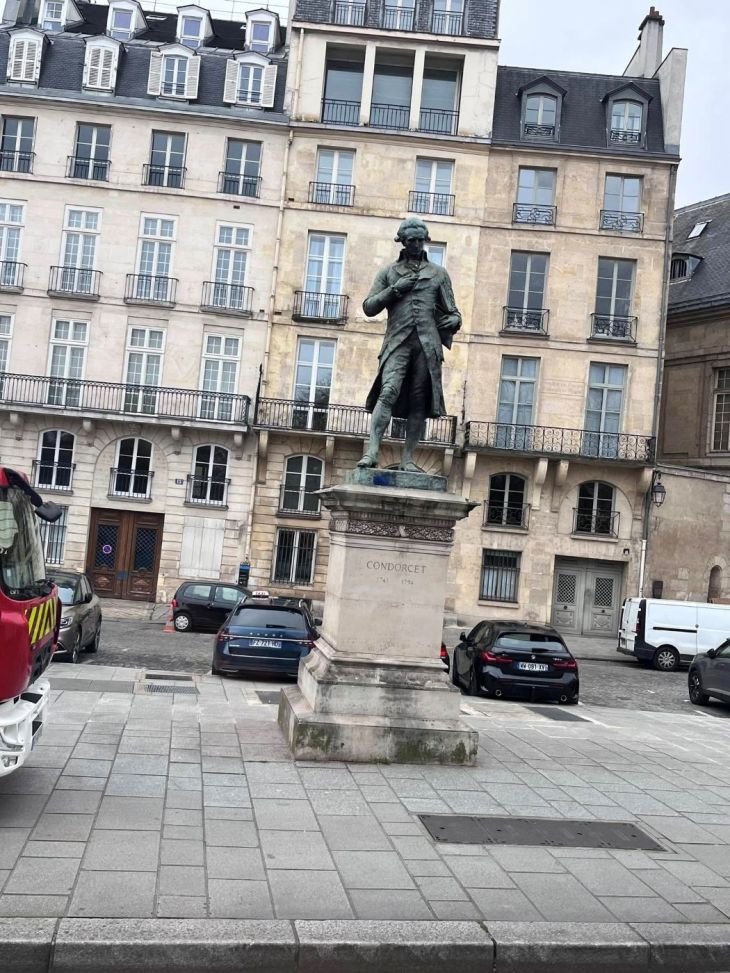
The Quai de Conti is located along the Seine in the 6éme arrondissement of Paris. It is 307 meters long and begins at 2 rue Dauphine and ends at Place de l’Institut. It is one-way, running east-west. This road is so named because the Hôtel de Conti had its main entrance there. On its site were built, among others, the Mint and the Mazarine Library of the Institut de France. Originally, the Nesles Tower was built at the beginning of the 13C and destroyed around 1665. It is cited under the name “rue du quay”, going from the end of the Pont Neuf to the Porte de Nesle in a manuscript from 1636. The 7 July 1817 decree determined the alignment of this quay. The Mint and the buildings located between the Impasse de Conti and the Institut de France are aligned; the remainder is subject to considerable retrenchment. A prefectural decree of 27 April 1814 restored its name to Quai de Conti. Reconstruction work on the quayside was carried out between 1851 and 1853. This resulted in a widening of the public road, particularly in front of the Institut de France, where traffic was already difficult and dangerous at the time !!! The notable buildings on it are at No. 3: Location of the curiosity and jewelry shop at Petit Dunkerque, established around 1760 by Granchez, a native of Dunkirk and jeweler to Queen Marie-Antoinette. No. 11: The Hôtel des Monnaies, which houses the Paris Mint, a public institution responsible, among other things, for managing the Paris Mint Museum, in the former Hôtel de Conti. At this point, between the quayside and the downstream point of the Square du Vert-Galant, the Mint’s dam-lock was established on the Seine. Put into operation in 1853, it operated until the flood of 1910 and was destroyed in 1923, No. 13: Hôtel de Sillery-Genlis; Charles Alexis Brûlart de Genlis, who died guillotined on October 31, 1793 in Paris, was a French field marshal of the 18C, deputy of the nobility during the French revolution. Bonaparte resided there. No. 23: the former Collège des Quatre-Nations, which housed the Institut de France. On its site stood the Tour de Nesle, part of the Philippe-Auguste enclosure. The statue of Nicolas de Condorcet (see photo) placed on Quai Conti, created by the sculptor Jacques Perrin for the centenary of his death on July 14, 1894; was destroyed in 1941, but a second cast was made with the same mold and the statue was reinstalled on its base in 1991. The politician is linked to the history of the district: in fact, he was inspector general of the Hôtel des Monnaies and permanent secretary of the Academy of Sciences, at the Institut de France. In the novel À la recherche du temps perdu or In Search of Lost Time by Marcel Proust, the Verdurins’ salon is located on Quai de Conti. At the end of Rue Mazarine, opposite Pont des Arts, on the current Quai de Conti at the height of Place de l’Institut, was the old “Quai des Nations” which can be found on Delagrive’s map of Paris from 1760 to 1771. At the descent of Pont-Neuf, at the corner of Rue de Nevers, in 1729, was the shop of Widow Pissot, a bookseller who sold the Mercure françois (the first newspaper in French) under the brand sign of the Croix d’Or.
The Paris tourist office on the 6éme arrondissement: https://parisjetaime.com/eng/article/explore-paris-s-6th-arrondissement-a823
The Place de la Madeleine (see post) is in the 8éme arrondissement of Paris. It is a rectangular shaped square of 218 meters long and 128 meters wide. On this square ends the following streets: rue Chauveau-Lagarde; rue Tronchet; rue de Sèze; boulevard de la Madeleine; rue Duphot; rue Royale; galerie de la Madeleine; boulevard Malesherbes; and passage de la Madeleine. It bears this name because the Church de la Madeleine (see post) is located on this square. This square is served by the Madeleine metro station with lines 8, 12 and 14. The Church of the Madeleine (see post) is an imposing appearance of a classical temple with 108 meters long (350 feet) by 43 meters wide (140 feet) surrounded by 52 Corinthians columns each measuring 20 meters (64 feet).

The Paris tourist office on the Place de la Madeleine: https://parisjetaime.com/eng/transport/place-de-la-madeleine-p1868
The Paris tourist office on the Church of the Madeleine: https://parisjetaime.com/eng/culture/eglise-de-la-madeleine-p939
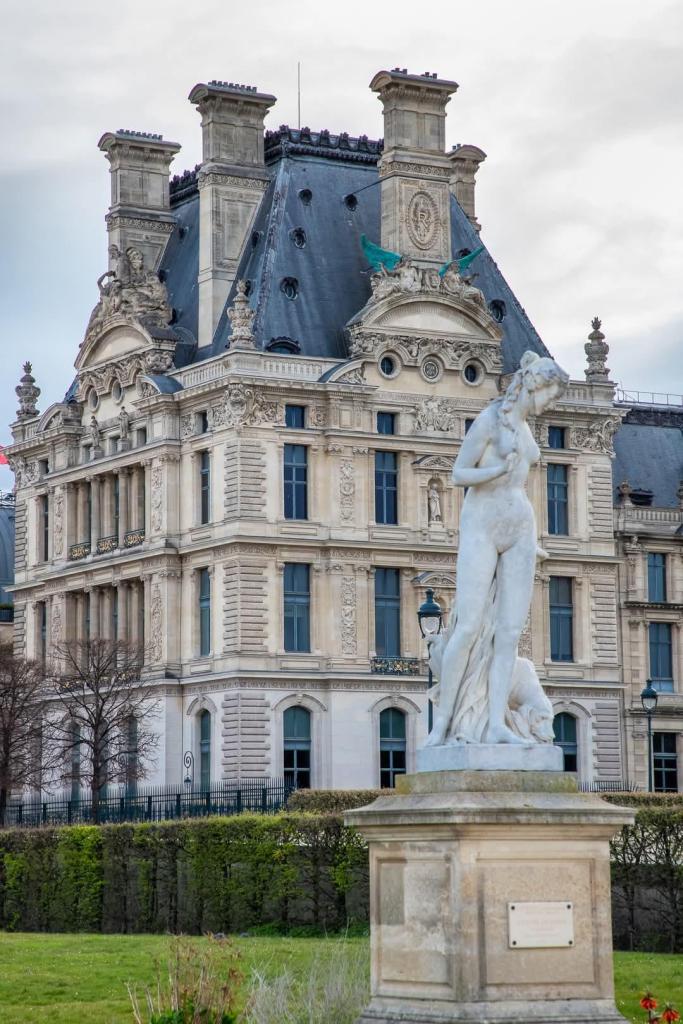
One of the greatest and by many THE greatest museum in the world, including me! One major monument building that I am Friends of the Museum is the Louvre in Paris. The best entrances are on the quai François Mitterrand, passage Richelieu, 99 Rue de Rivoli, and the Porte des Lions at the end of Pavillon Flore next to the Seine river to avoid as much as possible the crowds. The best days to visit are Mondays and Thursdays are these are full days of work in France. The Jardin des Tuileries, of major historical importance, covers 22.4 hectares. It has surrounded by three small gardens along the rue de Rivoli extends the jardin de l’Oratoire or Oratory garden (4,500 m2), and, facing the Seine, the jardin de l’Infante (3,900 m2) and the jardin Raffet (1,250 m2). These small gardens are not accessible to the public. In the heart of Paris, located between the Louvre and the Place de la Concorde and bordered by the Seine and the Rue de Rivoli. Statue commandée le 17 janvier 1866 pour le Palais de Fontainebleau par Napoléon III. The Nymphe seems not to have been sent to Fontainebleau. It was put in the jardin des Tuileries on April 17 1872, in the old garden reserve on the center of the parterre ,and later raise along the central alley.
The Paris tourist office on the Jardin des Tuileries: https://parisjetaime.com/eng/culture/jardin-des-tuileries-p3545
The Paris tourist office on the Musée du Louvre: https://parisjetaime.com/eng/culture/musee-du-louvre-p3489
There you go folks, a dandy city to explore and enjoy with the family, Memorable moments in my eternal Paris, driving and walking all over in my road warrior trails brings out sublime awesome spots with nice memorable family visits of yesteryear always remember and always looking forward to be back, eventually. Again hope you enjoy the post on curiosities of Paris, part XXXI !!! as I.
And remember, happy travels, good health, and many cheers to all !!!

 Paris1972-Versailles2003