
I am again to tell you about more streets of my eternal Paris. I have many many posts on Paris and several on the streets of the most beautiful city in the world. I have come up with pictures from cd rom vault that should be here for you and me. As always thank you for following my blog some since Nov 26, 2010. Therefore, here is my take on the streets of Paris, part XXIII !!! Hope you enjoy it as I.
The Rue Montmartre is located in the 1er and 2éme arrondissements of Paris. It extends north beyond Boulevard Montmartre as Rue du Faubourg-Montmartre. Located in the quartiers or neighborhoods of Les Halles, Vivienne, and Le Mail, The street is 939 meters long, and begins at Rue Rambuteau and Rue Montorgueil and ends at Boulevard Montmartre and Boulevard Poissonnière. You can reach it at metro lines 8 and 9 Grands Boulevards station, and bus lines 74 and 85 arrêt/stop Grands Boulevards, and Réaumur – Montmartre, and bus line 29 arrêt/stop Étienne Marcel Montmartre, The Rue Montmartre was the old route leading to the Butte Montmartre. It took shape when Louis VI, around 1137, created the Les Halles market. The section inside Philippe Auguste’s wall was called “Rue de la Porte Montmartre,” which was located around number 30 of the street. Under Charles V, the Montmartre Gate was moved north to the level of Rue Léopold-Bellan. Notable buildings are at No. 30: site of the former Porte de Montmartre Gate of the Philippe Auguste enclosure wall. No. 83: headquarters of Figaro Magazine from its foundation to the 1980s No. 129: around 1935, this was the Club de la Bourse, where Lino Ventura performed as a wrestler, No. 136: building originally called the Hôtel de Mantoue, (see pic) built in the Restoration style, unfortunately distorted by the shops installed on the ground floor. The facade has eight niches, each housing a plaster statue evoking Antiquity. No. 144: newspaper building that replaced the Saint-Joseph market, which itself had replaced the Saint-Joseph chapel, built in 1640 and destroyed at the beginning of the French revolution, and the Saint-Joseph cemetery where Molière, in 1673, and La Fontaine, in 1695, were buried. It was in this building, built in 1883 for the newspaper La France, that the issue of L’Aurore was printed with the article “J’accuse…!” by Émile Zola, defending Alfred Dreyfus. It also housed other newspapers, such as Le Radical (from 1884 to 1915) and Le Paris. In 2007, in the basement that housed the printing works, the Social Club nightclub opened, renamed Sacré in 2019. No. 146, on the corner of the even-numbered side of Rue du Croissant: the Café du Croissant. Jean Jaurès was assassinated there by Raoul Villain on July 31, 1914 at 21h40, No. 151: The Passage des Panoramas (see post) with the Stern boutique, The Rue Montmartre has inspired many novelists. Honoré de Balzac said, at the beginning of his novel Ferragus: “Some streets, like Rue Montmartre, have a beautiful head and end in a fishtail.”
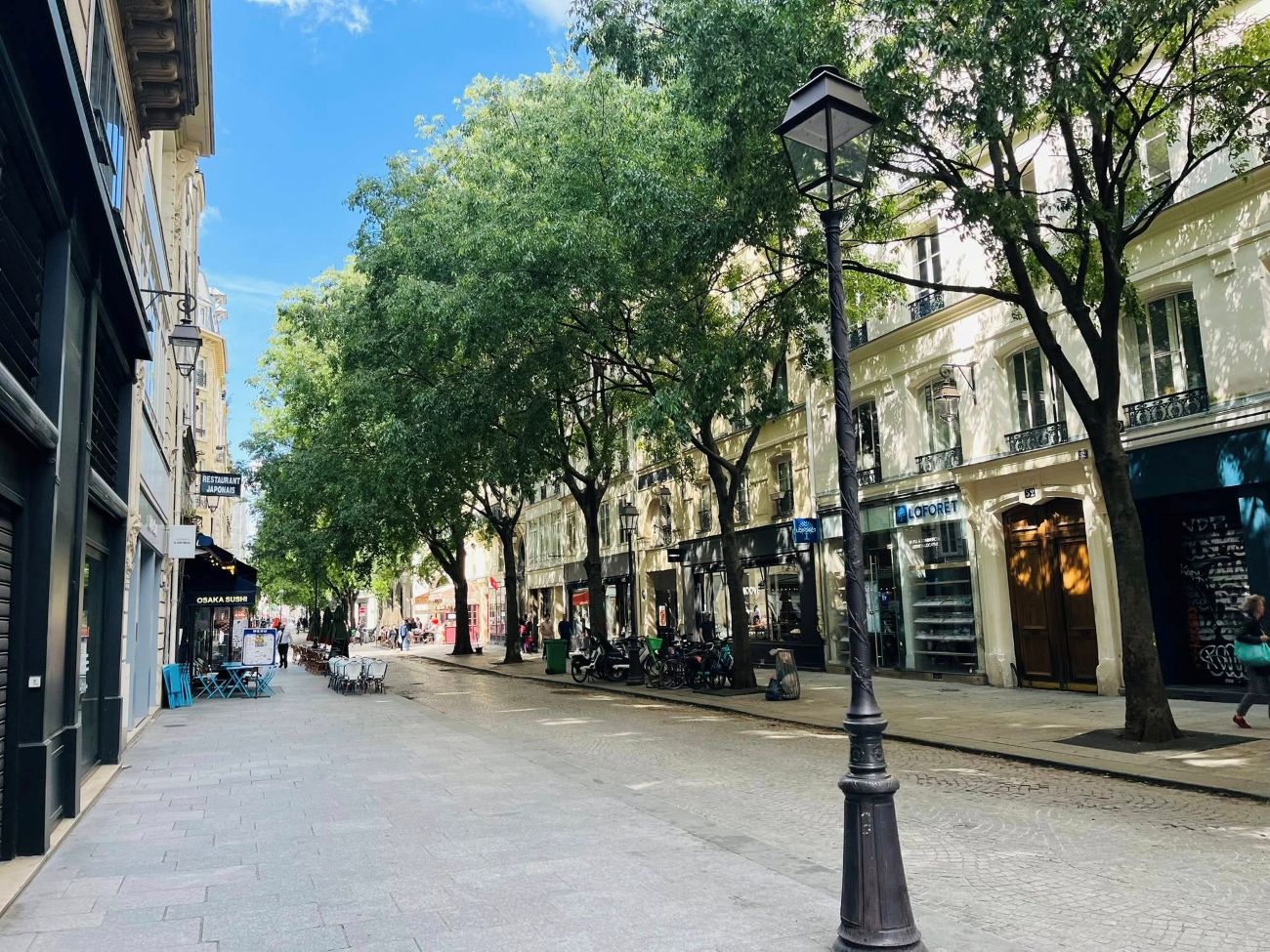
The Paris tourist office on Paris Centre (arrond 1-4): https://parisjetaime.com/eng/paris-by-district/central-paris-a1850
The Rue de Médicis is located in the Odéon quartier or neighborhood of the 6éme arrondissement or district of Paris. It is today 170 meters long,and begins at Place Paul-Claudel and ends at Place Edmond-Rostand. The district is served by metro lines 4 and 10 at the Odéon station, as well as by RER B at the Gare du Luxembourg station. Also, bus lines 38, 82, 84, and 89 take the street. The street takes its name from the proximity of the Luxembourg Palace, built in the 17C for Queen Marie de Médicis, wife of Henri IV. The Rue de Médicis was finally opened in 1861 as part of urban planning work carried out by Prefect Haussmann. This development led to the relocation of the Medici Fountain, commissioned by Marie de Medici, which now backs onto the street. Since then, the street has been bordered by Gabriel Davioud’s gates along its entire southwest side. The northeast sidewalk was divided into lots and built upon as soon as the street opened, creating a homogeneous collection of Haussmannian buildings. In 1924, the section of the street leading to Boulevard Saint-Michel was renamed Place Edmond-Rostand.
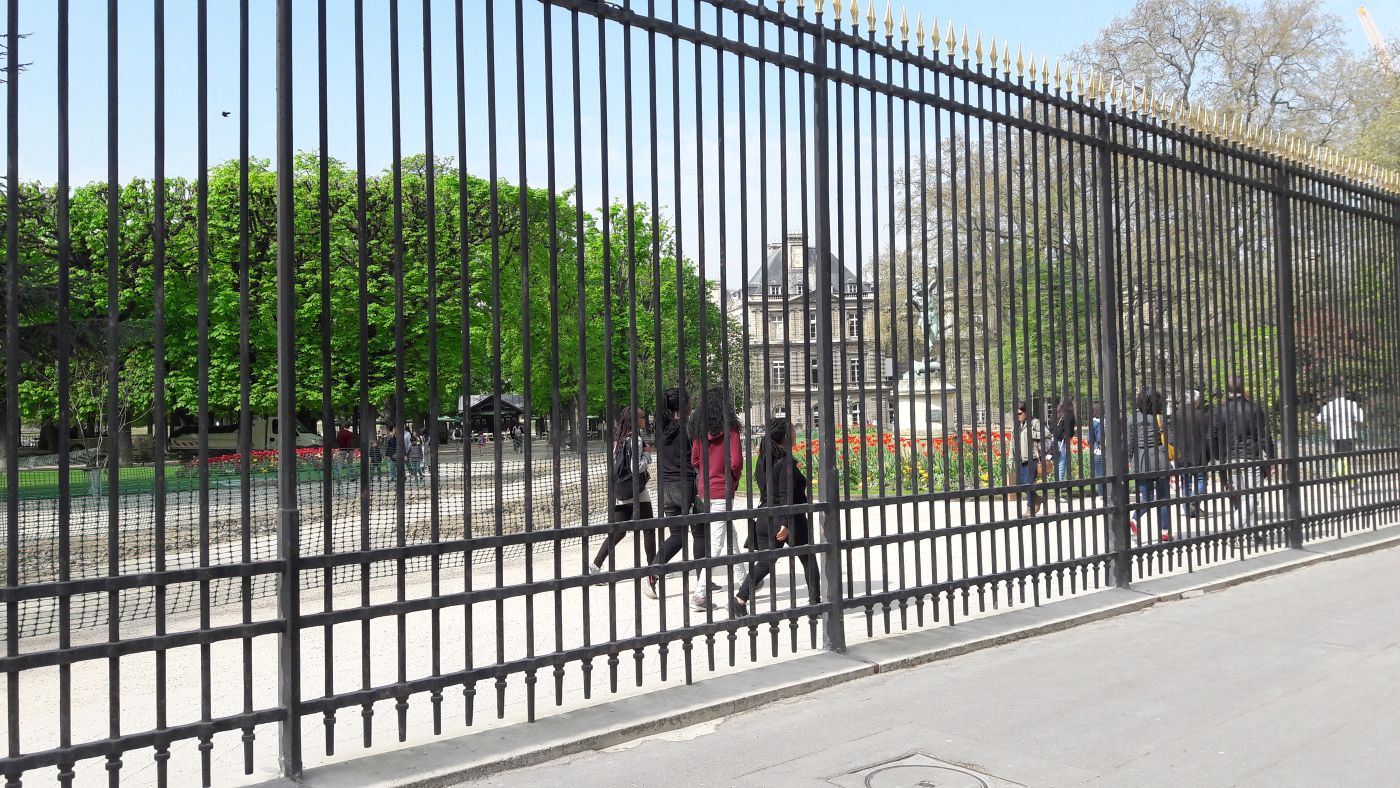
Notable buildings here are to note the street runs alongside the Luxembourg Gardens and the Medici Fountain. It leads to the Odéon theater, where the actress Sarah Bernhardt made a short appearance, At no. 5: Ernest Lavisse, historian and academic, founder of positivist history, and author of numerous school textbooks, the “Lavisse manuals”, lived in two duplex apartments of the 4th left and 5th left, floors, William Klein , American-French photographer, painter, visual artist, graphic designer and director of documentary, advertising, and fiction films,lived at 4th left floor, and died here in 2022, At no. 11, La Nouvelle Librairie nationale (which became La Nouvelle Librairie in 2018), since 1900 – from 1935 to 2016 ,the José Corti bookstore. At no. 19 (nowadays 2, place Edmond-Rostand) lived André Gide,
The Paris tourist office on the 6éme arrondissement de Paris : https://parisjetaime.com/eng/article/explore-paris-s-6th-arrondissement-a823
There you go folks, another dandy beautiful set of glorious streets of my eternal Paris. I have criss cross them many and have many in my blog already, Again, hope you enjoy this post on the streets of Paris, part XXIII !!! as I.
And remember happy travels, good health, and many cheers to all !!!

 Paris1972-Versailles2003