
This small museum doesn’t get much attention, but if you are into museum you should look into it. These are in great areas, easily accessible, and great history in each. In my times here, I have taken the time to walk, and see many museums, and I like to bring your attention to this gem that in my opinion should get more coverage. I am updating this older post with pictures found in my cd rom vault that should be here for you and me. I guess is my new area of entertainment but I rather like the architecture and history story of this marvel. Therefore, here is my take on the Musée du Luxembourg of Paris !! Hope you enjoy the post as I.
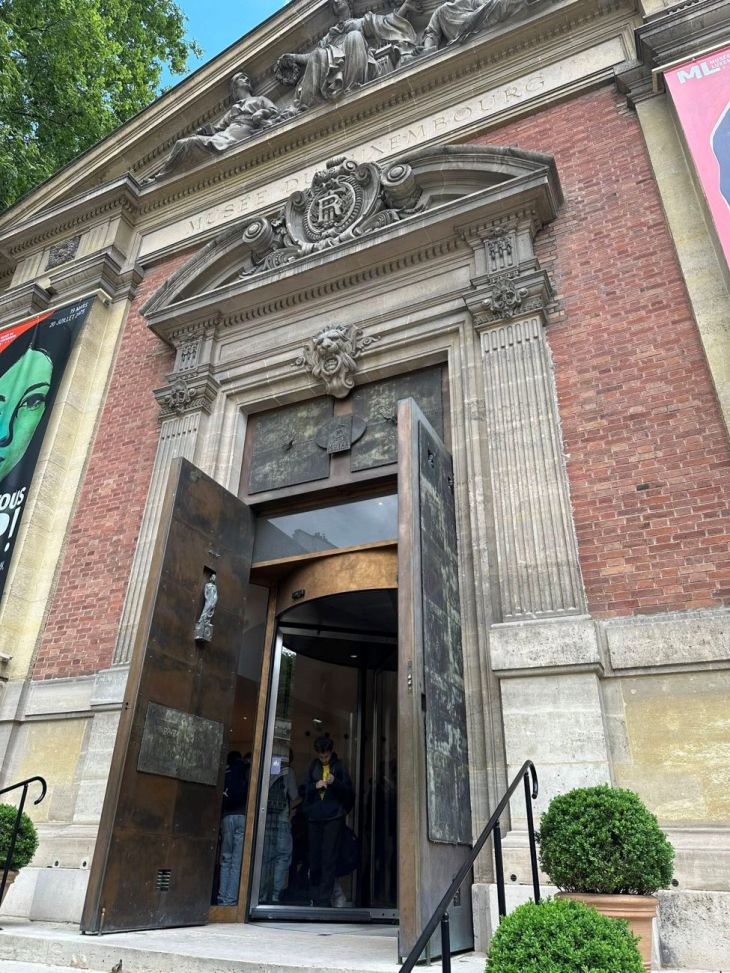
The musée du Luxembourg was the first museum in France open to the public in 1750 and in 1818 became the first museum to contemporary arts in Europe. The museum is an art exhibition space installed in a wing built perpendicular to the orangerie of the Luxembourg Palace by 19 rue de Vaugirard, in the 6éme arrondissement of Paris. Its current vocation is to periodically present thematic and original artistic exhibitions favoring three programming axes, in connection with the history of the place: the Renaissance in Europe, Art and power, and the Palace, the Garden and the Museum.of: Luxembourg in the heart of Paris, capital of the arts. You get there as per the site on RER B, Luxembourg stop (Jardin du Luxembourg exit). Metro: Line 4, Saint Sulpice stop; Line 10, Mabillon stop; Line 12, Rennes stop. Bus: Lines 58, 84, 89, Musée du Luxembourg stop; Lines 63, 70, 86, 96, Église Saint Sulpice stop. Parking Marché Saint-Germain: Access via rue Lobineau, Parking Place Saint Sulpice, Actually I came here by car and always found a free spot by Rue Guynemer a short few meters from the museum and garden or came by bus 82 stop by Place Edmond Rostang and another short walk to the museum and garden, A bookstore and gift shop is located within the museum, with free access (no admission required). The Mademoiselle Angelina tea room is located at the entrance to the Musée du Luxembourg. The museum presents two exhibitions per year, both national and international, on the themes of 20C modernity, photography, and women artists. It also offers a multitude of activities to enrich the visitor experience. Guided tours, children’s workshops, and conferences are regularly organized to allow everyone to discover art in a fun and interactive way. These initiatives make the museum a lively and dynamic place, accessible to all. Like I said worth the detour, me think.
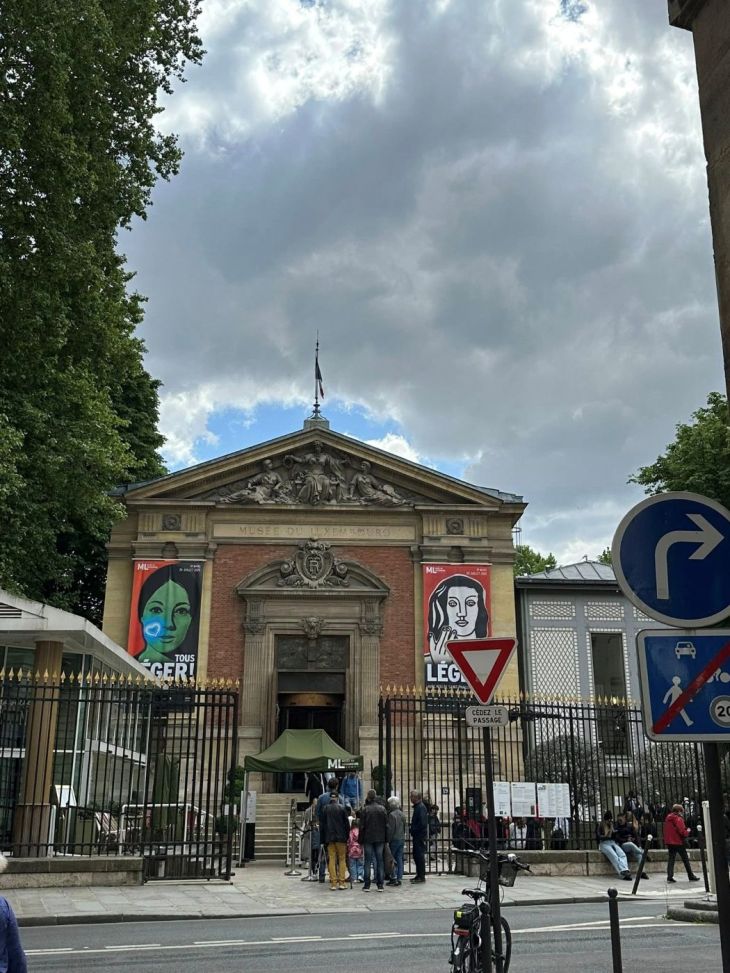
A bit of history I like tell us that Luxembourg was the first neighborhood or quartier of Paris to have a public painting gallery, almost fifty years before the creation of the Louvre museum. Opened on October 14, 1750, on the very site of the Marie de Medici gallery, in the east wing of the Luxembourg Palace, the Royal Painting Gallery of the Luxembourg Palace had very early attracted foreign visitors, both for its wealth than by the diversity of the collections. It was the Count of Provence, the future king Louis XVIII, who closed the gallery in 1780: in 1760 he had started to store his archives in the Luxembourg Palace, which he received as a supplement to his appanage in 1778. The administration crown took back the paintings as well as the set of paintings by Rubens, and deposited them in the Louvre in 1790, where the creation of a large museum had long been considered ,which finally happened in 1793 as the Central Museum of Paris. There is a decision to create a Luxembourg museum in 1801, at the request of the praetors of the Senate and at the instigation of Joseph-Marie Vien, a prominent senator and painter. It then competes with the special museum of the French School, in Versailles, which also exhibits the masterpieces of national genius: many paintings are transferred from Versailles to Luxembourg (all did it from Versailles!), which precipitates its disappearance in 1810. The museum then began its expansion into the palace, by annexing three rooms in the west wing, following the Rubens gallery, on the rue de Vaugirard side. Until around 1820, they hosted Views of the Ports of France by Joseph Vernet, then other canvases by Rubens and Lesueur. Following the restitution of works from the seizures of the Napoleonic wars, a large part of the canvases constituting the Musée du Luxembourg were transferred to the Louvre to fill in the gaps left by these restitutions.
King, Louis XVIII, wanting that the museum which was in the room of the Peers become again important and alive, decided in 1818 that in the same place would be arranged a museum of the living French artists. On April 24, 1818 opened, in the galleries of the Luxembourg Palace, the museum of living artists, with 74 canvases by living artists and 17 old artists, which were withdrawn in 1821. There were then exhibited, among others, works by David, Gros, Girodet, Ingres and Delacroix. They therefore reflect the official taste of the time, giving pride of place to history painting, portraits and classical landscapes, according to a well-established hierarchy of genres. This is how several sculptures now exhibited in the garden entered Luxembourg, including The Greek Actor or The Dancing Faun. The victory of the Republicans in the elections of 1879 made it possible to change the choice of works presented at the museum. It was to create a museum of contemporary arts in the Orangerie Férou, built perpendicular to the Orangerie, in 1839 and then temporarily assigned to the museum to house the sculptures, the new wing was inaugurated on April 1, 1886. Since 1861, the Musée du Luxembourg opened up to foreign schools and this section finally became large enough to constitute an independent museum installed at the Jeu de Paume museum in 1922 and renamed “Museum of Foreign Schools” in 1932. The Caillebotte bequest allows the impressionists to enter the Luxembourg museum in force. At the same time, the State also began to acquire works by more modern artists. .In 1909, the collection of Alfred Chauchard was offered, rich in a formidable set of paintings from the Barbizon school, including the famous Angelus de Millet. In 1911, Isaac de Camondo made a bequest comprising four of Monet’s Cathedrals of Rouen. In 1937, the Luxembourg Museum ,permanent collection left the museum. Since then, the works have been distributed among various institutions. 19C works can be found in the collections of the Musée d’Orsay or the Louvre, while 20C works can be found in the Centre Pompidou. In 1979, the museum was reopened to focus on the art of the French regions. From 2000, the management of the museum was taken over by the Senate of France, which turned towards the presentation of more ambitious artistic exhibitions, in particular of ancient art by forging links with Italian institutions and also wishing that the exhibitions of modern art are curate by museum curators or internationally renowned art historians. In 2010, the Senate delegated the management of the museum to the Réunion des Musées Nationaux-Grand Palais with the mission of organizing exhibitions there, favoring three programming axes linked to the history of the place, such as the Renaissance in Europe, Art and power and“ the Palace, the Garden and the Museum: Luxembourg in the heart of Paris, capital of the arts.
The official musée du Luxembourg: https://museeduluxembourg.fr/en
The Paris tourist office on the musée du Luxembourg: https://parisjetaime.com/eng/culture/musee-du-luxembourg-p3573
The boutique of museums on the shop of the Luxembourg museum: https://www.boutiquesdemusees.fr/en/content/5078-musee-du-luxembourg.html
There you go folks, glad able to tell you about his nice museum that should be visited me think In all, it is surrounded by beautiful garden theater and thing to see in my eternal Paris, a wonderful neighborhood, Again,hope you enjoy the post on the Musée du Luxembourg of Paris !! as I.
And remember, happy travels, good health,and many cheers to all !!!

 Paris1972-Versailles2003