
Let me tell you about a dandy in my road warrior rounds in the wonderful sublime Loire Valley. This is a spot have come several times to the gorgeous castle, I came by again this week and took nice pictures for you and me. It was a great experience, and always looking forward to be back, eventually, Do read my several posts on the castle and City in my blog, This time let me tell you again on curiosities of Amboise, part I !!! Hope you enjoy the post as I.
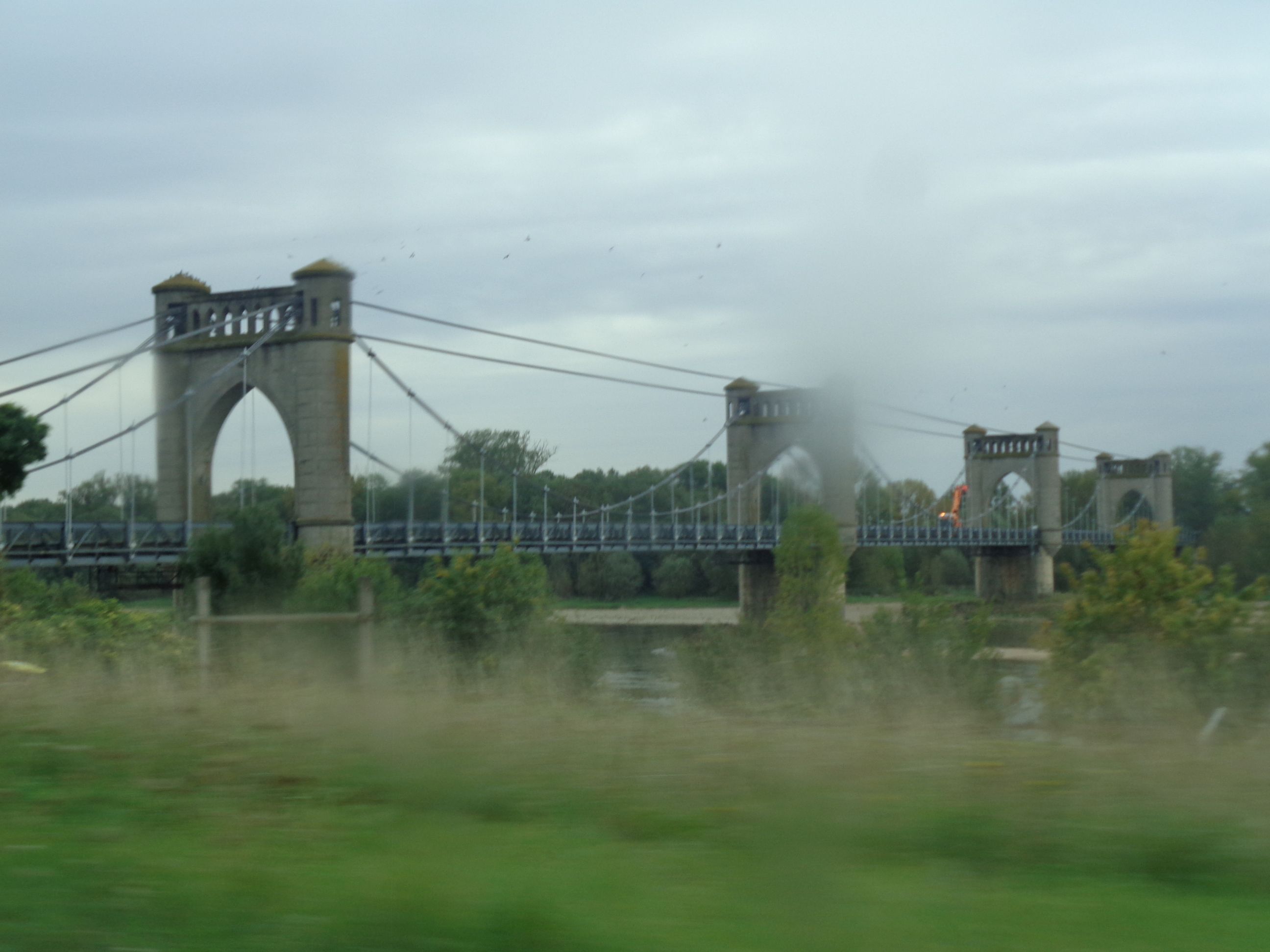
Going along the D751 road before reaching Amboise on our right hand side the mighty Loire river! The pont de Langeais bridge crosses the Loire between Langeais and La Chapelle-aux-Naux, and forms a section of the D 57 road. On the other side is Langeais and its castle (see post), We saw it coming by the Loire on the M952/D952 road direction Amboise before reaching Tours,
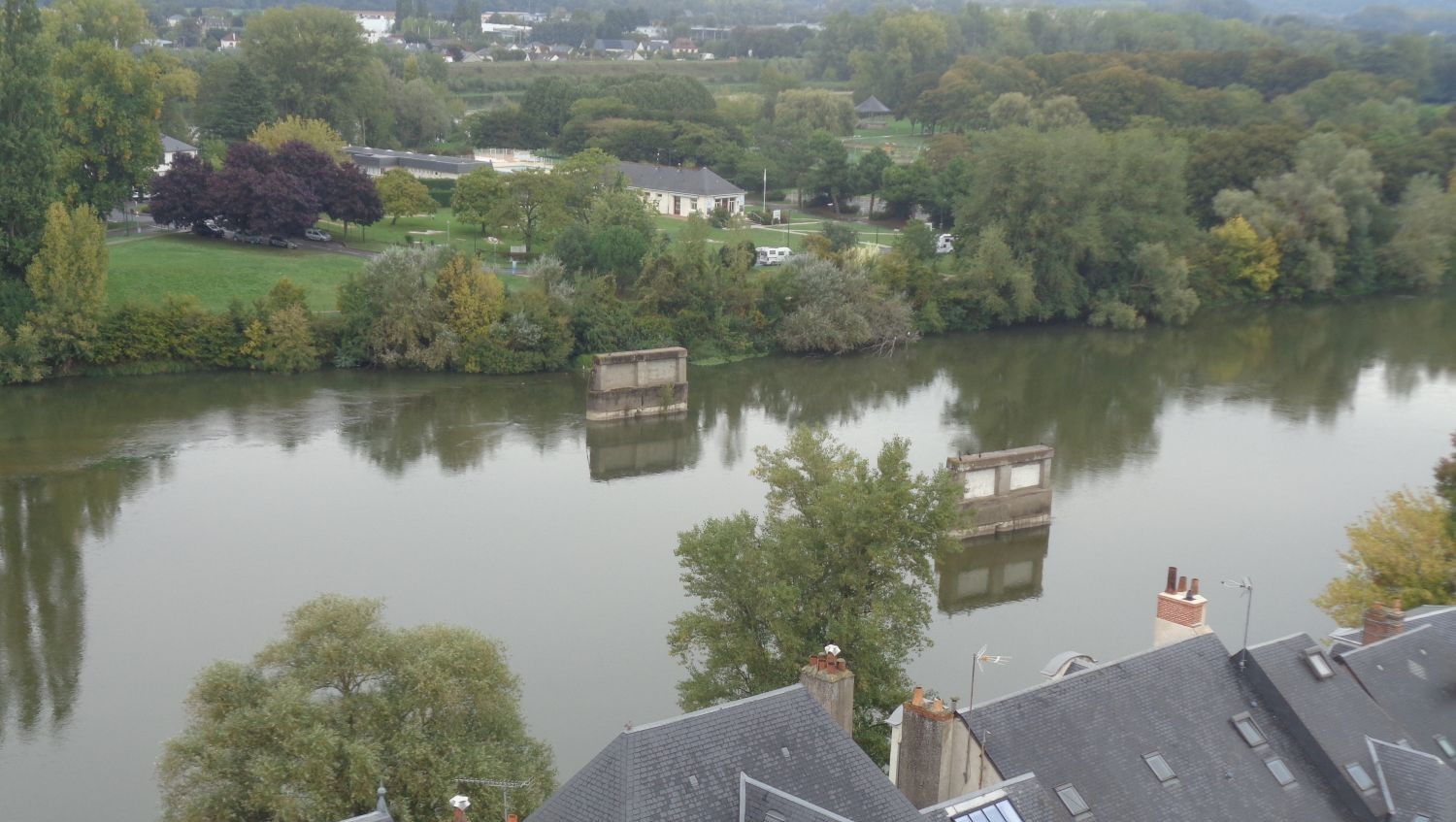
The piles of the temporary footbridge from WWII over the Loire river as seen from the Château d’Amboise, These were to allow the people of Ambois to cross the Loire. At low water, upstream, you can see the remains of the piers, both on the right and left banks. Strategic elements during the wars,
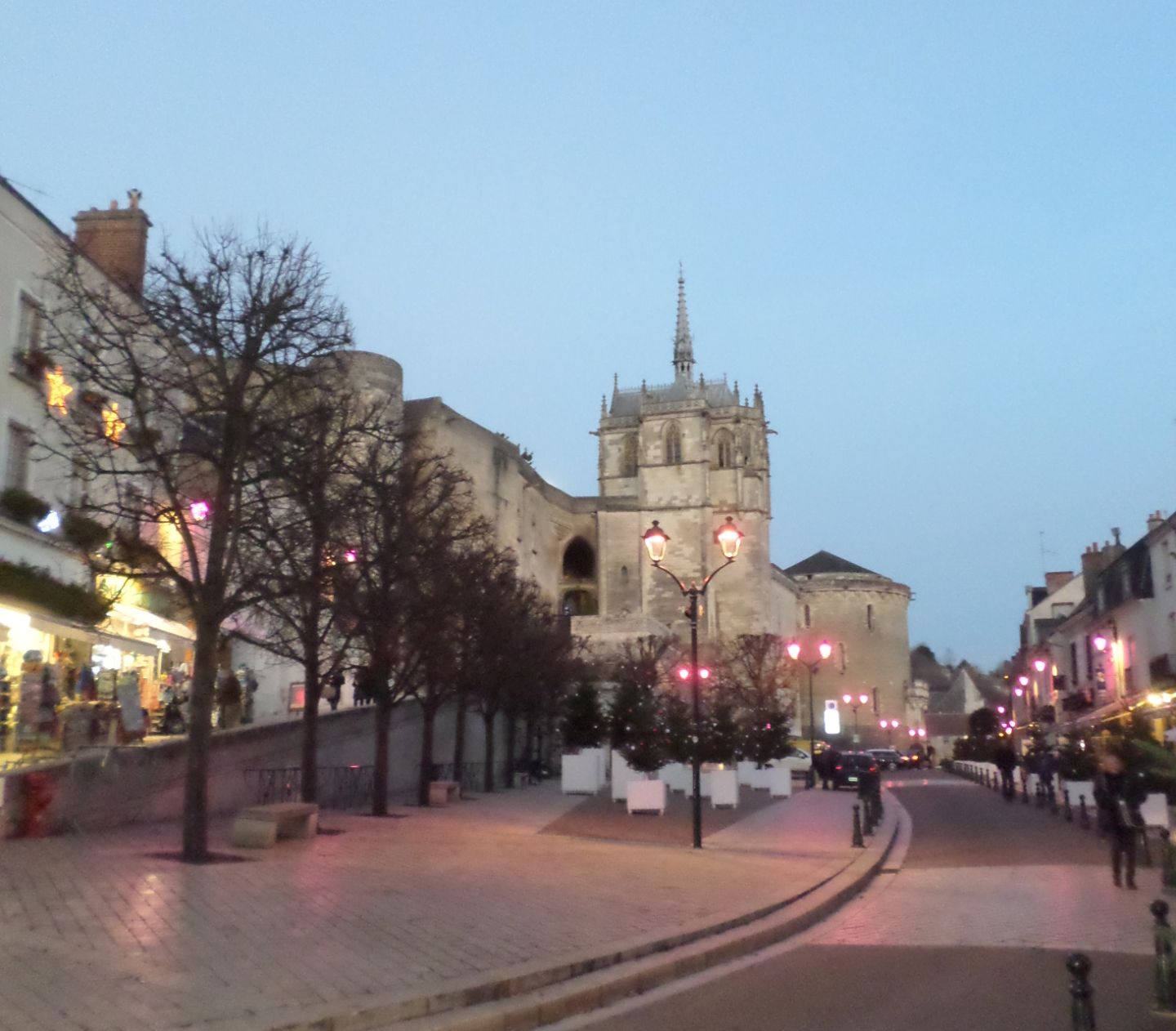
The Place Michel Debré was originally a street lined with houses on each side. The rampart was cleared under king Louis-Philippe and only the houses opposite it were preserved. Before the French revolution, it received the name of rue du Château; from the First Republic to the First Empire (1792-1814), it was the rue de la Citadelle. In 1833, it regained the name of rue du Château. Today, Place Michel Debré brings together the old Place du Château and the old rue du château. It was the most lively square in the medieval town. By a donation from Geoffroy Martel to Lisois de Basogers, we know that from the middle of the 11C the market took place there. It was also the square where the route d’Espagne separated from the route de Montrichard or even the link between the city and the Petit Fort before they were gathered in 1469. With the exception of the stone hotel at 4 place Michel Debré, only the half-timbered houses can date from the 15-16C. There are large facades like at 54 place Michel Debré: 9.2 meters!, and very narrow facades such as 8 place Michel Debré: about 3 meters!!. There is one of the two half-timbered houses which has kept its original sculpture at 54 place Michel Debré. One can imagine that the established houses dating from the 15-16C were most prestigious because of their privileged position in front of the king’s home (the castle).
You have the mini chateaux park or sort of a miniature castles of the Loire park, it has 2 hectares or 5 acres showing 45 castles of the Loire. Located at La Menaudière on the road D81 very close to Amboise. The parc Mini-Châteaux is a miniature park located in Amboise, Indre-et-Loire dept 37 in the Centre Val de Loire region. It shows a landscaped with some 2,000 bonsais, for a 1.5 km route. complete with gardens, figurines, boats and trains. The models presented are on a 1/25th scale. The parc is arranged with some 2,000 bonsais, 10,000 figurines, 6 railway networks and miniature boats, On the landscaped park, more than 44 faithful reproductions, in miniature, of the high places of the Loire Valley. A giant stride to discover, in a few hours, all the architectural treasures of the region: Chambord, Chenonceaux, Amboise, Villandry and many more…It could be use as an introduction to the region if time is of the essence, me think. The official Mini Chateaux : https://www.parcminichateaux.com/en

The castle of Chanteloup was an 18C castle located precisely in the heights of the city of Amboise, which was built on behalf of the princess of the Ursins, and was considerably embellished and expanded by the Duke of Choiseul, Louis XV’s minister Destroyed in 1823 , there remains in the domain of Chanteloup only the Chanteloup pagoda and its park on the road of route de Bléré , built by Louis-Denis Le Camus on behalf of the Duke of Choiseul of Louis XVI style with a Chinese touch dates from 1775 and has a height of 44 meters ( 145 ft) offering a splendid view over the valley of the Loire river and the forests of Amboise ,It is open to the visit since the late 1990s by the André family.
A bit of history I like tell us that the Duke of Choiseul , disgraced in 1770 because of his too close proximity to the parliaments and his sometimes public opposition to the king’s policy, as well as his jokes about Madame du Barry, the king’s favorite, was « retired » to the Château de Chanteloup by order of the king until the death of the latter in 1774 , While there he received visitors from all over Europe, holding a real court and giving sumptuous receptions. Thanks to him, Chanteloup became a magnificent country residence, surrounded by beautiful gardens, which one did not hesitated to compare to Versailles. In 1792, it became national property, and in 1794, it was seized and emptied of its furniture, partially transferred to the Museum of Fine Arts in Tours, It was sold at auction in 1802 to Jean-Antoine Chaptal, Count of Chanteloup, chemist and Minister of the Interior of Bonaparte (he resigned at the coronation of Napoleon 1st). Chaptal grew beets in the park to produce sugar but, following the bankruptcy of his son Jean-Baptiste-Marie, Viscount Chaptal de Chanteloup, he commissioned the sale of land and buildings from 1823 to 1829. Having failed to find lessee, the castle was finally sold to a demolisher. The residence was thus completely destroyed in 8 weeks, with the exception of the Pagoda, acquired on March 13, 1823 by the Duke Louis-Philippe of Orléans, with 228 hectares of forest, However, all that remains today is the so-called Concierge pavilion and two pavilions of the forecourt framing the gate.

The Chanteloup pagoda ,located to the south of the castle at the top of a hill, it formed the meeting point of seven long avenues traced in the forest of Amboise. This construction, and the development of a large half-moon water mirror terminated by a large canal in which it is reflected, completed the transformation of the gardens of Chanteloup; it was intended for nocturnal celebrations. On the first floor, Choiseul would have had the names of his visitors engraved on white marble tables, then turned face up against the wall, which rest on a peristyle of the purest circular Louis XVI style of sixteen columns and sixteen pillars, It has seven floors, the entrance staircase has seven steps, it is surmounted by a golden globe symbolizing the sun and the pond at its feet is in the shape of a half-moon. The pavilion of the Concierge of the Pagoda, built at the entrance to the esplanade of the Pagoda, now houses a small museum in which there is an exhibition of reproductions of maps of the castle and gardens of Chanteloup, as well as paintings and portraits of famous people from Chanteloup. The official Pagoda de Chanteloup: https://www.pagode-chanteloup.com/?lang=en
The city of Amboise on its heritage: https://www.ville-amboise.fr/88/monuments-a-visiter.htm
The Amboise tourist office on its heritage: https://amboise-valdeloire.com/en/
The local Val de Loire tourist office on Amboise : https://www.tourainevaldeloire.com/en/discover/towns-and-villages/amboise/
The Centre Val de Loire region tourist office on the Castles of the Loire: https://www.loirevalley-france.co.uk/discover/loire-chateaux/
There you go folks, another dandy town and beautiful castle, always great memories of always ! . It was a great experience to know it, always wonderful uplifting and with great history and architecture I like. Again, hope you have enjoy the post on curiosities of Amboise, part I !!! as I.
And remember, happy travels, good health, and many cheers to all !!!

 Paris1972-Versailles2003
I love the large room with the fireplace. I have spent many afternoons warming myself by this fire during winter hours. The chapel with da Vinci’s grave is one of the best parts of this tour.
LikeLiked by 1 person
Glad you enjoyed it. Thanks for stopping by. Cheers
LikeLike