
So coming back to Paris as we will always have Paris. Many memories here over the years and family visits as well as worked oh well; Paris is a big spot on the globe for me. There is so much to see here and tell if you like architecture and history as me and Paris. I just went to my cd rom vault again, and found me these wonderful pictures gladly have in my blog for you and me. Therefore, here is my take on the Hôtel de Soubise, Archieves National in Paris !!! Hope you enjoy the post as I.
The Archieves National in the Hôtel de Soubise, 60 rue des Francs Bourgeois 3éme arrondissement de Paris. The Hôtel de Soubise, formerly Hôtel de Clisson then Hôtel de Guise, is a Parisian townhouse located at the corner of the current rue des Francs-Bourgeois and rue des Archives in the Marais. A wonderful piece of architecture and history right in the quant picturesque Marais, maybe you passed by without realising treasures of France are kept here. Métro stations : Hôtel-de-Ville, lines 1 and 11, Rambuteau,line 11,and Saint-Paul, line 1.
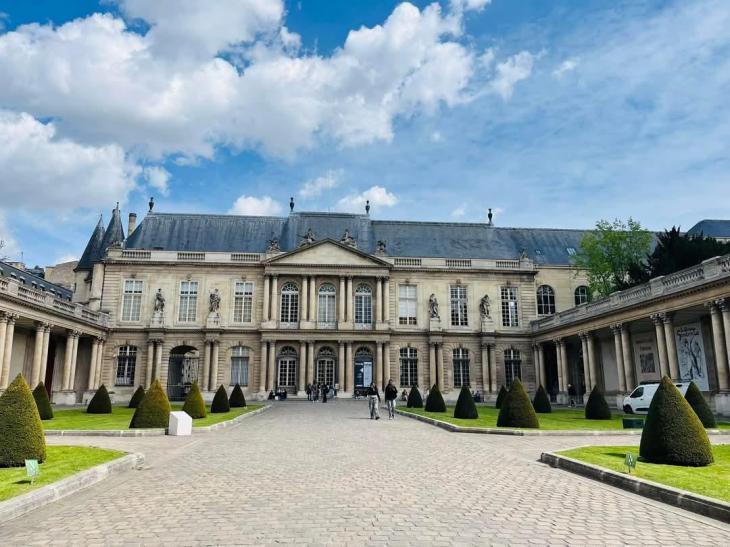
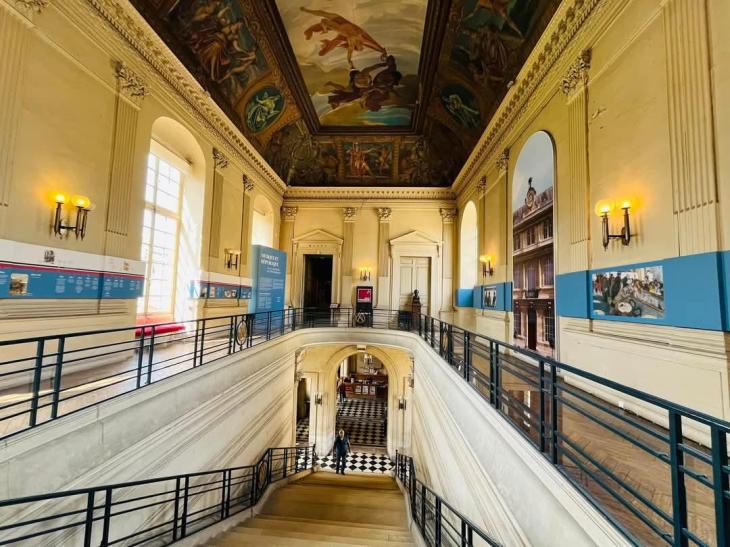
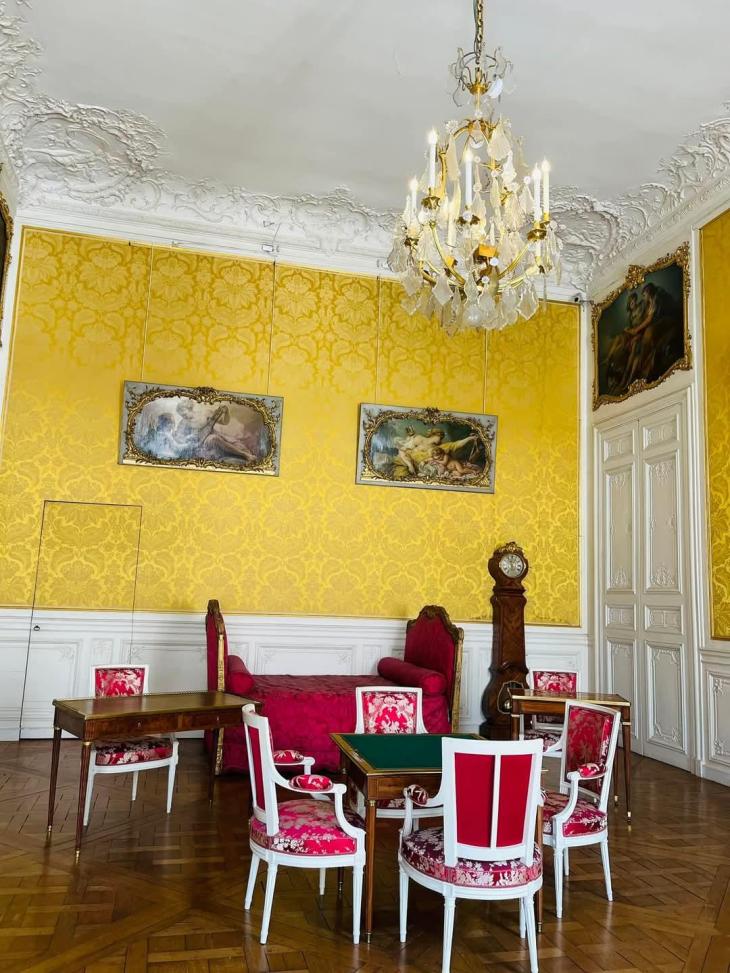
The Hôtel de Soubise exterior style is classic, but the interior decor is rocaille ,and is entered through a vestibule, of which very few elements of the original decor remain. The main courtyard and its double portico welcome you to the heart of the Marais! The reception suite, which led to the main rooms, took precedence over any concern for comfort. The first room is an antechamber which now serves as an exhibition room, We then reach the audience chamber and the prince’s state chamber, whose bas-reliefs of the medallions adorn the paneling. The door hidden under the hanging of the alcove of the prince’s state chamber gives access to the petit salon or small study. We then enter the Prince’s drawing room, beginning in 1735.The small drawing room is just as exquisite, inspired by Versailles! The drawing room connects to the Prince’s grand study, where the cornice is the only remaining evidence of the original decor. To access the Princess’s apartments on the first floor, one must take a grand staircase, rebuilt in 1844. At the top of this staircase, one first reaches the guard room, a room which, in the 16C, allowed the Guise family to welcome their important Parisian clientele. In the 18C, the room retained the same proportions but took the name great antechamber, gallery, or great hall. Since 1970, it has hosted temporary exhibitions from the National Archives.
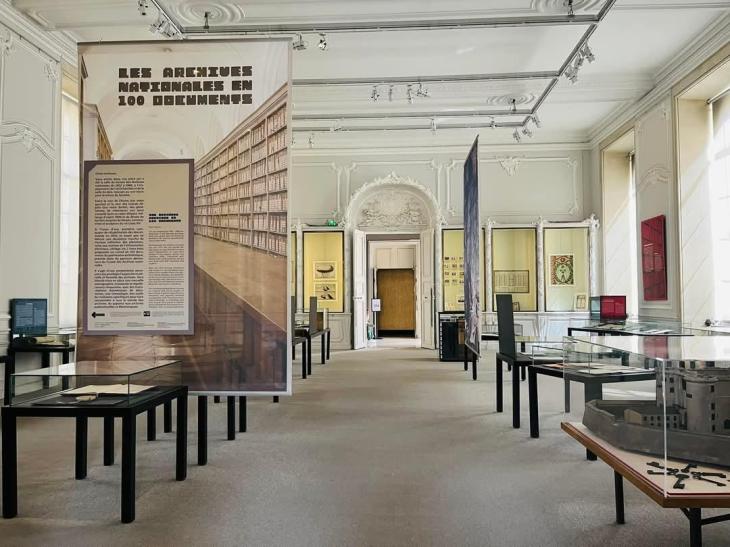
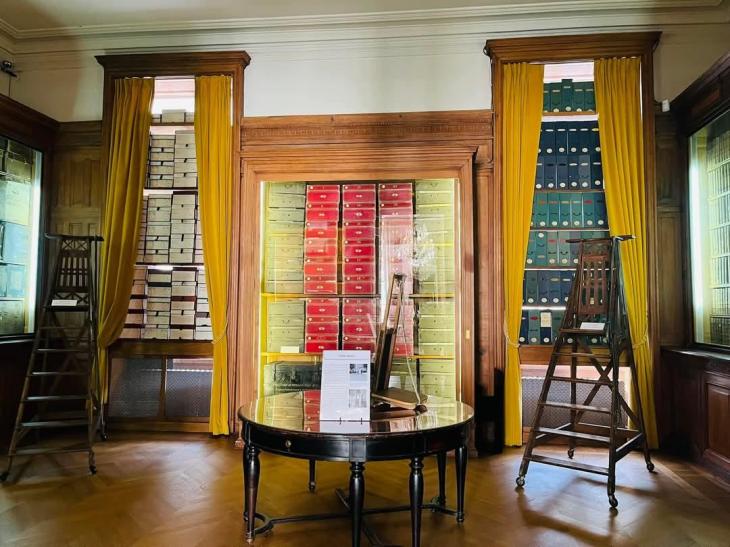
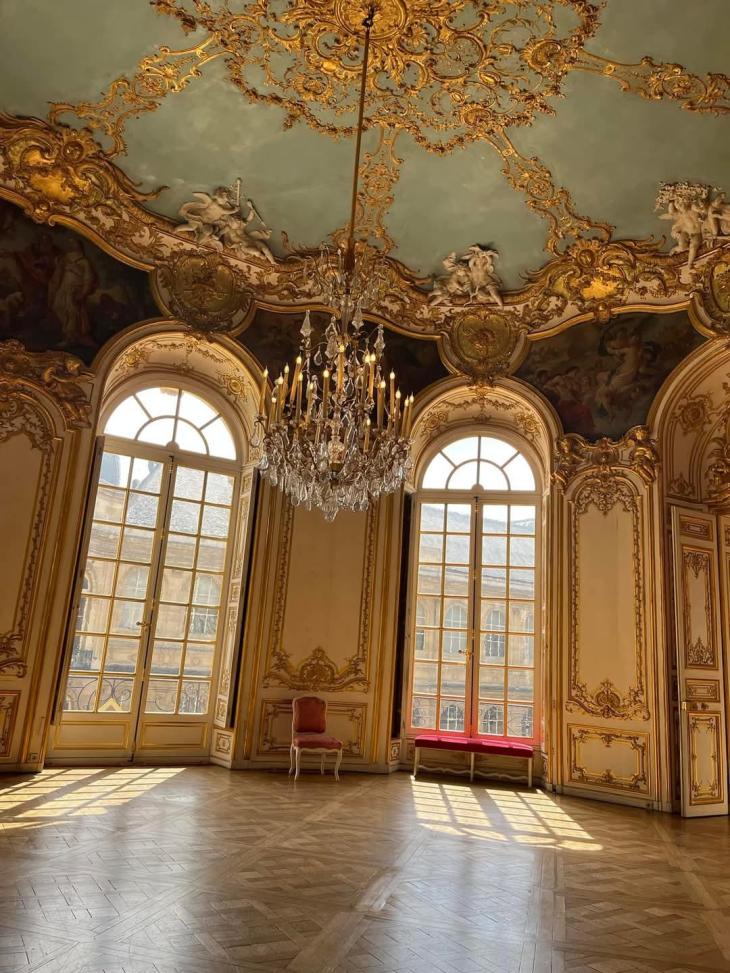
Then, we enter the assembly hall. This room still has a cast of its cornice, decorated at the corners with reliefs representing the four parts of the world. Display cases were specially designed for the museum’s inauguration in 1867. These display cases now house facsimiles of important documents from French history. The next room is the princess’s state bedroom, presented as it was designed for Hercule Mériadec’s second wife, the young Marie-Sophie de Courcillon. We then enter the most remarkable room of the hotel, the Princess’s Salon. Eight openings, four windows, three mirrors, and a door define as many vertical panels of white and gold woodwork, topped with cartouches. Eight canvases by Natoire are arranged on the cornice. They are all devoted to the myth of Psyche, The princess’s small bedroom, where she actually slept, is located in the building communicates with the living room by a door hidden in the woodwork ,and with the state room by a door under a hanging. The former Princess’s Dais room has retained its coat of arms cornice bearing the initials “RH” of the Rohan-Soubise family. This room is now devoted to temporary presentations of archival documents. The so-called Empire room was created in the 19C on the site of several rooms in the Princess’s private apartments. Furnished in 1882 with oak cupboards, like the shelves of the Grands Dépôts, this room, initially intended for the exhibition of various historical objects, became in 1939 a permanent exhibition gallery for documents from the First Empire.
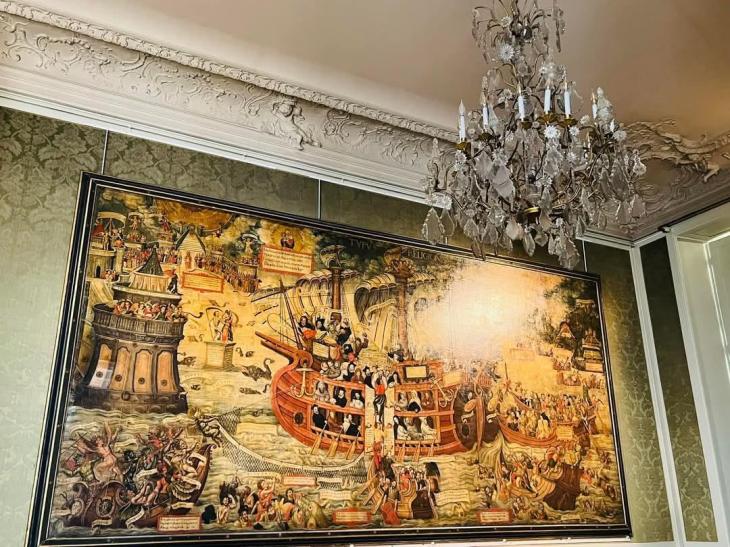
The National Archives Museum, created in 1867 at the National Archives, exhibits archival documents preserved by the institution to the public. It presents: on the one hand, a permanent tour around the most famous documents preserved and on the other hand, temporary exhibitions based on the funds of the at the National Archives. The National Archives Museum does not have permanent collections but exhibits documents from the National Archives. Some of its documents have a double rating and thus constitute an anthology of emblematic documents from the National Archives AE I – Most significant documents in the history of France preserved in the iron cabinet (constitutions from 1791 to the present day, wills of kings, Oath of the Tennis Court, etc.); AE II – So-called French documents (3,840 numbers, including the oldest documents kept in the National Archives dating from the Merovingian period); AE III – So-called foreign documents (254 numbers, international treaties concluded between the end of the 8C and the beginning of the 20C, the AE IV series has been deleted , AE V – Evidence from major criminal trials and seized objects (450 numbers), from the police or procedural files with which they were kept. Very diverse collection ranging from a Jesuit painting, seized in 1762 in a church in Puy-de-Dôme, to a pair of Landru glasses, including Fieschi’s infernal machine, counterfeit money or seditious brochures and objects) and AE VI – Historical objects (paintings, sculptures, engravings, drawings, art objects, medals, coins, keys (mainly those of cities taken by the armies of the French Republic), standards of weights and measures, etc. The museum is accessible to all free of charge.
A bit of condense history I like tell us that in 1371, Olivier de Clisson, Constable of France, began the construction of a private mansion on the land he had just acquired outside the ramparts of Philippe Auguste. Of this first hotel, only the fortified door with its corbelled turrets topped with pepper shakers, overlooking the rue des Archives, the only vestige still visible of private architecture of the 14C in Paris, is preserved today. In 1553, the Hôtel de Clisson was acquired by François de Lorraine, Duke of Guise and his wife Anne d’Este, granddaughter of Louis XII. In the middle of the 16C, it was rebuilt by Henri 1er of Lorraine-Guise, to become the Hôtel de Guise, poets, such as Malherbe, and scholars, such as François Roger de Gaignières, who installed his famous collection of drawings there, also found refuge there at that time. In 1700, the two princesses sold the Hôtel de Guise to François de Rohan-Soubise and Anne de Rohan-Chabot, his wife. The new facade of the Hôtel de Soubise and the colonnade of the courtyard were then built from 1705 to 1709. After the departure for the emigration of the prince and his children, during the French revolution, the Hôtel de Soubise is seized , and was diverted from its princely uses, and used, for fifteen years, for various activities , barracks, administrations, housing, factories, which put it in a sad state. The hotels of Soubise and Rohan, which were sold to a speculator in 1807, a month before the death of the princess. In 1808, the two hotels were acquired by the state; Napoleon Ier assigned the Hôtel de Soubise to the Imperial Archives and the Hôtel de Rohan to the Imperial Printing Office. The National Archives continued to occupy the site throughout the 19-20C. Under Louis-Philippe and Napoleon III, they annexed four other neighboring mansions, notably the hotels of Jaucourt, Le Tonnelier de Breteuil and Assy, rue des Francs -Bourgeois, and, in 1927, the Hôtel de Rohan, in turn, abandoned by the Imprimerie Nationale (old Imperial printing office). The first construction, now called the Louis-Philippe deposits, were built in the eastern extension of the Hôtel de Soubise. The Parliament Gallery is the culmination of the new repository to house the state’s judicial records. a second phase of works was launched in 1859. This new construction extends the corner pavilion of the Louis-Philippe wing and is today called the Napoleon III depot. In 1866, the symbolic character of the room was reinforced by the integration of the iron wardrobe. The creation of this safe had been ordered by the National Constituent Assembly in 1790 in order to protect the most precious documents from fire and theft. In the 19C, this wardrobe became the conservatory of the pieces considered the most emblematic in the history of France. Since 1996, the iron safe has housed all of France’s constitutional texts. It also contains pieces as priceless as the standard meter and the standard kilogram of 1799, the diary of Louis XVI, the jeu de paume Court Oath and the text of the law of June 20, 1936 instituting paid holidays. The museum of the National Archives occupies certain rooms of the Hôtel de Soubise since its creation, in 1867. Nearly 300 linear km of archives are preserved there. Quickly becoming too small, the Parisian site preserves the archives prior to 1958. They are now installed on three sites: Fontainebleau, Paris and Pierrefitte-sur-Seine. The Hôtel de Soubise, also has the honor of hosting the Museum of the History of France, created in 1867, during the reign of Napoleon III, by the Marquis Léon de Laborde, director of the Archives. Its mission: to present a thousand documents to the public. In 2009, the museum was renamed to become the Museum of Archives.
The official National Archieves on the Hôtel de Soubise : https://www.archives-nationales.culture.gouv.fr/en/web/guest/hotels-de-soubise-et-de-rohan
The official National Archieves on the museum :https://www.archives-nationales.culture.gouv.fr/fr/web/guest/musee
The Paris tourist office on the National Archives museum in the Hôtel de Soubise : https://parisjetaime.com/eng/culture/musee-des-archives-nationales-hotel-de-soubise-p1001
The Ïle de France region tourist office on the National Archieves museum : https://www.visitparisregion.com/en/national-archives-museum
There you go folks, one awesome building where the museum can be visited and fun while doing your walk in historically and architecturally stunning the Marais. Again, hope you enjoy this post on the Hôtel de Soubise ,Archieves National in Paris !!! as I.
And remember, happy travels, good health, and many cheers to all !!!

 Paris1972-Versailles2003
I visited l’Hôtel de Soubise on a trip to Paris several years ago. I was happy I got to visit, as I believe the hôtel has/had limited opening hours and I had limited time in the city. Interior was gorgeous, and who would’ve thought there would be stunning architecture inside an otherwise unassuming building? Thanks for sharing!
LikeLiked by 1 person
Another jewel of eternal Paris. Good you have visited. Thanks for stopping by. Cheers
LikeLiked by 1 person
Gorgeous.
Gwen.
LikeLiked by 1 person
Indeed! Thanks for stopping by. Cheers
LikeLiked by 1 person
Love this place, thank you
LikeLiked by 2 people
Glad you like it, thanks for stopping by Cheers
LikeLiked by 1 person