
We came here as many to seek the arts and the ocean breeze along its cobblestones streets and its festivals. Over the years the family took a loving liking to the town, and yes my mom, wife, and dad lies off the sea here so we come at least once a year, a very special town . Let me tell you a bit about the architecture and beautiful streets of my dear Honfleur, in the dept 14 of Calvados ,in the Normandie regioin of my belleFrance! Therefore, here is my take again onthe streets of Honfleur, part II !!!Hope you enjoy the post as I.
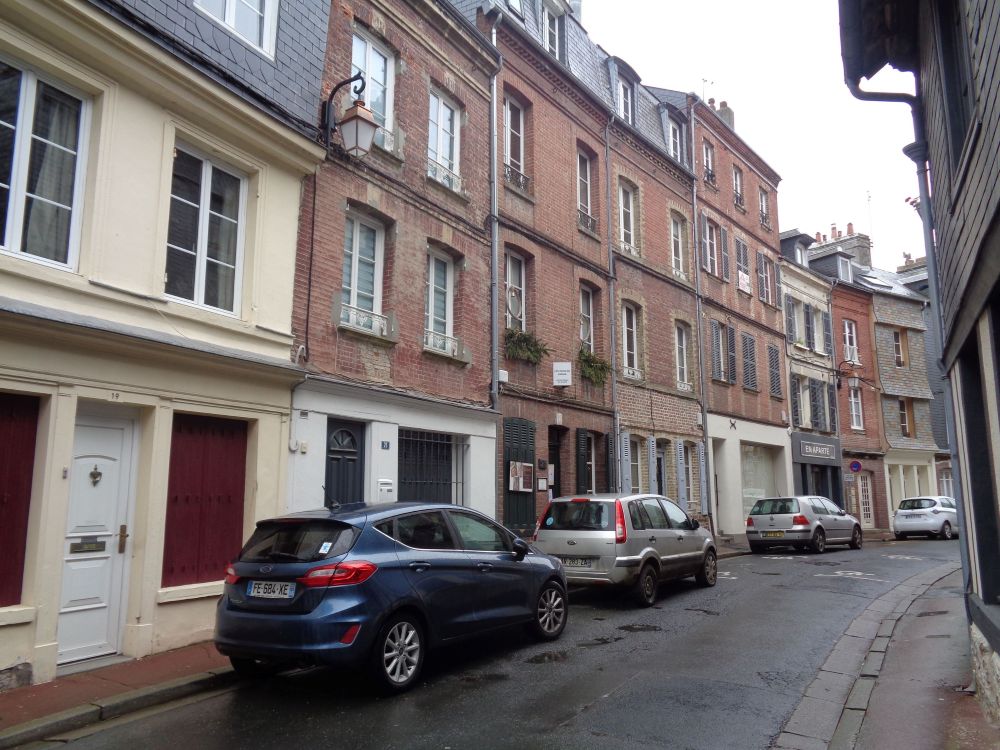
The rue de la Chaussée was named Rue de la Grande-Chaussée in 1447 ,because it separated the large pond from the ditch. by this means to form a restraint that was used for the port. This levee served at the same time as a place of passage and the dam thus built took the name of roadway (chausséé), With the drying up of the pond, it was the Claire which delimited the street on the south side. It now opens onto the Tripot garden. It is in this street that the Cohue was built, the place where the small justice was held. The building was equipped with a small secret room that allowed the criminals to be observed without their knowledge. At No 37, lived Pierre-Philippe Urbain Thomas, former commissioner of the Navy, who served on the ships Orient and Courageux during the Egyptian campaign at the end of the 18C. Thomas was, for more than 20 years, one of the editors of the Journal de Honfleur, a competitor of the Honfleur Echo.
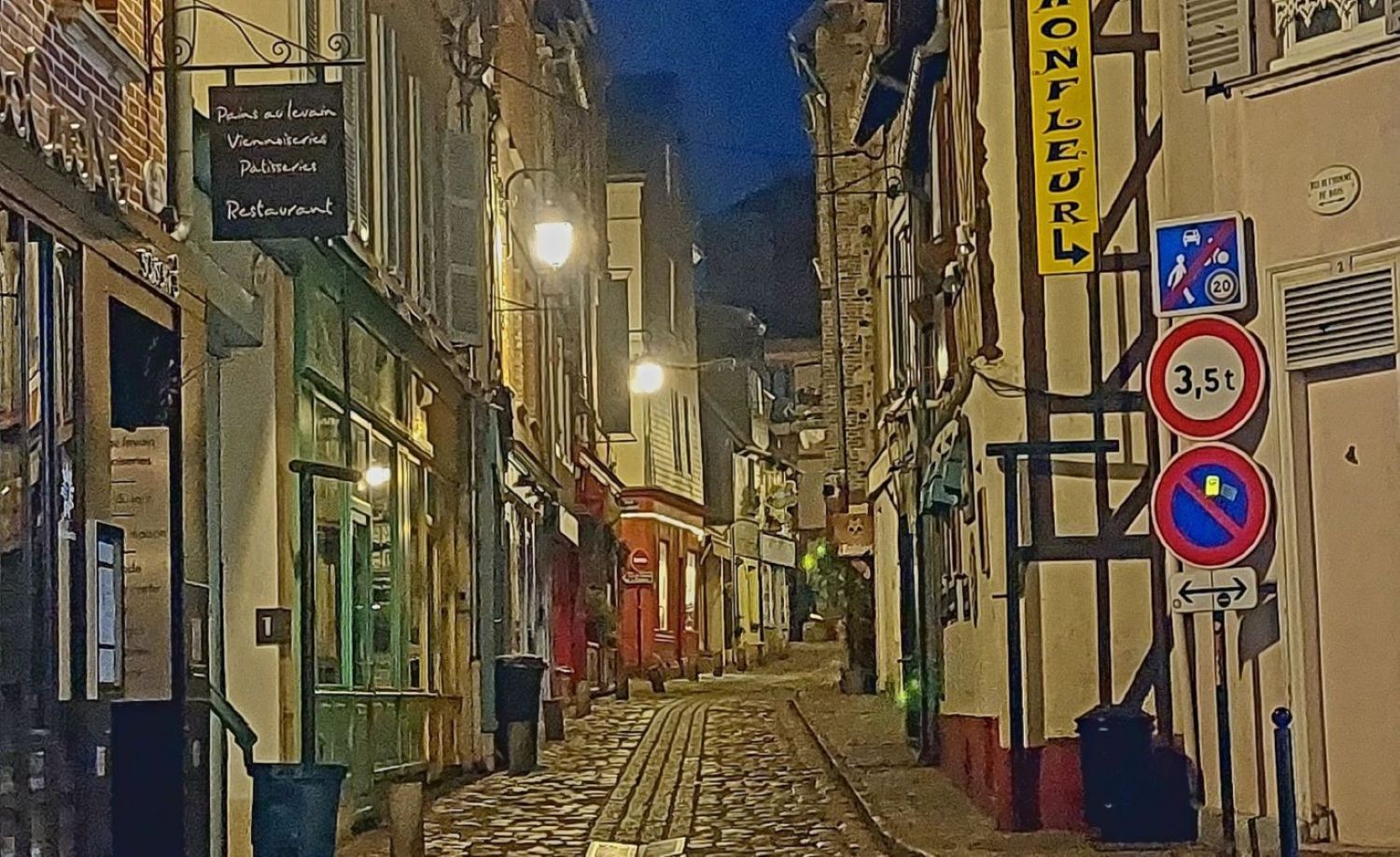
The rue de’homme de bois, starts at place Hamelin near the Lieutenance (see post) preserve a wood beam with the image of a men sculpture in relief’s rememberance when Honfleur was a port of slaves. Indeed, by “Man of wood”, we must understand “Man of ebony wood”, a name used in the 18C to designate the color of slaves, from the trade between France, Africa and the Antilles. It is at no 27 that we can see, on the first floor, a sculpture embedded in the facade, and supposed to represent this famous “Man of wood” It is in this street that the large public buildings of the city center built in the 19C were concentrated The lower part of the street is the oldest, You have near the museum Eugene Boudin,(see post), he had rented a room in 1889 to paint the pastel colors of the sky that the museum conserves a few examples. This street at the corner with Rue Varin was the object of many paintings by painters such as Alexander Dubourg that met the families of fisherman. The rue de l’Homme de bois continued on the rue Alphonse Allais that connected with the Impasse de Neubourg where the mother of Charles Baudelaire stayed, the house is no longer there.
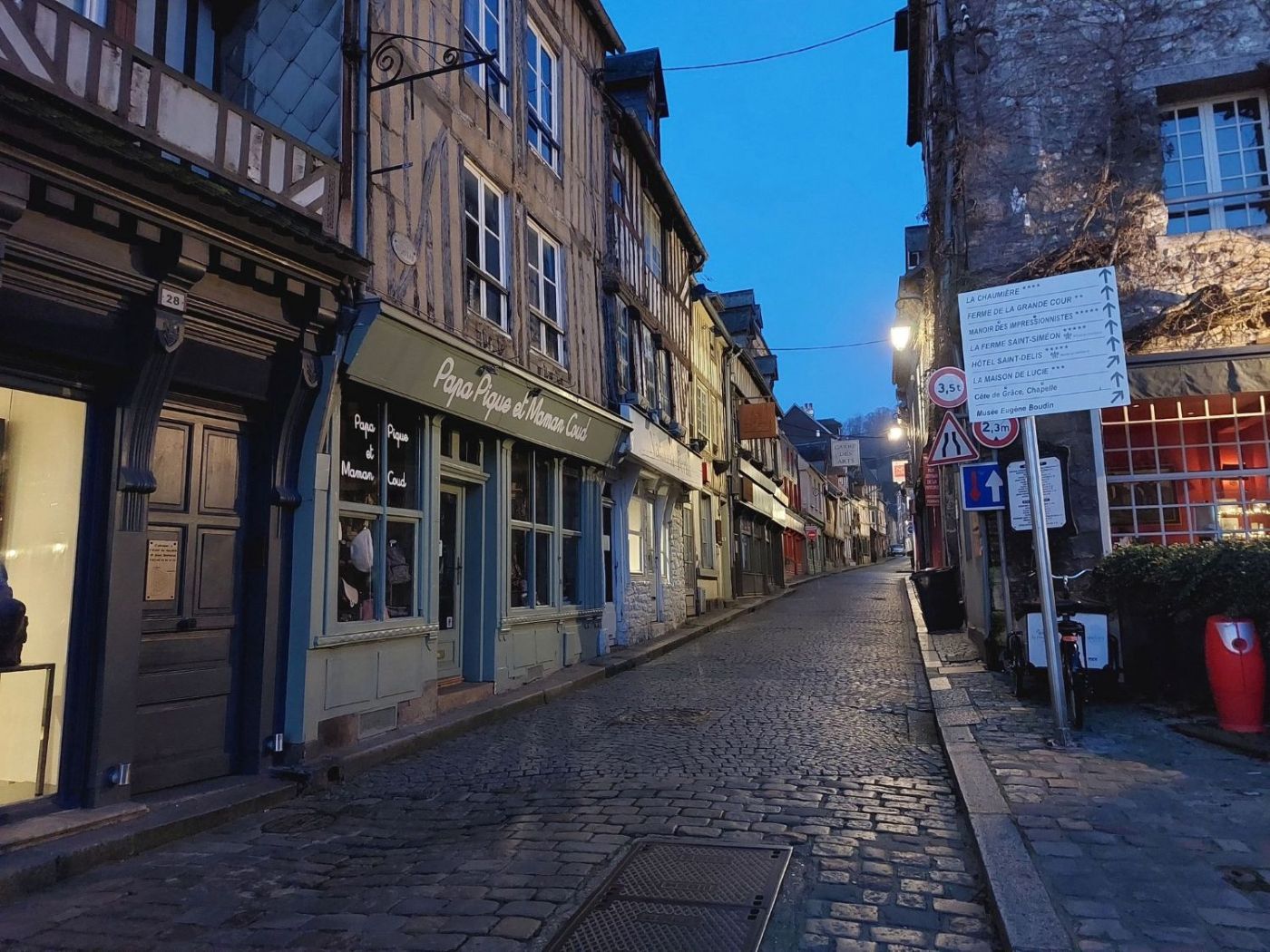
The Rue du Puits, from its origin to its terminus at Place du Puits is a very old street, The well at the corner of Rue du Puits and Rue Bucaille is mentioned as early as 1557. The current well was built between 1807 and 1835. It was moved in 1935. There was an iron dolphin on each side, the fourth side was occupied by the pump. Destroyed during WWII by a nazi truck. It was rebuilt in 1949. Interesting note tell us that at 41 rue du Puits, the painter Henri de Saint-Delis lived the last years of his life, until 1949. It is precisely on this 18C house backing onto and communicating with a beautiful 19C building ,accessible by no 43, that the Boelen family set their sights on, in order to set up a boutique hotel, a small 9-room establishment, with seminar room and garden, aiming for 5-star classification. Henri de Saint-Delis, Henri Liénard known as “de Saint-Delis”, born April 4, 1878 in Marconne (Pas-de-Calais) and died November 15, 1949 in Honfleur, is a French painter. He is buried in Honfleur.
The Vieux Basin is a Port or Vieux Port of Honfleur . Its narrow slate houses reflecting in the basin make it the main tourist attraction of Honfleur. This afloat basin was created on the insistance of Abraham Duquesne and by order of Colbert in 1681, finished in 1684. It replaces the old stranding haven, which was much narrower. This work necessitates the destruction of the western part of the ramparts. This basin with an area of approximately one hectare (10 000 m2) has a length of 130 meters for a width of 70 meters on the south side and 85 meters on the north side where the channel is located to the port of Honfleur. It is entirely surrounded by docks accessible to the public. It is completely surrounded by wharfs and walkable! Along the wharf or quai Sainte Catherine you see wooden houses from the 17C and 18C.
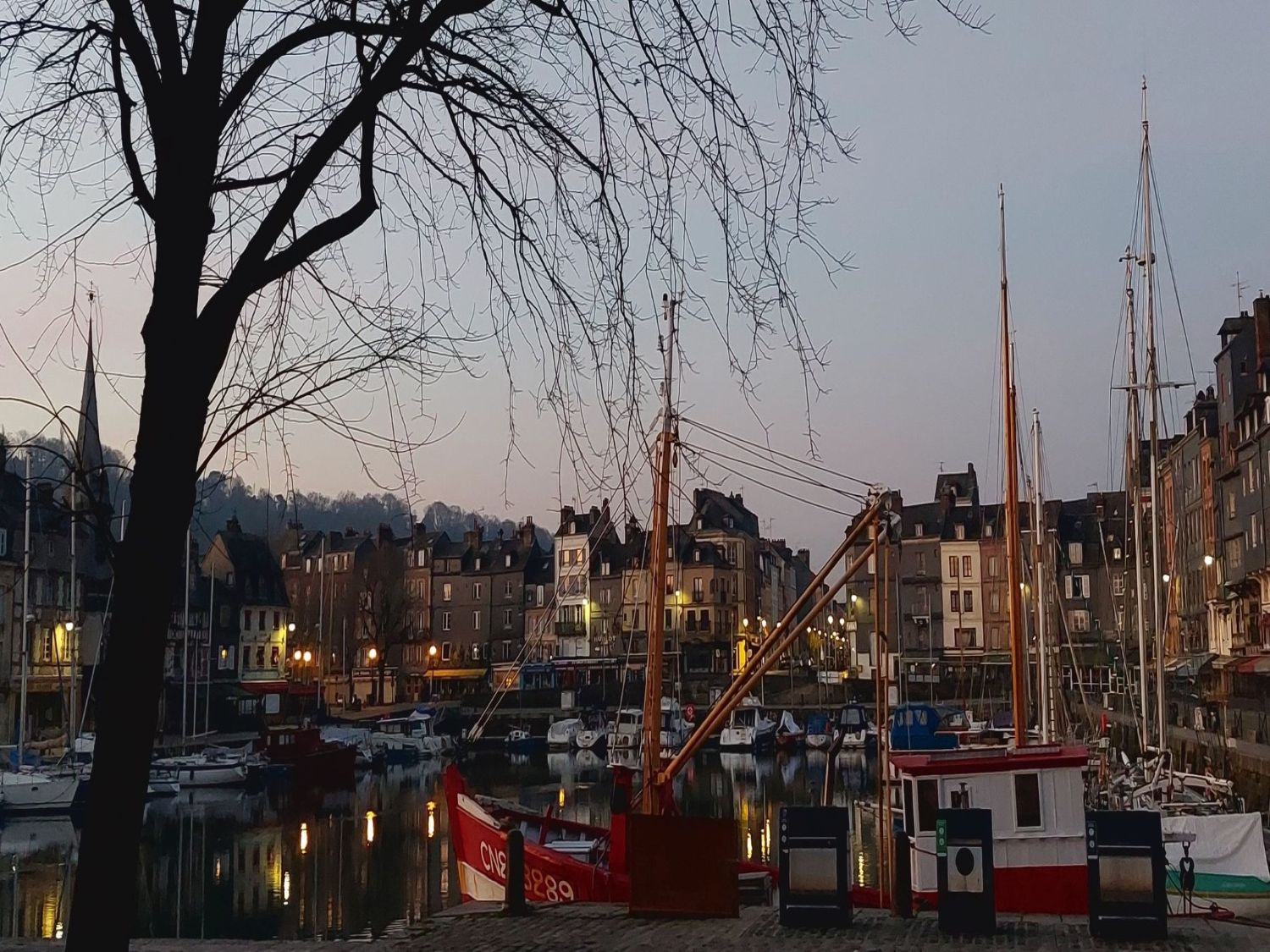
The western part of the vieux basin is built around some more houses that are part of the quai Saint-Étienne. One of these houses is the Hôtel de Ville or city hall and the former church of Saint Etienne, now a naval museum. The church was deconsecrated in 1791 ,The church was transformed after the French revolution into a rope store and then became a performance hall in 1797.In 1808, the city was authorized to destroyed the church bell tower because of its dilapidated condition; it later became a trade exchange and customs warehouse in 1816. From 1809 to 1897, it housed the real warehouse and from 1809 to 1832 the trade exchange and since 1897 a museum today mainly devoted to the navy. In 1897, the church was transferred to the Société du Vieux Honfleur, which restored it, rebuilt the bell tower, erected a gallery, had stained glass windows made and exhibited part of its collections there from 1899. In 1976, the historical and maritime collections were transferred from the ethnography manor to the church. The models, engravings and objects exhibited are the result of numerous donations and bequests. All bear witness to the activities of seafarers and Honfleur society in the 18-19C: fishing, shipbuilding, large-scale trade, popular crafts linked to the sea, etc.
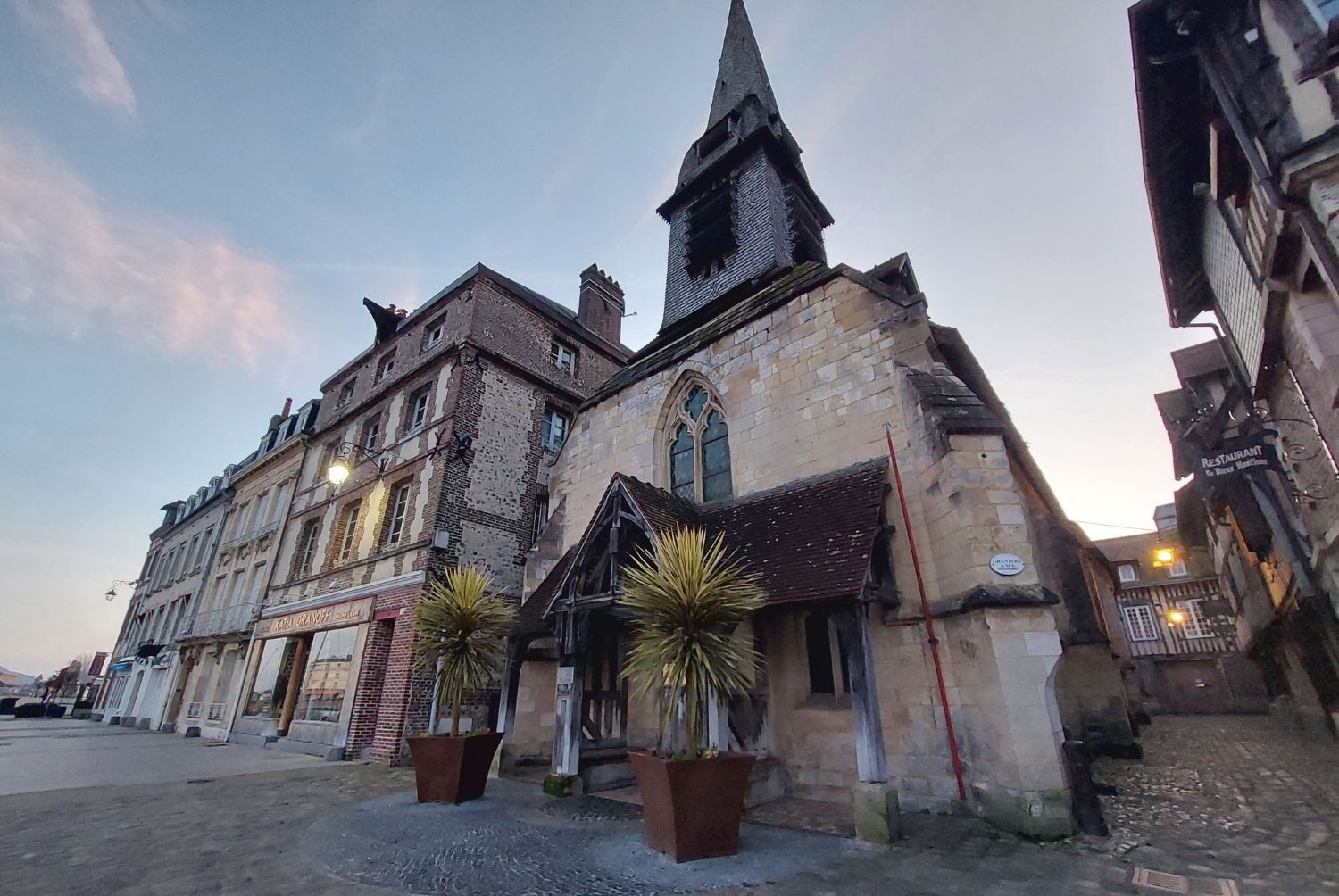
The Rue des Lingots has a somewhat dreamy name and takes us back to the time of piracy, Despite its golden name, the famous street seems never to have housed the slightest treasure. An undeniably lively street throughout the centuries, it has been occupied by many inns and shops. As early as 1435, the Englishman Robert Lynford opened a tavern there. Thanks to the notary’s records, we have been able to keep track of all these taverns: Le Cerf-volant in 1598, L’Agnus-dei in 1635, Maison Canada in 1665. On November 8, 1802, Napoleon Bonaparte, then First Consul, even had lunch at No. 32, after visiting the city’s port and shipyards. A legend ,also said that Henri IV stopped there during the Wars of Religion. During his stay, the sovereign is said to have had his personal tableware stolen and the house was then razed in retaliation. Rue des Lingots remains one of the streets illustrating the most authentic half-timbered built heritage of Honfleur.
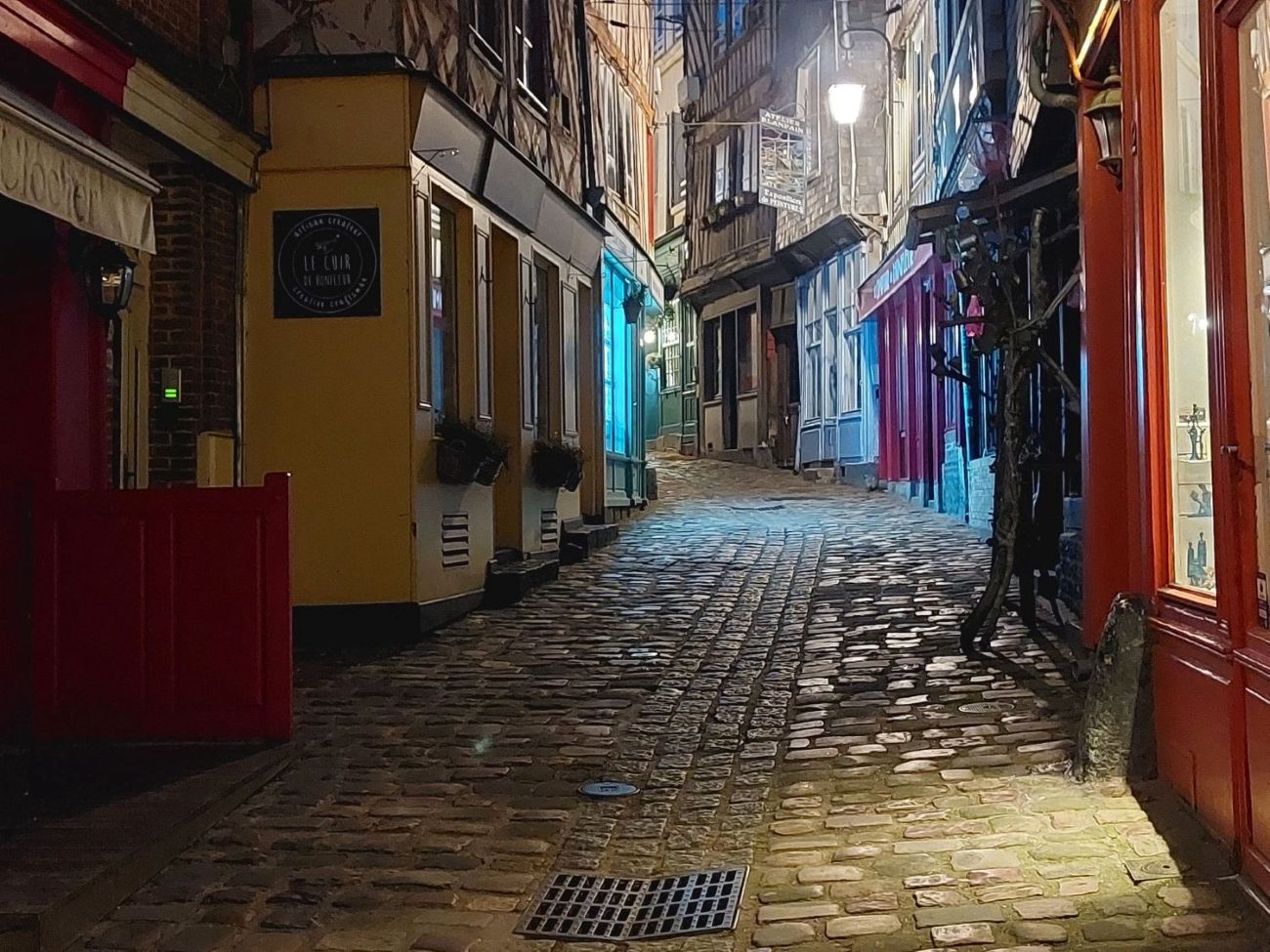
The Sainte-Catherine district is a real pleasure to explore… it has preserved all of its medieval architecture and its small cobbled streets. The names of its streets promise you a dive into the history of Honfleur: rue de l’Homme de Bois, rue des Lingots, rue des Logettes, rue des Capucins, rue du Puits…(see above), And of course rue Haute,(see post), which is the lowest in the town ,and which offers a line of old shipowners’ houses to admire. The bell tower, a sturdy oak construction, is built on the bell ringer’s house. Annex of the Eugène Boudin Museum, (see post) ,it can be visited and presents religious works (sculptures, souvenirs from the charities and the Notre-Dame de Grâce Chapel (see post)). Dating from the second half of the 15C, the Sainte-Catherine Church (see post) replaces an old stone church destroyed during the Hundred Years’ War. It was built by the town’s inhabitants after the departure of the English. The church is nothing less than one of the largest wooden churches in France! It is unique with its market hall silhouette and its separate bell tower, it sits proudly in the middle of the central square, it is one of the jewels of Honfleur’s heritage.
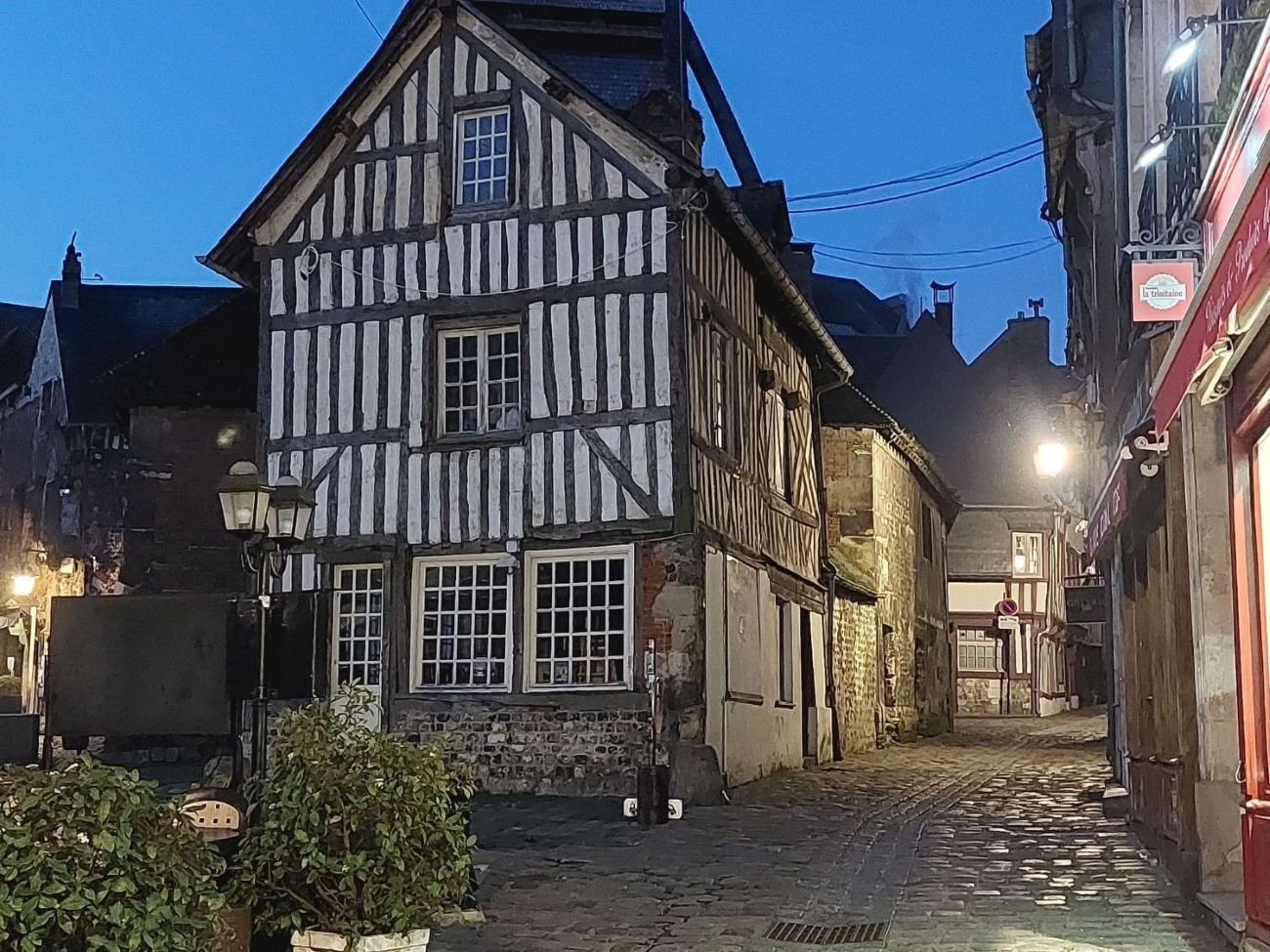
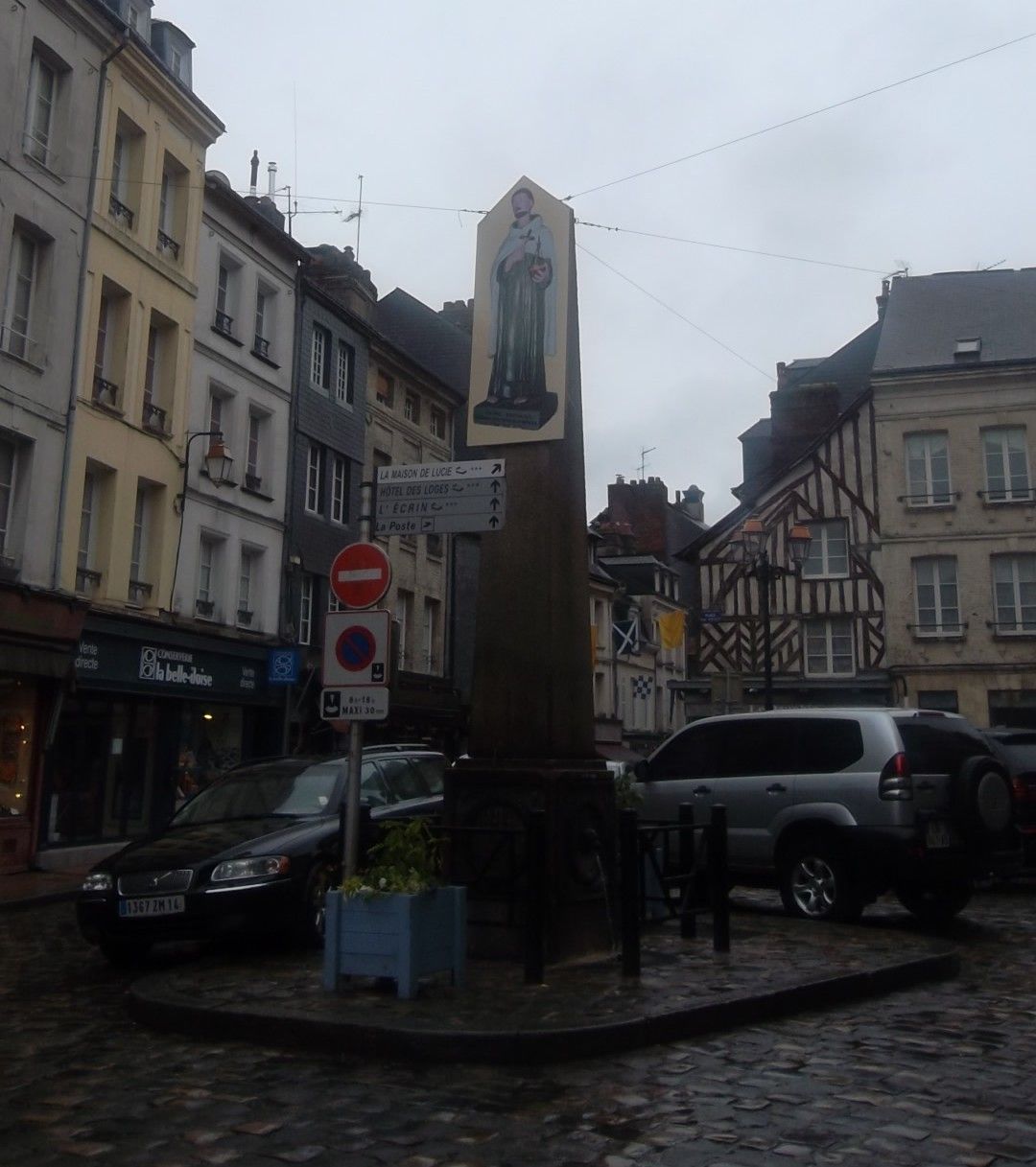
The place Pierre Berthelot at No 22 see a half timbered house from the 16C. There is a nice Hôtel le Dauphin as well as our favorite the Belle Iloise fish/seafood canned store. There is a fountain with an obelisk done in 1827. A bit of history I Like here : Pierre Berthelot (aka Denis of the Nativity), born in Honfleur on December 12, 1600. He was a sailor and sailed in the service of Portugal before entering the Order of Carmel. Landed in Indonesia following the capture of his ship by the Dutch, he stayed where he was and ended up serving the King of Portugal on the Indian Ocean. He retired to a Discalced Carmelite convent in Goa in the Portuguese Indies. His status as a monk will not prevent the King of Portugal from requesting him to command the Portuguese fleet during various particularly critical battles. He was ordained a priest in 1638. That same year, the King of Portugal called upon him again to lead a diplomatic mission to restore peace with the Indian Prince of Achem. But the mission turns into disaster: the prince has the entire delegation captured and imprisoned. The soldiers are finally released, but the religious are ordered to convert to Islam. Father Denis of the Nativity (as well as all the other monks) died a martyr in Sumatra on November 29, 1638. He was beatified in 1900. In the Jardin des Personnalités (see post) there is a bust of him
The city of Honfleur on its heritage: https://www.ville-honfleur.com/decouvrir-honfleur/
The Honfleur tourist office on its heritage: https://www.ot-honfleur.fr/en/Honfleur/unmissable-in-honfleur/
The Calvados dept 14 tourist office on Honfleur : https://www.calvados-tourisme.co.uk/a-weekend-in-honfleur/
The Normandie region tourist office on Honfleur: https://en.normandie-tourisme.fr/unmissable-sites/honfleur/
There you go folks, another memorable visit toHonfleurand there are plenty more in my blog and those pending to go when possible nowdays. Do visit the 2nd most visited site in all of Normandy! (for info 1st is MSM). Again, hope you enjoy the post on the streets of Honfleur, part II !!! as I.
And remember, happy travels, good health, and many cheers to all !!!


Great blog with lovely photographs. Thank you.
Gwen.
LikeLiked by 3 people
Thanks so much and for stopping by. Cheers
LikeLiked by 1 person
Great street pictures at night!
LikeLiked by 1 person
Yes! Thanks for stopping by. Cheers
LikeLiked by 1 person