
We have driven and walked in my eternal Paris, and would like to have an imprint in my blog on the wonderful family times we had there, There is so much to see , doing my best, and glad found me these older pictures in my cd rom vault ,which now transposing in my blog for you and me, This was my former worked city, so glad to post more memorable spots on it, Therefore, here is my take on curiosities of Paris , part XX !!! Hope you enjoy the post as I.
The rue Monge is a street located in the Saint-Victor and Jardin-des-Plantes quartiers or neighborhoods of the 5éme arrondissement or district of Paris. It was pierced in the 1860s as part of Haussmann’s urban planning work to double by a route adapted to circulation in width and moderate slope, the historic axis of the Italian road to the île de la Cité by the narrow streets of Mouffetard, Descartes, the Sainte-Geneviève mountain and Galande, The caritides shown are at 25 rue Monge , This street received in 1864 the name of the Gaspard Monge surveyor. It runs along the facade of the Saint Nicolas du Chardonnet Church at the beginning of which was built the Maison de la Mutualité, from 1931, located on part of the site of the Saint Nicolas du Chardonnet seminary. The rue Monge is accessible by the metro line 7 at the Censier – Daubenton and Place Monge stations and by line 10 at the Cardinal Lemoine and Maubert – Mutualité stations.
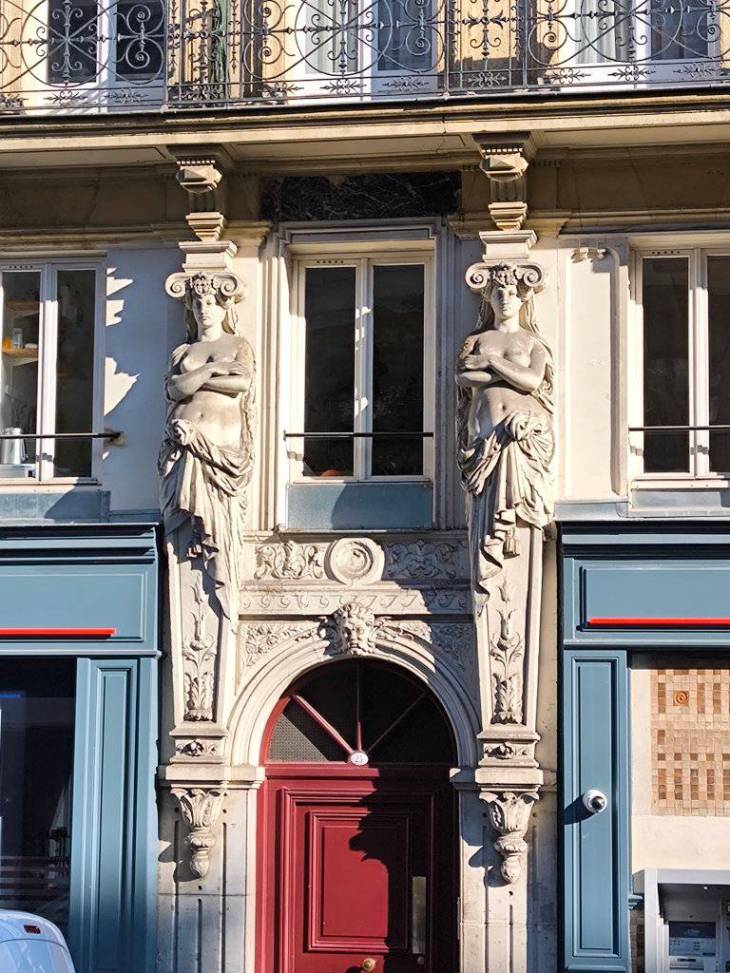
Remarkable buildings here see at No 29bis was formerly the house of scientist André-Marie Ampère, a French mathematician, physicist, chemist and philosopher. He was a member of the Academy of Sciences, as well as professor at the École Polytechnique and at the Collège de France. He is considered the precursor to the mathematization of physics, and as one of the last universal scholars who lived there from 1818 to 1836 and led his experiences there; A plaque pays tribute to him, as well as a story panel from Paris. Frédéric Ozanam who was beatified by Pope John Paul II on August 22, 1997.;close to the doctrines of Lamennais, he was one of the main thinkers of a neocatholic theory of Christian art and aesthetics after the French revolution ,He lodged there in board for eighteen months from November 1831. He occupied the room of Jean-Jacques Ampère, son of André-Marie Ampère, who then studied abroad , Until the mid-1970s, the Spanish republican Red Cross in exile manages a dispensary at No 47 rue Monge which bears the name of Cervantes, In No 49 is one of the entries of the arenas of Lutèce. See the nice Place Monge and its neighborhood market adjoining the street.
The Paris tourist office on the 5éme arrondissement or district : https://parisjetaime.com/eng/article/explore-paris-s-5th-arrondissement-a820
The cour du Commerce-Saint-André is a street located in the Monnaie quartier or neighborhood in the 6éme arrondissement or district of Paris. In the 1730s, a square passage was opened between rue des Fossés-Saint-Germain (current rue de l’Ancienne-Comédie) and rue Saint-André-des-Arts. In 1778, the passage along a wooded land bearing the legend « Jeux de Boule de Metz » or balls games of Metz. These are jeu de paume or old tennis games fitted out in the ditches of the enclosure of Philippe Auguste (whose remains are still present in certain stores on the even side, Around 1776, the passage is extended to rue des Cordeliers ( now rue de l’École-de-Médecine) on the site of the old tennis games. In 1823, the outlet on rue Saint-André-des-Arts was rebuilt to form the gallery that we currently know during the drill of Boulevard Saint-Germain, on July 28, 1866, the passage was amputated by forty meters. There were several passages of Commerce in Paris, and the cour du Commerce became the cour du Commerce-Saint-André to avoid confusion , The cour du Commerce-Saint André is served by lines 4 and 10 at Odéon metro station. The cour du commerce Saint-André is a semi-covered passage, bordered by shops, However, it houses a much older mythical establishment … le Procope ,the oldest café in Paris, which dates from 1686! The portraits in the window remind you that he was the HQ of great Parisian personalities. It welcomes the philosophers of the Enlightenment, the encyclopedists, then the revolutionaries Diderot, d’Alembert, Rousseau, Montesquieu, Voltaire, Danton, Marat or Camille Desmoulins, etc.

Remarkable buildings are the remains of the enclosure of Philippe Auguste visible in a store in No 4. cour du Commerce-Saint-André gives access to the cour de Rohan. Among the famous names as said is Procope, as well as the Relais Odéon. At No. 8, Marat had established the editorial staff and printing of the L’Ami du Peuple or friend of the people. Concomitantly, at no 9, at the carpenter Schmidt, housed Joseph Ignace Guillotin, who then experienced his guillotine there on sheep, At No 20, moved in August 1787 Danton. This building disappeared when the boulevard Saint-Germain was created.
The Paris tourist office on the 6éme arrondissement or district: https://parisjetaime.com/eng/article/explore-paris-s-6th-arrondissement-a823
The Place Franz-Liszt is a square located in the 10éme arrondissement of Paris.It is located at the crossroads of the La Fayette, d’Abbeville, d’Hauteville, des Petits-Hôtels ,and Bossuet streets. It forms the forecourt of the Saint-Vincent-de-Paul Church. On the church: a ramp system allows the old carriages to access the forecourt of the church. Since then, gardens have been set up in place of the ramps. The church is focused on rue d’Hauteville which descends to the Grands Boulevards. This site is served by the Poissonnière and Gare du Nord metro and train stations, See the atlanteans in the foot, 6 place Frantz Liszt.
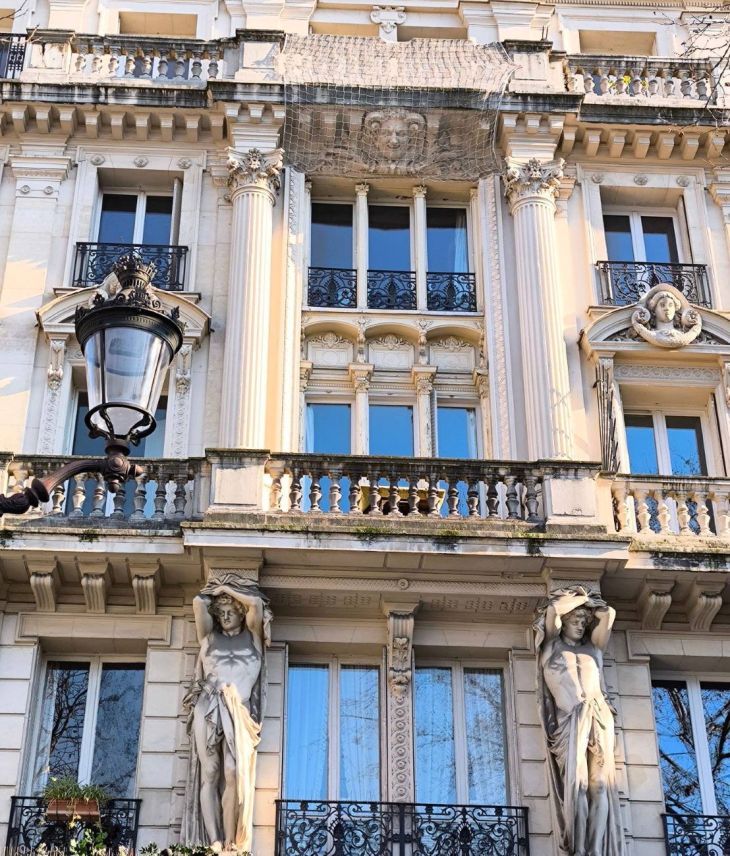
The square was opened in 1822 on the land of the Saint-Lazare enclosure. The new square received in 1825 the name Place Charles X in honor of king Charles X, who was then king of France. After the Trois Glorieuses revolution of 1830, the two odonyms were replaced by those of “rue La Fayette” and “Place La Fayette”, named after the Marquis de la Fayette alive when the decision was made. In 1842, a new turnaround attributed instead the name “Place Bossuet”, for a few years, to pay tribute to Bossuet, bishop of Meaux. Quickly, the forecourt of the Saint-Vincent-de-Paul Church regains the name of “Place La Fayette” or “Carrefour La Fayette”, it was finally baptized Place Franz-Liszt in 1962.
The Paris tourist office on the 10éme arrondissement or district: https://parisjetaime.com/eng/article/explore-paris-s-10th-arrondissement-a843
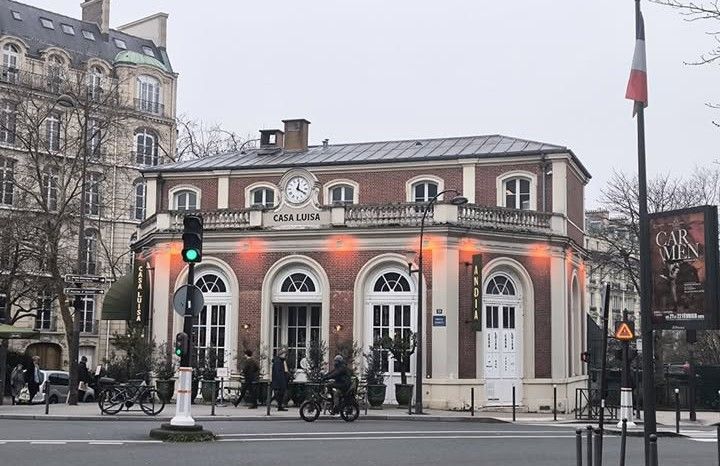
The old gare de Passy-la-Muette train station is a disused station on the petite ceinture line in Paris, the station was located in the 16éme arrondissement of Paris, at the crossroads of the Chaussée de la Muette and Boulevard de Beauséjour. It opened to travelers on May 2, 1854 as an element of the Auteuil line, connecting Saint-Lazare train station to Auteuil-Boulogne station,The Russian Tsar Nicolas II in Paris in October 1896, a temporary pavilion, named “Ranelagh station”, was built along the quay of the station overlooking the Ranelagh garden, in order to avoid the imperial couple to go out by the main building due to threats of attack. From the platform, this pavilion-landing was deployed over 160 meters along the tracks, up to the level of the intersection on boulevard de Beauséjour and rue du Ranelagh, Accompanied by his wife Alexandra, the Tsar arrived from a special train from Cherbourg. Upon his arrival, alongside the President of the French Republic Félix Faure, he is greeted by a large crowd. The procession then crosses a driveway in the Ranelagh garden and the Bois de Boulogne to the Porte Dauphine gate, subsequently taking the avenue du Bois (current avenue Foch), the journey to lead them to the Russian Embassy, The line closed on January 6, 1985, during the construction of the RER C. The building was later converted to a restaurant, called “La Gare” (my old hangout in Paris see post), it was renamed “Andia” in 2021, then “Casa Luisa” in 2024.
The rue du Ranelagh is a street of the 16éme arrondissement of Paris. It is 1,135 meters long, it begins avenue of President-Kennedy and finished boulevard de Beauséjour, it bears this name because it resulted near the Ranelagh garden (see post) created in 1877. It should not be confused with the avenue du Ranelagh, which is located in the garden of the same name. The garden is itself named after Lord Ranelagh, Irish politician and diplomat. The rue du Ranelagh is served nearby by line RER C at the avenue du President-Kennedy station and by line 9 at Ranelagh metro station. See pic at 94 Rue du Ranelagh , the former Hôtel du Comte de Caix-de-Saint-Aymour built in 1885 ; currently the Embassy of Suriname.
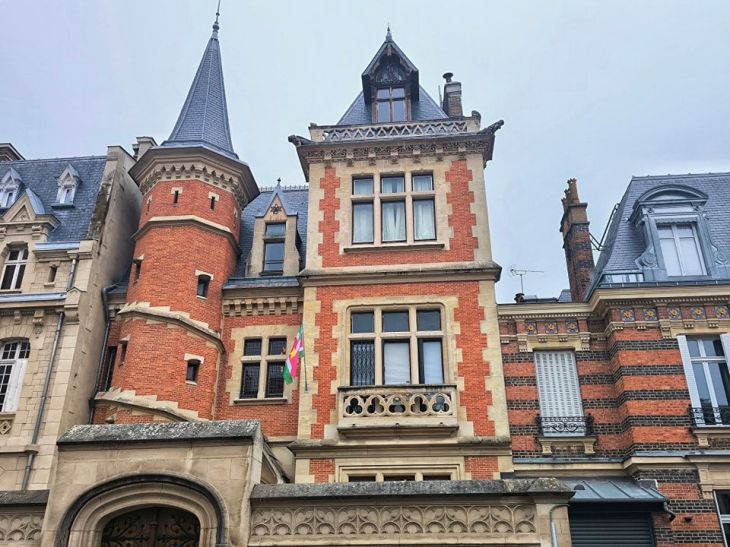
The Rue du Ranelagh leads to Boulevard de Beauséjour which follows the layout of the old railway of Auteuil from the old Passy-La Muette station to Auteuil Boulogne station, The street is drawn in the Boulainvilliers area, sold in 1825 after demolishing a castle and beaten the grounds of the park to create the new district of Boulainvilliers, A first part of the street was opened under its current name in 1825 between the Quai de Passy and the Rue de Boulainvilliers. It was extended for the first time in 1838 to the Chemin de la Briquettery on the edge of the hamlet of Boulainvilliers created at that time, then in 1854 to the rue de la Glacière by absorbing the sentier des Chenilles path, by a decree of May 29 1867 Between rue de la Glacière and avenue Mozart, absorbing the sentier du Calvaire or Calvary trail, finally by a decree of July 14, 1877 between avenue Mozart and the boulevard de Beauséjour, Remarkable buildings between the avenue of President-Kennedy and rue Raynouard: the Maison de la Radio. No 3: in this location (site of the Maison de Radio France) was formerly a house where actress Mademoiselle George died in 1867 according to Victor Hugo, Théophile Gautier, Alexandre Dumas Father, Eugène de Mirecourt and other testimonies, she will have been the tragedian who threw the most bright shine on the French scene, At no 45 and no 63: hamlet of Boulainvilliers, at the corner with the rue de Boulainvilliers. The tennis player Suzanne Lenglen was born there in 1899, At No 64: Alain-Ducasse cooking school. At No 94 private mansion of neogothic and neo-Louis XIII style built in 1885 for the count of Amédée de Caix de Saint-Aymour; Current Embassy of Suriname in France (see above). On 96 bis-98 a building built in 1890; Currently: Primary School of the International School of Paris , No 141 (and 61, Boulevard de Beauséjour): corner building of 1900-1901 with ornamental patterns evoking the Middle Ages and Renaissance , At the end of the street, at the crossroads with Boulevard de Beauséjour: access to the Petite Ceinture or small belt of the 16éme arrondissement.
The Paris tourist office on the 16éme arrondissement or district: https://parisjetaime.com/eng/article/a-la-decouverte-du-16e-arrondissement-de-paris-a830
There you go folks, a dandy city to explore and enjoy with the family, Memorable moments in my eternal Paris, driving and walking all over in my road warrior trails brings out sublime awesome spots with nice memorable family visits of yesteryear always remember and always looking forward to be back, eventually. Again hope you enjoy the post on curiosities of Paris, part XX !!! as I.
And remember, happy travels, good health, and many cheers to all !!!

 Paris1972-Versailles2003