
We have driven and walked in my former memorable City of Versailles, and would like to have an imprint in my blog on the wonderful family times we had there, There is so much to see , doing my best, and glad found me these older pictures in my cd rom, which now transposing in my blog for you and me, This was my old home, so glad to post, Therefore, here is my take on curiosities of Versailles, part IX !!! Hope you enjoy the post as I.
The rue Neuve Notre Dame was built between mid 1783 and at the end of 1784, at the time of drying up of the Clagny pond which occupied the location of the Boulevard de la Reine. It was name first the quai de l’étang en 1737, then in 1804 regain its current name, The former rue Neuve or new street built in place of the quay that bordered the clagny pond. The double house at four levels, handled or not with openings with lighters and railings. Homogeneous facades with openings often decorated with a mascar in staple as in most old districts of Versailles. Some of the interesting building on it are : N ° 1 to 3: Angle of rue Pétigny, a building “Au Guet du Roy” (see pic) The Corps de Garde des Invalides created in 1736 on the road to the Clagny pond on the site of the Boulevard de la Reine. N ° 3: a balcony with Art Nouveau style railing, N ° 9: the old Lechaudé pavilion which sheltered during the French revolution an oratory at the citizen Brisset, bookseller N ° 12 ter: brick facade with pilasters of “Art Deco” style. Former parish hall of Notre-Dame Church, then departmental archives which were then sheltered in the Grande Ecurie in 1960, before emigrating today in new buildings in the town of Saint-Quentin-en-Yvelines, N ° 15: Statue of the Virgin in a niche on painted lintel facades, N ° 35: Pavillon of the Nyert family, King Louis XV chamber valets, and N ° 39: House with passage (Baubigny) to rue de la Paroisse ,Angle of the rue des réservoirs: a virgin and child in a niche on the facade.
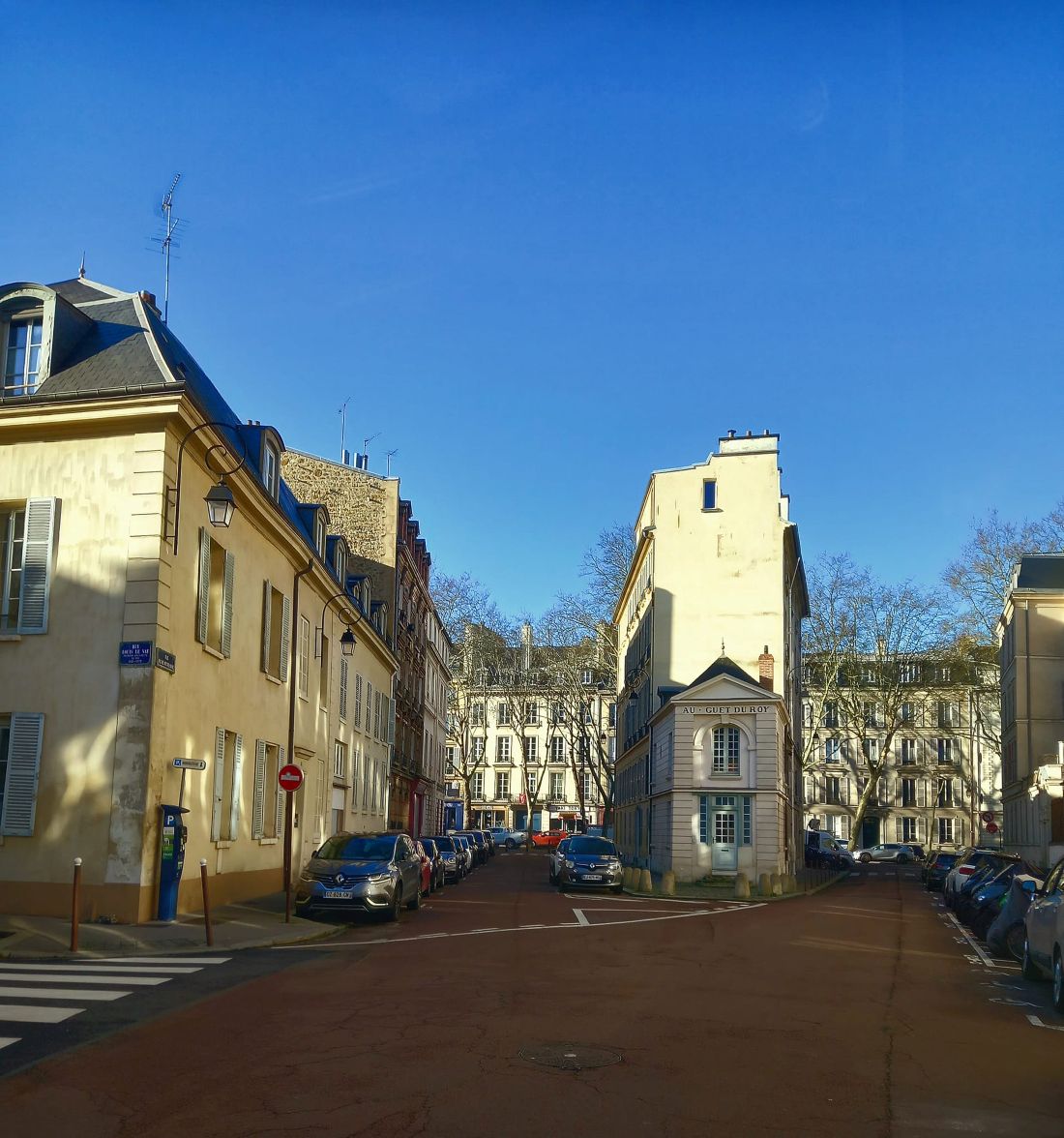
A bit of history tell us that the police had its buildings too in Versailles, but the picturesque one was called the Guet du Roy at the corner of rue Neuve Notre Dame and rue de Pétigny, Built in 1783 under king Louis XVI, It was decided that the Prince de Poix military governor of Versailles to watch over the land of the former pond of Clagny dried up in 1736 that was a property encircling the boulevard du Roi, rue Neuve Notre Dame, rue Berthier, and rue du Maréchal Foch (pretty much where the Notre Dame market is today) near the rive droite train station was inhabited by troublesome folks so it was needed to keep an eye from this building, after the French revolution and after passing by several owners.
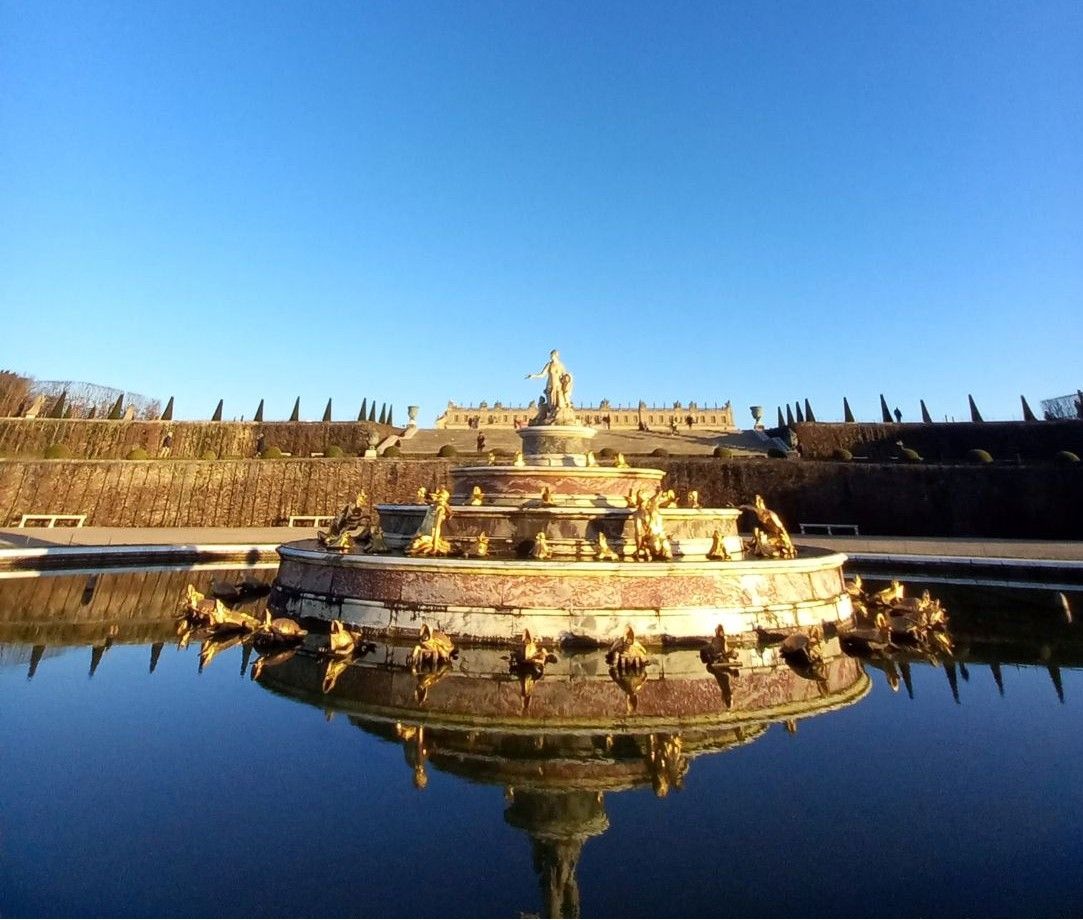
It is by advancing far into the water parterre, the first coming from the Palace/museum of Versailles, that this large Bassin de Latone basin (see post) is revealed. It is indeed located in the second parterre when walking towards the Grand Canal. Located in the center of the parterre, the Latona Fountain features a number of gilded bronze figures, surrounding a large pyramid. In the middle, at the top of a pyramid, a group of sculptures is displayed: Latona and her children, Apollo and Diana, Latona begs for justice from Jupiter and seeks to escape, protecting her children. Indeed, she reproached the peasants of Lycia for not having assisted her, at this moment when she had to face the wrath of Minerva, deceived wife of Jupiter. The master of the gods then decides to transform them into frogs. This is how we can see this transformation in the gilded bronzes surrounding the basin, as well as in the other basins of the parterre. All around the basin, 174 frogs, lizards, turtles, but also the peasants whose metamorphosis is in progress, throwing their jets of water towards the goddess. The Latona Fountain lies in the Latona Basin. On the top tier, there is a statue of the goddess Latona, mother of the sun and moon gods. The fountain was begun in 1670 by André Le Nôtre, then enlarged and modified by Jules Hadouin-Mansart in 1686.
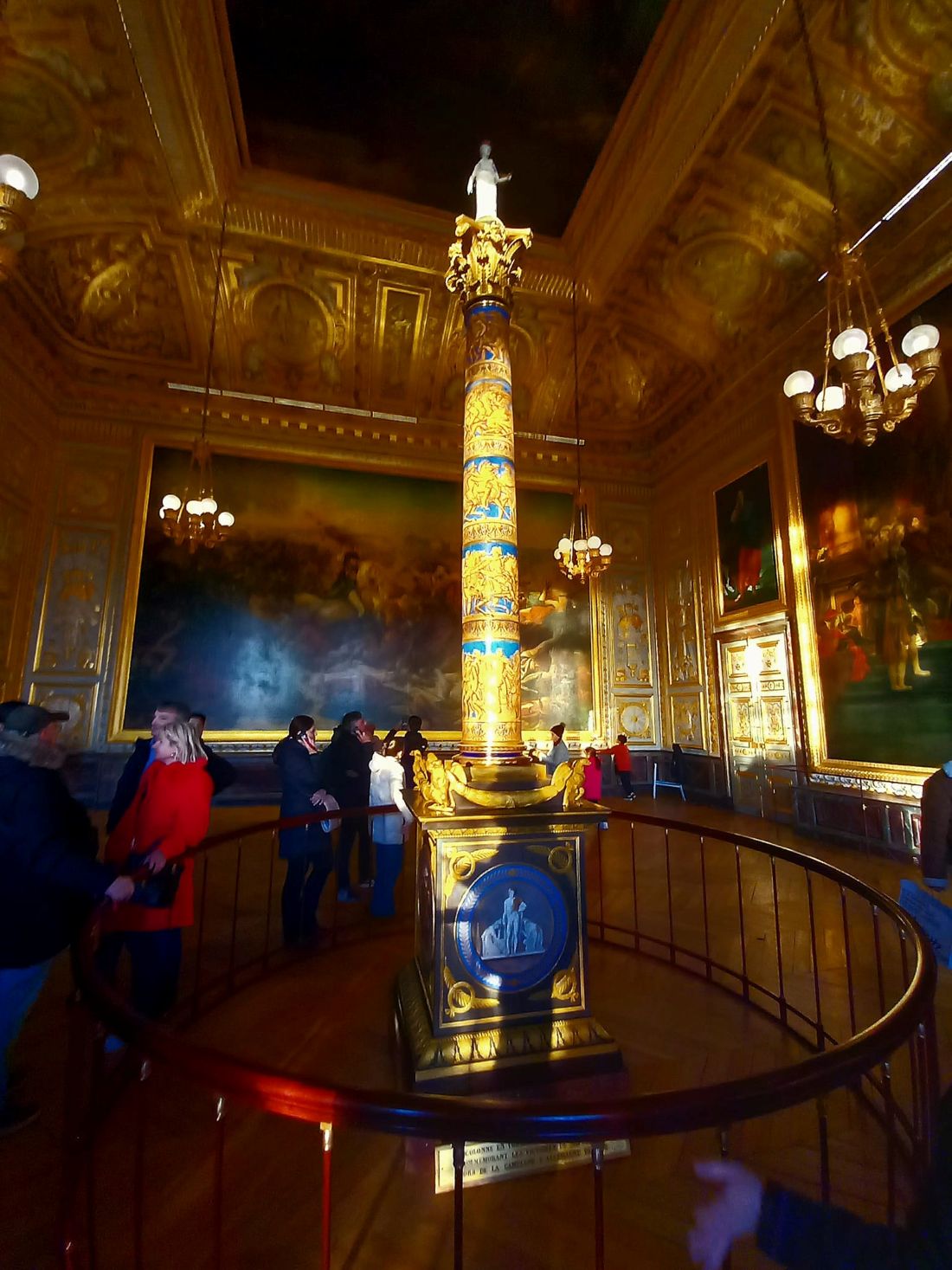
Inside the Château de Versailles, in the center of the room took place the column of the German campaign, also known as “Austerlitz column”, commanded by Napoleon at the Sèvres factory to commemorate his first imperial victories. Completed in 1807 and placed the following year in the large apartments of the Tuileries Palace (see post), it is one of the great masterpieces of the production of Sèvres porcelain under the Empire, produced in collaboration by Brongniart (drawing) , Pierre-Nolasque Bergeret is a French painter and lithographer. He worked in particular for the Sèvres porcelain and participated in the drawings of the bas-reliefs of the Vendôme column, and Pierre-Philippe Thomire is a sculptor, bronzier, founder, chiseler and French gilder. He was the pupil of Pajou and Houdon. The column is today in the Salle Sacré or Coronation room, (see post).
The Château de Versailles on things around the palace : https://en.chateauversailles.fr/discover/estate/around-palace
The Château de Versailles on the salle du sacre or coronation room :https://en.chateauversailles.fr/discover/estate/palace/coronation-room
The Château de Versailles on the Bassin de Latone : https://en.chateauversailles.fr/discover/estate/gardens/fountains#latonas-fountain
The Versailles tourist office on its heritage: https://en.versailles-tourisme.com/visit-and-explore-versailles-the-royal-town/a-town-to-discover
The city of Versailles on things to see: https://www.versailles.fr/65/decouvrir-versailles.htm
There you go folks, dandy monuments and town to explore and enjoy with the family, Memorable moments in my belle France, walking all over in my dear Versailles brings out sublime awesome spots with nice memorable family visits of yesteryear always remember and always looking forward to be back, eventually. Again hope you enjoy the post on curiosities of Versailles, part IX !!! as I.
And remember, happy travels, good health, and many cheers to all !!!

 Paris1972-Versailles2003