
I have come back in my road warrior trails of my belle France and Normandy is tops ; see my many posts on it in my blog, I needed to be back and did in grand style me think. Nice experiences which had made us come back again to historically Colleville sur Mer, Therefore, let me tell you about Omaha Beach at Colleville sur Mer !!! Hope you enjoy it as I.
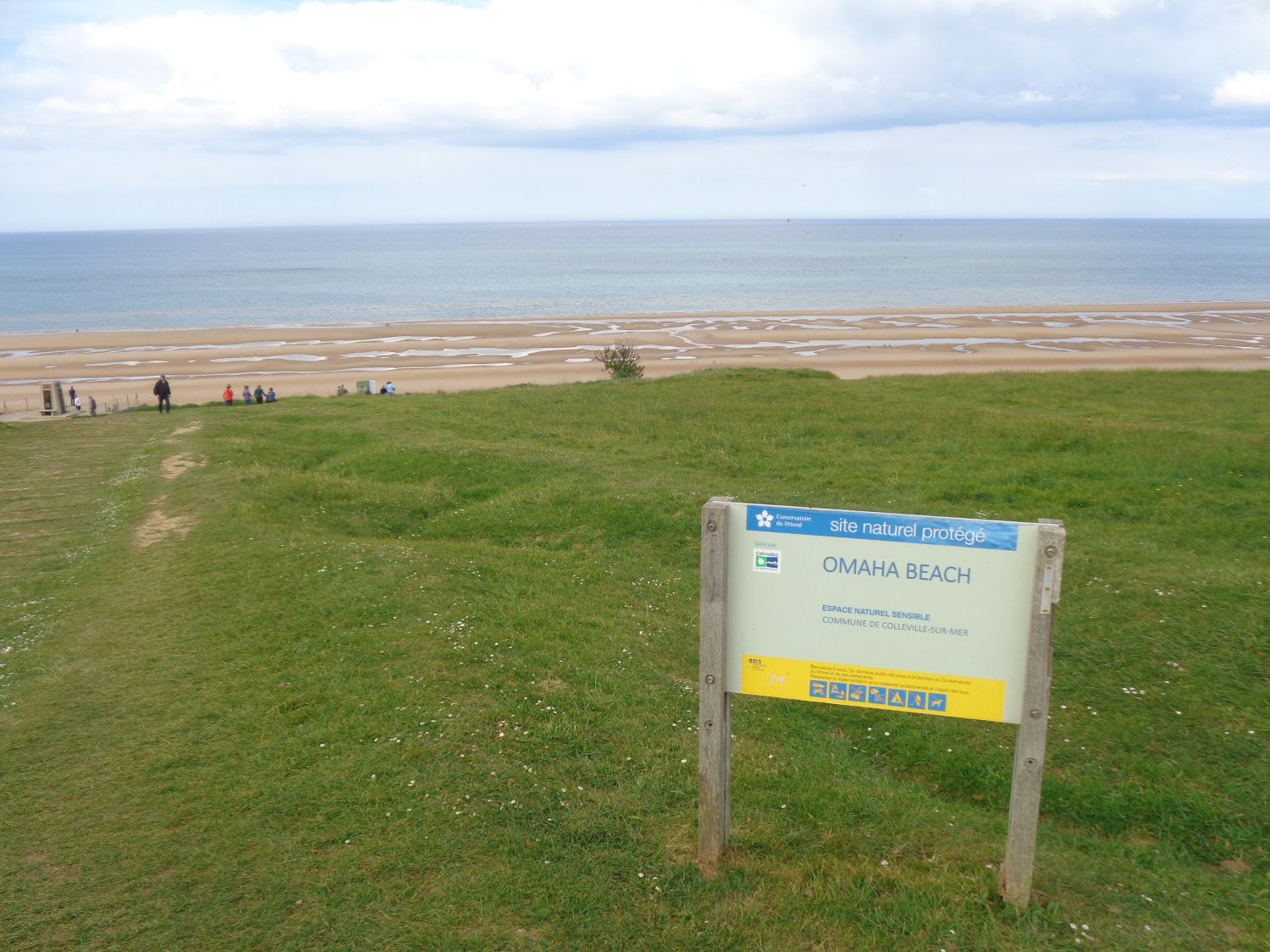
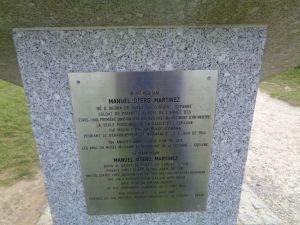
The village of Colleville-sur-Mer is located in the Calvados dept 14 ,in the region of Normandie of my belle France, It has aproximately 203 inhabitants, From Bayeux to the Cimetière Américain de Normandie and Overlord Museum in Colleville-sur-Mer is 17 km from Bayeux, 47 km from Caen, 271 km from Versailles, and 337 km from my current home, We went there from Bayeux on the road D613 ,then D97, and finally the D514 from which there is a road Route du Cimetiere Americain to the US Normandy Cemetery. See the silver plaque pic below of Manuel Otero Martinez, first person from Galicia and Spain who died in the landing with the 1st division 16th infantry regiment !
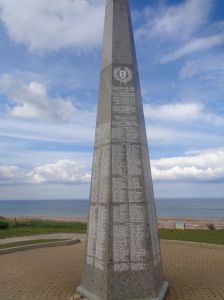
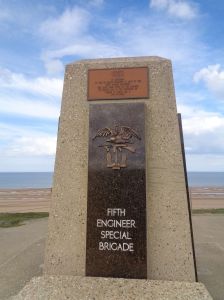
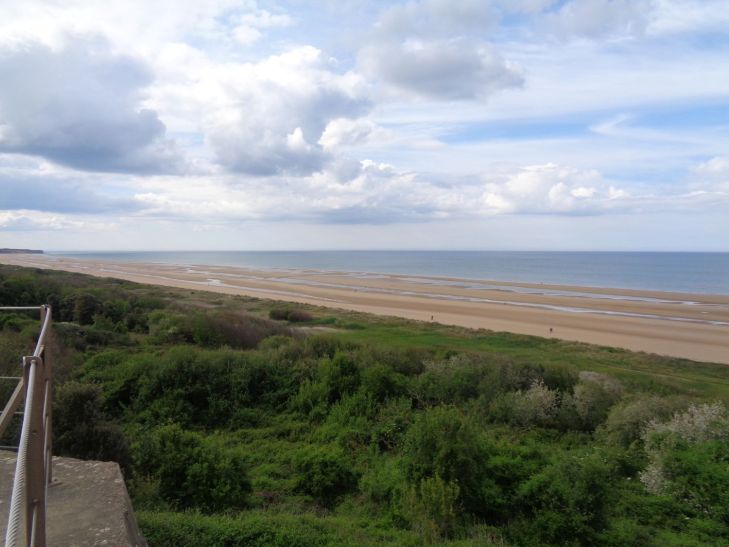
Omaha Beach was the name used by the Allies during WWII to designate one of the five beaches of the Normandy landings. Assigned to American troops, it was the one where the Allies lost the most troops, earning it the nickname “Bloody Omaha”. The landing zone, 8 km long, stretches along the western coast of Calvados dept 14, from Sainte-Honorine-des-Pertes in the east to Vierville-sur-Mer in the west, on the right bank of the Douve estuary. The objective at Omaha beach was to capture it and then hold a bridgehead 8 km deep between Port-en-Bessin and the Vire and, as soon as possible, link up to the east with the British and to the west with the US VII Corps landed at Utah Beach in order to establish a continuous bridgehead on the Normandy coast. The capture of Omaha beach was the responsibility of the American command, placed under the orders of General Omar Bradley, and Major General Clarence Huebner for the operational part. It involved troops from the US Army, maritime transports provided by the US Navy and elements of the Royal Navy. The assault on Omaha Beach was entrusted to the US V Corps under Lieutenant General Gerow, which included three infantry divisions (the 1st, 2nd, and 29th), one armored division (the 2nd Tk Div), two ranger battalions, engineer units, and various support units. The 2nd Infantry Division and the 2nd Armored Division landed in the days following June 6. Among the tank battalions reinforcing the leading divisions, the 743rd to the 29th Division and the 741st to the 1st were equipped with amphibious tanks. Each Ranger battalion had a strength of 500 men divided into six small companies of 68 men numbered from A to F. The two Ranger battalions (2nd and 5th) had, in fact, an isolated mission: to seize Pointe du Hoc (5 km west of Omaha beach area) with initially three companies of the 2nd. Company C of this battalion was to land with the first wave at the extreme west of Omaha beach to establish the liaison. At the signal of the attackers, the other units were to go directly to Pointe du Hoc, otherwise they would land west of Omaha beach and reach Pointe du Hoc by land. The engineer units included the organic units of the divisions, but also reinforcements, including, among others, units specialized in demolition belonging to the Navy. The command of the fleet was held by Admiral Hall who worked in close collaboration with Lt, General Gerow. For the landing, they are both on the Ancon which serves as the HQ ship. Omaha Beach stretches past the towns of Vierville-sur-Mer, Saint-Laurent-sur-Mer, Colleville-sur-Mer, and Sainte-Honorine-des-Pertes. Before the war, it was sometimes called “the golden beach.” It appears as a long, gently curving strip of beach about 8 km long and is framed by rocky cliffs at each end. 6 km further west is the headland of Pointe du Hoc.
Other things to see here is the Church of Our Lady of the Assumption which dates back to the 12C and 13C. It was almost completely destroyed during the D-Day landings by American destroyer fire, as the bell tower served as an observation post for seven nazis soldiers who communicated firing coordinates to the nazis batteries. Reconstruction lasted from 1946 to 1951 and restored the church to its pre-war appearance.
The village of Colleville sur Mer on the landing of Omaha Beach : https://collevillesurmer.fr/debarquement/
A private site 6juinOmaha on the history : http://6juin.omaha.free.fr/
A private site 6juin1944 on the American actions : http://www.6juin1944.com/assaut/omaha/en_index.php
The local Isigny Omaha tourist office on Omaha Beach : https://isigny-omaha-tourisme.fr/visites-et-activites/omaha-beach-debarquement-normandie-visite-sites-historiques-1944/omaha-beach/
The Normandy region tourist office on Omaha Beach : https://en.normandie-tourisme.fr/discover/d-day-and-the-battle-of-normandy/dday-landing-beaches/omaha-beach/
There you go folks, another dandy in beautiful Normandie, and my belle France,never enough time to see it all, This is a memorable spots that should be visited more, me think. Glad to be back, we had a great time indeed ! Again, hope you enjoy this post on Omaha Beach at Colleville sur Mer !!! as I
And remember, happy travels, good health, and many cheers to all !!!

 Paris1972-Versailles2003
🪖
LikeLiked by 1 person