
I have come back in my road warrior trails of my belle France and Normandy is tops ; see my many posts on it in my blog, I needed to be back and did in grand style me think. Nice experiences which had made us come back again to historically and architecturally stunning Bayeux, From Pluvigner to parking Québec-Orangerie place de Québec Bayeux We got on the D768 then the N24 to A84/E3 en direction de D53 à Souleuvre en Bocage. Prendre la sortie 41 et quitter A84 Suivre D53, D9 et D67 en direction de Pl. de Québec ,total of 3h20 and 303 km, and hit the cathedral first, Therefore, let me tell you about this is Bayeux !!! Hope you enjoy it as I.
The former “Rue Sous le Mur,” now Rue Larcher, has also undergone many changes in just a few decades… Named after its proximity to the medieval city wall, the road, which at the end of the 18C was no more than a winding and poorly maintained path, saw its appearance change when Mr. Larcher de la Londe, then Mayor of Bayeux, had it straightened and paved. Newly known as Rue Neuve, it was quickly renamed Rue Larcher. Then came the French revolution. At that time, the streets were renamed. Rue Larcher became Rue de la Constitution for a time before regaining its definitive name in 1823. At no. 36 Maison de la Du Barry. This Louis XV house is said to have housed the Countess du Barry.
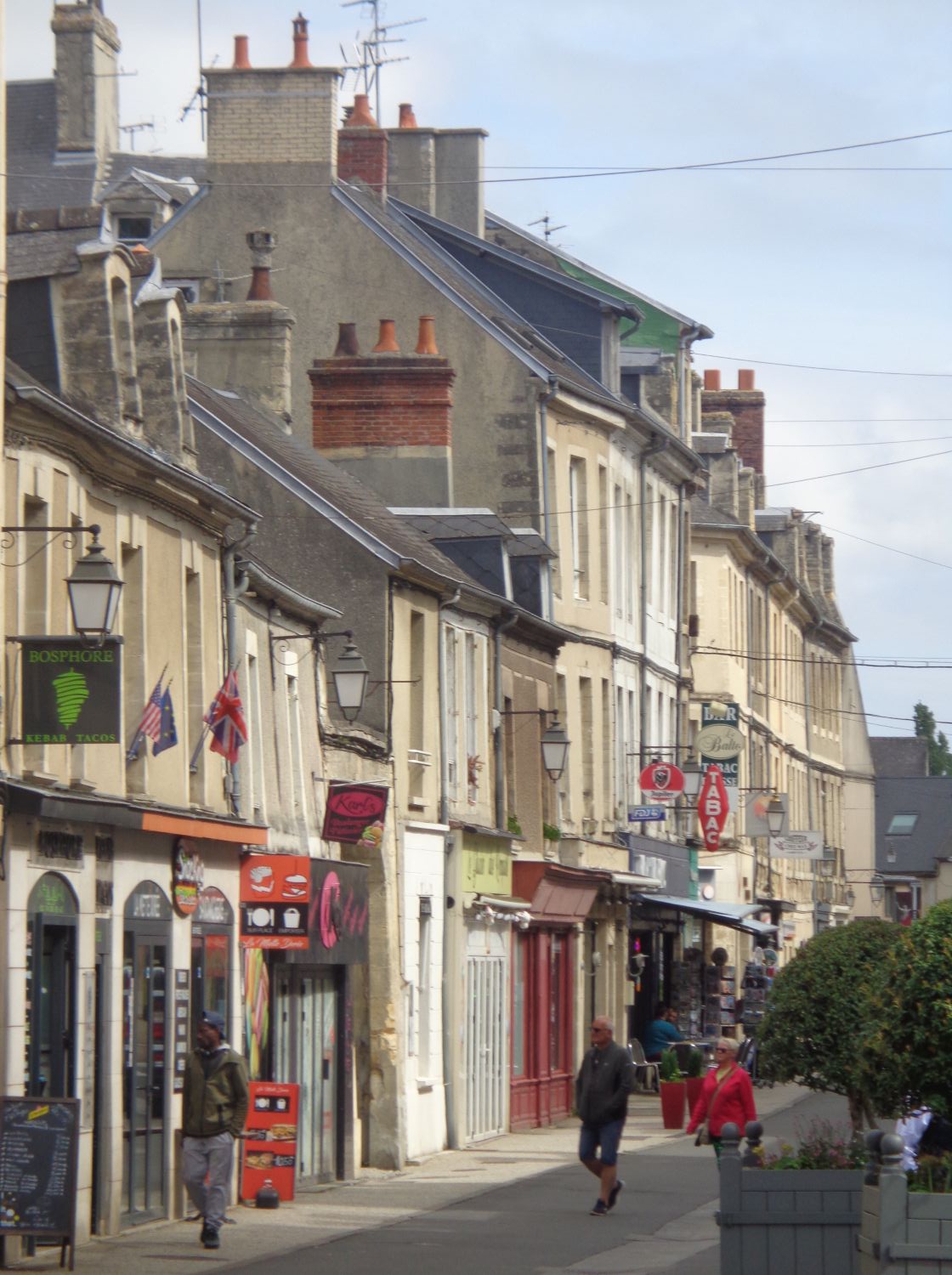
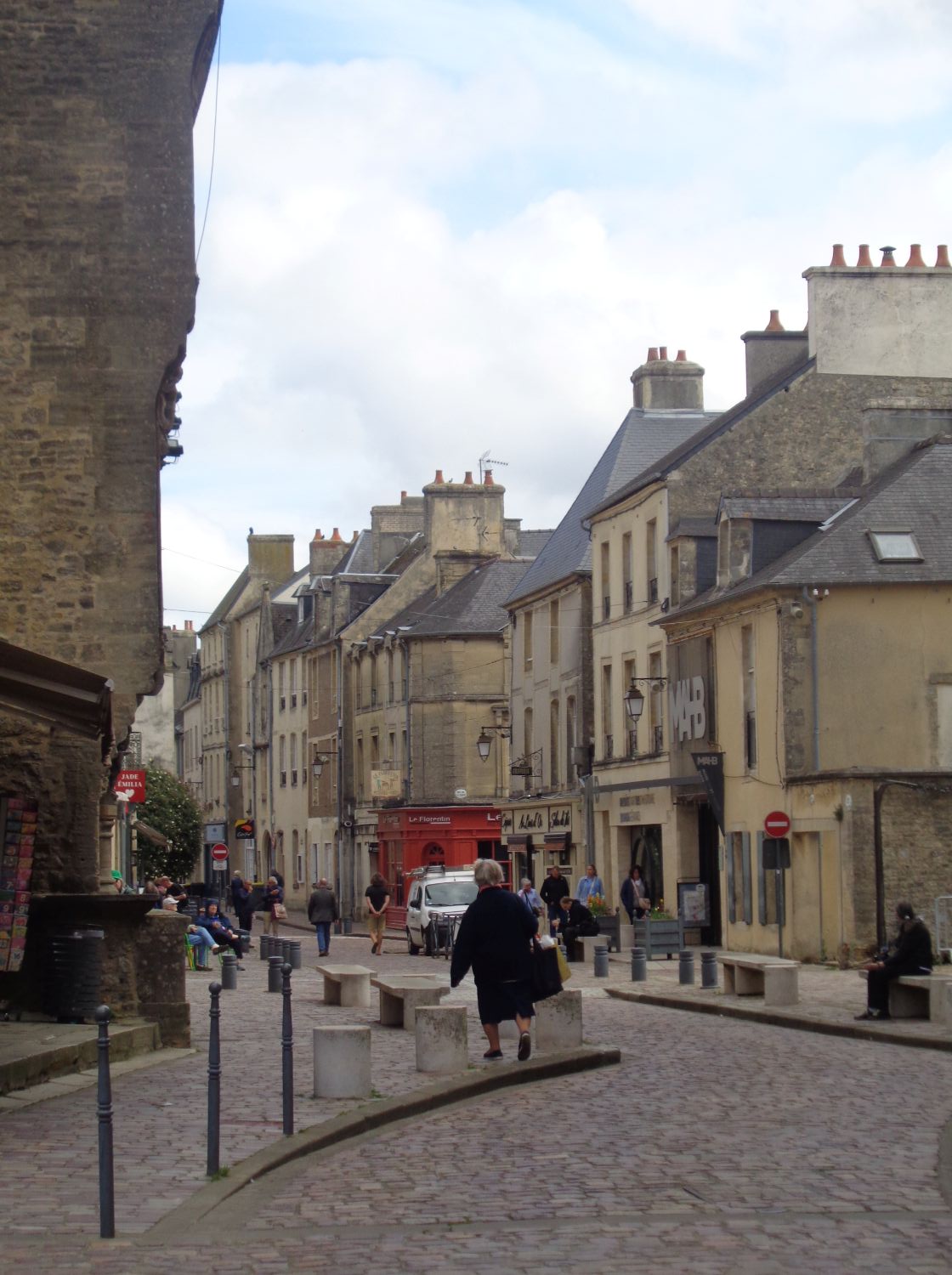
The Rue du Bienvenue is the street of the Notre Dame Cathedral, See, also at no 37, the Musée d’Art et d’Histoire Baron Gérard (MAHB), and at no 6 the Conservatoire de la dentelle (lace) de Bayeux , Maison Adam et Eve, dating from the 15C, built using the timber-framed technique and composed of two buildings, it owes its name to its two statuettes of Adam and Eve which illustrate the theme of original sin.
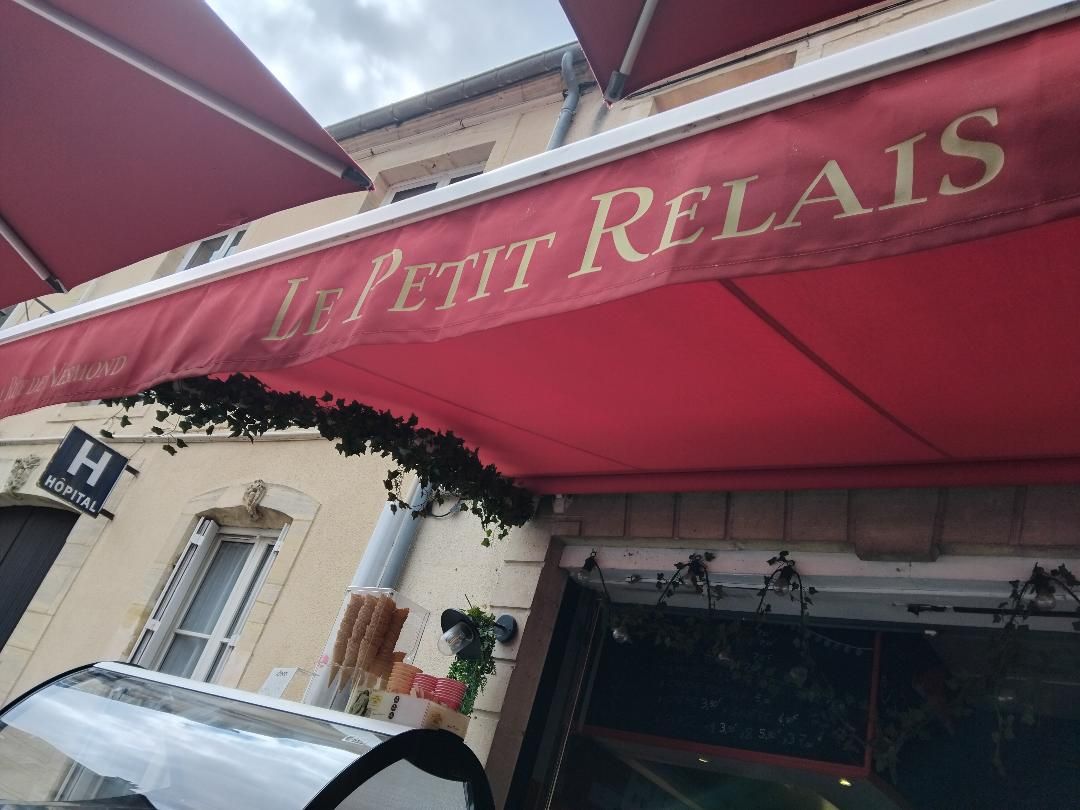
Le Petit Relais 14 rue des Nesmond , some standard info Here you will find quality traditional French cuisine. In a warm and friendly setting, you will enjoy a varied menu offering homemade dishes made with fresh, seasonal produce. The restaurant is ideally located for exploring the charming town of Bayeux. Excellent value for money is guaranteed.Indeed, We were wandering around Bayeux by the cathedral and hunger stroke as usual we call ahead making sure they accept our dog Rex and voilà one of the cooks has one 12 yrs old, ours is 7, Connection guarantee, I had the smashburger double with a pint of Gallia a blonde beer from the Paris region that was good, My boys had different stuff and of course, Rex got his fries and water ! All a delighful place that we have noted to come back eventually, No web
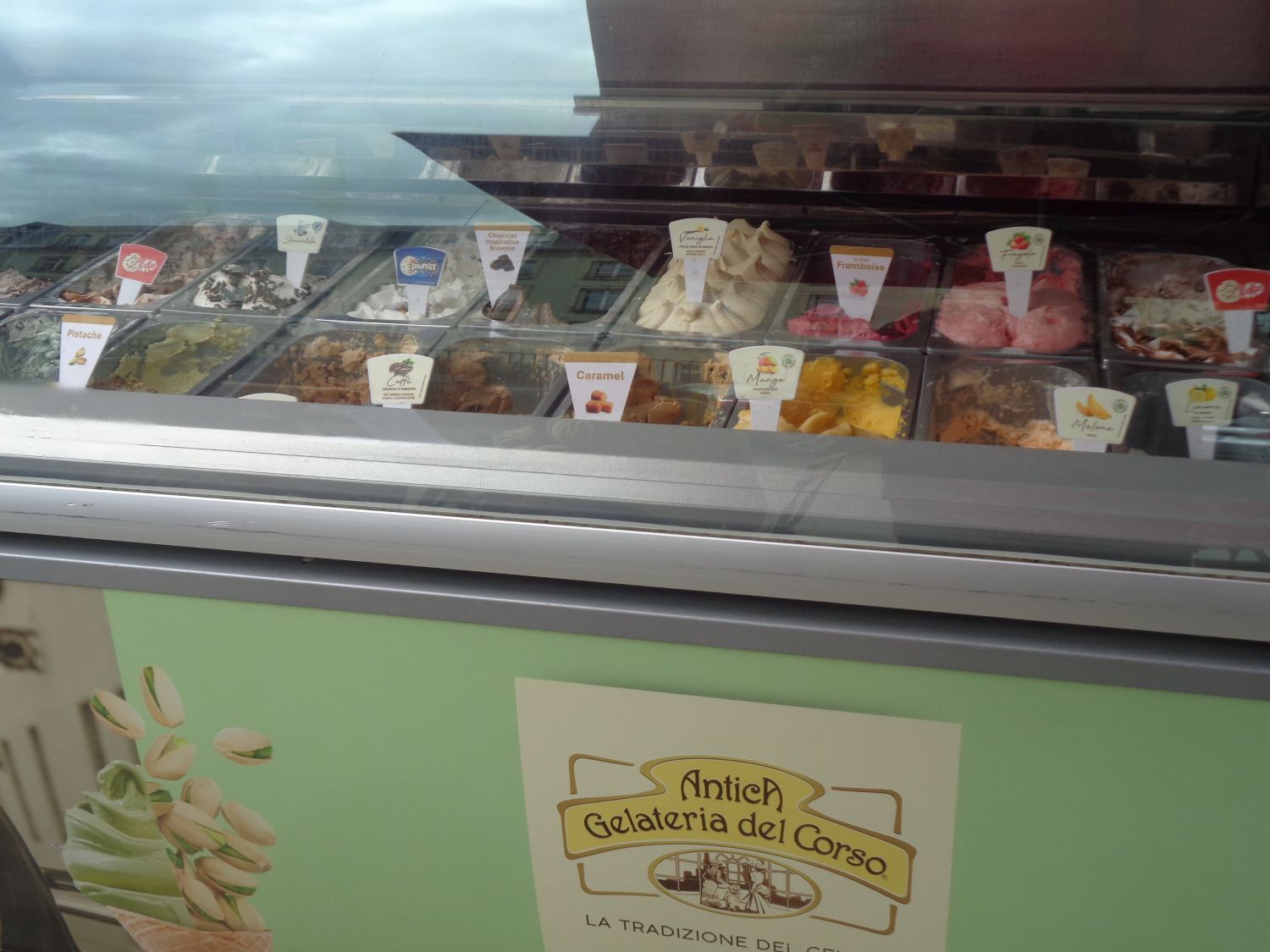
The RestaurantGuru reviews on Le Petit Relais : https://restaurantguru.com/Le-Petit-Relais-Bayeux-Normandy
Other things to see in Bayeux : The bell tower of the Saint-Patrice Church is the only monument of typically Renaissance architecture in Bayeux. It was built between 1544 and 1548 and has seven floors. The Convent of Charity is located at 1 rue de Cabourg and rue du marché. It was founded in 1652 by two Protestant nuns to “fight against poverty, libertinism and heresy.” A chapel was built in 1706-1708. Today, the building houses the Bayeux Intercom community of towns. The Bayeux British Military Cemetery is the largest British military cemetery in France. It contains 4,648 graves of soldiers from both sides, including 3,935 British, 17 Australian, 8 New Zealander, 1 South African, 25 Polish, 3 French, 2 Czech, 2 Italian, 7 Russian, 466 German and 1 unidentified. A memorial inscribed with the names of 2,808 missing soldiers: 1,537 British, 270 Canadian and 1 South African. The Saint-Exupère Church takes its name from the first bishop of Bayeux. Its origins are very ancient because it was the burial place of the first bishops in the 5th century (Saint Exupère, Saint Rufinien, Saint Loup, Saint Patrice, Saint Contest, Saint Manvieu, Saint Gerbold, Saint Frambold, Geretrand). The current building dates from the 19C. It is closed to the public. The public garden, with an area of 2.6 hectares, opened in 1864. The land was given to the city by Charlemagne Jean-Delamare to create a garden for horticultural education, but it was converted into a public garden by Eugène Bühler. The bust of Charlemagne Jean-Delamare, the original in bronze, was inaugurated in 1880. It was melted down under the Vichy regime, as part of the mobilization of non-ferrous metals. A replacement bust in stone was installed. The Reporters’ Memorial, on Boulevard Fabian-Ware, was inaugurated in 2006, as an extension of the Bayeux Calvados-Normandy War Correspondents’ Prize. It was designed by Samuel Craquelin and pays tribute to journalists killed in the line of duty since 1944, so a new stele is unveiled each year. This white garden is a joint project of Reporters Without Borders and the city of Bayeux.
On the cathedral square, overlooking the house “La Lanterne”, stands a 13C chimney with its conical stone cap. Opposite the chapter house is the Maison du Bienvenu, a 15C half-timbered house decorated with sculptures. Taking the rue de la Maîtrise, which opens almost opposite the cathedral and led to the castle, on the left stand canonical houses, one of which, dating from the 14C, has mullioned windows and a quatrefoil border at the top of the facade. The house that follows has remains of a pointed arch window as well as a beautiful portal. Opposite, in the courtyard, a triangular pediment, remains of a chapel. At no, 7 rue Bourbesneur, a beautiful porch from the 15C and a pointed gable from the same period pierced by a Gothic window, and not visible from the street, on the back a window from the 14C. On the other side, at no 10, the Hôtel du Gouverneur 15C, slightly altered: Renaissance window, crowning of the side staircase turret. This is where the governor of the castle lived rather than in the fortress , At the corner of rue des Cuisiniers and rue Saint-Martin, a wooden house from the 14C, the oldest wooden house in Bayeux. It was a former hotel where people stayed on foot because it did not have stables. Rue Saint-Malo. On the right, at no 4, is the wooden facade of the Grand Hôtel d’Argouges, decorated with sculptures on the wooden posts, and which has a staircase tower at the back with a very sculpted Gothic door.
When coming to Bayeux do seek these two marvels : The Bayeux Porcelain was when in 1793, Joachim Langlois opened a porcelain factory in Valognes, but it was forced to close in 1812 for financial reasons. He decided to move his business to Bayeux, to the former Benedictine convent that had been vacated after the French revolution. There are three stages in the factory’s history, coinciding with the three ruling families: the Langlois era (1812-1849), the Gosse era (1849-1878), and the Morlent era (1878-1951). During the Morlent era, production specialized in laboratory pieces and gained an international reputation. The Bayeux Lace story tell us that François de Nesmond entrusted the sisters of the hospital with the care of the children in care in 1676. They started making lace, but it was modest until the 18C before a significant boom. Following the French revolution, the activity separated from the church; in 1824, twenty-five companies were dedicated to the manufacture of lace, the most famous of which were the Tardif and Carpentier-Delamare houses. The last workshop, the Lefébure house, closed in 1973. A lace conservatory exists in Bayeux and specializes in luxury creations; it has worked for Hermès, Dior and Christian Lacroix. Bayeux lace is constructed with black silk threads and crossed bobbins. Bayeux lace excites, fascinates and inspires collectors.
A bit of history I like tell us that is seems to have benn founded in the Gallo-Roman era, in the 1C BC under the name of Augustodurum, even if the information about ancient Bayeux remains sparse. At the end of the 3C, the city surrounded itself with a quadrangular castra measuring 450 x 350 meters, which was destroyed in the 18C to protect itself from invasions see Rue des Chanoines. In the 4C, after the decline of Rome, groups of Saxons from Lower Saxony managed to establish themselves in the Bayeux region, which they destroyed; the region was then called Otlinga Saxonia. At the end of the 6C, the population was Christianized, the city prospered and became a religious center. In 890, Rollon, at the head of the Normans of Lower Seine, led an expedition against the Count of Bayeux Berengar II of Neustria, whose daughter Poppa was Rollon’s more danico wife. Bayeux was rebuilt at the beginning of the 10C, under the reign of Bothon, Rollon’s traveling companion and Count of Bessin. In 846, the Bretons led a raid against the city and probably succeeded in annexing Avranchin in the process, William the Conqueror deciding in 1050 to establish the capital of his duchy in Caen. Scene 22 of the Bayeux Tapestry depicts the fortified town of Bayeux. The annexation of Normandy to the Capetian royal domain in 1204 reinforced the town’s political and economic importance. Between the beginning of the 12C and the end of the Hundred Years’ War, Bayeux suffered several times from looting. Bayeux was surrounded by a wall that was 5 to 8 meters high and 2 to 4 meters thick, depending on the location, reinforced by 18 towers. Only the northwest tower from the 12C remains, in a garden at 68bis rue Saint-Malo. The Renaissance left few traces. Among the most beautiful creations of the period is the Saint-Patrice Church built between 1544 and 1548.
In 1940, Bayeux was occupied by nazis troops, which allowed them to control the coast. On June 7, 1944, the day after Operation Neptune, British troops landed on Gold Beach and entered Bayeux, which became the first major city and sub-prefecture to be liberated in continental France. It was far enough from the coast to escape preemptive bombing and was chosen to serve as a hospital town for the British to receive and treat thousands of wounded victims of the bombings or fighting in the Battle of Normandy. Schools, monasteries and colleges were transformed into makeshift hospitals. It is thus one of the rare towns in Calvados to have remained completely intact. On June 14, upon his arrival on French soil in Courseulles, General de Gaulle went to Bayeux, which he crossed on foot, surrounded by an enthusiastic crowd, before giving a speech in which he affirmed France’s membership of the Allied countries. Charles de Gaulle returned to Bayeux on June 16, 1946 to inaugurate a stele on the square that now bears his name. He then gave the Bayeux speech in which he presented the foundations of what would become the Constitution of 1958. 5th Republic of France to date.
The City of Bayeux on its heritage :https://www.bayeux.fr/fr/decouvrir-bayeux/patrimoine-levez-les-yeux
The local Bayeux Bessin tourist office on things to see around Bayeux:https://bayeux-bessin-tourisme.com/en/visits
The Normandy region tourist office on Bayeux : https://en.normandie-tourisme.fr/unmissable-sites/bayeux/
There you go folks, another dandy in beautiful Normandie, and my belle France,never enough time to see it all, This is a memorable spots that should be visited more, me think. Glad to be back, we had a great time indeed ! Again, hope you enjoy this post on this is Bayeux !!! as I
And remember, happy travels, good health, and many cheers to all !!!

 Paris1972-Versailles2003
Wow! I’d love to visit there one of these days, Pedmar.
LikeLiked by 1 person
Worth your time and money me think. Thanks for stopping by Cheers
LikeLiked by 1 person