
I have come back in my road warrior trails of my belle France and Normandy is tops ; see my many posts on it in my blog, I needed to be back and did in grand style me think. Nice experiences which had made us come back again to historically and architecturally stunning Bayeux, From Pluvigner to Parking Québec-Orangerie place de Québec Bayeux We got on the D768 then the N24 to A84/E3 en direction de D53 à Souleuvre en Bocage. Prendre la sortie 41 et quitter A84 Suivre D53, D9 et D67 en direction de Pl. de Québec ,total of 3h20 and 303 km, and we continue our walking trail, Therefore, let me tell you about the tapestry museum of Bayeux !!! Hope you enjoy it as I.
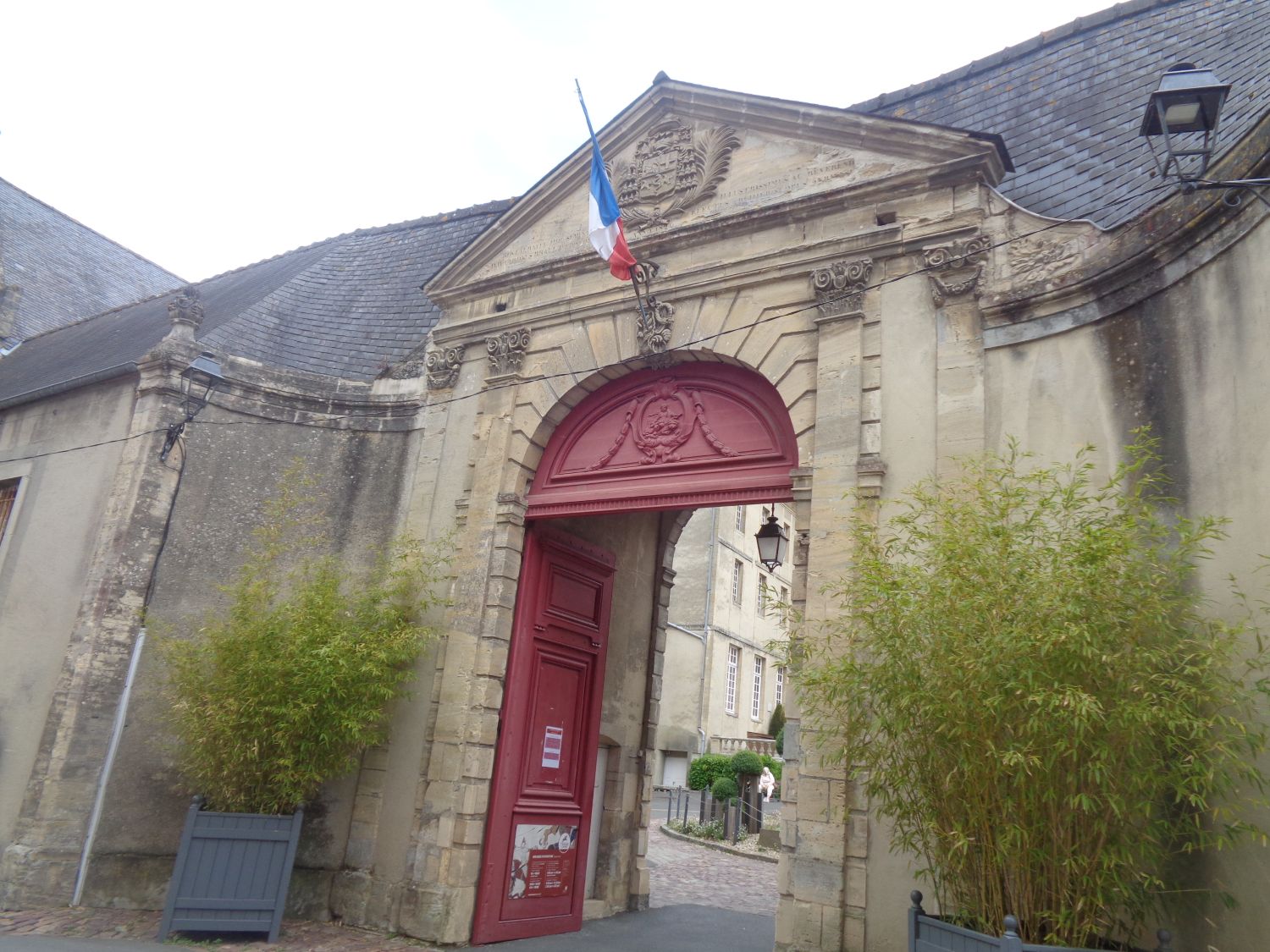
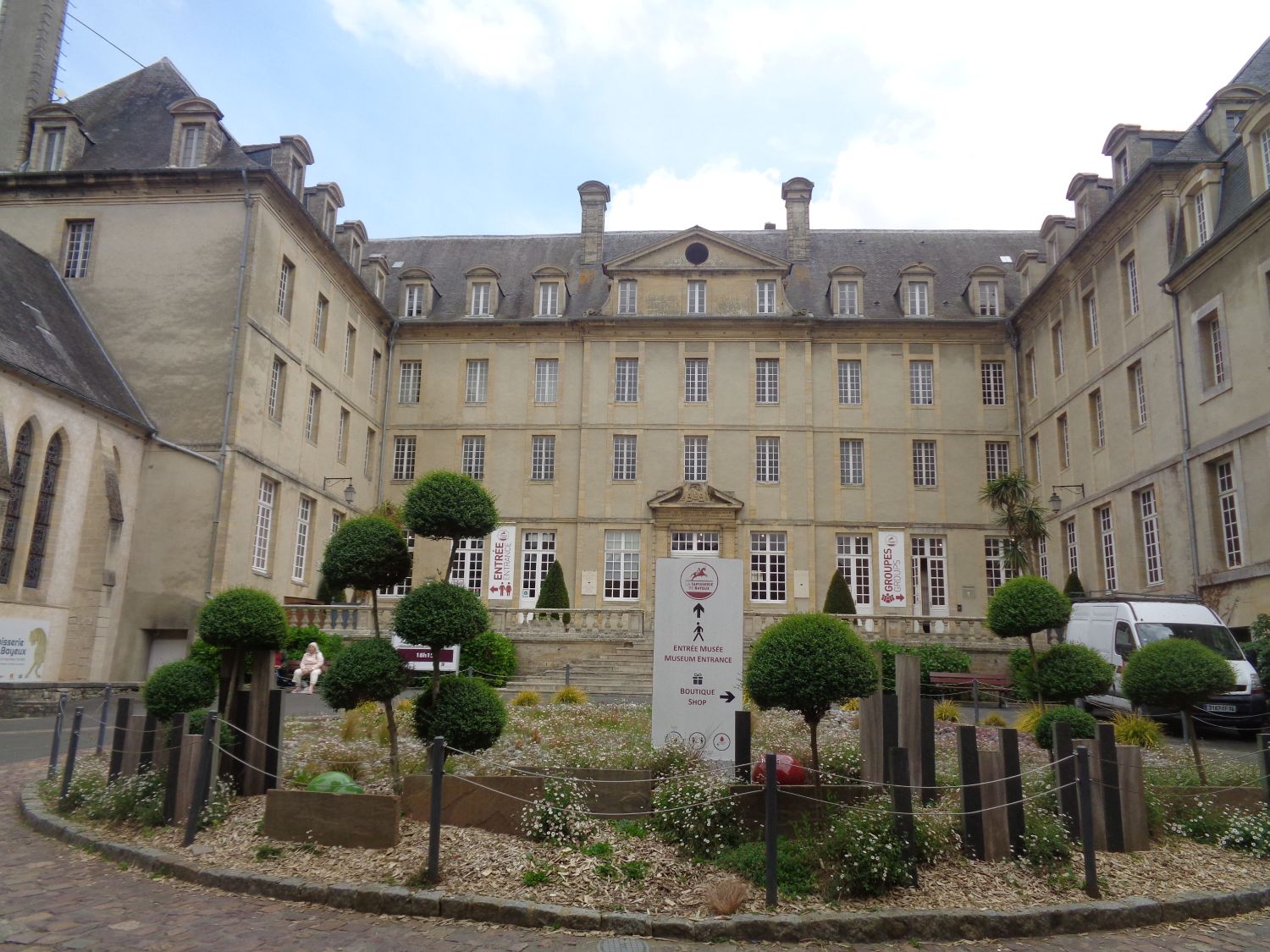
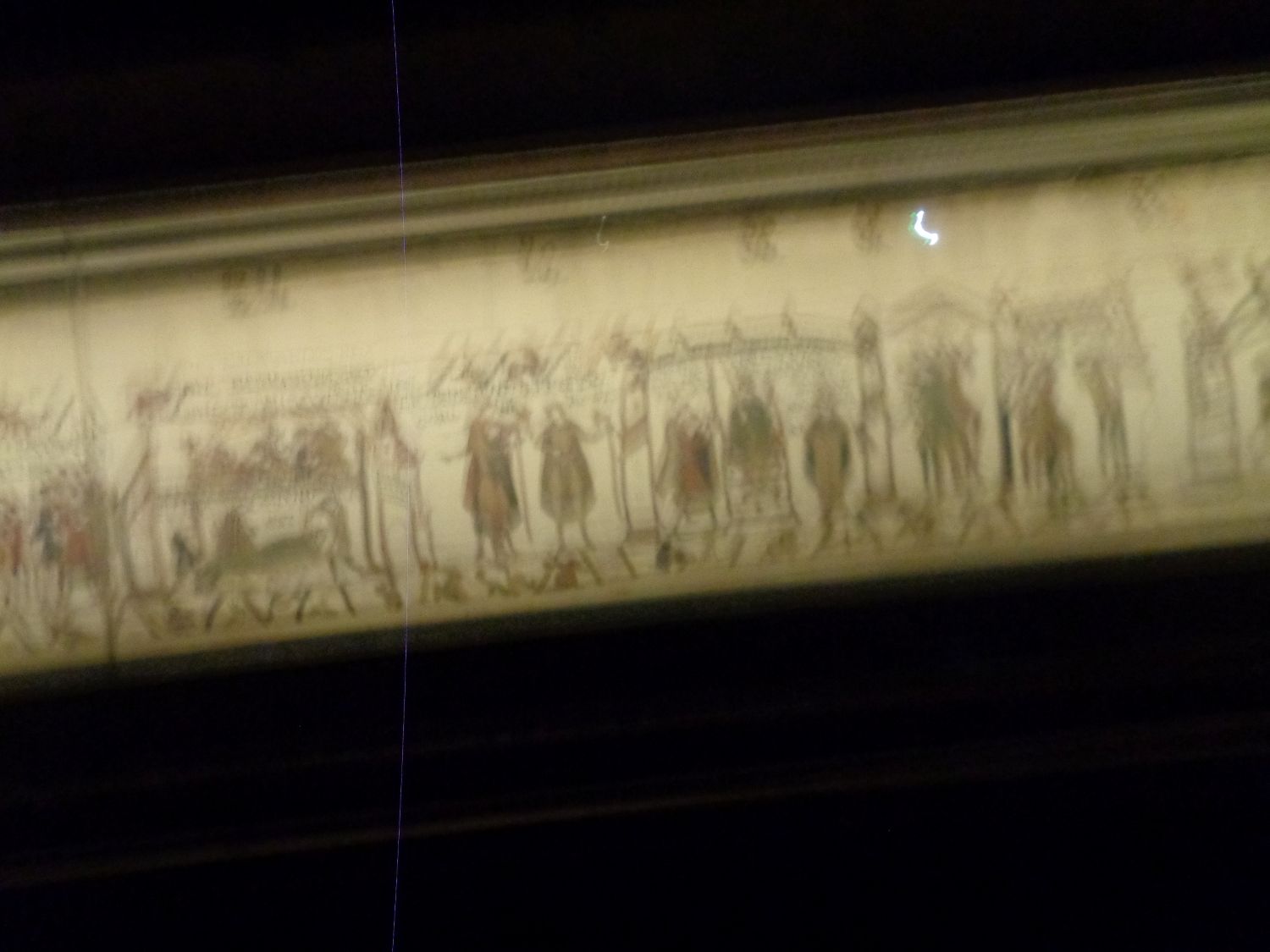
The Musée de la Tapisserie de Bayeux, or the Bayeux Tapestry Museum,located at 13B Rue de Nesmond, exhibits the Bayeux Tapestry. The museum is located in the former seminary, the construction of which began in 1693 under the leadership of Bishop François de Nesmond and which housed a community of Vincentian brothers. The Bayeux Tapestry is presented in a darkened space in which only the artefact itself is lit After looking at the Tapestry itself, the visit continues with a permanent exhibition, which presents the secrets of its creation, and a overview of the historical context and the Anglo-Norman kingdom in the 11th century. Finally, on the second floor, a 16-minute film, screened alternatively in French and in English, shows the story told by the Bayeux Tapestry unfolds, including reconstructions of real scenes from the Battle of Hastings.
The Bayeux Tapestry is a masterpiece of 11th century Romanesque art, which was probably commissioned by Bishop Odo, William the Conqueror’s half-brother, to embellish his newly-built cathedral in Bayeux in 1077. The Tapestry tells the story of the events surrounding the conquest of England by the Duke of Normandy. The Bayeux Tapestry or Bayeux Embroidery, successively called “Telle du Conquest” (“Conquest cloth”) by the canons of the Notre Dame Cathedral, the Saint John’s Dress and the Duke William’s Dress in the 18C, or the Queen Mathilde’s Tapestry in the 19C, is an embroidery (formerly “needlepoint tapestry”) from the 11C. It features 623 characters, 994 animals, 438 plants, 37 fortresses and buildings, 41 ships and small boats, and countless very diverse objects. It describes events ranging from the end of the reign of King Edward the Confessor of England in 1064 to the Battle of Hastings in 1066, at stake was the throne of England, contested from Harold Godwinson by William, Duke of Normandy. On 14 October 1066, the Battle of Hastings, fought against the army of Harold Godwinson, last of the Anglo-Saxon kings, was the decisive event in the conquest of England by William, Duke of Normandy. The Bayeux Tapestry, with its countless details embroidered on linen cloth, serves as a unique representation of one of the greatest battles of the Middle Ages. Having called on his Breton, Frankish and Flemish vassals and allies to provide their support for the conquest, William even managed to obtain the Pope’s blessing for his claim to the throne of England.
Ten colours of wool thread are used to depict 626 characters, 37 buildings (including the Mont-Saint-Michel), 41 ships and 202 horses and mules, often with effects of perspective. Among the many characters included in the Bayeux Tapestry, most of whom are men, those shown the most are William, Duke of Normandy, Edward the Confessor, King of England, Harold Godwinson, Count of Wessex and Odo de Conteville, half-brother of William and Bishop of Bayeux. To make it easier to recognise the characters, the artist added distinctive features such as moustaches and long hair for the Anglo-Saxons and short hair for the Normans. Odo is recognisable as a man of the Church from his tonsured head. The protagonist of the story of the Tapestry is Guillaume, seventh Duke of Normandy. Became the Conqueror after his coronation in England on December 25, 1066, he was one of the most powerful monarchs of Western Europe in the Middle Ages. Born in Falaise in 1027, he is the natural son of Robert the Magnificent, Duke of Normandy, and Arlette, daughter of a tanner. His illegitimate birth earned him the nickname of William the bastard. In 1035, when he was only 8 years old, he succeeded his father, who died after returning from his pilgrimage to Jerusalem. A period of unrest and plots weakened the duchy of Normandy but the young duke managed to impose his power. In 1047, the victory of Val-ès-Dune near Caen marks the first turning point of his reign. He takes the duchy firmly in hand and manages to ensure the fidelity of his vassals. The descendants of William reign over Normandy and England until 1204, date of the attachment of the duchy to the royal domain of France.
The official Bayeux tapestry museum : https://www.bayeuxmuseum.com/en/the-bayeux-tapestry/
The City of Bayeux on the tapestry : https://www.bayeux.fr/fr/decouvrir-bayeux/tapisserie-de-bayeux
The local Bayeux Bessin tourist office on the tapestry of Bayeux ; https://bayeux-bessin-tourisme.com/en/visits/museums/bayeux/tapisserie-de-bayeux
The Normandy region tourist office on the tapestry of Bayeux : https://www.normandie-tourisme.fr/sites-lieux-de-visites/tapisserie-de-bayeux/
There you go folks, another dandy in beautiful Normandie, and my belle France,never enough time to see it all, This is a memorable spots that should be visited more, me think. Glad to be back, we had a great time indeed ! Again, hope you enjoy this post on the tapestry museum of Bayeux !!! as I
And remember, happy travels, good health, and many cheers to all !!!

 Paris1972-Versailles2003
Such a beautiful piece of art.
LikeLiked by 1 person
Yes but the présentation leaves à lot out.
LikeLiked by 1 person
It’s been a while I saw it.
LikeLiked by 1 person