
I will take on again, the Grand Trianon on this post. Of course, plenty more in my blog but just found older pictures on one of my cd roms ,that I like to show them for you and me. This is a wonderful huge property, and about time tell you a bit on the doing of Napoléon Ier here. Versailles is it !!! can’t stop bragging lived here for 9+ wonderful years, Let me tell you about the Grand Trianon of Versailles, part V !!! Hope you enjoy this post as I.
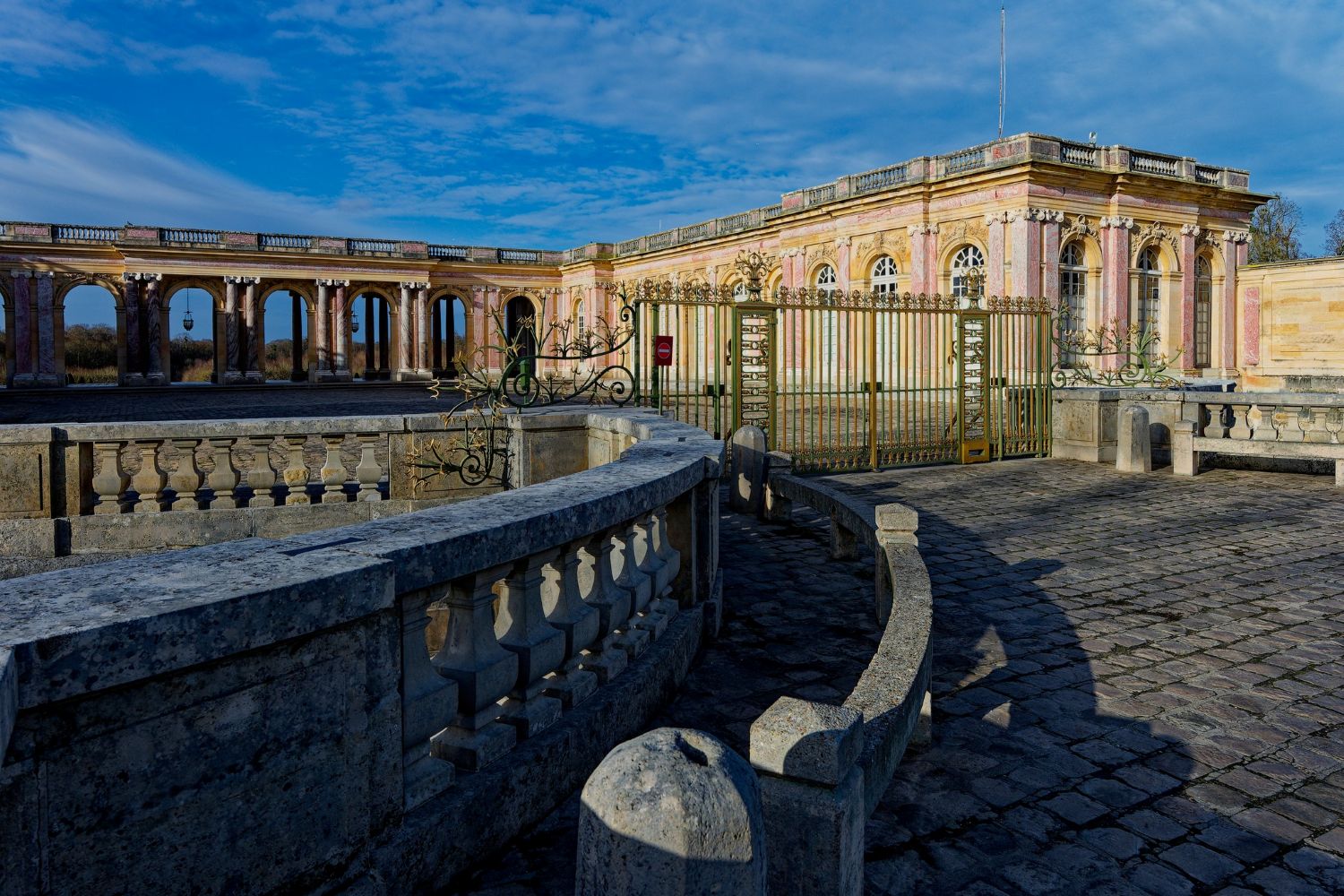
Built on the site of the former Longuets property, in the village of Trianon, acquired by the King in 1662, the building was completed in a few months as if by magic. This new satellite of the castle was thus a counterpart to the Menagerie, the northern arm of the Grand Canal allowing easy access. This graceful Trianon did not last long: in 1687, the King had it completely razed to build in its place the marble Trianon that we know today. Occupied by Louis XIV who welcomes his family there, the Grand Trianon is then frequented by Marie Leszczynska who lives there in summer and lodges his father Stanislas there when he visits Versailles. Marie-Antoinette prefers the Petit Trianon (see posts) that Louis XVI had offered her. Napoleon Ier, after having ordered the restoration, made a few stays there. General Charles de Gaulle, stayed here 1944 to 1946 and again from 1958 to 1969. took, in 1963, the initiative of returning the inventory to André Malraux, Minister of Cultural Affairs under de Gaulle, that engages in a Grand Trianon restoration policy to welcome the hosts of France to Versailles, a high place for the official and diplomatic receptions of France, welcoming many state visits, and organize there in the northern wing known as “Trianon-sous-Bois”, a presidential residence.
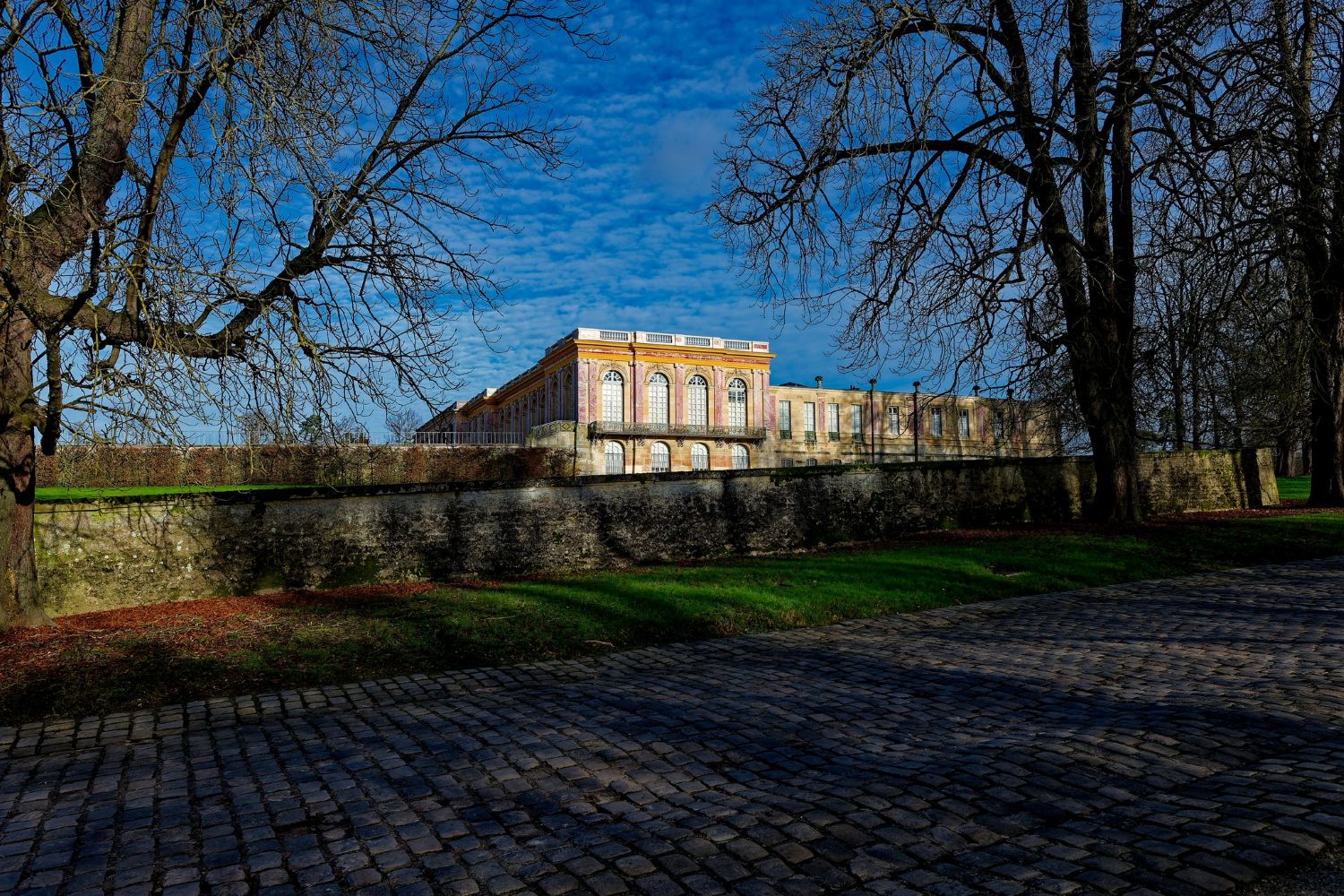
The Grand Appartement or large apartment is in the right wing of the Grand Trianon. The original Grand Trianon furniture having been dispersed during the French revolution, are with a few exceptions, that of the first empire. Napoleon completely renovates the Grand Trianon ,and sometimes comes to it with the Empress Marie-Louise. The Emperor’s interior apartment made up of five rooms, whose windows open on the old king’s garden, it was formed by the meeting of part of the old apartment of Madame de Maintenon and the small apartment , Furnished in 1750 for Louis XV. Napoleon occupied it for the first time in December 1809, in the days following his divorce from Joséphine. Under Louis-Philippe, it was inhabited by the king’s younger girls, the Princesses Marie and Clémentine.
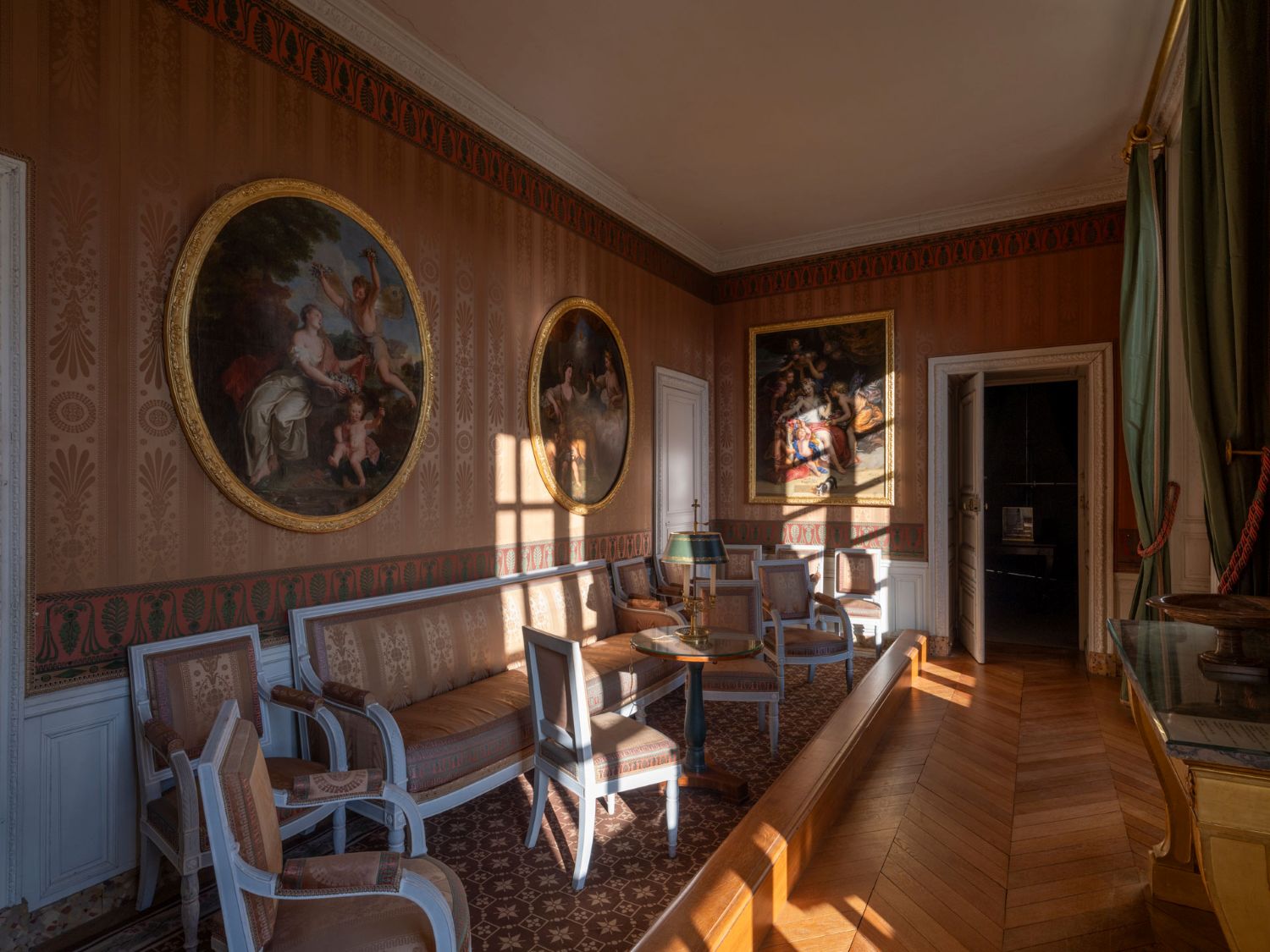
The antichambre or anteroom is the former cabinet of the Levant, who served as a large cabinet for Madame de Maintenon. In the 17C, the room served as a chamber to Madame de Pompadour then, on a few times, to Marie-Antoinette. The latter’s second daughter, Princess Sophie-Béatrice, died there in 1787, eleven months old. In 1812, the room was lowered in depth to accommodate a staircase leading to the entreesol: it then became the cabinet of the secretary of the emperor. The walls are tense of a earth of Egypt with a sander and green border, on which the following portraits are hungs : Junon and Flore by Louis de Boulogne, Zéphyr and Flore, by Noël Coypel and Michel Corneille, as well as Apollo receives his quiver and her Mercury arrows by Noël Coypel.
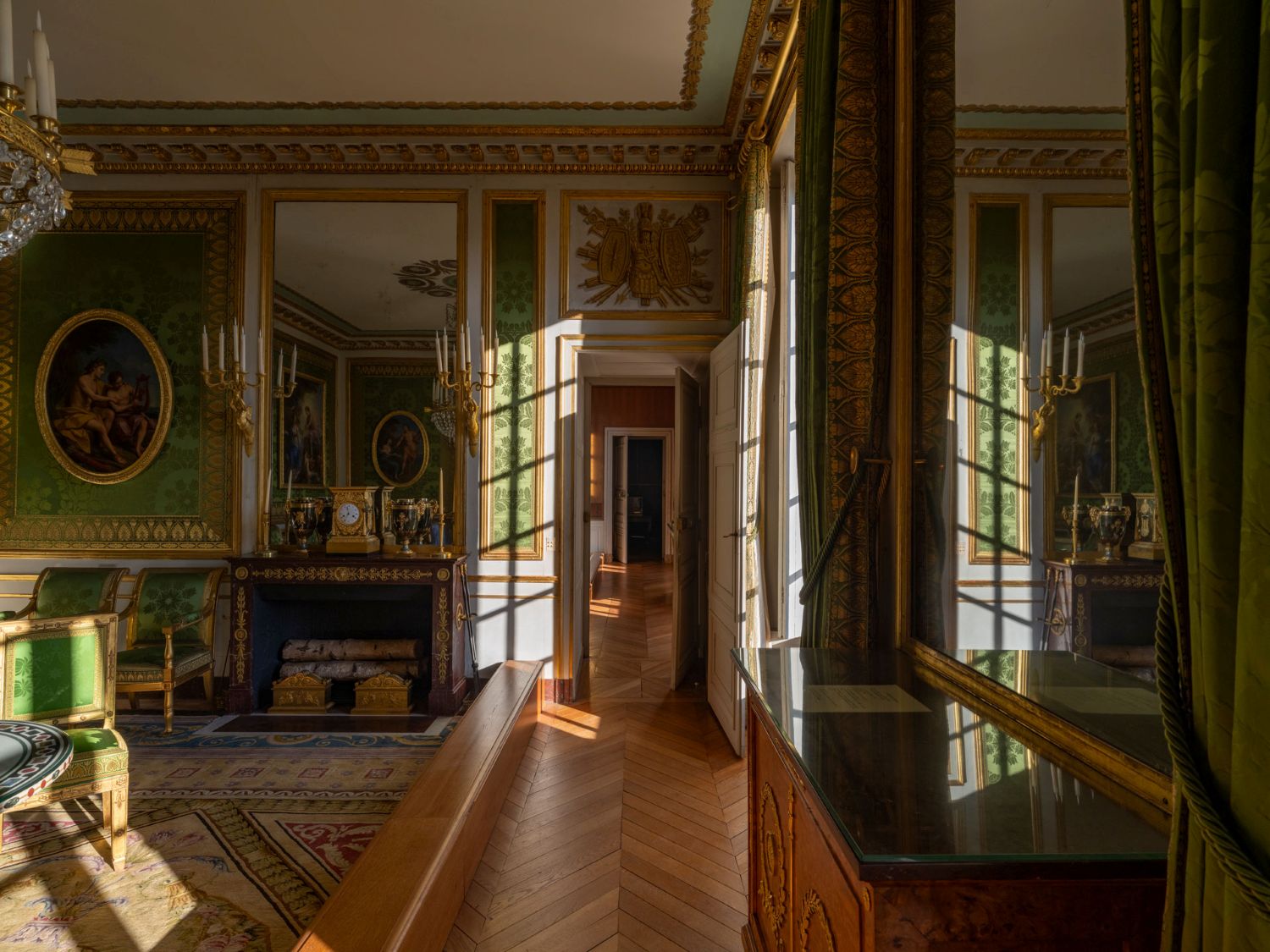
The cabinet particulier or private cabinet is the former rest office, which served as a bedroom for Madame de Maintenon. Divided in the 18C into several cabinets, this room was restored in 1813 in its dimensions; it then took on the aspect it presents today. The greenhouse papers furniture was delivered of the Louis XVI style. The seats served at the first consul at the Château de Saint-Cloud, and the pedestal table comes from the Palais de l’Elysée. On the hanging of Damascus green enriched with a gold brocade border, the following paintings are hung : Apollo and the Sibylon and Hyacinthe by Louis de Boulogne, Apollo At Thétys by Jean Jouvenet, Apollo crowned by the victory and the rest of Apollo, by Noël Coypel.
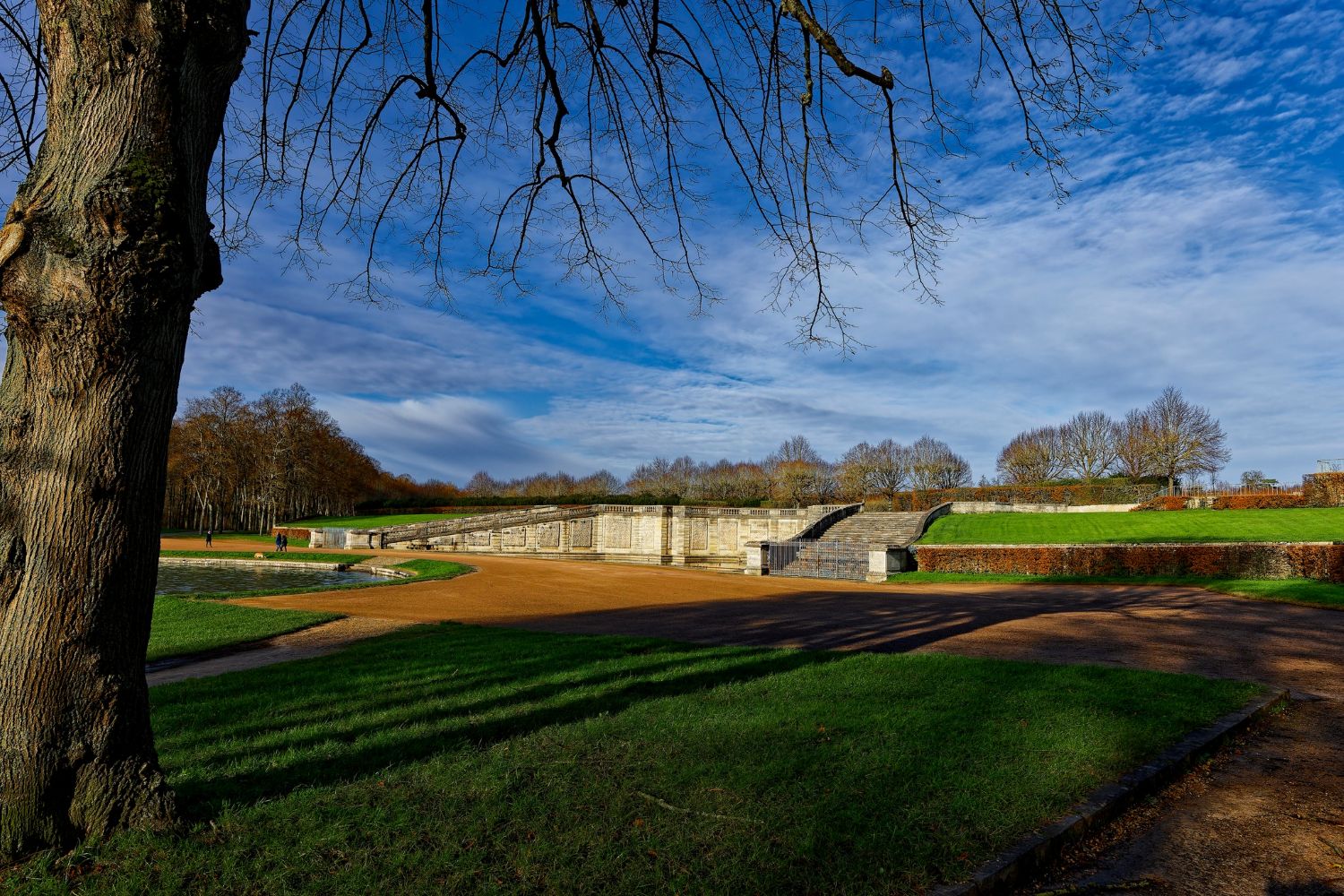
The bassin du Fer-à-cheval or horseshoe basin is a basin in the gardens, in the extension of the northern arm of the Grand Canal, south of the Grand Trianon gardens. The stone balustrade dominates the bassin Fer-à-Cheval, framed by two ramps, The Menagerie buildings built in the time of Louis XIV, now missing, were at this end. The walls are carved in the shape of water, as if the whole wall was only a cascade. With each side of the horseshoe, a staircase descends to the bank. You have to choose your side judiciously: if you want to go to the Palace of Versailles in about twenty minutes, it is the one on the left. Otherwise, you will have to go all the turn of the cross formed by the two branches of the Grand Canal. It will be three times longer.,,,,
The Château de Versailles on the Grand Trianon: https://en.chateauversailles.fr/discover/estate/estate-trianon/grand-trianon
The city of Versailles tourist office on the Grand Trianon: https://www.versailles-tourisme.com/le-grand-trianon.html
There you go folks, some more of my favorite Domaine (including palace, trianon, hameau etc), a dandy in beautiful Versailles, the most Royal of all French cities and the base of the new French constitution. Again, hope you enjoy the this post on the Grand Trianon of Versailles,part V as I.
And remember, happy travels, good health, and many cheers to all !!!

 Paris1972-Versailles2003