
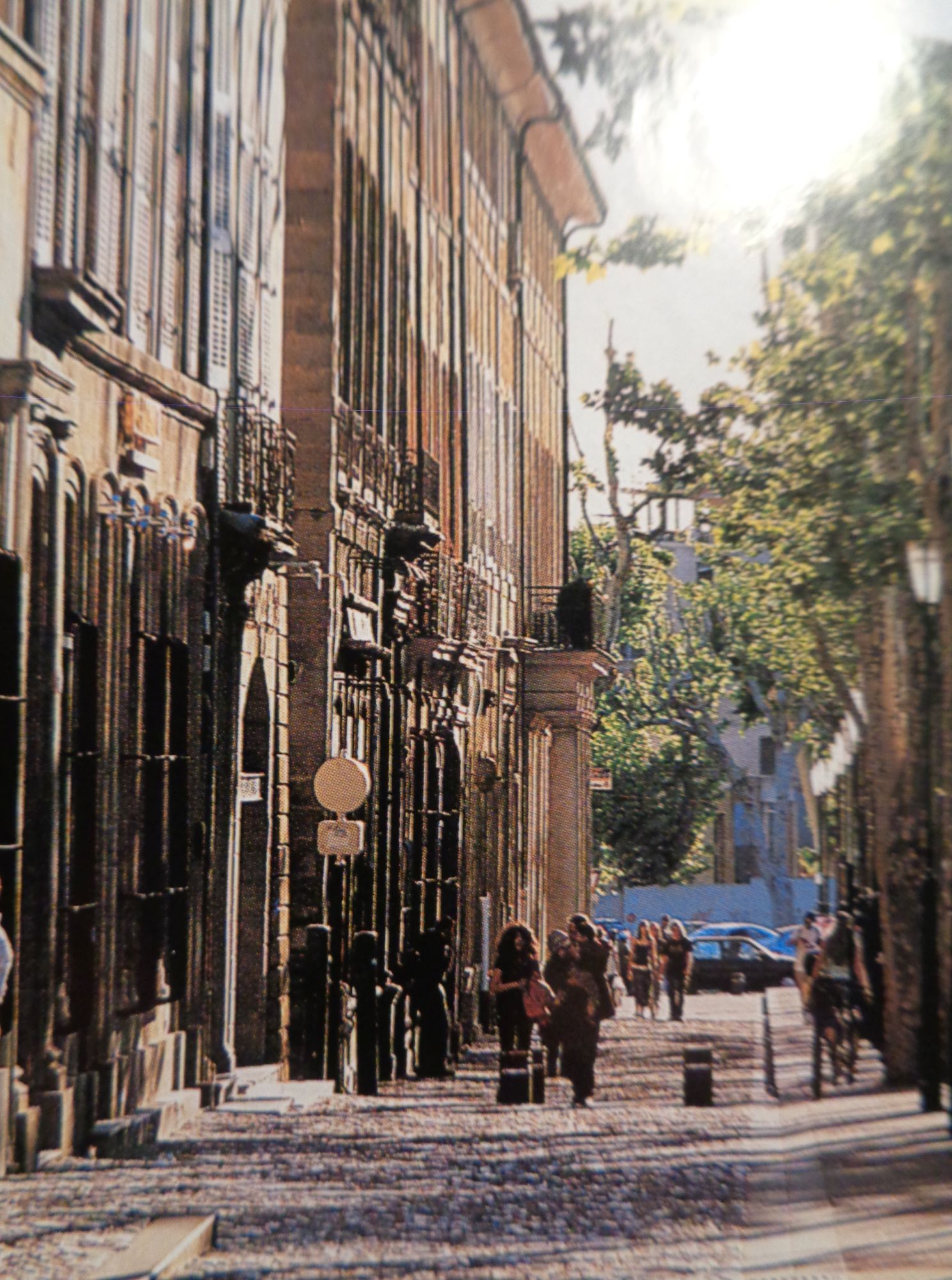
 Many things to see here but in my road warrior mode missed a lot, should be back, anyway my favorites are : The Cathédrale Saint-Sauveur with a triptych of the burning bush (altarpiece of King René); altarpiece of the legend of Saint Miter (14C); Tapestries: Life of the Virgin and Jesus (end of the 15C). Saint-Sauveur cloister: late 12C. The Madeleine Church at Place des Préachers, the current church dates from the end of the 19C, Saint-Jean-de-Malte Church. not far from the Cours Mirabeau , the first Gothic church in Provence. Saint-Jean-Baptiste du Faubourg Church, Chapel of the Oblates., Preachers convent of Aix-en-Provence. 1655 and 1678, whose facade inspired by Italian palaces borders one of the sides of the Place de l’Hotel-de-Ville and its clock tower, crowned with a campanile, attract the eye when you penetrate In the historic center, the Hôtel de Castillon (18C, 21, Cours Mirabeau). The Rue de l’Opéra, which saw Paul Cézanne born, offers a plunging view of the main artery of the city and has three remarkable mansions, the Grimaldi Regusse (1680), the Hotel d’Arlatan (1684 ) and the hotel of Lestang-Parade (1650). On the other side of the street is the Théâtre du Jeu de Paume, which is one of the few Italian theater in France. Nearby is the baroque silver fountain. The Saint-Pons bridge or the Trois-Sautets bridge. Not far from this bridge, we can notice the old infirmaries built between 1564 and 1671. They now house a hotel.
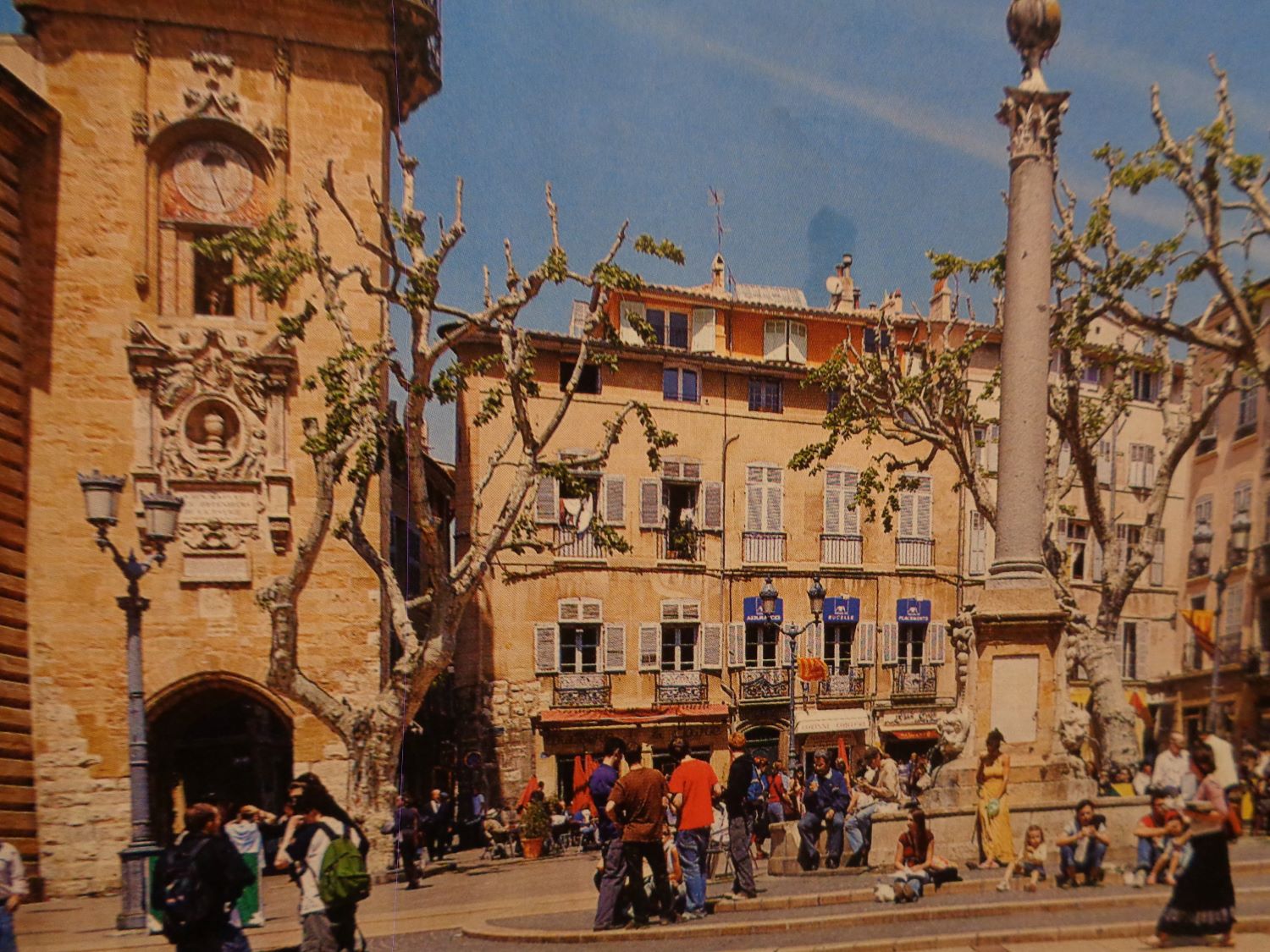
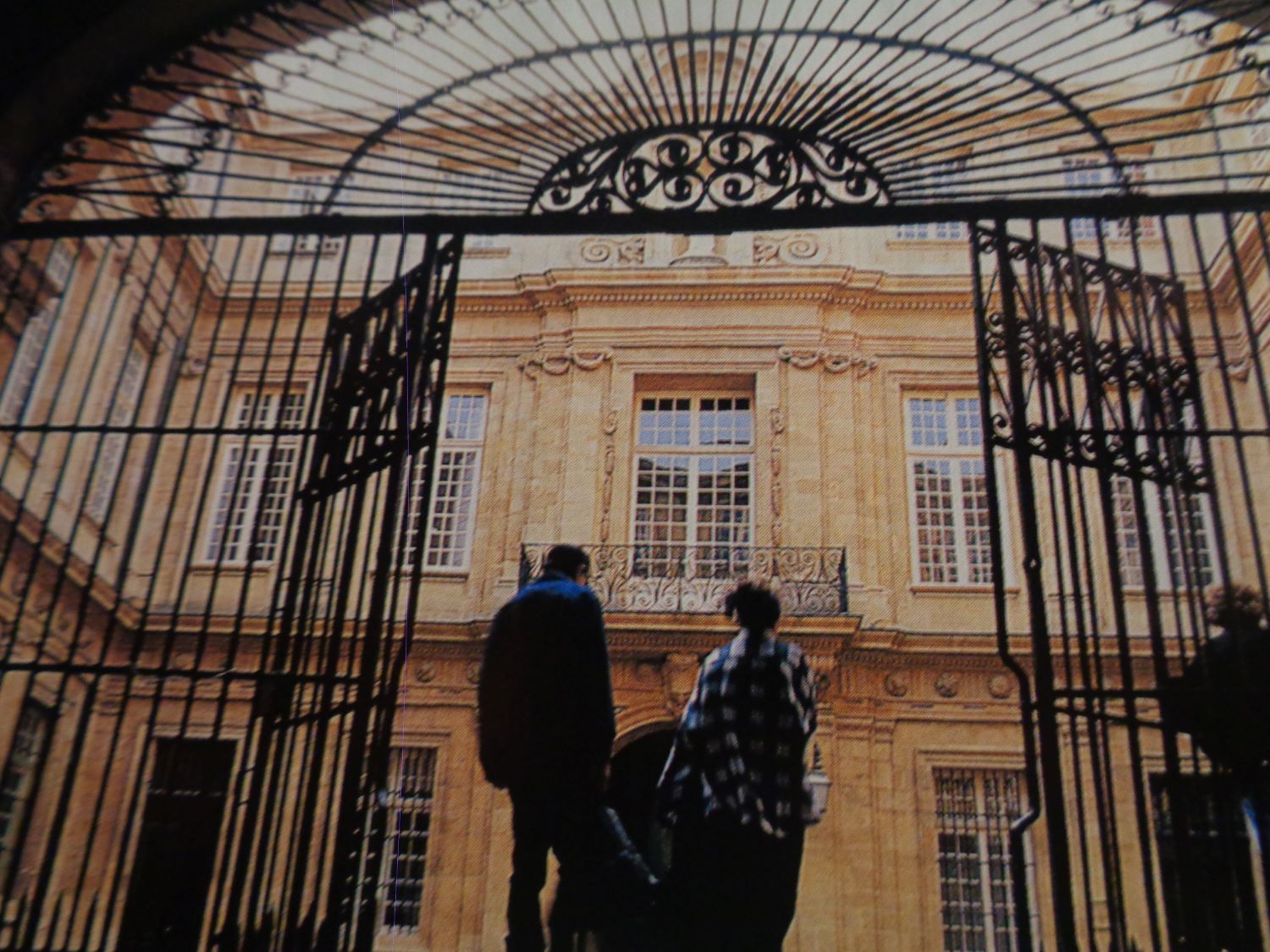 And more to see such as the Granet Museum, located against the Saint-Jean-de-Malte Church, the building that shelters it was built in 1671, the priory being transformed into a museum in 1838. The museum has an annex located in the chapel of the White Penitents A few streets from the main building.François Marius Granet bequeaths an important collection of paintings and the establishment takes the name of its donor in 1949. The Museum of Tapestries consists of a vast collection from the old archbishopric. There are tapestries executed in Beauvais in the 17-18C, some of which were made according to Bérain, as well as a series of nine panels of the life of Don Quixote, and four other panels executed according to Leprince. The Vieil-Aix Museum at Rue Gaston-de-Saporta has existed since 1933, located in the Hôtel d’Estienne-de-Saint-Jean. It has the collections of costumes, earthenware, puppets, reconstructing life in Aix-en-Provence under the old regime (monarchy), as well as in the 19C. The Paul-Arbaud Museum, meanwhile, is the seat of ‘Academy of Sciences, Agriculture, Arts and Belles-Lettres d’Aix-en-Provence. It offers a collection of 18C Provencal earthenware and portraits of the Mirabeau family but also hosts a library of 1,600 documents and an important private archive fund.
A bit of history tell us the site was founded in 122 BC under the name of Aquae Sextiae by the Roman consul Caius Sextius Calvinus, Aix later becomes the capital of the county of Provence. As such, the installation of King René, Duke of Anjou, Count of Provence, holder of Sicily, in the 15C, marks the golden age of the city, which will forever retain the title of “Cité du King René ” or City of king René. A thermal city from antiquity, Aix-en-Provence has an important cultural heritage (architecture, Granet museum, Lyric art festival, Grand Théâtre de Provence, etc.) and is asserted as an important tourist center and as an essential cultural center around Mediterranean in France. City of water, it is nicknamed the “City of a Hundred Fontaines” or even “La Copenhague du Midi” by Marcel Pagnol (French Writer, Playwright, Filmmaker and Producer), Aix-en-Provence is the city where Frédéric Mistral His law studies, Paul Cézanne spent his life and Émile Zola his first eighteen years. It was at Bourbon College (current Mignet college) that the deep friendship that united them. From 1486, a governor resided there to represent the Count of Provence which was, simultaneously, king of France. The Union of Provence to France was underway, but it remained until 1789 an independent state associated with France, In 1501, Louis XII established the Parliament of Provence which continues until the French revolution. The historic language of Aix is the Provençal, which was gradually replaced by French from the total integration of Provence into France in 1789 and the authoritarian francization of the Provencal population during the 19-20C.
The City of Aix en Provence on its heritage : https://www.aixenprovence.fr/Tourisme
The Aix en Provence tourist office on its heritage : https://www.aixenprovencetourism.com/en/aix-en-provence-en/culture-heritage/
The Marseille tourist office on Aix en Provence (good info) : https://www.marseille-tourisme.com/en/discover-marseille/around-marseille/aix-en-provence/
There you go folks, a dandy area to explore and enjoy with the family, Memorable moments in my belle France, driving all over in my road warrior trails brings out sublime awesome spots with nice memorable family visits of yesteryear always remember and always looking forward to be back, eventually. Again hope you enjoy the post on curiosities of Aix en Provence as I.
And remember, happy travels, good health, and many cheers to all !!!
And more to see such as the Granet Museum, located against the Saint-Jean-de-Malte Church, the building that shelters it was built in 1671, the priory being transformed into a museum in 1838. The museum has an annex located in the chapel of the White Penitents A few streets from the main building.François Marius Granet bequeaths an important collection of paintings and the establishment takes the name of its donor in 1949. The Museum of Tapestries consists of a vast collection from the old archbishopric. There are tapestries executed in Beauvais in the 17-18C, some of which were made according to Bérain, as well as a series of nine panels of the life of Don Quixote, and four other panels executed according to Leprince. The Vieil-Aix Museum at Rue Gaston-de-Saporta has existed since 1933, located in the Hôtel d’Estienne-de-Saint-Jean. It has the collections of costumes, earthenware, puppets, reconstructing life in Aix-en-Provence under the old regime (monarchy), as well as in the 19C. The Paul-Arbaud Museum, meanwhile, is the seat of ‘Academy of Sciences, Agriculture, Arts and Belles-Lettres d’Aix-en-Provence. It offers a collection of 18C Provencal earthenware and portraits of the Mirabeau family but also hosts a library of 1,600 documents and an important private archive fund.
A bit of history tell us the site was founded in 122 BC under the name of Aquae Sextiae by the Roman consul Caius Sextius Calvinus, Aix later becomes the capital of the county of Provence. As such, the installation of King René, Duke of Anjou, Count of Provence, holder of Sicily, in the 15C, marks the golden age of the city, which will forever retain the title of “Cité du King René ” or City of king René. A thermal city from antiquity, Aix-en-Provence has an important cultural heritage (architecture, Granet museum, Lyric art festival, Grand Théâtre de Provence, etc.) and is asserted as an important tourist center and as an essential cultural center around Mediterranean in France. City of water, it is nicknamed the “City of a Hundred Fontaines” or even “La Copenhague du Midi” by Marcel Pagnol (French Writer, Playwright, Filmmaker and Producer), Aix-en-Provence is the city where Frédéric Mistral His law studies, Paul Cézanne spent his life and Émile Zola his first eighteen years. It was at Bourbon College (current Mignet college) that the deep friendship that united them. From 1486, a governor resided there to represent the Count of Provence which was, simultaneously, king of France. The Union of Provence to France was underway, but it remained until 1789 an independent state associated with France, In 1501, Louis XII established the Parliament of Provence which continues until the French revolution. The historic language of Aix is the Provençal, which was gradually replaced by French from the total integration of Provence into France in 1789 and the authoritarian francization of the Provencal population during the 19-20C.
The City of Aix en Provence on its heritage : https://www.aixenprovence.fr/Tourisme
The Aix en Provence tourist office on its heritage : https://www.aixenprovencetourism.com/en/aix-en-provence-en/culture-heritage/
The Marseille tourist office on Aix en Provence (good info) : https://www.marseille-tourisme.com/en/discover-marseille/around-marseille/aix-en-provence/
There you go folks, a dandy area to explore and enjoy with the family, Memorable moments in my belle France, driving all over in my road warrior trails brings out sublime awesome spots with nice memorable family visits of yesteryear always remember and always looking forward to be back, eventually. Again hope you enjoy the post on curiosities of Aix en Provence as I.
And remember, happy travels, good health, and many cheers to all !!! 
 Paris1972-Versailles2003
One of my fave places – thank you
LikeLiked by 1 person
Many too many will take me a lifetime to see them all but trying …Thanks for stopping by Cheers
LikeLiked by 1 person
Splendid.
LikeLiked by 1 person
Thanks for stopping by. Cheers
LikeLike