Published by pedmar10
I am a lover of travels to Europe , Americas , Africa and Asia as well ,who like to share my experiences of the last 53 years with the world, visiting so far 81 countries; living in 6, working in 5, and Citizen of 4, speaking fluently 4 languages. I can deal with sports especially football/soccer and love music, arts, wine collector/drinker, and go out to restaurants, and just visit the world.
My background comes all the way from Candelaria and Pajara in Tenerife, Spain where my grandparents came from ;not knowing each other then, to Punta Brava, west of Havana, Cuba. There , my parents born in Cuba met and later on I was born there too. 100% guanche (annexed Tenerife to Spain on April 10 ,1496). I left Cuba as many have to Madrid, Spain where I lived for 4 years. Then, move to Perth Amboy ,New Jersey USA (living there 13 yrs) ; where I completed high school, became a US Citizen, learned to drive a car, and learned English. Afterward, went to the university in Florida, ERAU, and upon graduation decided to moved there to Ormond by the Sea, near Daytona Beach, finally moving North Miami, then Hialeah, then another moved to Silver Lakes division in Miramar, Broward county, Florida; in Florida I lived a total of 18 years. Finally , moved to France in 2003 ,Versailles call me for its royalty, and working in Paris was great. It was time to seek frontiers again and moved to Brech near Auray, Morbihan in Brittany , and later move to not too far Pluvigner. Total so far in France has been 20 years, and counting.
Moving average a home every 5.5 years hopefully this will be my last. Cheers
All rights reserved. No part of this blog may be reproduced or transmitted in any form or by any means or stored in a retrieval system of any nature, without the written permission of the copyright holder, me. No part of this work may be modified, without the written permission of the holder, me.No part of this work may be exposed to public view in any form or by any means, without identifying the holder as the author, and with the before mentioned permission.
View all posts by pedmar10

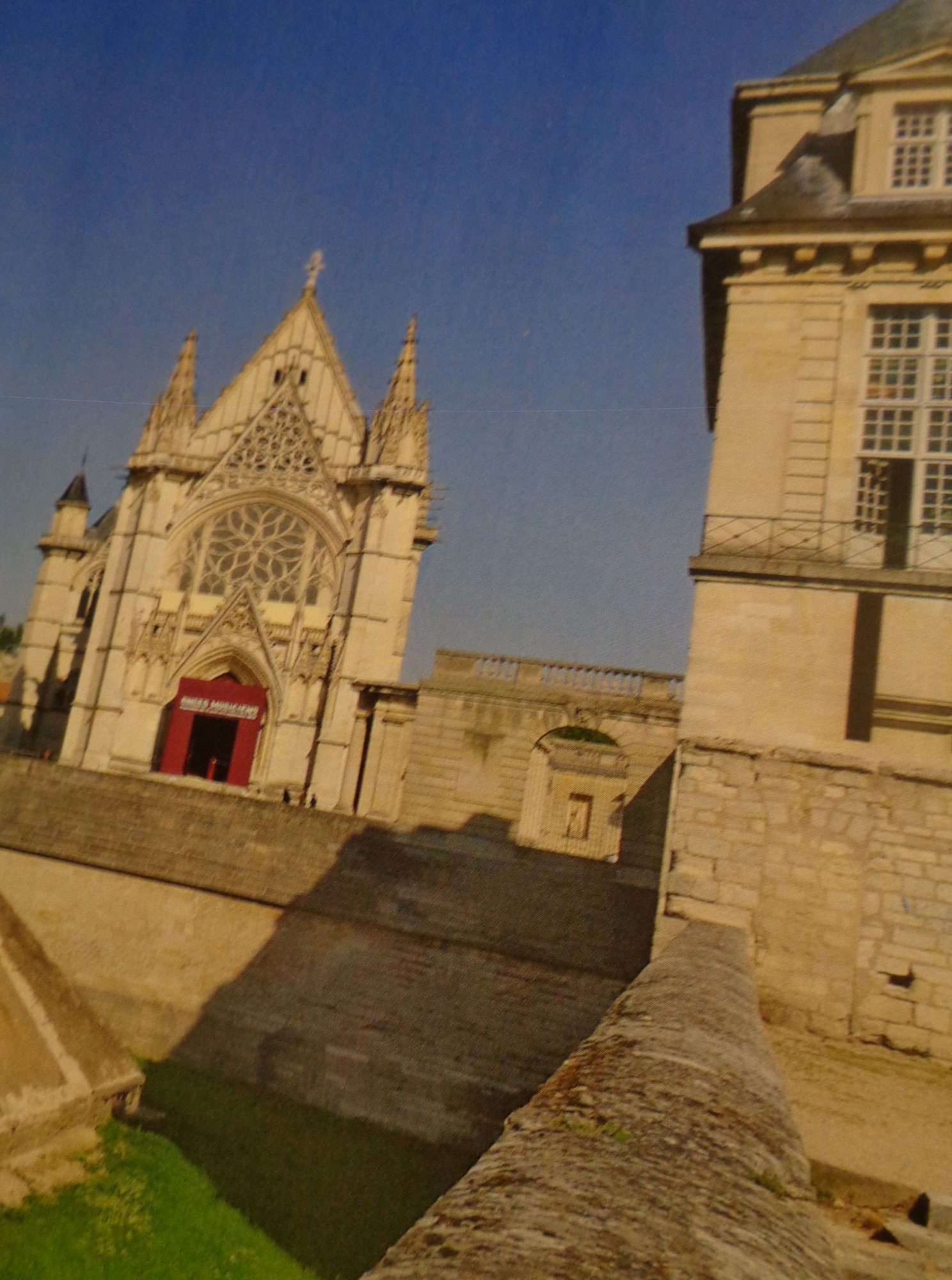
 The Sainte-Chapelle started from 1379 had the relics of the crown of thorns kept in Vincennes having been transferred to the Sainte-Chapelle in Paris, the works of construction of a new chapel, entrusted to Raymond du Temple, begin in 1379. It is 20 meters high, 40 meters in length and 12 meters in width. From Louis XIII at least, it served as a baptismal font during the baptisms of the children of France. The royal baptistery was transferred to the Louvre museum after the French revolution in 1793. Within its walls is buried Louis Antoine de Bourbon-Condé, Duke of Enghien , prince of French blood, executed in the ditches of the Château de Vincennes. He is the 10th and last Duke of Enghien, and the ultimate descendant of the Maison Condé’s house.
 Other things to see here me thing are : The Hôtel de Ville illustrates both the neo-Renaissance style inspired by the model that constituted the city hall of Paris at the start of the Third Republic, and the Art Deco style, remarkable by the monumental staircase and the dome in glass 12.20 meters in diameter and 30 tons, The Saint-Louis Church designed in 1912 original architecture of neo-byzantine style, characteristic of the renewal of sacred art in the first half of the 20C. Its interior sets are the fruit of the talent of the artists of the sacred art workshops: frescoes of Henri Marret and Maurice Denis, a set of ceramics from Maurice Dhomme, sculptures by Carlo Sarrabezolles and art ironwork of Raymond Subes, The Bois de Vincennes included the Parc Floral. The Paris-Vincennes racecourse. The Palais de la Porte Dorée. The Pagoda de Vincennes, Arboretum. The Paris farm. Theater of puppets. And Astral theater.
A bit bit of history I like tell us the story of Vincennes is closely linked to the history of its forest and its castle. It really started in the 12C, when Louis VII chose the Vilcena forest as a hunting ground and had a hunting pavilion fitted out. In 1667, Basse-Cour and Pissotte were gathered in the same parish which took the name of La Pissotte. In 1787, an administrative reform installed a community of inhabitants which took the name of the town of Vincennes. During the revolutionary period, Vincennes was allocated 238 hectares including the castle and its garden as well as the petit parc or small park, and part of the forest. The town was part of the Seine department. The reorganization of the Paris region in 1964 made that the city belongs to the department of Val-de-Marne no 94.
The City of Vincennes on its heritage : https://www.vincennes.fr/rayonnement-culturel-et-patrimonial/decouvrir-vincennes
The official National Monuments Center on the Château de Vincennes : https://www.chateau-de-vincennes.fr/en
The Local Vincennes Marnebois tourist office on its heritage : https://tourisme-vincennes-marnebois.fr/fr
The Val de Marne dept 94 tourist office on Vincennes : https://www.tourisme-valdemarne.com/incontournables/
There you go folks, a dandy area to explore and enjoy with the family, Memorable moments on my road warrior trips and family visits of yesteryear always remember and always looking forward to be back, eventually. Again hope you enjoy the post on this is Vincennes as I.
And remember, happy travels, good health, and many cheers to all !!!
Other things to see here me thing are : The Hôtel de Ville illustrates both the neo-Renaissance style inspired by the model that constituted the city hall of Paris at the start of the Third Republic, and the Art Deco style, remarkable by the monumental staircase and the dome in glass 12.20 meters in diameter and 30 tons, The Saint-Louis Church designed in 1912 original architecture of neo-byzantine style, characteristic of the renewal of sacred art in the first half of the 20C. Its interior sets are the fruit of the talent of the artists of the sacred art workshops: frescoes of Henri Marret and Maurice Denis, a set of ceramics from Maurice Dhomme, sculptures by Carlo Sarrabezolles and art ironwork of Raymond Subes, The Bois de Vincennes included the Parc Floral. The Paris-Vincennes racecourse. The Palais de la Porte Dorée. The Pagoda de Vincennes, Arboretum. The Paris farm. Theater of puppets. And Astral theater.
A bit bit of history I like tell us the story of Vincennes is closely linked to the history of its forest and its castle. It really started in the 12C, when Louis VII chose the Vilcena forest as a hunting ground and had a hunting pavilion fitted out. In 1667, Basse-Cour and Pissotte were gathered in the same parish which took the name of La Pissotte. In 1787, an administrative reform installed a community of inhabitants which took the name of the town of Vincennes. During the revolutionary period, Vincennes was allocated 238 hectares including the castle and its garden as well as the petit parc or small park, and part of the forest. The town was part of the Seine department. The reorganization of the Paris region in 1964 made that the city belongs to the department of Val-de-Marne no 94.
The City of Vincennes on its heritage : https://www.vincennes.fr/rayonnement-culturel-et-patrimonial/decouvrir-vincennes
The official National Monuments Center on the Château de Vincennes : https://www.chateau-de-vincennes.fr/en
The Local Vincennes Marnebois tourist office on its heritage : https://tourisme-vincennes-marnebois.fr/fr
The Val de Marne dept 94 tourist office on Vincennes : https://www.tourisme-valdemarne.com/incontournables/
There you go folks, a dandy area to explore and enjoy with the family, Memorable moments on my road warrior trips and family visits of yesteryear always remember and always looking forward to be back, eventually. Again hope you enjoy the post on this is Vincennes as I.
And remember, happy travels, good health, and many cheers to all !!!

 Paris1972-Versailles2003