
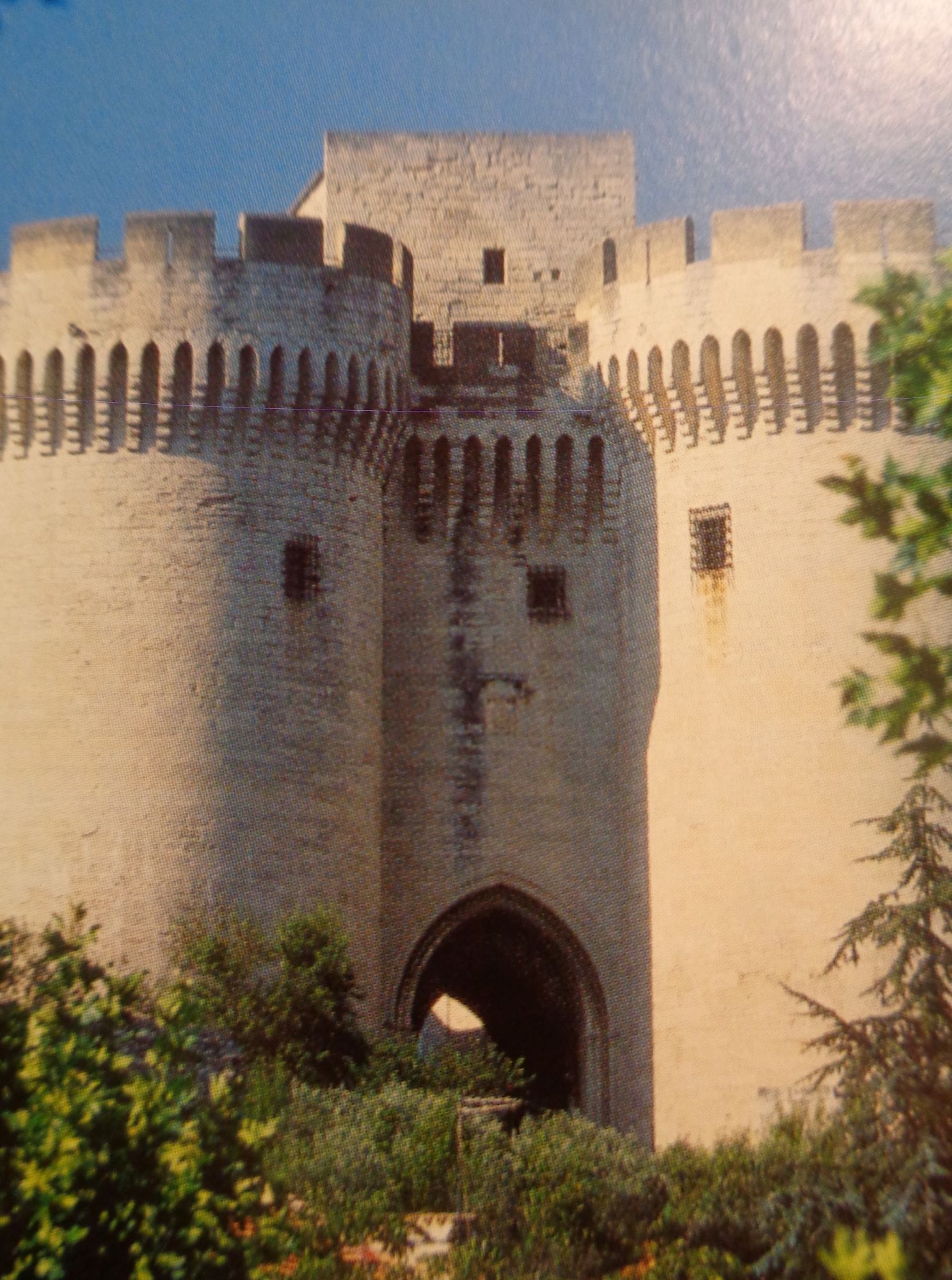
 The Tour Philippe-le-Bel was the keep of a fortress built in the 13C by the King of France, at the end of the famous Avignon bridge to which it controlled access, It dominates all of Provence thanks to an exceptional panorama of Villeneuve Lez Avignon, Avignon and the Rhone Valley. The Tower has been beautiful vaulted rooms and a permanent museum space called “tower memories”. The exhibition covers the following themes. The figure of King Philip the Fair, The Avignon area around the Rhône, from the Carolingian Era to the French revolution, building a bridge in medieval times and discovering the Pont d’Avignon in 3d in its medieval landscape.
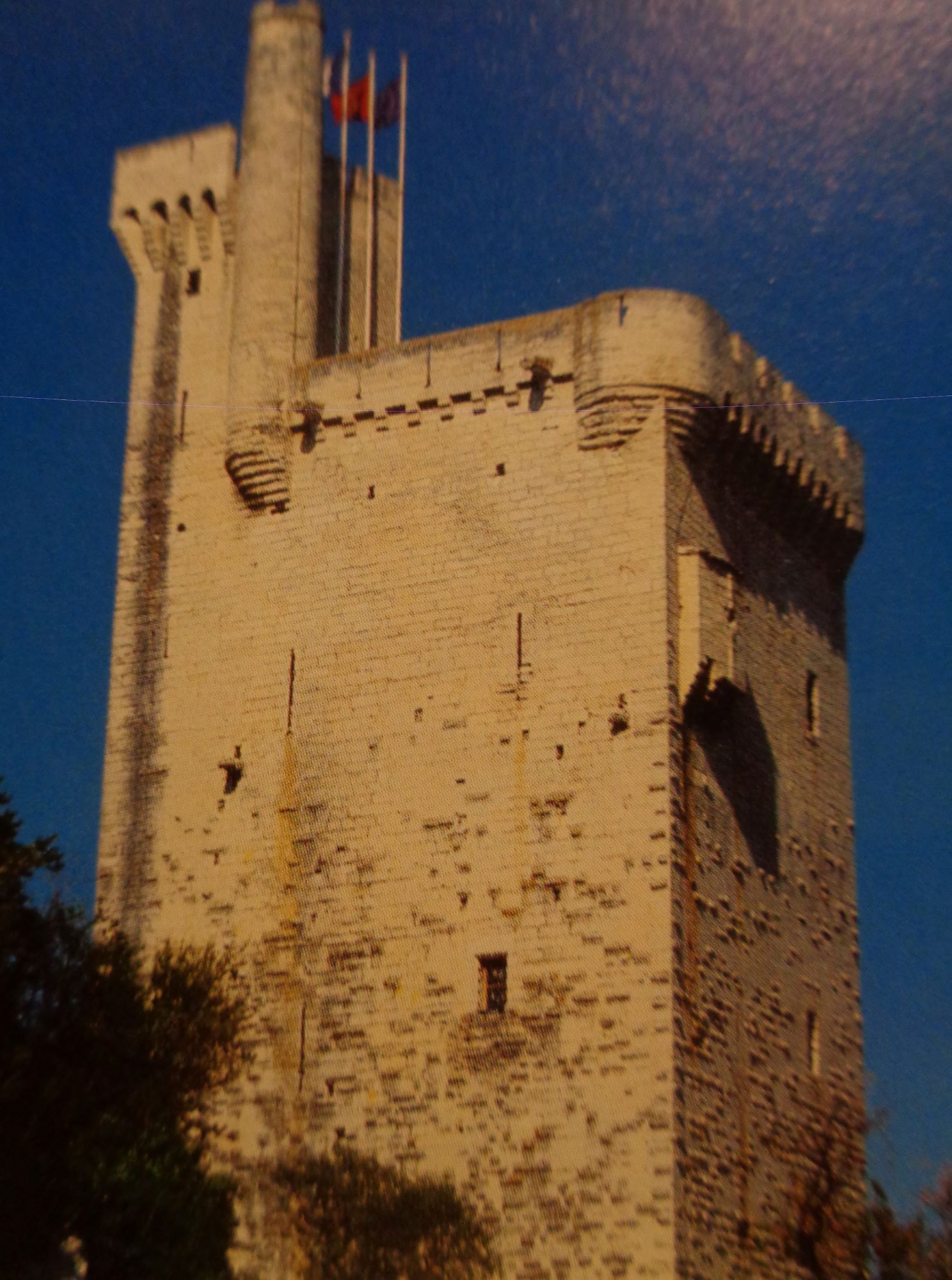 Other things to see here, me think are : The Chartreuse Notre-Dame-du-Val-de-Bénédication. Its architecture alone justifies a visit. The Sainte-Thérèse Church at Impasse Marie Viroulet, The Notre-Dame Collegiate Church devoted in 1333 by Pope John XXII. It was completed by the belfry bell tower in 1362, the former Benedictine Abbey Saint-André. The Pierre-de-Luxembourg museum which houses the coronation of the Virgin of Enguerrand Quarton.
A bit of history tell us that Mont Andaon or Puy Andaon is a hill overlooking the city of Villeneuve-lès-Avignon. It was, facing the rock of the Doms of Avignon of which he is the counterpart, a strategic position bordered on the east side by the Rhône and the west side by strong slopes, which made it a secure place. On Mount Andaon, a Christian necropolis was developing around the tomb of Casarie, in a cave. On his death on December 8, 586, her husband Valens affixed an epitaph on her grave. This text engraved on a marble plate (preserved in the Collégiale de Villeneuve) is at the origin of the tradition according to which Casarie is the wife of a bishop of Avignon, who withdrew as a hermit at the top of Mount Andaon, according to the model of Sainte Marie-Madeleine. Faced with the veneration of which the tomb was object, the bishop of Avignon calls a Benedictine community in order to frame the emerging cult. Before 980, the Saint-André abbey was based on Mont Andaon, before being approved by Bulle Papale in January 999 , A village developed around the abbey in the 11C, under the name of Bourg Saint-André , this was annexed by the city of Avignon at the beginning of the 13C, and in 1210, the Count of Provence Raymond V confirmed this annexation, In 1226, the army of the King of France besiege Avignon, as part of the crusade of Albigensian. The installation in 1316 in Avignon of the Papacy had enormous consequences on the emerging city which will receive the resorts of cardinals and pontiff sovereigns. Fourteen palaces were built in Villeneuve, whose hold of the domains still marks the physiognomy of the city today. In 1356, the foundation by Pope Innocent VI of the Chartreuse of Villeneuve-lès-Avignon, who became one of the largest and richest in Europe, In November 1461, by his letters patent, Louis XI confirmed the privileges of Saint-André-Léz-Avignon, In 1660, Louis XIV will crossed it as a large ceremonial when he came to visit the Chartreuse accompanied by a large suite. The French revolution was a relatively calm period in Villeneuve where many Avignon and Comtadins found to escape the civil war which was bloodied the Pontifical states. However, this period was a radical break in the history of the city. Deprived by a blow of her privileges of royal city and her rich religious houses, It finds itself reduced to the rank of chief town of canton.
The landscape painter Paul Huet, back from Auvergne, according to his travel book, arrived in Villeneuve-lès-Avignon on September 23, 1833, and returned to it on October 12. He produced a watercolor kept at the Louvre museum: View of Villeneuve-lès-Avignon which represents a group of houses inside the enclosure of Fort Saint-André, backed by the fortified door. On the right is guessed the city of Avignon on the other side of the Rhône. He uses this study to carry out a table presented at the Salon of 1834, from a broader general view of Avignon and Villeneuve-lès-Avignon, taken from the interior of Fort Saint-André, now kept at the museum of Cahors. The city will then be the privileged subject of painters of the Avignon school from the beginning of the 20C.
The City of Villeneuve Léz Avignon on its heritage : https://villeneuvelezavignon.com/decouvrir-la-ville/ville-attractive/patrimoine/
The Grand Avignon tourist office on Villeneuve Lez Avignon : https://www.grandavignon-destinations.fr/destination/villeneuve-lez-avignon/
The Gard dept 30 tourist office on Villeneuve lez Avignon : https://www.tourismegard.com/destination/villes-villages/villes-remarquables/villeneuve-lez-avignon/
There you go folks, another spot in my world map or rather France’s map. Glad to have found the old pictures to give credit to Villeneuve-les-Avignon in my blog; good for the memories of always. Again, hope you enjoy the post on this is Villeneuve-les-Avignon as I.
And remember, happy travels, good health, and many cheers to all !!!
Other things to see here, me think are : The Chartreuse Notre-Dame-du-Val-de-Bénédication. Its architecture alone justifies a visit. The Sainte-Thérèse Church at Impasse Marie Viroulet, The Notre-Dame Collegiate Church devoted in 1333 by Pope John XXII. It was completed by the belfry bell tower in 1362, the former Benedictine Abbey Saint-André. The Pierre-de-Luxembourg museum which houses the coronation of the Virgin of Enguerrand Quarton.
A bit of history tell us that Mont Andaon or Puy Andaon is a hill overlooking the city of Villeneuve-lès-Avignon. It was, facing the rock of the Doms of Avignon of which he is the counterpart, a strategic position bordered on the east side by the Rhône and the west side by strong slopes, which made it a secure place. On Mount Andaon, a Christian necropolis was developing around the tomb of Casarie, in a cave. On his death on December 8, 586, her husband Valens affixed an epitaph on her grave. This text engraved on a marble plate (preserved in the Collégiale de Villeneuve) is at the origin of the tradition according to which Casarie is the wife of a bishop of Avignon, who withdrew as a hermit at the top of Mount Andaon, according to the model of Sainte Marie-Madeleine. Faced with the veneration of which the tomb was object, the bishop of Avignon calls a Benedictine community in order to frame the emerging cult. Before 980, the Saint-André abbey was based on Mont Andaon, before being approved by Bulle Papale in January 999 , A village developed around the abbey in the 11C, under the name of Bourg Saint-André , this was annexed by the city of Avignon at the beginning of the 13C, and in 1210, the Count of Provence Raymond V confirmed this annexation, In 1226, the army of the King of France besiege Avignon, as part of the crusade of Albigensian. The installation in 1316 in Avignon of the Papacy had enormous consequences on the emerging city which will receive the resorts of cardinals and pontiff sovereigns. Fourteen palaces were built in Villeneuve, whose hold of the domains still marks the physiognomy of the city today. In 1356, the foundation by Pope Innocent VI of the Chartreuse of Villeneuve-lès-Avignon, who became one of the largest and richest in Europe, In November 1461, by his letters patent, Louis XI confirmed the privileges of Saint-André-Léz-Avignon, In 1660, Louis XIV will crossed it as a large ceremonial when he came to visit the Chartreuse accompanied by a large suite. The French revolution was a relatively calm period in Villeneuve where many Avignon and Comtadins found to escape the civil war which was bloodied the Pontifical states. However, this period was a radical break in the history of the city. Deprived by a blow of her privileges of royal city and her rich religious houses, It finds itself reduced to the rank of chief town of canton.
The landscape painter Paul Huet, back from Auvergne, according to his travel book, arrived in Villeneuve-lès-Avignon on September 23, 1833, and returned to it on October 12. He produced a watercolor kept at the Louvre museum: View of Villeneuve-lès-Avignon which represents a group of houses inside the enclosure of Fort Saint-André, backed by the fortified door. On the right is guessed the city of Avignon on the other side of the Rhône. He uses this study to carry out a table presented at the Salon of 1834, from a broader general view of Avignon and Villeneuve-lès-Avignon, taken from the interior of Fort Saint-André, now kept at the museum of Cahors. The city will then be the privileged subject of painters of the Avignon school from the beginning of the 20C.
The City of Villeneuve Léz Avignon on its heritage : https://villeneuvelezavignon.com/decouvrir-la-ville/ville-attractive/patrimoine/
The Grand Avignon tourist office on Villeneuve Lez Avignon : https://www.grandavignon-destinations.fr/destination/villeneuve-lez-avignon/
The Gard dept 30 tourist office on Villeneuve lez Avignon : https://www.tourismegard.com/destination/villes-villages/villes-remarquables/villeneuve-lez-avignon/
There you go folks, another spot in my world map or rather France’s map. Glad to have found the old pictures to give credit to Villeneuve-les-Avignon in my blog; good for the memories of always. Again, hope you enjoy the post on this is Villeneuve-les-Avignon as I.
And remember, happy travels, good health, and many cheers to all !!! 


I spent an afternoon in Villeneuve-les-Avignon while staying in Avignon several years ago. It was overcast and rainy when I went, but it was still very lovely 🙂
LikeLiked by 1 person