
 Other things to see here with more time are Church Sainte-Eugénie built in 1859-1860 at the expense of Napoleon III , in honor of his wife Eugénie (Eugenia) who appreciated the place, One I passed by when in the area but no pictures as usual in those time by me is the La Fayette Squadron Memorial inaugurated on July 4, 1928. Erected in memory of French and American airmen, all volunteers of the La Fayette squadron engaged during the Great War or WWI, an underground crypt contains the remains of most of these aviators killed in combat. This monument, located 5, boulevard Raymond-Poincaré, is made up of a monumental arc, The Research Applications Museum, installed since 1986 in the Cent-Gardes pavilion, retraces the fight against infectious diseases using photographs, original documents, equipment from the Pasteur museum collections, the museum is open to the public at 3, Boulevard Raymond-Poincaré corner at 3, avenue Pasteur. The buildings of the domain were built between 1852 and 1930, The building that houses the city hall, built in 1849 and enlarged in 1888, Today destroyed, the Château de la Marche was, at the end of the 17C and at the beginning of the 18C, a component of the domaine de l’Étang. After the dismantling of this area, in 1710, it belonged to the financier John Law then to Queen Marie-Antoinette. It was in Marnes-la-Coquette that lived, from 1952 to 1972, Maurice Chevalier in his very beautiful property La Louque. This house has remarkable gardens, Johnny Hallyday and Hugues Aufray each have a villa in Marnes park. Johnny Hallyday died at La Savannah, his villa in Marnes-la-Coquette on December 5, 2017. Access to the house being prohibited.
A bit of history I like tell us that at the turn of the 17-18C, the Domaine de l’Etang belongs to Louis-François-Marie Le Tellier de Barbezieux, Secretary of State of King Louis XIV, then to Michel Chamillart, General Controller and Secretary of State for the war of the same Louis XIV. From 1710, the Château de l’Etang was demolished and its domain, composed in particular of the Château de la Marche and Villeneuve, was dismantled. Villeneuve will become the castle of Villeneuve-l’Etang. In 1852, Louis Napoleon Bonaparte, then President of the Republic, buys the Domaine de Villeneuve-l’Etang. This area had belonged to Marshal Soult during the first empire and then to the Duchess of Angoulême, Marie-Thérèse Dauphine de France, who carried the title of Countess of Marnes. Once it became an emperor, he built the Cent-Garde pavilion there intended to accommodate his close guard when he resides at the Château de Saint-Cloud. In 1878, the domain became public. The castle was destroyed in the 1880s. Part of the estate is conceded to Louis Pasteur so that he continues his research after his discovery of the rabies vaccine.Pasteur then installs his laboratory in the Cent-Gardes pavilion. He plans to set up his institute there, but the success of his international subscription allows him to acquire land on rue Dutot in Paris and to have the main site and seat of the Institut Pasteur, inaugurated in 1888, that of Marnes la Coquette being kept for part of the activities. Villeneuve-l’Etang then becomes an annex where Pasteur often settles in summer. He died there on September 28, 1895. His room is still kept there.
The town of Marnes la Coquette (see un patrimoine à explorer) : https://www.marnes-la-coquette.fr/
The Hauts de Seine dept 92 tourist office on its heritage (general) : https://destination.hauts-de-seine.fr/sites-et-monuments-92.html
The Île de France region tourist office (general) : https://www.visitparisregion.com/en/what-to-see-and-do/visiting
There you go folks, another dandy in my belle France and very near Parison a off the beaten path per se, but worth the detour, me think, I have wonderful memories of riding by here, Again, hope you enjoy this post on this is Marnes la Coquette as I.
And remember, happy travels, good health, and many cheers to all !!!
Other things to see here with more time are Church Sainte-Eugénie built in 1859-1860 at the expense of Napoleon III , in honor of his wife Eugénie (Eugenia) who appreciated the place, One I passed by when in the area but no pictures as usual in those time by me is the La Fayette Squadron Memorial inaugurated on July 4, 1928. Erected in memory of French and American airmen, all volunteers of the La Fayette squadron engaged during the Great War or WWI, an underground crypt contains the remains of most of these aviators killed in combat. This monument, located 5, boulevard Raymond-Poincaré, is made up of a monumental arc, The Research Applications Museum, installed since 1986 in the Cent-Gardes pavilion, retraces the fight against infectious diseases using photographs, original documents, equipment from the Pasteur museum collections, the museum is open to the public at 3, Boulevard Raymond-Poincaré corner at 3, avenue Pasteur. The buildings of the domain were built between 1852 and 1930, The building that houses the city hall, built in 1849 and enlarged in 1888, Today destroyed, the Château de la Marche was, at the end of the 17C and at the beginning of the 18C, a component of the domaine de l’Étang. After the dismantling of this area, in 1710, it belonged to the financier John Law then to Queen Marie-Antoinette. It was in Marnes-la-Coquette that lived, from 1952 to 1972, Maurice Chevalier in his very beautiful property La Louque. This house has remarkable gardens, Johnny Hallyday and Hugues Aufray each have a villa in Marnes park. Johnny Hallyday died at La Savannah, his villa in Marnes-la-Coquette on December 5, 2017. Access to the house being prohibited.
A bit of history I like tell us that at the turn of the 17-18C, the Domaine de l’Etang belongs to Louis-François-Marie Le Tellier de Barbezieux, Secretary of State of King Louis XIV, then to Michel Chamillart, General Controller and Secretary of State for the war of the same Louis XIV. From 1710, the Château de l’Etang was demolished and its domain, composed in particular of the Château de la Marche and Villeneuve, was dismantled. Villeneuve will become the castle of Villeneuve-l’Etang. In 1852, Louis Napoleon Bonaparte, then President of the Republic, buys the Domaine de Villeneuve-l’Etang. This area had belonged to Marshal Soult during the first empire and then to the Duchess of Angoulême, Marie-Thérèse Dauphine de France, who carried the title of Countess of Marnes. Once it became an emperor, he built the Cent-Garde pavilion there intended to accommodate his close guard when he resides at the Château de Saint-Cloud. In 1878, the domain became public. The castle was destroyed in the 1880s. Part of the estate is conceded to Louis Pasteur so that he continues his research after his discovery of the rabies vaccine.Pasteur then installs his laboratory in the Cent-Gardes pavilion. He plans to set up his institute there, but the success of his international subscription allows him to acquire land on rue Dutot in Paris and to have the main site and seat of the Institut Pasteur, inaugurated in 1888, that of Marnes la Coquette being kept for part of the activities. Villeneuve-l’Etang then becomes an annex where Pasteur often settles in summer. He died there on September 28, 1895. His room is still kept there.
The town of Marnes la Coquette (see un patrimoine à explorer) : https://www.marnes-la-coquette.fr/
The Hauts de Seine dept 92 tourist office on its heritage (general) : https://destination.hauts-de-seine.fr/sites-et-monuments-92.html
The Île de France region tourist office (general) : https://www.visitparisregion.com/en/what-to-see-and-do/visiting
There you go folks, another dandy in my belle France and very near Parison a off the beaten path per se, but worth the detour, me think, I have wonderful memories of riding by here, Again, hope you enjoy this post on this is Marnes la Coquette as I.
And remember, happy travels, good health, and many cheers to all !!! This is Marnes la Coquette !!!
It’s a place that I have been by several times, as used to drive around it to avoid trafic when lived in Versailles and going east to Paris etc, At this time the pictures were not in my mind and sadly did not took much, However, found me one that make me write this post for you and me. I like to tell you a bit on this is Marnes la Coquette !!! Hope you enjoy it as I.
The town of Marnes-la-Coquette is located west of the suburbs of Paris, around the Domaine de Villeneuve-l’Etang that belonged to Napoleon III. It was the emperor Napoleon III who, in 1859, authorized by decree the small town of Marnes to take the name of Marnes-la-Coquette. It is in the Hauts de Seine dept 92 of the Île de France region of my belle France.
Marnes-la-Coquette is crossed by the A13 highway (known as the Autoroute de l’ouest or Normandie), The town served from the RD 907 which takes the old rue de Vaucresson, from the Domaine de la Marche and Garches to from the Raymond-Poincaré hospital in the town of Garches, (my route), Also, by the RD 407, which takes rue Yves-Cariou then rue Georges-et-Xavier-Schlumberger. It is bordered by the parc Saint-Cloud park, and the Forest of Fausses-Reposes. Through this forest the road to the Empress (Eugénie), the ONF forest route, leads to the old granting of the Porte Verte of Versailles (old limits of castle under monarchy) along the Haras de Jardy. The town is served by line L of the Transilien trains, on the Paris -Saint-Nom-la-Bretèche, at the Garches-Marnes-la-Coquette train station, located in Garches.
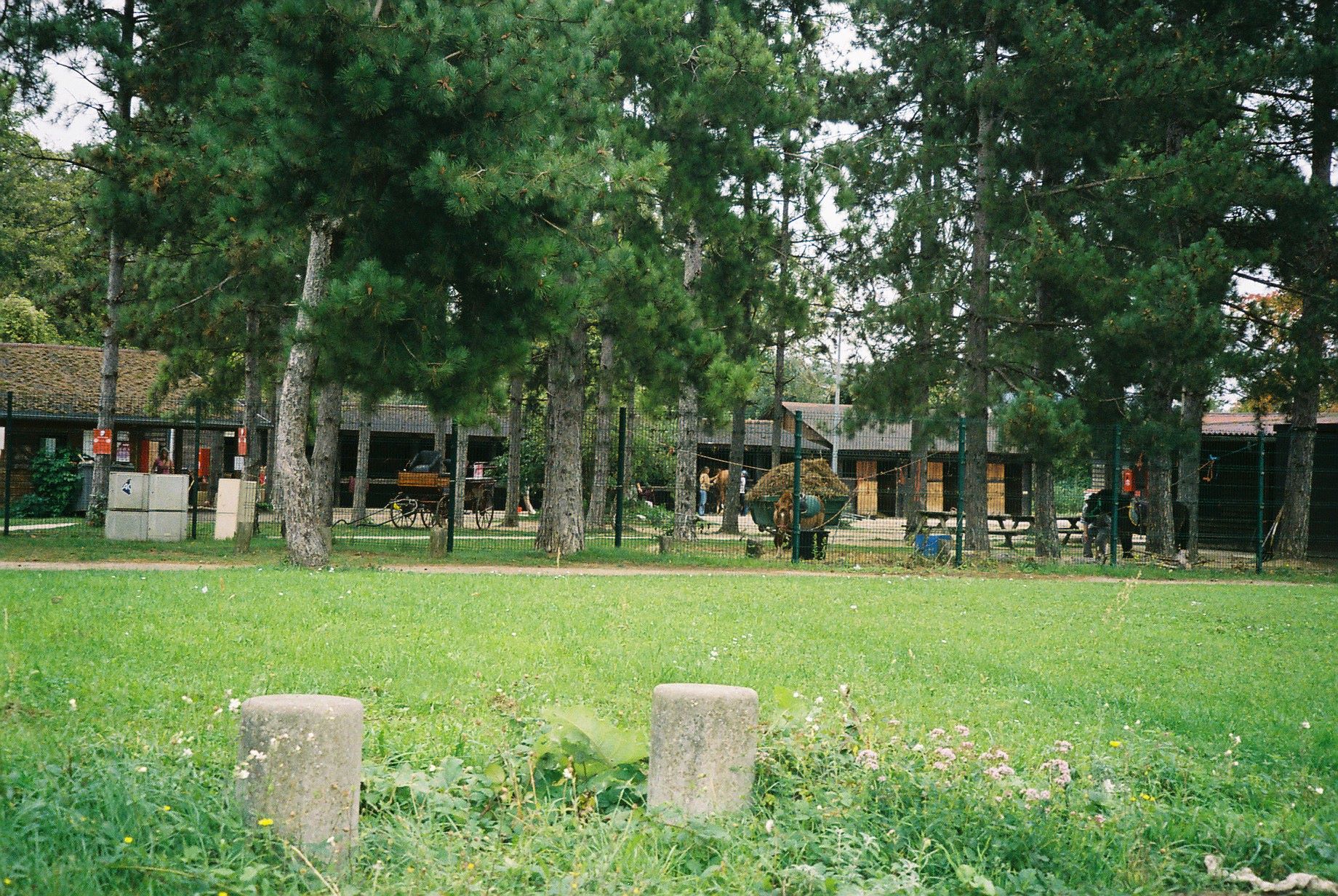
In Marnes-la-Coquette ,you have the largest equestrian center in France, Le Haras de Jardy created in 1891 by Edmond Blanc, the largest racing horses in the Belle Époque. Afterward, Marcel Boussac bought this stud farm and perpetuated the international reputation of racing horses from this breeding. At the heart of a preserved nature, come and go horse riding in a prestigious setting. From initiation to competition, all equestrian disciplines are practiced at the Equestrian Center of the Haras de Jardy In the 12C, the monks of the Tiron abbey, create a priory on the Domaine de Jardy. This monastic order of Benedictine inspiration is dedicated to the construction of abbeys throughout Europe. Thus the priory of Jardy exploited the lands of its agricultural field until the French revolution of 1789. Indeed, the taking of the goods of the Church as national goods leads to the sale of the domain. In 1817, Jardy ceased to be part of the territory of Vaucresson to be attached to Marnes-la-Coquette. It remains a large farm in the middle of the woods. The old monks buildings, except the barn, disappear in favor of buildings of neo-norman style, half-timbered with exposed bricks: The court of 49 box, the small merry-go-round and different pavilions give their identity to the estate. The horses shine in prizes in France and abroad, its breeders born in Jardy are scattered around the world and ensured the reputation of French farming, devoted in 1905, by the visit of King Edouard VII. In the 1950s and 1960s, the stables became the most famous in the world, even eclipping the Rothschild or Aga Khan stables. In 1957, the estate received the visit of Elisabeth II, and in 1961, that of Nikita S, Khrouchtchev , But the advent of synthetic materials puts it in difficulty and the State must buy the Domaine de Jardy so that it can save its breeding.
Other things to see here with more time are Church Sainte-Eugénie built in 1859-1860 at the expense of Napoleon III , in honor of his wife Eugénie (Eugenia) who appreciated the place, One I passed by when in the area but no pictures as usual in those time by me is the La Fayette Squadron Memorial inaugurated on July 4, 1928. Erected in memory of French and American airmen, all volunteers of the La Fayette squadron engaged during the Great War or WWI, an underground crypt contains the remains of most of these aviators killed in combat. This monument, located 5, boulevard Raymond-Poincaré, is made up of a monumental arc, The Research Applications Museum, installed since 1986 in the Cent-Gardes pavilion, retraces the fight against infectious diseases using photographs, original documents, equipment from the Pasteur museum collections, the museum is open to the public at 3, Boulevard Raymond-Poincaré corner at 3, avenue Pasteur. The buildings of the domain were built between 1852 and 1930, The building that houses the city hall, built in 1849 and enlarged in 1888, Today destroyed, the Château de la Marche was, at the end of the 17C and at the beginning of the 18C, a component of the domaine de l’Étang. After the dismantling of this area, in 1710, it belonged to the financier John Law then to Queen Marie-Antoinette. It was in Marnes-la-Coquette that lived, from 1952 to 1972, Maurice Chevalier in his very beautiful property La Louque. This house has remarkable gardens, Johnny Hallyday and Hugues Aufray each have a villa in Marnes park. Johnny Hallyday died at La Savannah, his villa in Marnes-la-Coquette on December 5, 2017. Access to the house being prohibited.
A bit of history I like tell us that at the turn of the 17-18C, the Domaine de l’Etang belongs to Louis-François-Marie Le Tellier de Barbezieux, Secretary of State of King Louis XIV, then to Michel Chamillart, General Controller and Secretary of State for the war of the same Louis XIV. From 1710, the Château de l’Etang was demolished and its domain, composed in particular of the Château de la Marche and Villeneuve, was dismantled. Villeneuve will become the castle of Villeneuve-l’Etang. In 1852, Louis Napoleon Bonaparte, then President of the Republic, buys the Domaine de Villeneuve-l’Etang. This area had belonged to Marshal Soult during the first empire and then to the Duchess of Angoulême, Marie-Thérèse Dauphine de France, who carried the title of Countess of Marnes. Once it became an emperor, he built the Cent-Garde pavilion there intended to accommodate his close guard when he resides at the Château de Saint-Cloud. In 1878, the domain became public. The castle was destroyed in the 1880s. Part of the estate is conceded to Louis Pasteur so that he continues his research after his discovery of the rabies vaccine.Pasteur then installs his laboratory in the Cent-Gardes pavilion. He plans to set up his institute there, but the success of his international subscription allows him to acquire land on rue Dutot in Paris and to have the main site and seat of the Institut Pasteur, inaugurated in 1888, that of Marnes la Coquette being kept for part of the activities. Villeneuve-l’Etang then becomes an annex where Pasteur often settles in summer. He died there on September 28, 1895. His room is still kept there.
The town of Marnes la Coquette (see un patrimoine à explorer) : https://www.marnes-la-coquette.fr/
The Hauts de Seine dept 92 tourist office on its heritage (general) : https://destination.hauts-de-seine.fr/sites-et-monuments-92.html
The Île de France region tourist office (general) : https://www.visitparisregion.com/en/what-to-see-and-do/visiting
There you go folks, another dandy in my belle France and very near Parison a off the beaten path per se, but worth the detour, me think, I have wonderful memories of riding by here, Again, hope you enjoy this post on this is Marnes la Coquette as I.
And remember, happy travels, good health, and many cheers to all !!!
Other things to see here with more time are Church Sainte-Eugénie built in 1859-1860 at the expense of Napoleon III , in honor of his wife Eugénie (Eugenia) who appreciated the place, One I passed by when in the area but no pictures as usual in those time by me is the La Fayette Squadron Memorial inaugurated on July 4, 1928. Erected in memory of French and American airmen, all volunteers of the La Fayette squadron engaged during the Great War or WWI, an underground crypt contains the remains of most of these aviators killed in combat. This monument, located 5, boulevard Raymond-Poincaré, is made up of a monumental arc, The Research Applications Museum, installed since 1986 in the Cent-Gardes pavilion, retraces the fight against infectious diseases using photographs, original documents, equipment from the Pasteur museum collections, the museum is open to the public at 3, Boulevard Raymond-Poincaré corner at 3, avenue Pasteur. The buildings of the domain were built between 1852 and 1930, The building that houses the city hall, built in 1849 and enlarged in 1888, Today destroyed, the Château de la Marche was, at the end of the 17C and at the beginning of the 18C, a component of the domaine de l’Étang. After the dismantling of this area, in 1710, it belonged to the financier John Law then to Queen Marie-Antoinette. It was in Marnes-la-Coquette that lived, from 1952 to 1972, Maurice Chevalier in his very beautiful property La Louque. This house has remarkable gardens, Johnny Hallyday and Hugues Aufray each have a villa in Marnes park. Johnny Hallyday died at La Savannah, his villa in Marnes-la-Coquette on December 5, 2017. Access to the house being prohibited.
A bit of history I like tell us that at the turn of the 17-18C, the Domaine de l’Etang belongs to Louis-François-Marie Le Tellier de Barbezieux, Secretary of State of King Louis XIV, then to Michel Chamillart, General Controller and Secretary of State for the war of the same Louis XIV. From 1710, the Château de l’Etang was demolished and its domain, composed in particular of the Château de la Marche and Villeneuve, was dismantled. Villeneuve will become the castle of Villeneuve-l’Etang. In 1852, Louis Napoleon Bonaparte, then President of the Republic, buys the Domaine de Villeneuve-l’Etang. This area had belonged to Marshal Soult during the first empire and then to the Duchess of Angoulême, Marie-Thérèse Dauphine de France, who carried the title of Countess of Marnes. Once it became an emperor, he built the Cent-Garde pavilion there intended to accommodate his close guard when he resides at the Château de Saint-Cloud. In 1878, the domain became public. The castle was destroyed in the 1880s. Part of the estate is conceded to Louis Pasteur so that he continues his research after his discovery of the rabies vaccine.Pasteur then installs his laboratory in the Cent-Gardes pavilion. He plans to set up his institute there, but the success of his international subscription allows him to acquire land on rue Dutot in Paris and to have the main site and seat of the Institut Pasteur, inaugurated in 1888, that of Marnes la Coquette being kept for part of the activities. Villeneuve-l’Etang then becomes an annex where Pasteur often settles in summer. He died there on September 28, 1895. His room is still kept there.
The town of Marnes la Coquette (see un patrimoine à explorer) : https://www.marnes-la-coquette.fr/
The Hauts de Seine dept 92 tourist office on its heritage (general) : https://destination.hauts-de-seine.fr/sites-et-monuments-92.html
The Île de France region tourist office (general) : https://www.visitparisregion.com/en/what-to-see-and-do/visiting
There you go folks, another dandy in my belle France and very near Parison a off the beaten path per se, but worth the detour, me think, I have wonderful memories of riding by here, Again, hope you enjoy this post on this is Marnes la Coquette as I.
And remember, happy travels, good health, and many cheers to all !!! 
 Paris1972-Versailles2003