
 The Arco de Belén was built in 1775 and was part of the convent and church of Our Lady of Belén located on calle Acosta. The Old Convent of Our Lady of Belén is the first Baroque building in Old Havana. It was completed in 1718 and directed by the Order of Bethlemites. Originally and until the 19C, the convent of Bethlehem belonged to the barefoot Carmelites, and then became occupied by the Clarisas religious. The Jesuit parents used it as a school until the beginning of the 20C. The Belen Jesuit Preparatory School, moved from Havana to Miami after the Cuban dictatorship, it was created in the Mid 19C in the facilities of the Convent of Belén of Havana. At present, the convent became the headquarters of the Office of Humanitarian Affairs of the historian’s office and in a center of specialized care areas for the elderly.
 The Callejón del Chorro is located in old Havana , or what was the city of intramuros in the time of the muralla or wall, very close to the Plaza de la Cathedral. In the 16C and 17C this alley was a continuous street from calle San Ignacio to that of calle Compostela, there are no more obstacles than the small bridges that were built in which today are cross -country streets of Cuba, such as calle Aguiar and calle Habana. It is located in the square delimited by calle San Ignacio , which in front of the Plaza de la Cathedral, calle O’Reilly south, calle Cuba in the back and calle Empedrado by the north. Its name comes from its old use. The “jet” was a hydraulic channel over 11 km long that from 1592 left the Almendares river (then called from the Chorrera), bringing water to Havana. This street was formerly called from the Jagüey and was open throughout the extension to the calle de Monserrate. The name of Jagüey had to be given because of the tank or cistern, built in 1587. The transcendence of the Calléjon del Chorro public fountain located inside the town of San Cristóbal de la Habana (Havana) . This aqueduct stopped supplying drinking water to Havana Intramuros from 1835, when the Fernando VII aqueduct is inaugurated. The channels that reached the alley stopped working from that moment, leaving all the space that now occupies the house, to give it a different use.
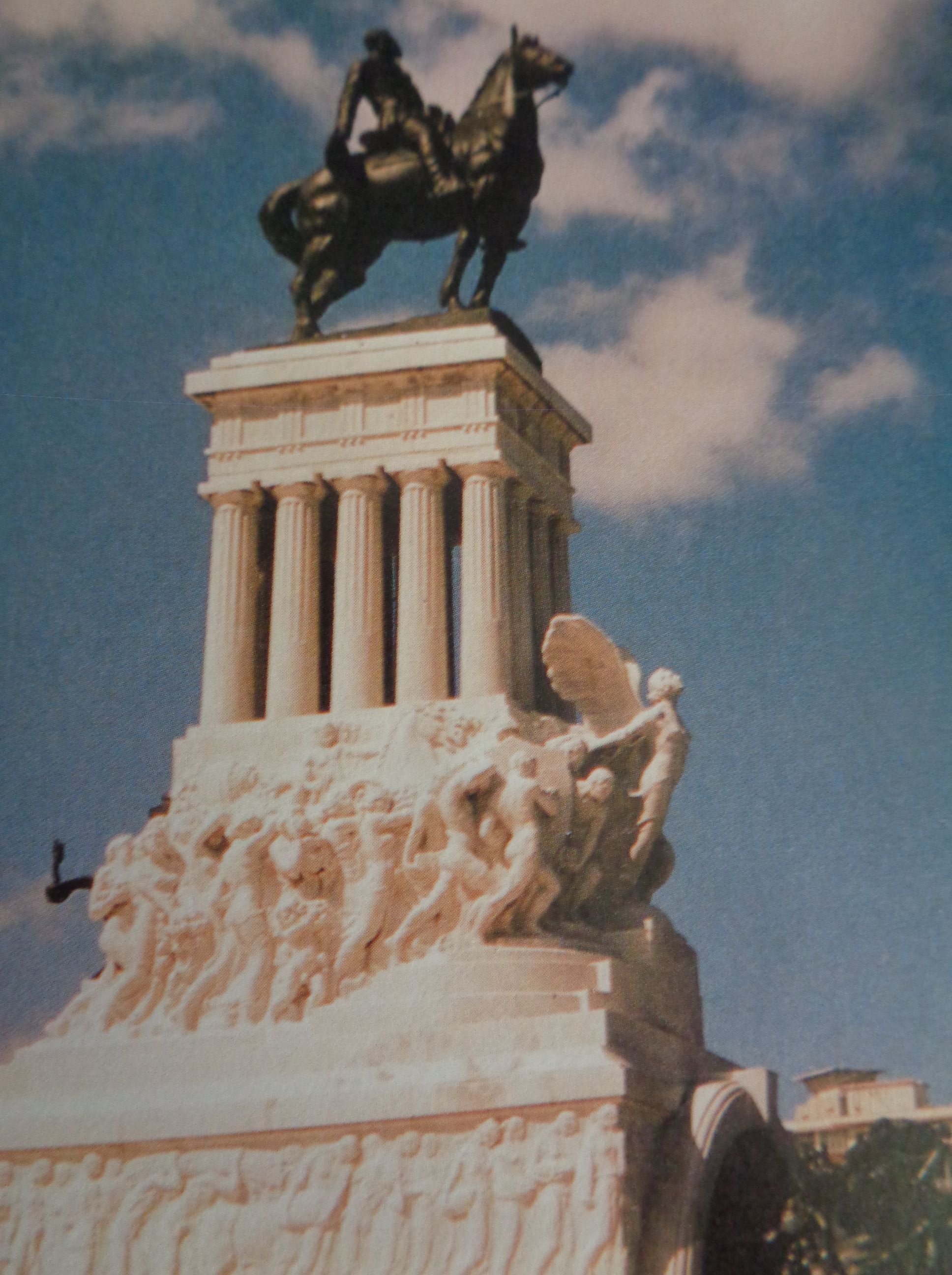
 The monument to Antonio Maceo is between El Malecón and the Hermanos Ameijeiras hospital. It is a bronze representation of the protagonist of the First War of Independence, one of the most important Cuban generals. It was installed here in 1916. Antonio Maceo y Grajales, born June 14, 1845 in San Luis, (Oriente) died in combat on December 7, 1896 in Punta Brava,(my native town ! ) is a fighter and hero of the fight for the independence of Cuba, also known as the Bronze Titan for its strength and skin color . He participated in more than 900 battles in the ten years war (1868-1878) and the War of Independence (1895-1898). The Spaniards also call Maceo “the buggest lion”. Maceo was one of the most remarkable chiefs of guerrilla warfare in the 19C in Latin America, for his military insight.
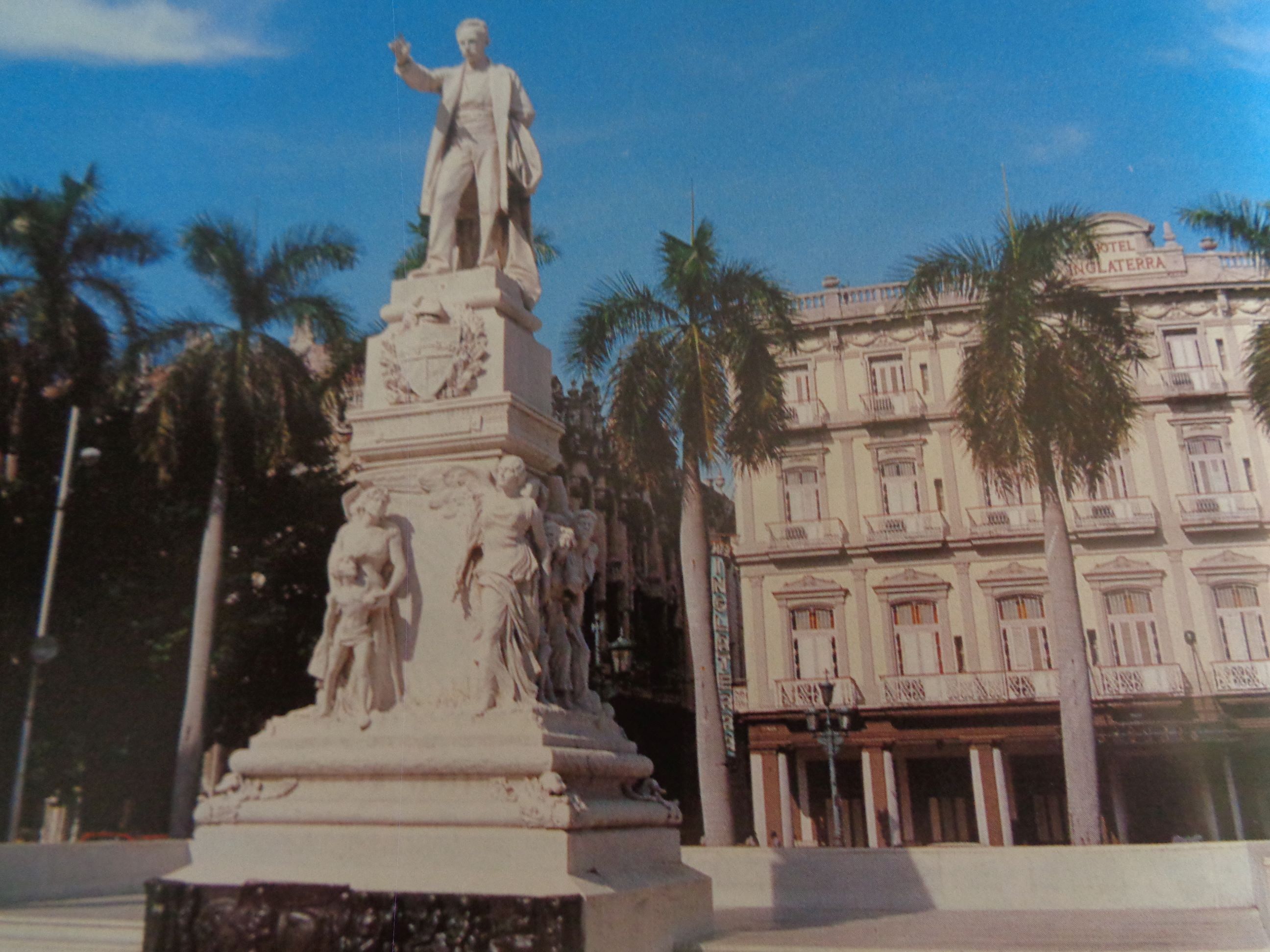
 The Parque Central or central park is one of the best known in the city of Havana. Its construction was finished in 1877 after the murallas (walls) that surrounded the city were demolished. It is located between Paseo del Prado,Calle Neptuno, Calle Zulueta and Calle San José, as well as Bulevar San Rafael and ends in front of it, Among the buildings surrounding the park are the Gran Teatro of Havana, Hotel Inglaterra (England), Hotel Telegrafo , the Parque Central Hotel, La Manzana de Gómez, the Plaza Hotel and the National Museum of Fine Arts Universal Art Building. It is located in the vicinity of the Capitol of Havana and the Park of La Fraternidad, belonging to the Centro Habana district , and of calle Obispo , the Hotel Sevilla, the Paseo del Prado and the famous Bar El Floridita belonging to the Havana Vieja district, finding themselves in the limits of both districts. Two years before the inauguration of the park, a statue of the Queen of Spain Isabel II, which was dismantled in 1899 for that of José Martí. The statue of José Martí in the Parque Central was unveiled on February 24, 1905. In ceremony that headed the Generalissimo Máximo Gómez Libertador Army and first President of Cuba, Tomás Estrada Palma. Other speakers rose to the podium during the event were ,Leonor Pérez,(mother) Carmen Zayas Bazán ,(wife) and Amelia Martí (daughter), The roads that intersect and cross the park have 28 royal palms that mean Martí’s birth date, as well as 8 coffin -shaped stonecutters that represent the medical students shot by the Spanish government of the island during the ten -year war on November 27, 1871.
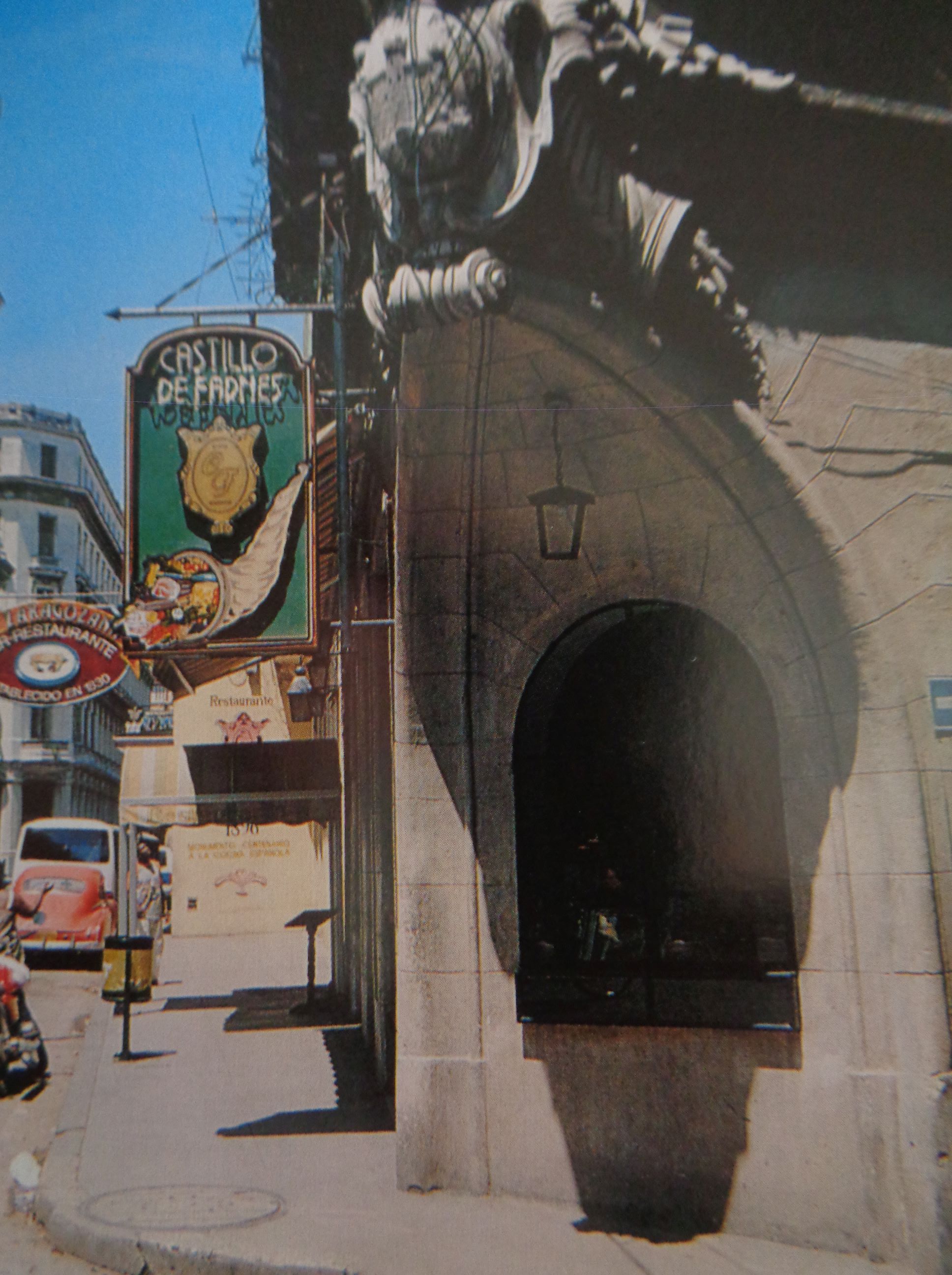
 And lastly, way back in 1998 my family in Cuba took to this restaurant with me paying of course, Restaurant Castillo de Farnés founded in 1896, Its interior is inspired by these Spanish taverns which flourish with the Toreros posters. At the corner of Calle Obrapía, and Calle Monsurrate 363, In the 19C this building was home to a grocery store. Later, Francisco Puig bought the establishment and turned it into a cheap restaurant which he named Castillo de Farnés, after a fortress in Catalonia, his hometown. On the corner of the façade there used to be a figurehead depicting the horn of plenty, currently preserved and used as the symbol of this place. Today Castillo de Farnés restaurant serving typical Spanish food. The Calle Monserrate has as an official name since 1918 Avenida de Belgica. Its first name received it due to the hermitage that existed in the square in one of the gates of the (muralla) wall in Havana in the 17C and 18C. The street begins at the height of Calle Colón ,and comes to term on Avenida del Puerto, in front of the docks that are next to the Central Railroad station (see post). In 1695 a hermitage was founded right next to the hamlet of the property of the Siglet Family and was consecrated to Our Lady of the Monserrate. This hermitage was very simple and was in the place that today gives rise to the Plaza de Albear. In 1836 the hermitage was destroyed to be able to guarantee a better traffic in the busy city. The hermitage was erected again in extramurous, in 1844, on Calle Galiano . In this artery is the Church Santo Ángel Custodio ( Holy Angel Custodian ) (see post) that was built between 1866 and 1871 is a temple of neo -Gothic style, in which Félix Varela and José Martí were baptized, respectively, The great Cuban novel of the 19C, the work of the writer Cirilo Villaverde , Is titled Cecilia Valdés or La Loma del Ángel, because the house of the protagonist gives this hill and the culminating scene of the aforementioned novel takes place, Other significant buildings, includes, the Palace of Fine Arts, which was created in 1954 this is located in the corner of Calle Monserrate and calle Trocadero. The best samples of Art Decó in Latin America and that was the headquarters of the central offices of Ron Bacardí’s company, is located in the corner of calle San Juan de Dios and calle Monserrate. The famous Floridita bar, which was frequented by the writer Ernest Hemingway is located in the corner of Calle Obispos and calle Monserrate and right next to the side is the monument that honors the engineer Francisco de Albear and Lara, of the year 1895. In the space that will formerly occupied the Monserrate hotel today is a housing building , and the former Palacio del Centro Asturiano ( Asturian Center).
 There you go folks, it was a city to fall in love for no matter what period of time in history, Sadly for the last 65 years since have change a lot and is not the same nor would it ever will be ; all we have is the nostalgia of past times, Again, hope you enjoy this post on curiosities of Havana, part III as I
And remember, happy travels, good health, and many cheers to all !!!
There you go folks, it was a city to fall in love for no matter what period of time in history, Sadly for the last 65 years since have change a lot and is not the same nor would it ever will be ; all we have is the nostalgia of past times, Again, hope you enjoy this post on curiosities of Havana, part III as I
And remember, happy travels, good health, and many cheers to all !!! 
 Paris1972-Versailles2003
Thanks for your like of my post. « Christ And Pre-Kingdom Jews – Pt 9; » you are very kind.
LikeLiked by 2 people
You are welcome
LikeLiked by 2 people