
I am again to tell you about more streets of my eternal Paris. I have many many posts on Paris and several on the streets of the most beautiful city in the world. I have come up with some pictures believe not in my blog and will tell you about the streets they represent. As always thank you for following my blog. Therefore, here is my take on the streets of Paris, part VII !!! Hope you enjoy it as I
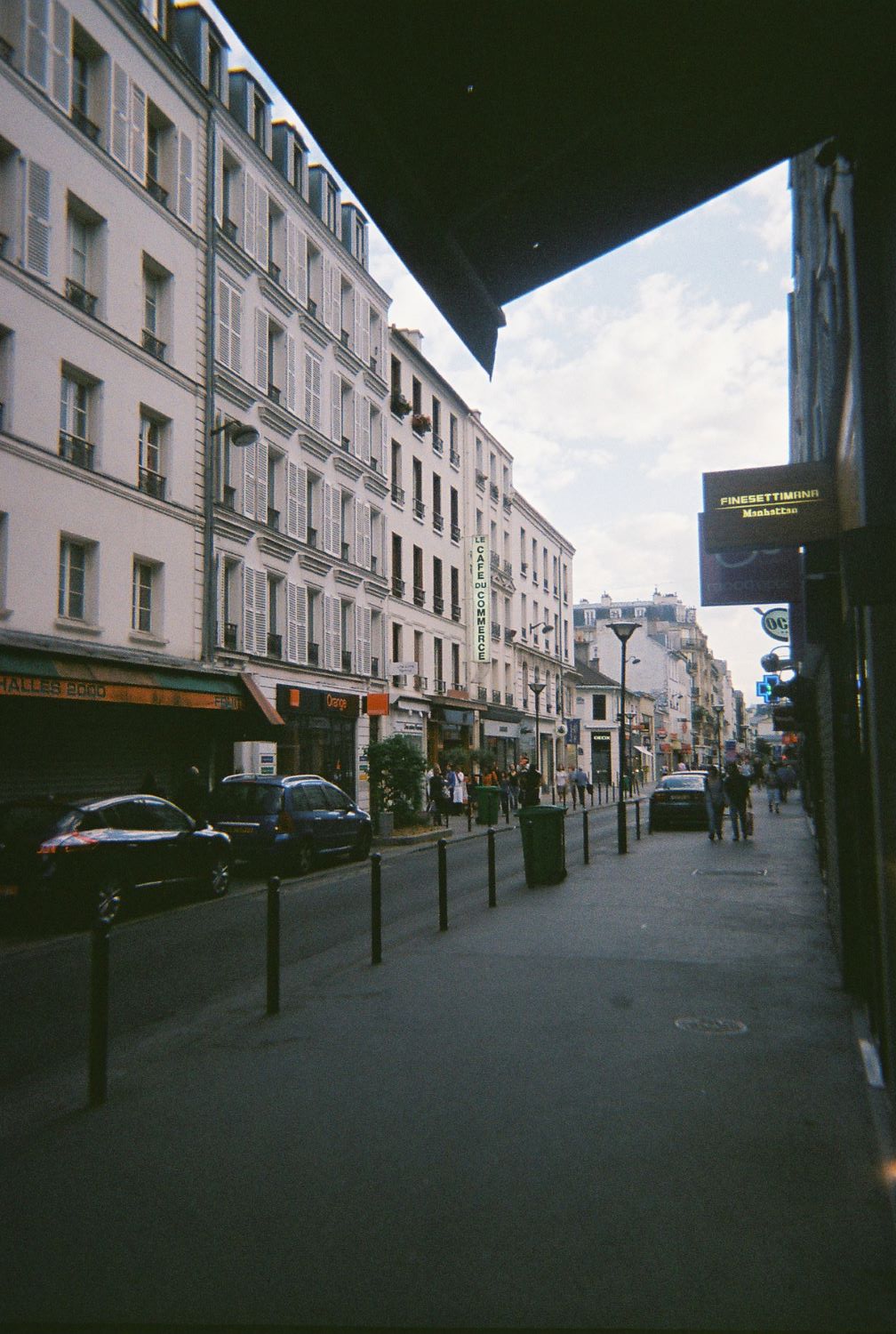
The Rue du Commerce is in the 15éme arrondissement of Paris. The street begins on Boulevard de Grenelle, at the aerial metro level, in the extension of Avenue de La Motte-Picquet and ends at Rue des Entrepreneurs. The rue du Commerce has formed since the middle of the 19C one of the three or four lively and attractive shopping axes of the 15éme arrondissement. And was, one of my favorite places for shopping too, The street was the main shopping street of the former village of Grenelle formed in 1837 under the name of Rue Saint-Guillaume , It takes the name of rue de la Montagne-Noire on February 1, 1877 before taking its current name by a decree of March 16, 1877.
It is crossed by rue Letellier, rue Fondary and rue du Théâtre. It serves as the starting point for rue Tiphaine, rue Frémicourt, rue Gramme and rue Lakanal, but also as a point of arrival at avenue Émile-Zola. Its length is 675 meters with an average width of only 18 meters. Due to this narrow width, it is a one-way lane for automobile traffic. Recent developments also limit the parking of vehicles. Yes indeed but there is an undergroun parking at 76 Rue du Commerce, This street is also served by metro Commerce line 8 at Place du Commerce. Metro Émile Zola line 10 on avenue Émile-Zola, and 20 meters from the intersection with rue du Commerce and La Motte-Picquet – Grenelle ,Metro lines 6 8 and 10, The Rue du Commerce is the result of an urban planning operation carried out in the 19C , The facades of houses and apartment buildings adorned with sculpted patterns, bands and cornices meet the tastes of the middle bourgeoisie that want to attract to this new district. The opening of the rue Frémicourt, then its extension in 1905 by the avenue Émile-Zola, created new links between the Grenelle district and the rest of Paris in full development. But, for its part, the rue du Commerce will keep much of its original cachet, in part no doubt thanks to the strong presence of activities on the ground floor of the buildings bordering the street.

Today, rue du Commerceis still an important shopping street with many shops selling perfumes, lingerie, clothing, tableware, decoration and gifts, bank branches, a few restaurants and cafes including the famous Café du Commerce at no 51,one of my memorable spots to eat (see post) as well as food shops (bakeries, butchers, etc.). Also, covers everything from one-of-a-kind boutiques to affordable fashions, but because you will be shopping where the locals go. Some of the significant buildings to see in rue du commerce me think are: At no 93: building from 1876 which takes up the size and aesthetics of the first constructions of Grenelle; no 87: building from 1860, with a beautiful cast iron grille and a largely preserved molding; no 71: first large building built (in 1864) just after annexation to Paris, with the aesthetic standards of the capital; Nos 56 and 116, rue du Théâtre: building having retained its original volume and simplicity, contrasts and marks a landmark on the street.
The place du Commerce,a square with a rectangular oblong, is located towards the end of rue du Commerce, at the crossroads of rue Lakanal and between rue du Commerce and rue Violet. It is therefore in the heart of the 15éme arrondissement of Paris. The Metro Commerce of line 8 is located on the square. It has this name because this square, like the rue du Commerce, was the main shopping street of the old village of Grenelle. This square in the village of Grenelle was called “Place de la Mairie” from 1828 to 1867, when it took the name of “Place du Commerce” until February 1877 when it became “Place de la Montagne-Noire ». It resumes its current name in March of the same year.

Some of the significant buildings to see in Place du commerce me think are : No 1 et 69, rue Violet ,the former City/town hall of Grenelle , It was settled in 1842 in the house built by two Americans, Daniel Low and Thomas W. Storrow ; it is a large neo-Palladian house characteristic of the Restoration period surrounded by a garden . The facade is decorated with empty niches surmounted by a triangular pediment and lit with a bay. No 4: collége Claude-Debussy middle school. No 23: Building from 1846, transformed between 1863 and 1880, but which has kept its bands and which presents a pediment on the square which gives it all its character.
The Avenue Émile -Zola is a street of the 15éme arrondissement of Paris. This site is served by metro stations avenue Émile Zola, Charles Michels and Javel – André Citroën of line 10. It bears the name of the French writer Émile Zola, born in Paris on April 2, 1840 and died in Paris on September 29, 1902 ; before this name, the street bears the name of rue Frémicourt , The ave opened from 1905, and bears the name of ‘”Avenue Émile-Zola” since 1907,A monument to Émile Zola was erected in 1924. The statue was described as follows: The hero is in work clothes surrounded by two figures symbolizing work and fertility. The statue was melted under the nazis occupation between 1942 and 1944. In 1985, a stele was erected in memory of Émile Zola, then in 2000, this part of the avenue took the name of Place Alfred-Dreyfus.

Some of the significant buildings to see in the Avenue Emile Zola me think are No 66: Barbados Consulate in Paris. No 76: Jules Longuet built a beautiful corner building, in 1907. In the hollow of a double scroll, an anonymous sculptor arranged two large very detailed poppy flowers, with rods and foliage. No 146: At the beginning of the 20C, seat of mutual aid, a cooperative of liners founded by Gabrielle Duchêne.
The rue du Théâtre is a street in the 15éme arrondissement of Paris. The street begins at the Quai de Grenelle and completed rue de la Croix-Nivert. Meets rue Robert-de-Flers, rue Émeriau, rue Saint-Charles, rue de Lourmel, rue Violet, Avenue Émile-Zola and rue du Commerce. Rue Hécart, rue Georges-City, rue de Tournus and Cité Thure begin or lead rue du Théâtre. The street held its name because it led to the theater of Grenelle, which was at 55, rue de la Croix-Nivert, and which in 1929 closed , The rue du Théâtre is an old route in the village of Grenelle. It bears the name of rue Ginoux from 1843. It connected the port of Grenelle and its cafes for the sailors at the theater of Grenelle. It joined the nomenclature of the streets of Paris by decree of May 23, 1863. In 1972, during the development of the Front-de-Seine the section between the Quai de Grenelle and rue Emeriau was covered with a slab.

Some of the significant buildings to see in the rue du Théâtre me think are No 48: There is no longer any trace of the annex to the Citroën factories which sheltered, under very spartes conditions, the workshop of Flaminio Bertoni, the brilliant creator of the body’s iconic models, before, 2 CV , DS and finally Friend 6. This in the most perfect anonymity, as it was the norm at the time of the Quai de Javel! It was the work of historians who allowed his return to glory, a plate in No 44, recalling that there were the Citroën design office there, the factories being along the Quai de Javel. The plaque mentions André Citroën, Flaminio Bertoni and André Lefèbvre. No 58: The poet Xavier Grall lived there from 1951 to 1960; A plaque pays tribute to him. No 81: High building of four square floors on the ground floor, built in 1832. It is one of the first and rare survivors of the reports of the village of Beaugrenelle. . It is very characteristic of the modern movement with its facade without any ornament, its horizontal berries and its two rectangular bow-women. No 138: building built in the 1930s. It belonged to Helena Rubinstein, married in second marriage of Prince Artchill Gourielli Tchkonia. It is very characteristic of the modern movement with its facade without any ornament, its horizontal berries and its two rectangular bow-women.
The Paris tourist office on the 15éme arrondissement/district of Paris : https://parisjetaime.com/eng/article/explore-paris-s-15th-arrondissement-a827
The Paris tourist office on the rue du Commerce: https://parisjetaime.com/eng/transport/rue-du-commerce-p2044
There you go folks, another dandy beautiful set of glorious streets of my eternal Paris. I have criss cross them many and have many in my blog already, Again, hope you enjoy this post on the streets of Paris, part VII !!! as I.
And remember happy travels, good health, and many cheers to all !!!

 Paris1972-Versailles2003