
This is a love affair of many years now, even if less due to the distance. If you read my blog ,you know I am an amateur of history and architecture and tried to put a bit of them in all my posts. You have ,also, read I am friend of several wonderful properties in my belle France; one of them is the sublime Musée du Louvre !!! I have found me again some old paper pictures of these official visits and why not again a post. Therefore, here is my take on the wonderful amazing gorgeous the Musée du Louvre of Paris , part VI !!! Hope you enjoy this post as I.
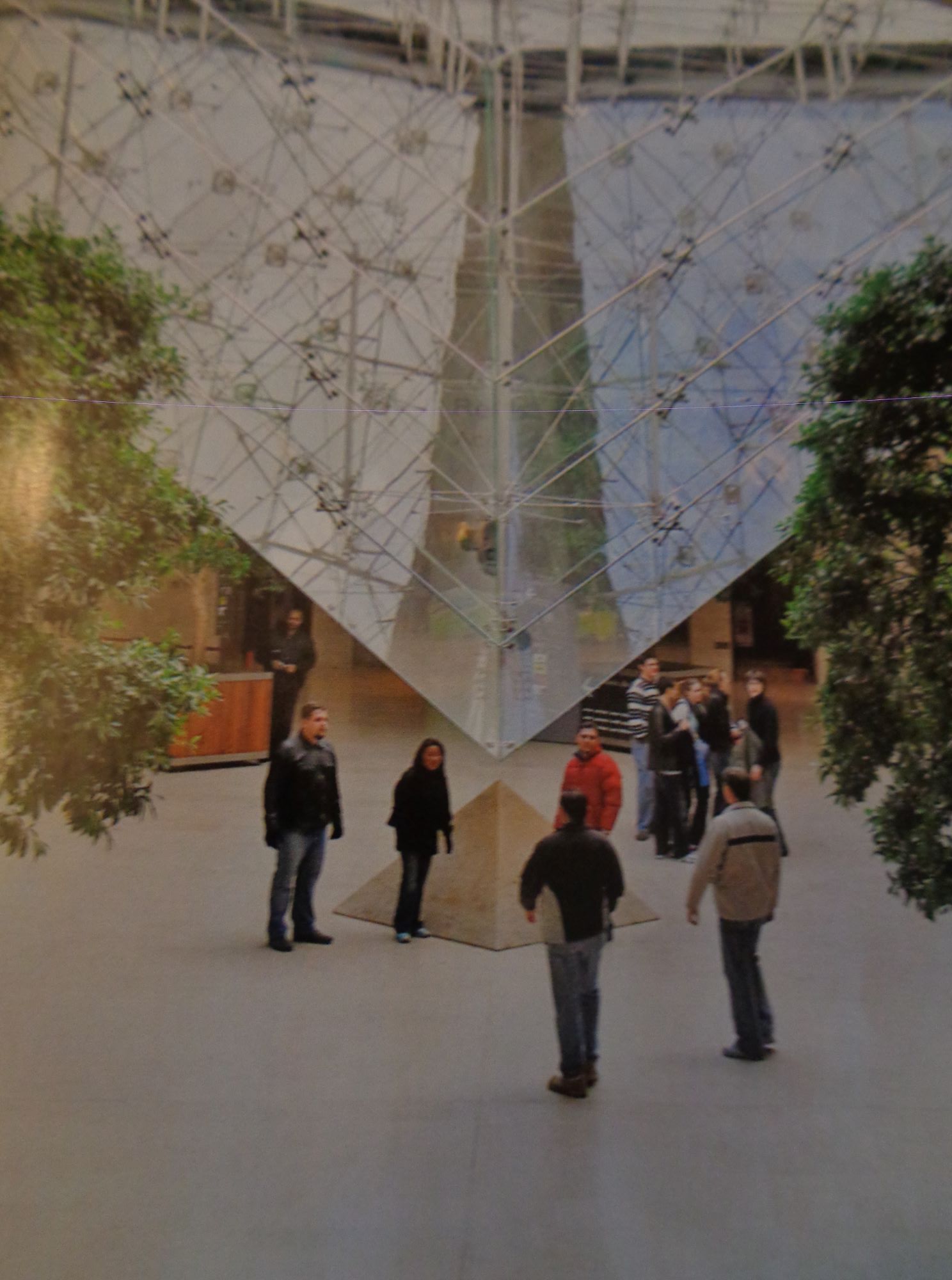
The reversed pyramid of the Louvre museum is a pyramid of glass and metal, located in the carousel of the Louvre inaugurated in 1989 ; the inverted pyramid of the architect Leoh Ming Pei weighs 180 tons and measures 16 meters side by 7 meters high. The inverted pyramid is not visible from the outside if we stay at the level of the ground: indeed, it is not only below ground but the center of the square of the carousel where the inaccessible pyramid is inaccessible and It is closed visually by hedges. This pyramid is twice, shown at the beginning and at the end, in the film The Da Vinci Code and the tomb of Marie Madeleine is supposed to be under the stone reproduction at the apex of the inverted pyramid.
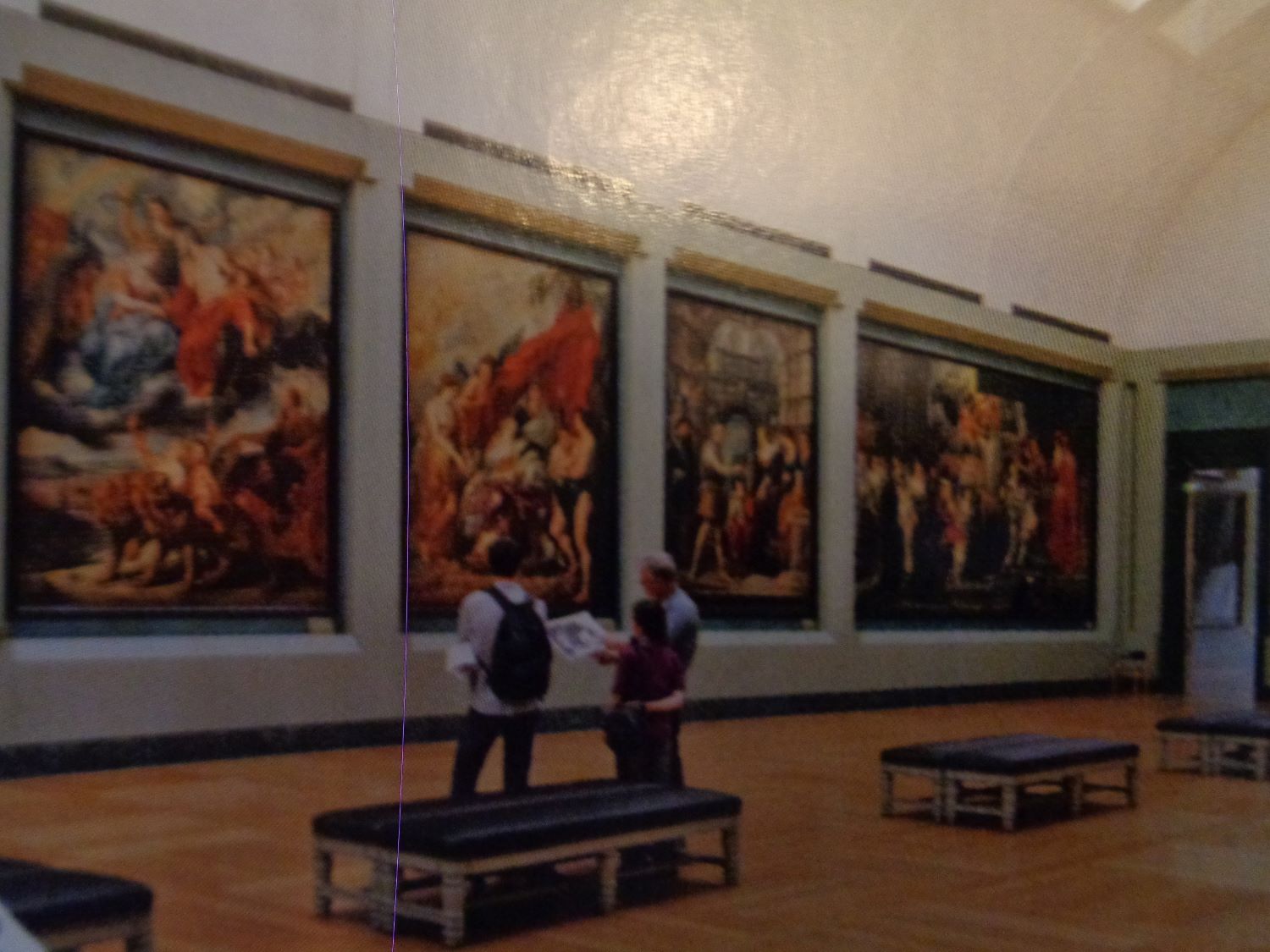
The Galerie Médicis, Aile Richelieu wing , level 2 is exposed one of the largest painted sets from a Parisian palace. This large room was specially designed to accommodate the huge tables of Rubens which form the cycle of Marie de Médicis. It restores the splendors of the ceremonial gallery that the Queen, on the return from her exile, had staged in her palace in Luxembourg. Originally from Florence, in Italy, she had the Luxembourg Palace built in Paris (where today the Senate sits) according to the model of the Pitti Palace The work of one of the greatest painters of his time, Pierre-Paul Rubens. The hanging of canvases follows the chronological order of the Queen’s life, presented in a mode that is both allegorical and historical. Marie de Médicis is the widow of King Henri IV and the mother of King Louis XIII with whom she maintains delicate relations. When she commanded these paintings in 1622, she returned from a exile of several years, to which her son had forced her. In 1622, Rubens was one of the most popular painters in Europe. He was formed in Flanders, Italy and Spain between 1600 and 1608 before coming to settle in Antwerp. Rubens undertakes to make all the tables of the Marie de Médicis cycle in just 4 years, and with his own hand. In 1625, in time for the celebrations of the marriage of Marie’s daughter, Henriette, with King Charles I of England, the paintings are finished! Traveled by a baroque breath, the cycle mixes with great freedom the historical scenes and the allegorical figures, the realism of the portraits and the inventiveness of the mythological characters. He summons Greco-Roman deities and Christian references to glorify the Queen. In the investigation of the Queen, for example, Minerva, the goddess of the arts and sciences, and Mercury, messenger of the gods, participate in her education of future sovereign. The style is baroque, with various and abundant compositions, Taken to the Louvre in 1790 to be restored, the canvases have been exhibited there since 1817, first in the Grande Galerie. In 1899, they were transported in the large room on the first floor of the pavillon des Sessions. Now in the Richelieu wing, the current presentation has the double advantage of highlighting the works and presenting them according to the arrangement designed by Rubens. One of the most imposing sets preserved in the Louvre has thus regained its consistency.
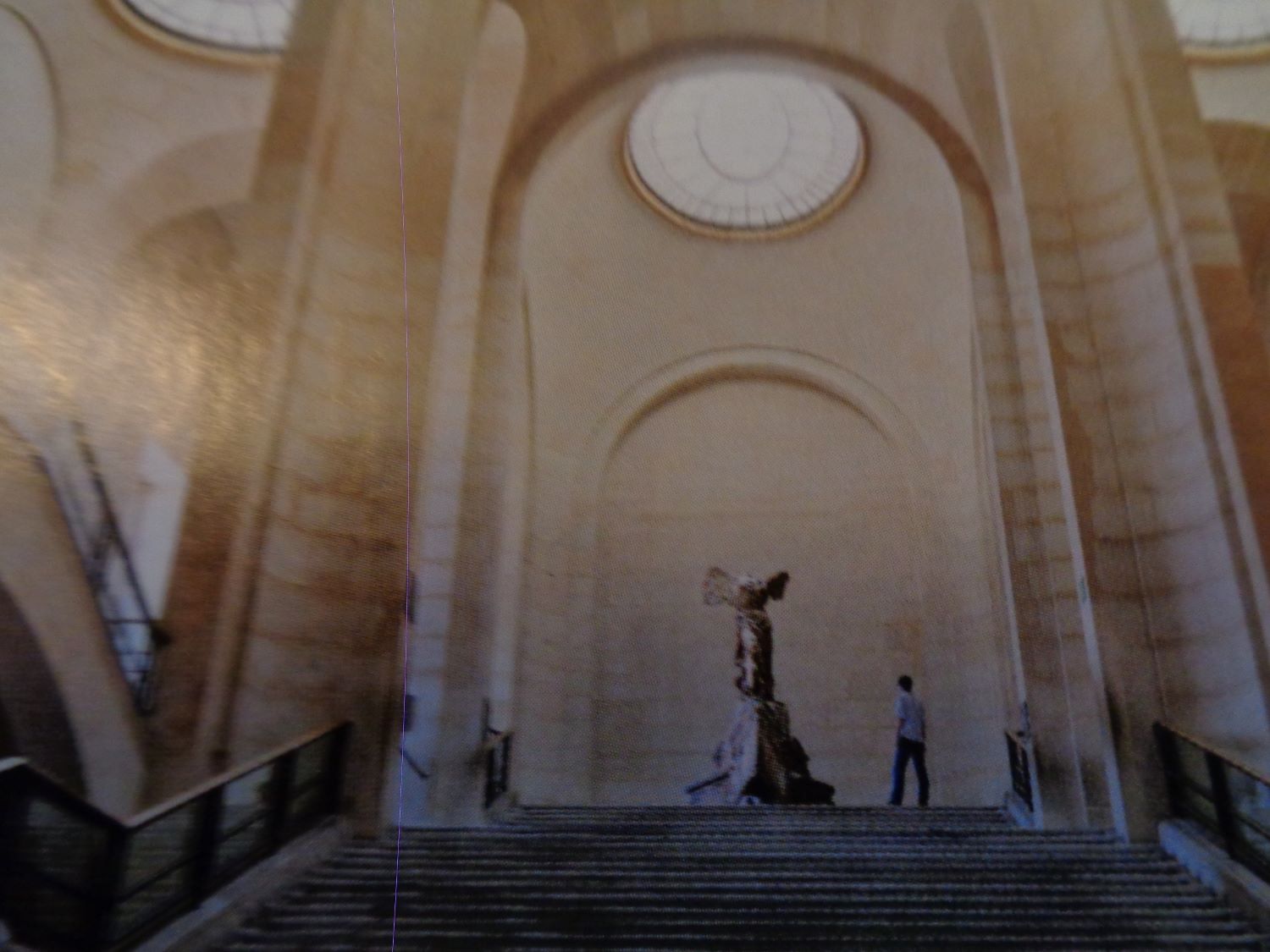
Department of Greek, Etruscan and Roman Antiquities at the top of the gigantic staircase Daru, sits a very strange creature … She has neither head nor arm but two large wings deployed in the air … She is called “The victory of Samothrace ”and it is one of the greatest works in the Louvre museum. It is a representation of the Greek goddess “Nikè” The famous victory bears the name of the Greek island of Samothrace, in the Aegean Sea, where it was discovered in 1863 by Charles Champoiseau ,the statue is sublime, but It is broken and incomplete. The Daru staircase of Samothrace’s victory was designed as an offering to the gods for the sanctuary, on the Greek island of Samothrace. Placed in height, we had to be able to see it from afar. This is what this staging at the top of the Daru staircase wants to evoke. Niké, the winged goddess of victory, is seized at the moment when she lands on the ship. It was in 1883 that Samothrace’s victory was installed on the upper landing. The marble statue of Paros represents the goddess of victory who comes to land on a winning ship. It may date from 190 before our era and was ordered during a naval victory. The winners, perhaps the inhabitants of the island of Rhodes, erected it in Samothrace to thank the great gods of the island, the Cabires, venerated in all the Greek world.
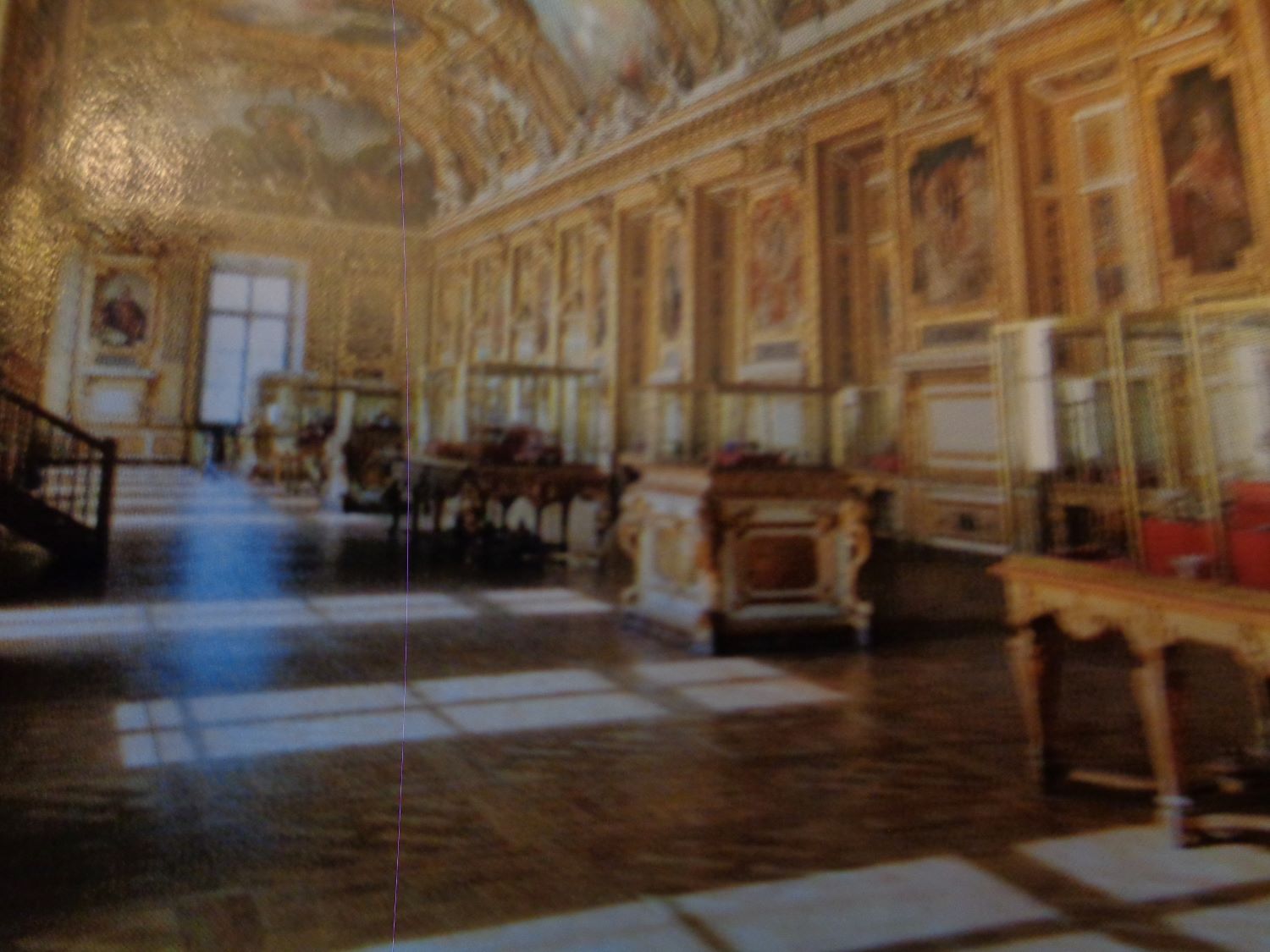
It is in the galerie d’Apollon that Louis XIV associates for the first time his royal power with the Divinity of the Sun. To make this masterpiece of architectural decor, combining painting, sculpture and gilding, he surrounded himself with the greatest artists who worked, a few years later, at the Palace of Versailles, in the Galerie des Glaces. Today, the Apollo gallery is home to the Royal Gems collection and the diamonds of the Crown. At the Louvre, Charles Le Brun adorns the vault of the gallery of paintings which represent the race of Apollo in his chariot through the sky. The course of the God of the Sun thus marks the different moments of the day, from the dawn to the night. Around this central axis, representations and symbols of everything that is influenced by the variations in light and the beneficial heat of the solar star (hours, days, months, seasons, but also signs zodiac or continents) form a cosmic whole. This abundant decor of paintings and sculptures materializes the power of the sun that governs the whole universe. Through Apollo, the gallery exalts the glory of the Sun King. It was not until two centuries later, in 1850, that the decor was finished,Eugène Delacroix is responsible for making a 12 -meter -wide work to decorate the center of the ceiling, Apollo winner of the Python serpent, a true pictorial manifesto of romanticism. The decor is also completed on the walls where tapestries show the portraits of 28 sovereigns and artists who, over the centuries, have built and embellished the palace.The gallery presents the sumptuous collection of gems united by the kings of France. These works carved out in precious minerals (Agate, Amethyst, Lapis-Lazuli, Jade, Sardoine or Cristal de Roche) and highlighted by most often spectacular mounts are very luxury objects, appreciated since Antiquity. Louis XIV had a real passion for gems: his collection had around 800 pieces.
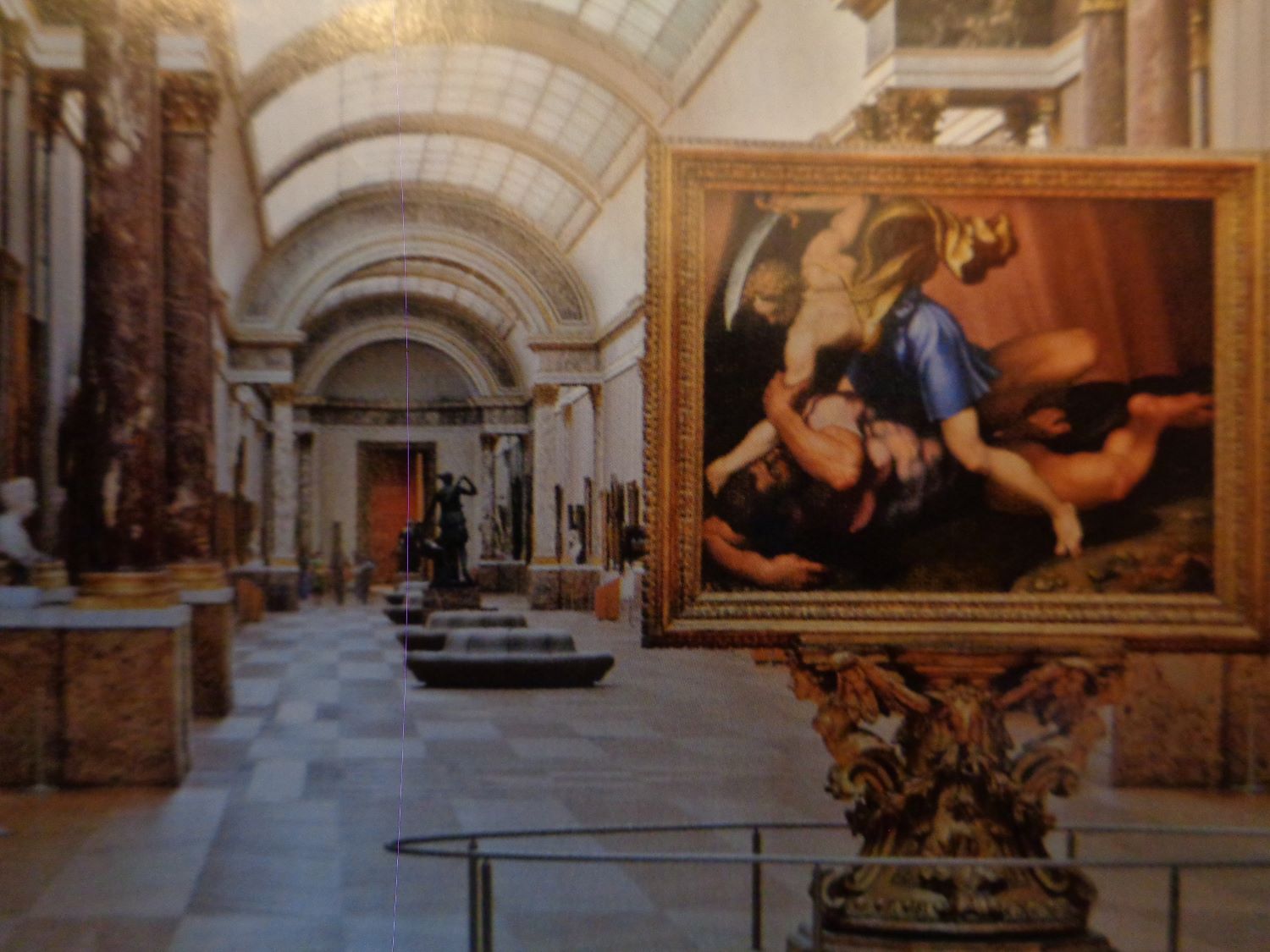
At the end of the 16C, the Grande Galerie was built to connect two palaces of the Kings of France: Louvre and the Tuileries. After the French revolution of 1789, it was one of the first parts of the palace open to the public when the Louvre became a museum. The major element of this project, which is called the great design, is a huge gallery that runs along the Seine: the Galerie du Bord-de-l’Eau. This gigantic building which leads from one castle to the other then measures 460 meters long! At the time, it was the largest in Europe. It is under the reign of Louis XIV that the first floor of the vast gallery becomes an exhibition place for the works of the members of the Royal Academy of Painting and Sculpture The project to devote the gallery to the permanent exhibition of paintings of the royal collections is developed during the reign of Louis XVI , The revolution broke out, and it was on August 10, 1793 that the museum was created and opens to the public under the name of the central arts museum. From its construction, the Grande Galerie is dedicated to the arts; In this new museum, it keeps this function and welcomes collections of paintings. Under the first empire, it is renamed the Napoleon Museum, responsible for decorating and restructuring the large gallery to give it a more majestic setting. Today, on the walls of the Grande Galerie follow one another the masterpieces of the greatest masters of Italian painting: Mantegna, Raphaël, Léonard de Vinci, Arcimboldo, Caravage … and many others.
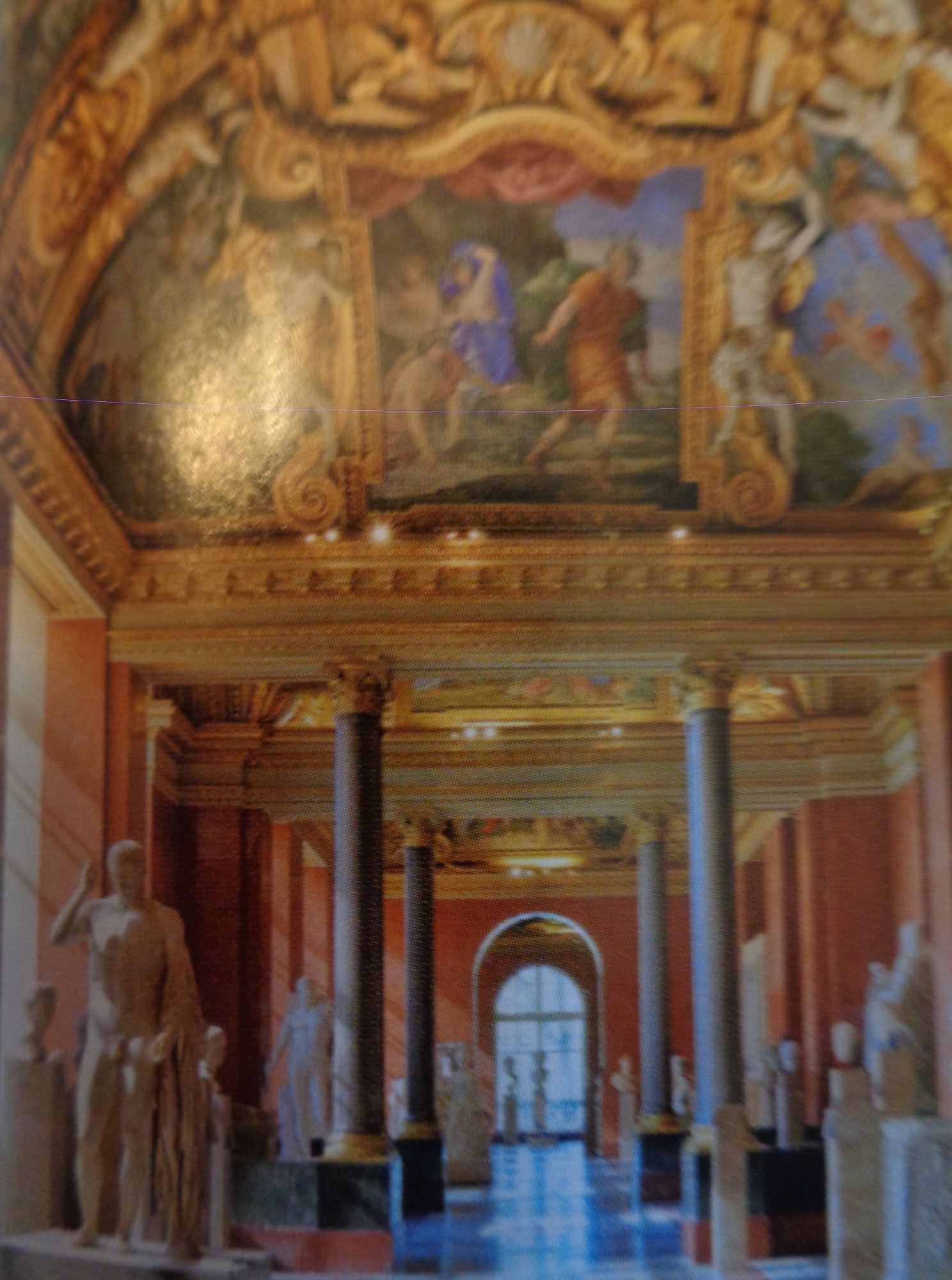
The Salle des Saisons in the Louvre was inaugurated on August 10, 1793, the museum presented in the Palais du Louvre the ancient royal collections and the property seized with the clergy and the emigrants, to which were soon added the butts of the military conquests of the revolutionary then Napoleonic armies. Decided in 1795, the creation of an ancient museum located in the old apartment of Anne of Austria was not effective until November 1800, after an official inauguration in the presence of the first consul and his wife. The Museum of Ancients revolved around two axes perpendicular, the first part, a row of rooms, the salle des Saisons , the salle des Hommes illustres, the salle des Romains, which led to the salle du Laocoon featuring in a niche the famous sculpted group of the Vatican, it is the ceiling of the former anteroom of the Queen Mother Anne’s of Austria, known as the Salle des Saisons. The decoration is composed as follows: in the center of the vault are Apollo and Diane; At the vault, above the cornice, from south to north, are Spring, Diane and Actéon, Summer, Apollo and Marsyas, Fall, Apollo and Muses, Winter, Diane and Endymion. The seasons occupy the apports.
The official Louvre museum on its collections: https://collections.louvre.fr/en/
The Paris tourist office on the Louvre museum : https://parisjetaime.com/eng/culture/musee-du-louvre-p3489
Ahh the Louvre !!! A wonderful monument to mankind, and an even greater museum to the world. A must when in anywhere in my eternal Paris ! You have not visited Paris without the Louvre museum !!! Again, hope you enjoy this post on the Musée du Louvre of Paris , part VI !!! as I,
And remember, happy travels, good health, and many cheers to all !!!

 Paris1972-Versailles2003