
I have found older paper pictures that should be in my blog even if quality is not as good, This is a work of love and nostalgia of times and places that will never be back from a beautiful city of Havana, now mostly in ruins, This is my native capital City, the city where I spent a great part of my very early life until 10 years old, Luckily was able to visit it in 1984, 1998, and 2012 , This is Havana or La Habana or the full name San Cristobal de La Habana, the capital of the Republic of Cuba. This is my Habana and would like to share these new old pictures with the world; do see my other posts on it, Therefore, here is my take on the other churches of Havana !! Hope you enjoy the post as I.
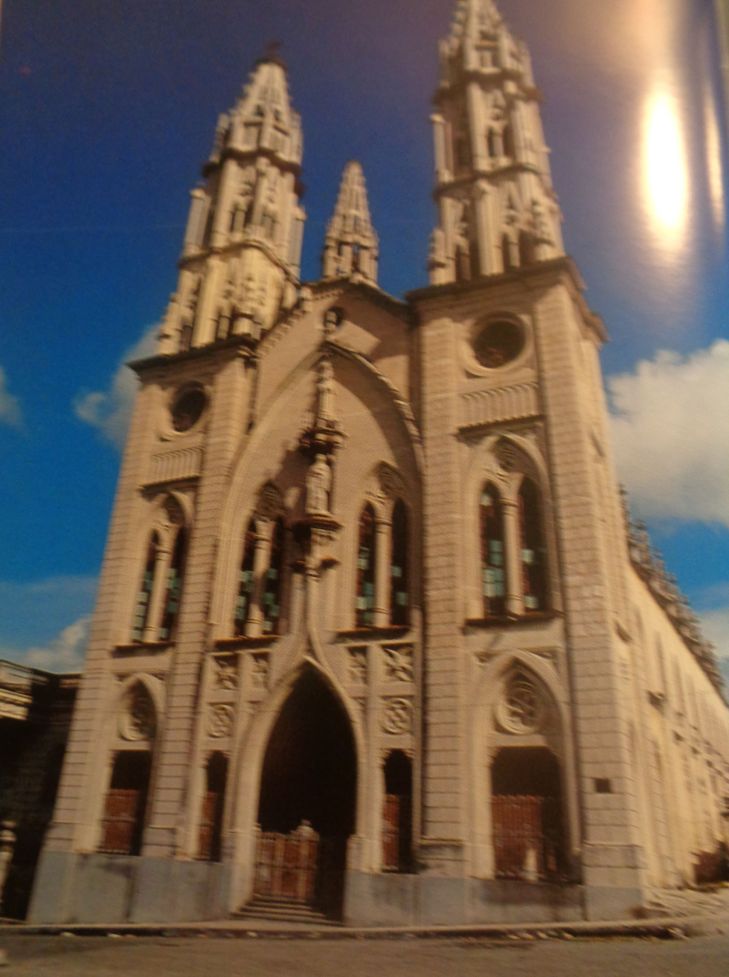
The Church of Los Pasionistas de la Vibora. This church is located in the La Víbora neighborhood in Havana, specifically on the corner of Calle Buenaventura and Calle Vista Alegre just a few meters from the main Calzada de 10 de Octubre, one of the most populous and busiest avenues. The church was the first of this congregation in Cuba. This church was built between 1936 and 1948, with the beautiful towers finished 5 years after its inauguration, in 1953. The façade of the church is very beautiful and is composed of the main entrance arch that ends in point, with beautiful tympanums, accentuating its Gothic accent, as well as the twin windows, where there are flower-shaped inlays at the top of the arches. In the center of the façade, at the top of the entrance arch, you can see the image of Saint Gemma Galgani, a young Italian Passionist, venerated and sanctified by the Catholic Church On the exterior grille there is a heart and a cross which is the symbol of the congregation. The two beautiful and striking towers on either side of the facade are 50 meters high and are visible from afar , Sadly passing by had no time to go inside ! San Pablo de la Cruz C.P, was an Italian eremitic and mystical priest founding the congregation of passion in 1720 better known as passionists. His secular name was Pablo Francisco Danei Massari. They are a group of Christians, priests and laity, who live in fraternal community and intend to announce to the men of our time the Gospel of Christ.
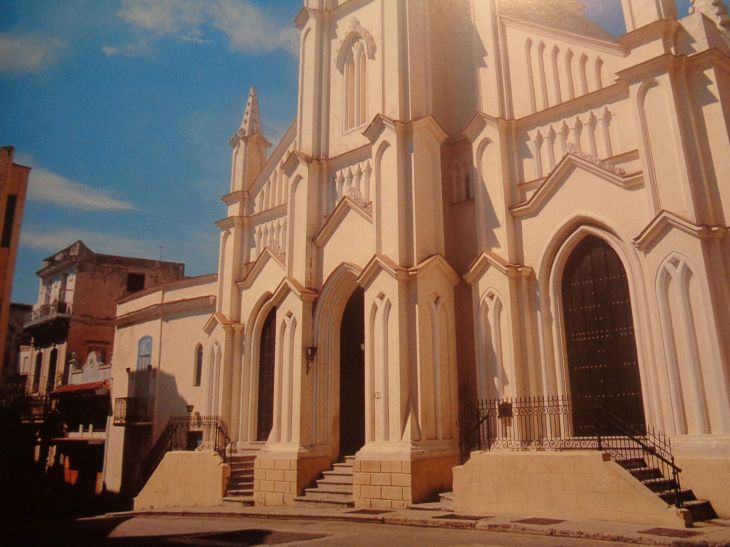
The Church del Santo Angel Custodio is located at no, 2 Calle Compostela in old Havana, it was built in 1695, but until 1788 it was not considered a church. On a hill called once Peña Pobre (poor rock), then Loma del Angel (Angel hill), the Church of the Saint-Angel Guardian is of neogothic construction, dating from 1866 and constitutes one of the best examples of 19C religious architecture. Its caramel color bell tower is bristling with thin arrows ready to take off towards heavens. At the back of the church, twenty-three steps lead to the foot of the hill. The original church was struck by a hurricane in 1846, which was why it was completely reformed in neo-Gothic style very different from the original. This temple currently has two towers and an atrium where centuries previously was the church cemetery.The entrance doors have an ogival shape, and inside there are three naves covered with cannon vaults, it also has an ambulatory.Here were baptized Félix Varela and José Martí. It is curious to know that this temple was mentioned in Cecilia Valdés, a great Cuban century novel from the 19C, work of Cirilo Villaverde.
There you go folks, another dandy of my old Havana, memories forever, even if today they are becoming blurred and far away in my mind. Havana still an attracting place even if the crowds are different and the conditions worse; life goes on in this sad forgotten island of Cuba under a long dictatorship . Again, hope you enjoy the post on the other churches of Havana !! as I.
And remember, happy travels, good health, and many cheers to all !!!

 Paris1972-Versailles2003
Se ve que fue realmente una de las cinco más bellas ciudades del mundo… Que lástima porque ahora es una de las más feas, por culpa únicamente de los comunistas, destructores del mundo! Un saludo y feliz domingo.
LikeLiked by 1 person
Gracias por tu comentario. Igualmente a ti.
LikeLiked by 1 person
De nada, un placer.
LikeLiked by 1 person