
I am looking at my blog and notice this older post that needed update, So therefore, here is my new take on the Pont de la Concorde of Paris, This is a wonderful spot in my eternal Paris and close to my former job there, It is really worth the detour because as said, Hemingway when he wrote the “A Moveable Feast ” printed posthume, Let me tell you a bit more on the Pont de la Concorde of Paris ! Hope you enjoy the post as I.
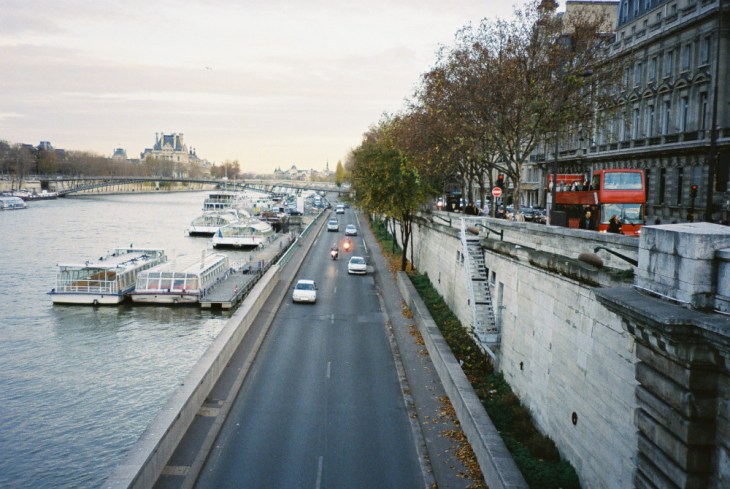
The Pont de la Concorde leads from the Place de la Concorde to the Palais Bourbon, home of the French Parliament’s lower house or Assamblée Nationale. Already planned in 1725, the bridge was built after much delay, between 1787 and 1791. The width of the bridge was doubled in 1932 to 34m (112ft) to accommodate the increasing traffic. It is currently 153 meters long and 35 meters wide, It was last renovated in 1983. It is serve by the metro line 12 of station Assamblée Nationale and lines 1 8 and 12 at Concorde.
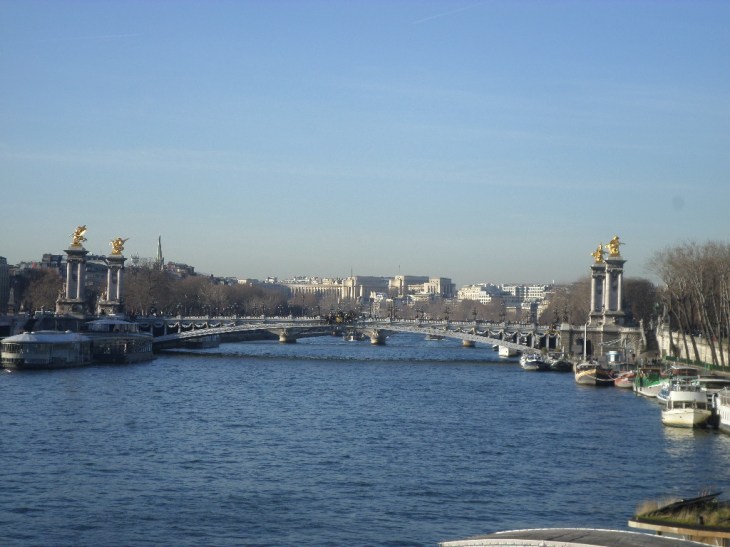
The Pont de la Concorde crosses the Seine between the Quai des Tuileries at Place de la Concorde and the Quai d’Orsay. During its history, it bore the names of “Pont Louis-XVI”, “Pont de la Révolution”, “Pont de la Concorde”, again “Pont Louis-XVI” during the Restoration of 1814, and definitively ” pont de la Concorde ”since 1830. It took its new name, Concorde, in 1795 when the new government, the Directory, sought to appease the clashes of the Terror and the executions which were so numerous in this place. As said, it change names according to who was in power until keeping definitively the name in 1830.
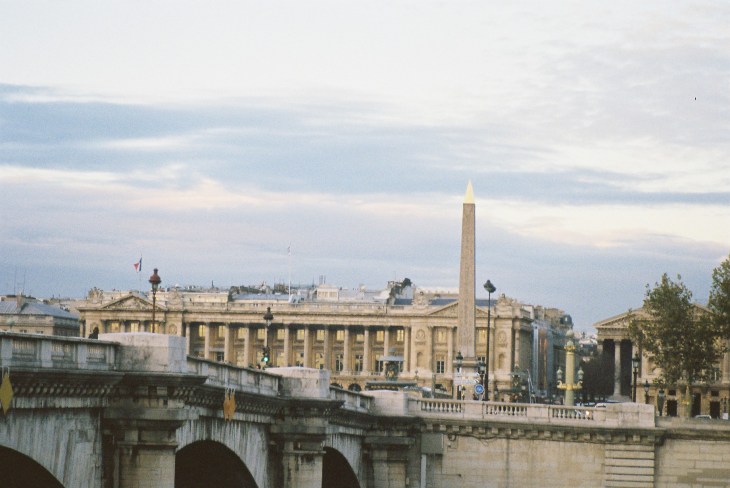
Built at the end of the 18C with a pavement of 8.75 meters in width and two sidewalks of 3 meters, it quickly proved insufficient to ensure adequate circulation in this part of the city, between the two banks of the Seine. The final width of the structure will be 35 meters with a pavement of 21 meters and two sidewalks of 7 meters. The Pont de la Concorde, and its surroundings, was the site of confrontations during the crisis of February 6, 1934. The date of February 6, 1934 refers to an anti-parliamentary demonstration organized in Paris in front of the Chamber of Deputies by right-wing groups , veterans associations and far-right leagues to protest the dismissal of police prefect Jean Chiappe following the Stavisky affair (this scandal symbolized the crisis of an unstable regime suspected of corruption).
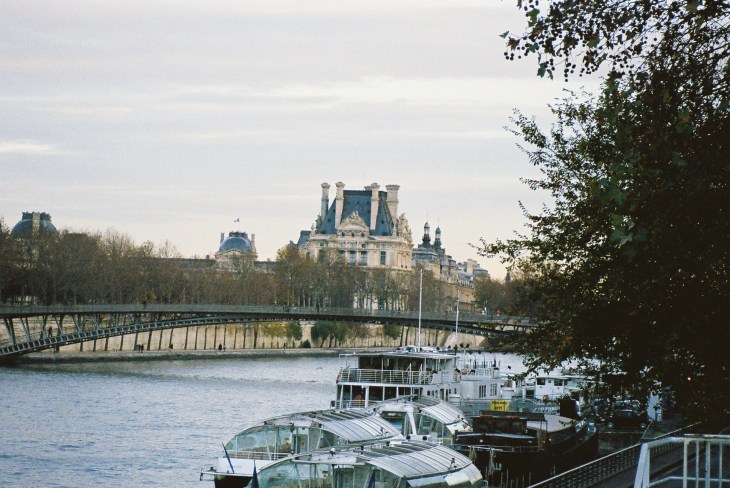
A bit of history I like tells us that in 1722, King Louis XV authorized the provost of the merchants of Paris and the aldermen of the city to build a bridge at this location, in order to serve the district of Saint-Germain-des-Prés. The works must begin in 1725 but, for lack of money, are postponed and do not start until the end of the century. When the events of July 14, 1789 , the construction was completed in 1791. Thereafter changing names as above. The anecdote is that this bridge was done with the stones from the Bastille !!By taking the Concorde Bridge you are not walking over 3 centuries of history, but over 7 !!!
In 1810, Napoleon Bonaparte had statues placed there in honor of eight generals who died on the field of honor during the campaigns of the First Empire. At the Restoration, they were replaced by a set of twelve monumental statues in white marble. These statues commissioned by king Louis XVIII in 1816 and posed before 1829 represent four great ministers such as Colbert, Richelieu, Suger, and Sully, and four soldiers such as Bayard, Grand Condé, Du Guesclin, and Turenne as well as four sailors such as Duguay-Trouin, Duquesne, Suffren , and Tourville. But this set is too heavy for the bridge, and Louis-Philippe Ier removed these statues to transfer them to Versailles. At present, the statues are located Saint-Cyr Coëtquidan: statue of Du Guesclin, Bayard, Condé (destroyed in 1944) , Turenne; Naval school of Brest: statue of Colbert, Duquesne (destroyed in 1944), Suffren, Duguay-Trouin (went through Saint-Malo then Poulmic); Rosny-sur-Seine: statue of Sully; Saint-Omer: statue of Suger; Richelieu: statue of Richelieu; and Tourville-sur-Sienne: statue of Tourville.
I had done a post on several bridges of Paris ,so do read my other posts on these wonderful structures of my eternal Paris , There is info on the city of Paris page, unfortunately the Paris tourist office does not have the Pont de la Concorde, maybe afraid to show the world the guillotine was here in force !!!
The city of Paris on its bridges see Concorde : https://www.paris.fr/pages/paris-et-ses-ponts-toute-une-histoire-7466
The Paris tourist office on the bridges not Concorde : https://parisjetaime.com/eng/article/paris-the-Seine-with-its-bridges-and-footbridges-a025
There you go folks, another dandy in my beautiful Paris, once bitten, the virus of love stays with you. Again, hope you enjoy the post on the Pont de la Concorde of Paris as I
And remember, happy travels, good health, and many cheers to all !!!

 Paris1972-Versailles2003