
Again, for the story, It took me a while , worse when you have family about an hour from the city. But often said, living and visiting are two different things . When in the area stay with family and this time again,however, did it in reverse order, when to see Lille and its sights, (stay tune for posts), and then went to see family. Therefore, let me tell you about the Church Saint Maurice of Lille, part I !!! Hope you enjoy the post as I.
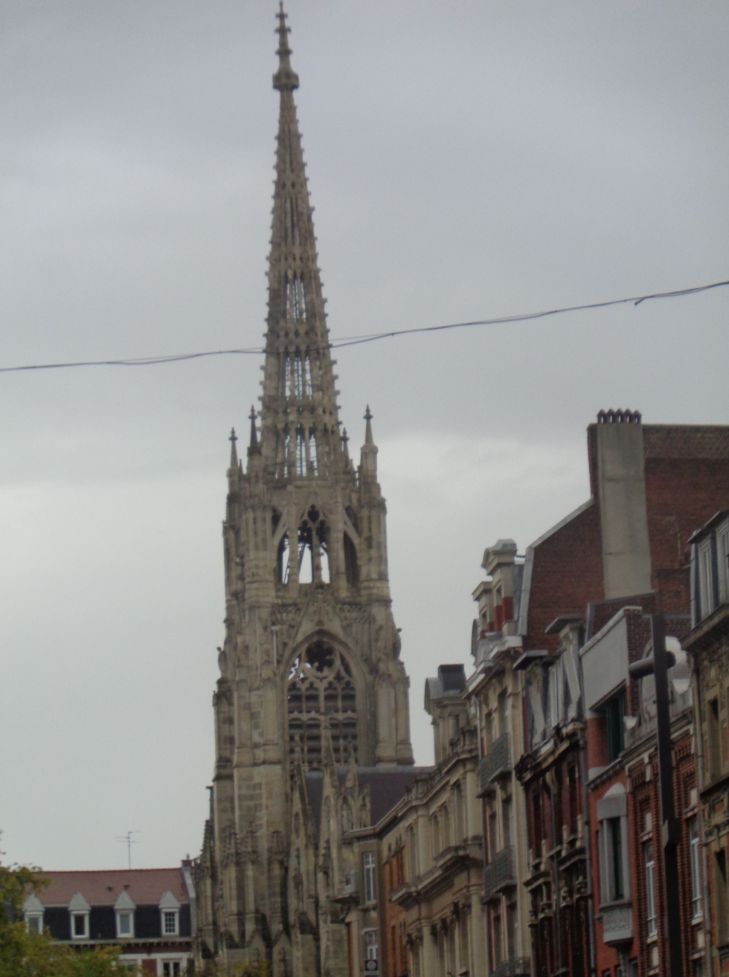
The oldest is the Church of Saint-Maurice, parvis Saint Maurice off Rue Pierre Mauroy is a typical of Flemish religious architecture, in Gothic and Neo-Gothic style with five naves. Located in the Centre district, the first elements of its construction date back to the beginning of the 14C, but it was profoundly altered in the 17C and then in the 19C. It contains numerous paintings from the 17-18C,
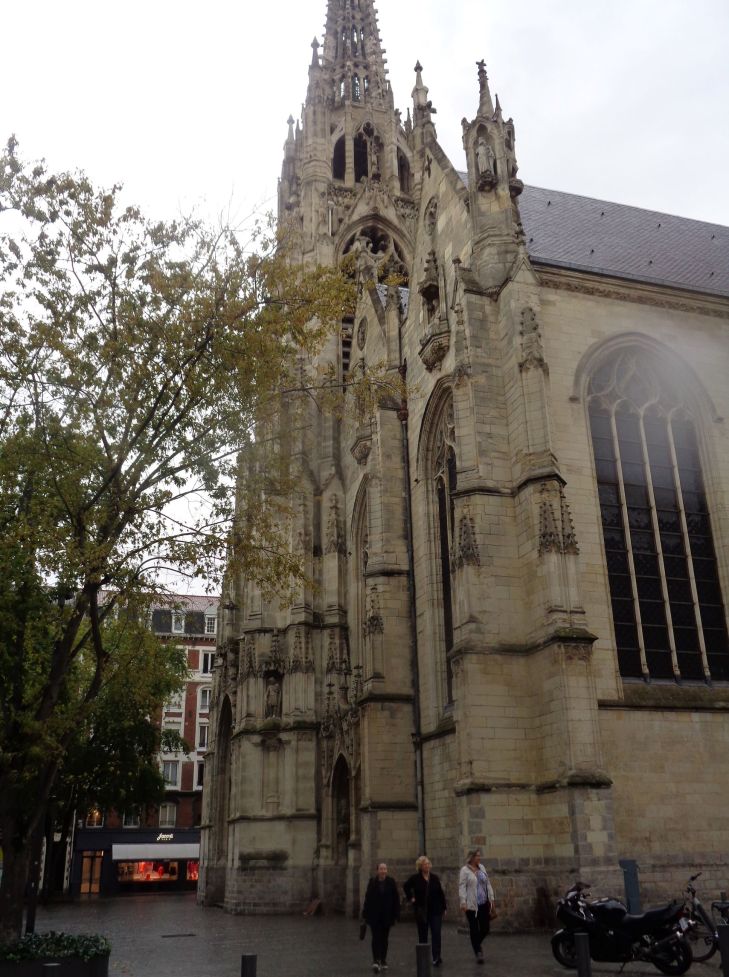
The dating of the Church Saint-Maurice is problematic. Historians consider its presence as evidence of an ancient settlement or associate it with the mallus publicus held in 875 in Fins. In contrast, the charter of 1066 suggests a more recent installation, made by Bishop Baudoin (bishop of Noyon and Tournai from 1044 to 1068). A traditional explanation considers that the church would be located on the ruins of a place of worship dedicated to Mars, as proof of the lack of orientation of the church and the dedication to Saint Maurice, unique in the diocese of Tournai, as well as the name Fins from the Latin fines =border

A bit on the history and description of this marvelous Church Saint Maurice of Lille, The last two bays of the nave and the three central bays of the transept date back to the end of the 14C. The choir, with aisles, eastern side chapels (today dedicated to the Virgin and to Saint Joseph), ambulatory and radiating chapels, was built from around 1421 to 1431. The nave was enlarged towards the west and a tower was built at the during the 15C. Around 1500, the transept was lengthened to reach its current dimensions. In the 16-17C, side chapels were added to the nave and choir from 1539 to 1544 on the north side, and from 1621 to 1660 at the latest on the south side. The vaults, planned from the beginning, were only erected between 1615 and 1623. At the same period, the nave was raised to the height of the choir and a small wooden lantern tower, a source of light, was erected at the crossing of the transept. This lantern tower was removed in 1805 and replaced by the umbrella type.


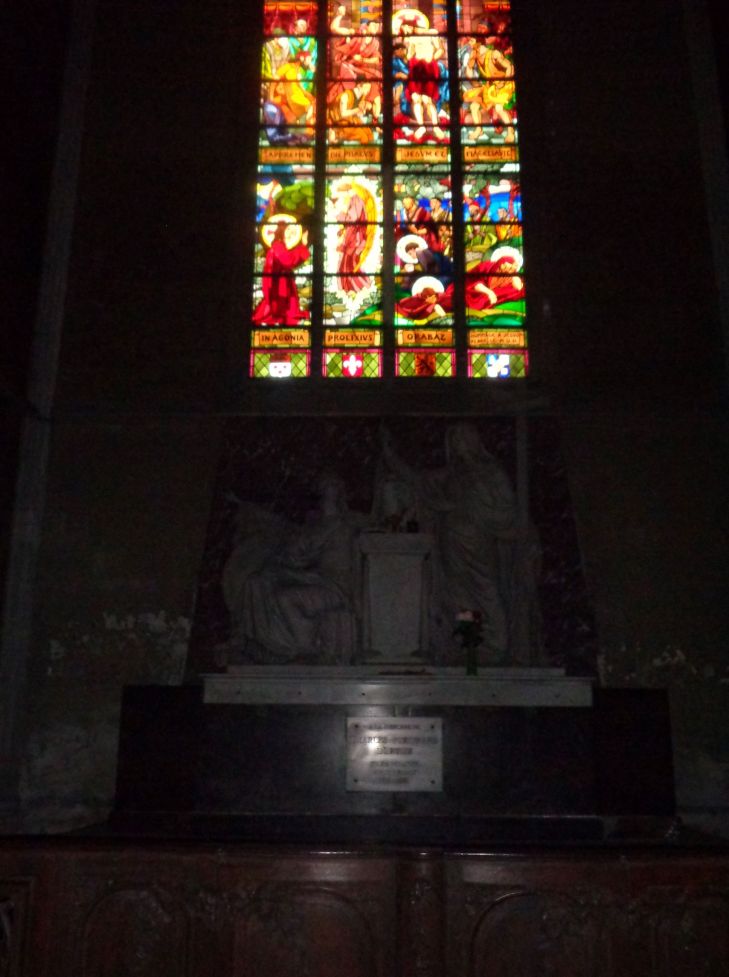
It also houses numerous paintings from the city’s former convents. The Church Saint Maurice, also houses a monument to the Duke of Berry which contains the viscera of Charles Ferdinand d’Artois, assassinated in 1820. The white marble statues represent the city of Lille on the left and Religion on the right. During the restoration, the church was equipped with neo-Gothic furniture. It was also equipped with stained glass windows executed between 1859 and 1861. The church has two organs: A large organ, in the gallery, built in 1877 and a choir organ, built in 1882.
The Lille tourist office on the Church Saint Maurice : https://en.lilletourism.com/historic-sites-and-monuments-lille/saint-maurice.html
The Parish of St Eubert on the Church Saint Maurice : https://paroissesteubert-lille.fr/culture/leglise-sainte-marie-madeleine/
The City of Lille on the Church Saint Maurice : https://www.lille.fr/Nos-equipements/Eglise-Saint-Maurice
There you go folks, a dandy city of the Nord that is North of France. I was finally back to Lille and it was great with many family memories flashing but glad I did it now. Again, hope you enjoy the post on the Church Saint Maurice of Lille, part I as I
And remember, happy travels, good health, and many cheers to all !!!

 Paris1972-Versailles2003
💜
LikeLiked by 1 person
Merci
LikeLike