
I am back to this small beautiful country, first encounter in 1990 and love it ever since. Many memorable trips, sometimes even just for lunch from my beloved Versailles with the family. And lucky to have been able to do this run from my now beautiful Morbihan breton dept 56, We all love the city of Luxembourg, just as quant magical nice, friendly memories never to forget. Again, found some pictures in my vault not in my blog and they should, Therefore, here is my take on the Cathedral Notre Dame of Luxembourg Ville !!! Hope you enjoy the post as I,
The 17C Notre Dame Cathedral is a late Gothic Church. On its main portal in the primitive Baroque style is the statue of the Blessed Virgin, surrounded by the Apostles Peter and Paul, as well as Ignatius of Loyola and Francis Xavier, founders of the Society of Jesus. Later a statue of St. Nicholas completed the ensemble. The portal of the new part of the Cathedral, marked by the ornamentation comprises a hundred human figures, about fifty animal representations and a rich vegetal decoration. The bronze shutters of the doors also all made by Auguste Trémont. The Notre Dame Cathedral has three towers, the original from the Jesuit church and two that were added in the 1930s when the cathedral was expanded. In total, the cathedral has 11 bells. During construction works in April 1985, the main tower caught fire during refurbishment works and was destroyed almost entirely. The three bells in the tower did not survive the fire. This was a particularly unfortunate time, as Pope John Paul II was about to visit the Grand Duchy. The reconstruction of the tower ended in October 1985, and new bells chimed in July 1986
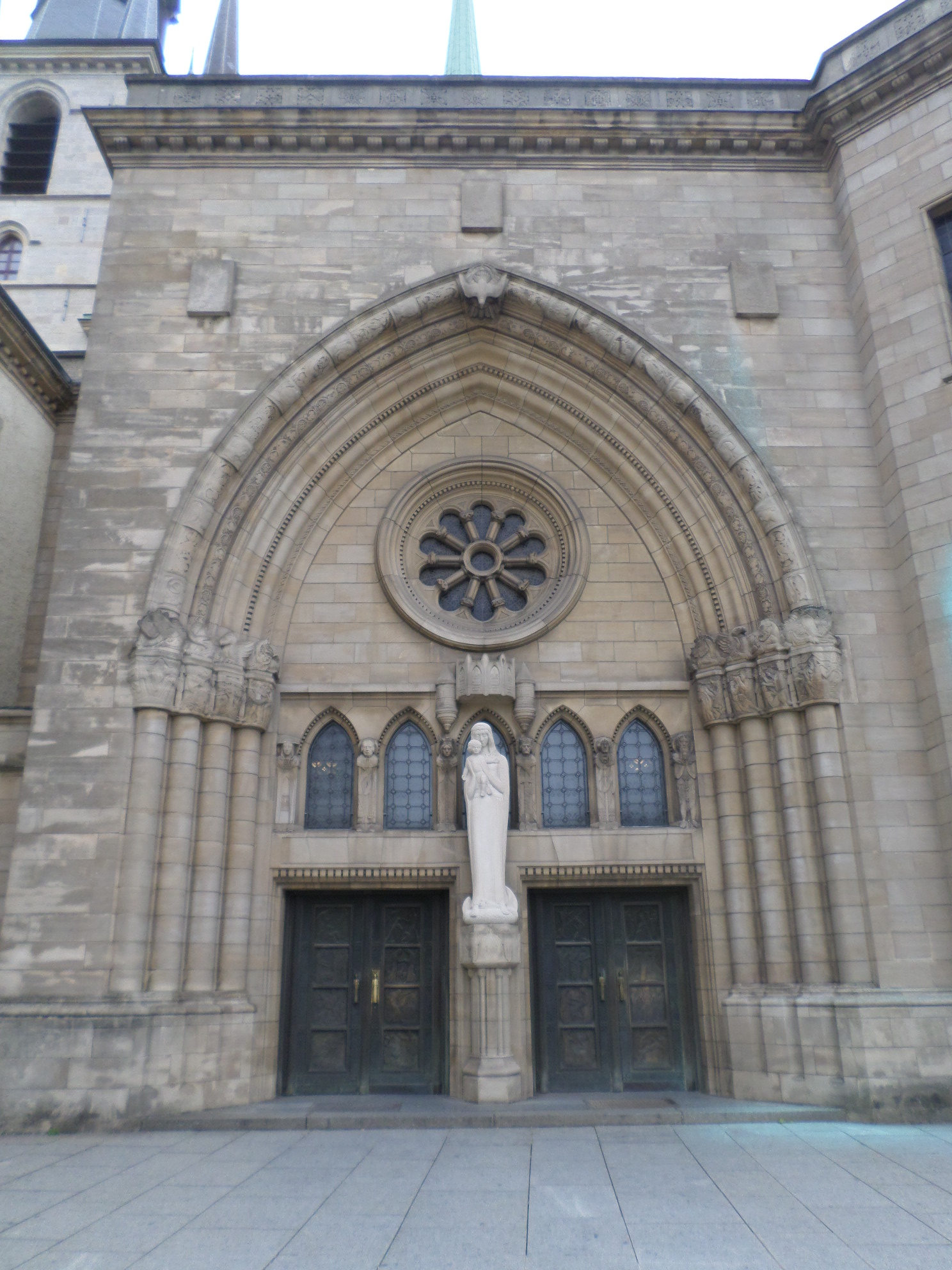
I like to tell you about a special place for them, for us, for all. The history of the Notre Dame Cathedral is linked to that of the Society of Jesus. In 1594, Jesuits settled in Luxembourg, the city which was then part of the Spanish Netherlands. They opened a college there in 1603 ; by 1613, the rector of the College, lays the first stone. The work lasts eight years. By 1621, the Church is solemnly consecrated by the Bishop of Trier, and dedicated to the Immaculate Conception. Built as a Church of the College of Jesuit, it became the Cathedral and seat of the Archbishopric of Luxembourg in 1870. It is also a Marian shrine, housing the statue of Notre Dame (Our Lady) Comforter of the Afflicted , protector of the city of Luxembourg (Patron Saint). In 1773, the Society of Jesus was suppressed by Pope Clement XIV. Their church in Luxembourg became, in 1778, a parish church, under the name of Saint-Nicolas-et-Sainte-Thérèse. In 1794, the church welcomed the miraculous statue of Notre-Dame, comforter of the afflicted, which was formerly in a Chapel outside the city walls. In 1801, the church changed its name again by being dedicated to Saint Peter, before regaining its dedication to the Virgin Mary in 1848.
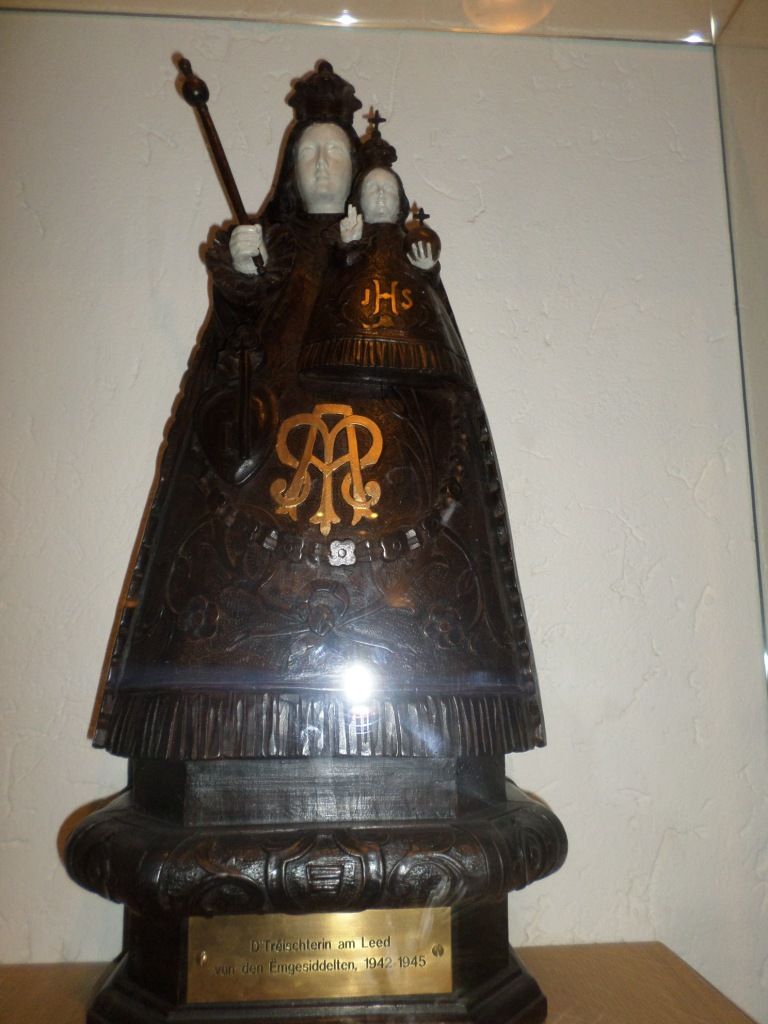
The main figure to come here and see and blessed is Notre-Dame, comforter of the afflicted the statue which is kept at the Cathedral of Luxembourg has been attested since the beginning of the 17C. It is an effigy of a woman bearing her child, carved in Linden Wood, with a height of 73 cm, and established that its date of manufacture dates back to the end of the 16C. In addition, the style and technique of shearing would indicate that the sculptor would come from the greater German region, not from Flanders or Champagne as it has been assumed for a long time. It is a woman standing, the hair untied, the feet laid on the moon, capped with a crown of stars, appearing in the narrative of the Apocalypse according to the traditional Catholic interpretation, this woman is the Virgin Mary, the Sun represents The New Covenant, the moon the Old covenant or heresy. She carries a scepter of the right hand and on the left hand the Child-Jesus seated, wearing a royal crown and carrying a globe surmounted by a Cross. These symbols evoke the kingship of Mary in heaven and of Jesus on Earth, Christ the king. The sculpture depicts her wearing a tunic, a belt and a cloak. Following a medieval and long-preserved use in Spain, the statue was clad in richly embroidered and ornamented garments, in particular a large cloak in the shape of a cape or a screed descending to the ground and concealing its feet placed on the moon. These ornaments were renewed several times, adapting to the style of the time, as attested by the various representations of the statue published over the centuries. The Crown of the Virgin lost its stars, attributes were added later.
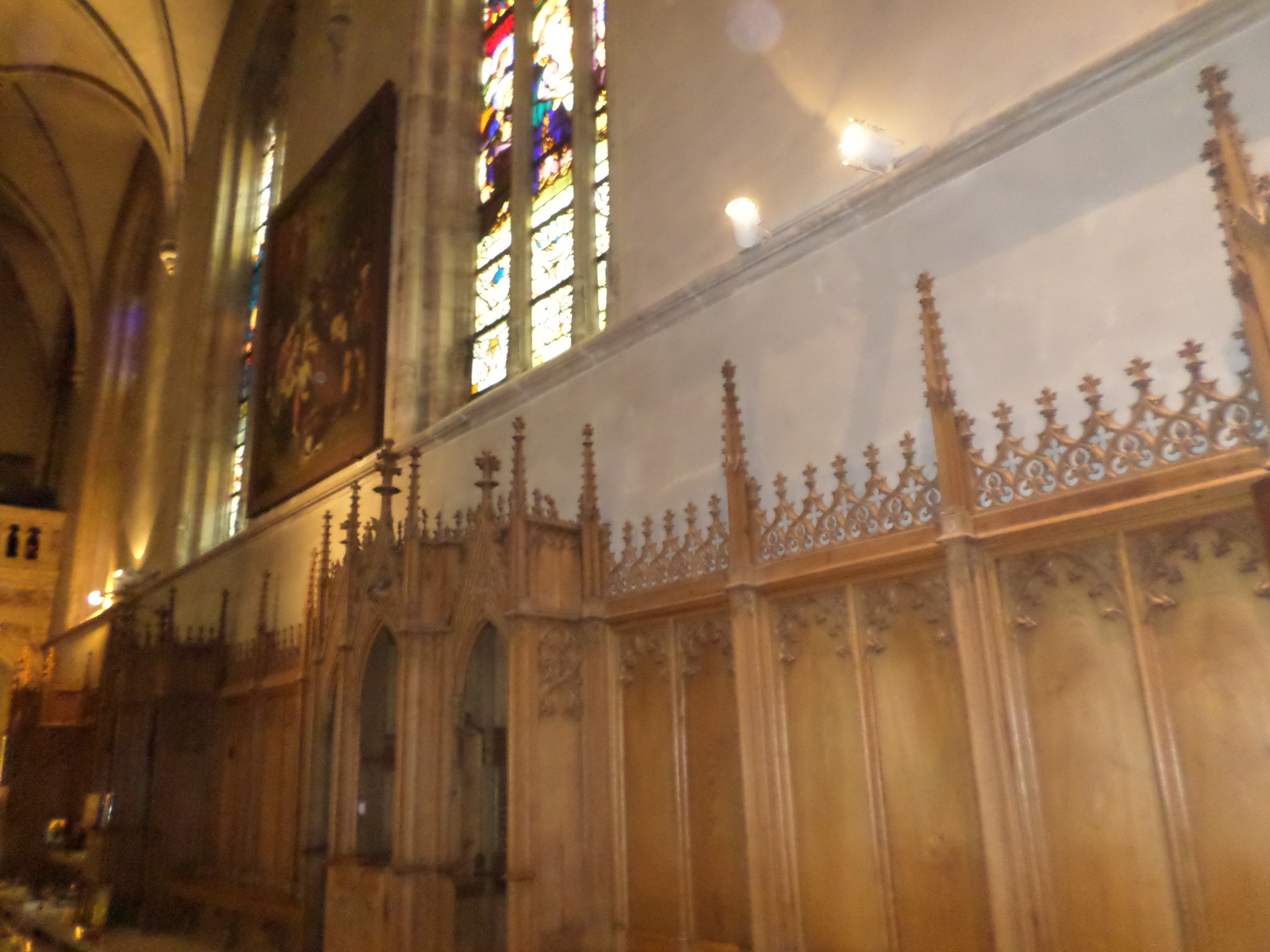
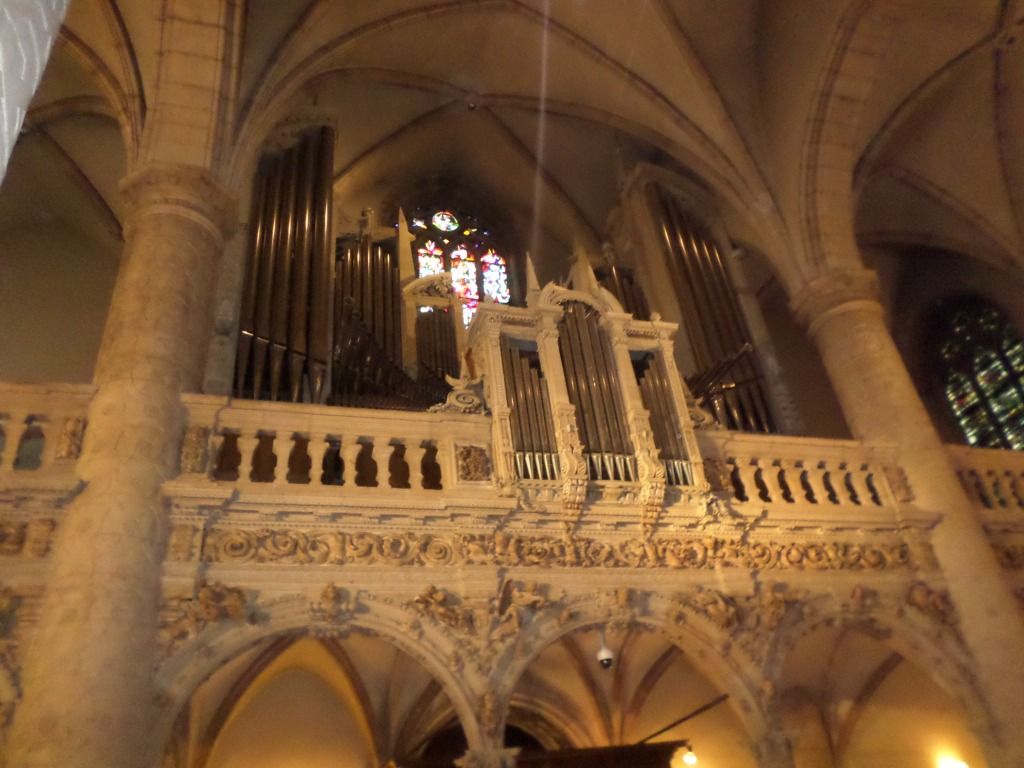
Among the works present in the cathedral, one can see: The large canopies of the Choir. The canopies of the Grand Ducal Tribune, representing the characters of the medieval Comtal house. The stained glass windows representing biblical scenes (episode of Tobie in the eardrum of the door of the inner courtyard, issuance of Saint Peter in the eardrum of the Chapel of the Sacred Heart) or of the Jesuit Saints (Pierre Canisius, Robert Bellarmine, François Xavier, Ignace de Loyola, Jean Berchmans) and other well-known Jesuits in Luxembourg, such as Alexandre Wiltheim or Jacques Brocquart. The stained glass windows of the years 1848-1860 depicting scenes from the life of the Virgin. The abstract canopies of 1966 located at the organ stand , inspired by the canopies of Notre-Dame de Paris. The rood decorated with alabaster statues dating back to the late Renaissance. The cylindrical pillars adorned with a system of interlaced bands. A painting, the Adoration of the Magi, of Jacques Nikolai, of the School of Rubens. The mural paintings , dated 1897. The two organs: the Haupt symphonic organ of 1938, and the classical organ of Westenfelder installed in 1995. In the Crypt: you will see the stations of the way of the Cross ,and the altars, adorned with reliefs representing the Saints Henri and Cunegonde, Hubert and Willibrord.
The main figure to come here and see and blessed is Notre-Dame, comforter of the afflicted the statue which is kept at the Cathedral of Luxembourg has been attested since the beginning of the 17C. It is an effigy of a woman bearing her child, carved in Linden Wood, with a height of 73 cm, and established that its date of manufacture dates back to the end of the 16C. In addition, the style and technique of shearing would indicate that the sculptor would come from the greater German region, not from Flanders or Champagne as it has been assumed for a long time. It is a woman standing, the hair untied, the feet laid on the moon, capped with a crown of stars, appearing in the narrative of the Apocalypse according to the traditional Catholic interpretation, this woman is the Virgin Mary, the Sun represents The New Covenant, the moon the Old covenant or heresy. She carries a scepter of the right hand and on the left hand the Child-Jesus seated, wearing a royal crown and carrying a globe surmounted by a Cross. These symbols evoke the kingship of Mary in heaven and of Jesus on Earth, Christ the king. The sculpture depicts her wearing a tunic, a belt and a cloak. Following a medieval and long-preserved use in Spain, the statue was clad in richly embroidered and ornamented garments, in particular a large cloak in the shape of a cape or a screed descending to the ground and concealing its feet placed on the moon. These ornaments were renewed several times, adapting to the style of the time, as attested by the various representations of the statue published over the centuries. The Crown of the Virgin lost its stars, attributes were added later.
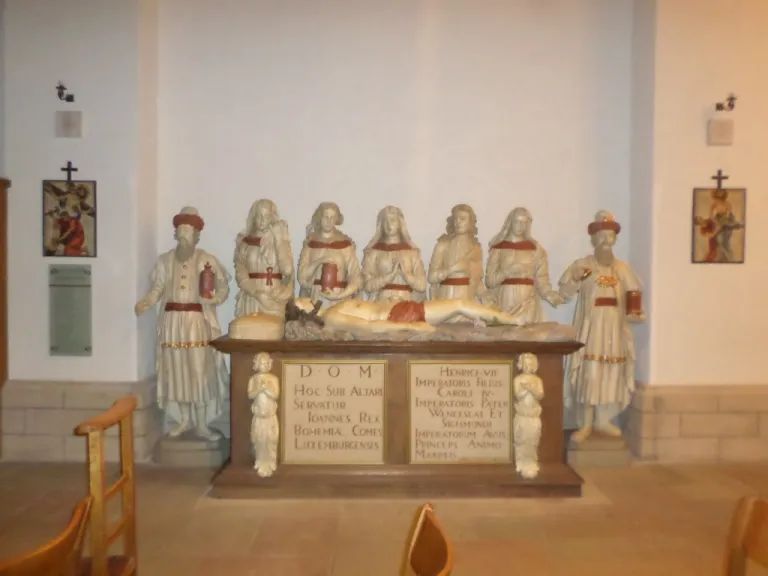
In the crypt of the cathedral are the tombs of the ducal family: such as : John, Count of Luxembourg, King of Bohemia (10 August 1296-26 August 1346)-(son of Henry VII of the Holy Roman Empire). Marie-Anne of Portugal (13 July 1861-1 August 1942)-(wife of Grand Duke Guillaume IV of Luxembourg). Marie-Adelaide I of Luxembourg, Grand Duchess of Luxembourg (14 June 1894-24 January 1924)-(eldest daughter of Grand Duke Guillaume IV of Luxembourg). Charlotte I, Grand Duchess of Luxembourg (23 January 1896-9 July 1985)-(daughter of Guillaume IV of Luxembourg). Félix de Bourbon-Parma (28 October 1893-8 April 1970)-(husband of the Grand Duchess Charlotte of Luxembourg). Charles of Luxembourg (7 August 1927-26 July 1977)-(son of the Grand Duchess Charlotte of Luxembourg).Josephine-Charlotte of Belgium (11 October 1927-10 January 2005)-(married to the Grand Duke Jean).
A yearly key event at the cathedral is the Octave. During a two-week period in April and May, pilgrims visit the cathedral to pay tribute to the statue of the Virgin Mary. The cathedral is beautifully decorated for this occasion, and the Virgin Mary is dressed in festive garments. The ‘Märtchen’ (little market) is part of this tradition, and people can visit it for food and drink over the course of two weeks. During the Octave period, several special services are held in the cathedral, and on the last day, the statue of the Virgin Mary is carried through the streets of Luxembourg in a procession. This event is usually televised.
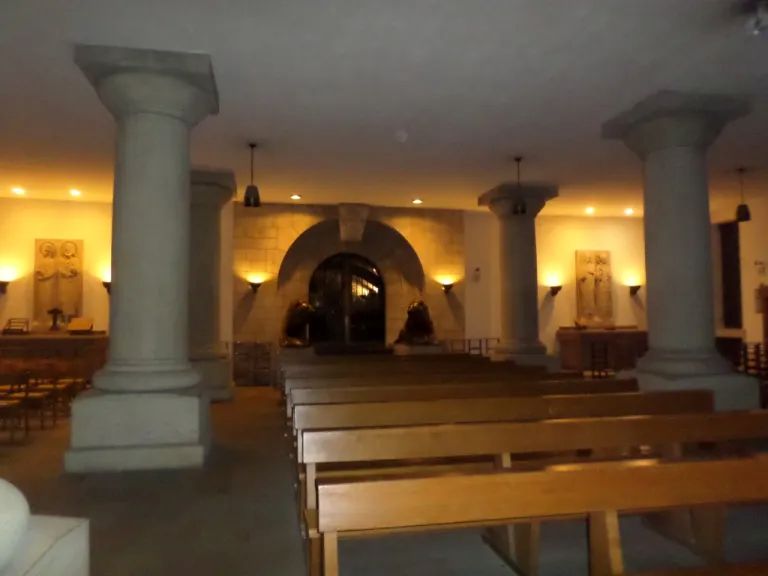
A bit of history I like tell us that the Cathedral is linked to that of the Society of Jesus. In 1594, Jesuits settled in Luxembourg, the city which was then part of the Spanish Netherlands. They opened a college there in 1603 ; by 1613, the rector of the College, lays the first stone. The work lasts eight years. By 1621, the Church is solemnly consecrated by the Bishop of Trier, and dedicated to the Immaculate Conception. In 1773, the Society of Jesus was suppressed by Pope Clement XIV. Their Church in Luxembourg became, in 1778, a parish Church, under the name of Saint-Nicolas-et-Sainte-Thérèse. In 1794, the Church welcomed the miraculous statue of Notre-Dame, comforter of the afflicted, which was formerly in a Chapel outside the city walls. In 1801, the Church changed its name again by being dedicated to Saint Peter, before regaining its dedication to the Virgin Mary in 1848. In 1840, the Grand duchy was erected by Pope Gregory XVI in Apostolic Vicariate. The Diocese of Luxembourg was erected in 1870 and the Church of the former Jesuit college became the Cathedral. A century later, on 23 April 1988, the Diocese of Luxembourg was raised to the rank of archdiocese by Pope John Paul II. An extension of the Cathedral began in 1935 and continue until 1938. The Choir was remodelled in 1962 – 1963, after which the Cathedral was again consecrated on December 8, 1963, the feast day of the Immaculate Conception. A crypt is built under the choir and dedicated to Saint Peter which contains the tombs of the bishops of Luxembourg. Communicating with the latter, there is also the necropolis of the Grand Ducal family, closed by a grid surrounded by two bronze lions , dated 1936-37. The Cathedral of Notre-Dame of Luxembourg, by its history, has become a temple of Luxembourg memory. The national character of the building is emphasized on the day of the national holiday when the official ceremony organized by the Government takes the form of a service of Thanksgiving in which the Luxembourg authorities and the diplomatic corps participate.
The Catholic parish of Luxembourg on its history : https://www.cathol.lu/patrimoine-patrimoine/geschicht-vun-der-diozees-histoire-du-diocese/history-of-the-archbishopric-of-luxembourg.html
The Luxembourg tourist office on the Cathedral: https://www.visitluxembourg.com/place/cathedrale-notre-dame
The City of Luxembourg on the Cathedral: https://www.luxembourg-city.com/en/place/church/cathedral-of-the-blessed-virgin
The city of Luxembourg on its heritage: https://www.vdl.lu/fr/visiter/art-et-culture/architecture-et-patrimoine
There you go folks ,another jewel of in Luxembourg ville, do not forget to visit the Notre Dame Cathedral. A wonderful city , we love it so much. Again hope you enjoy the post on the Cathedral Notre Dame of Luxembourg Ville !!! as I.
And remember , happy travels, good health, and many cheers to all !!!


