
So here I go again digging into my vault of pictures, and finding some gems that should be in my blog. In my road warrior campaigns of my belle France, I have visited several times Le Mans and have plenty of posts on it in my blog. As you know, for reference, Le Mans is in the dept Sarthe no 72 of the region of Pays de la Loire of my belle France. However, left out a couple pictures of neat off the beaten path places that should be in ,so therefore, here are my latest curiosities of Le Mans !!! Hope you enjoy it as I
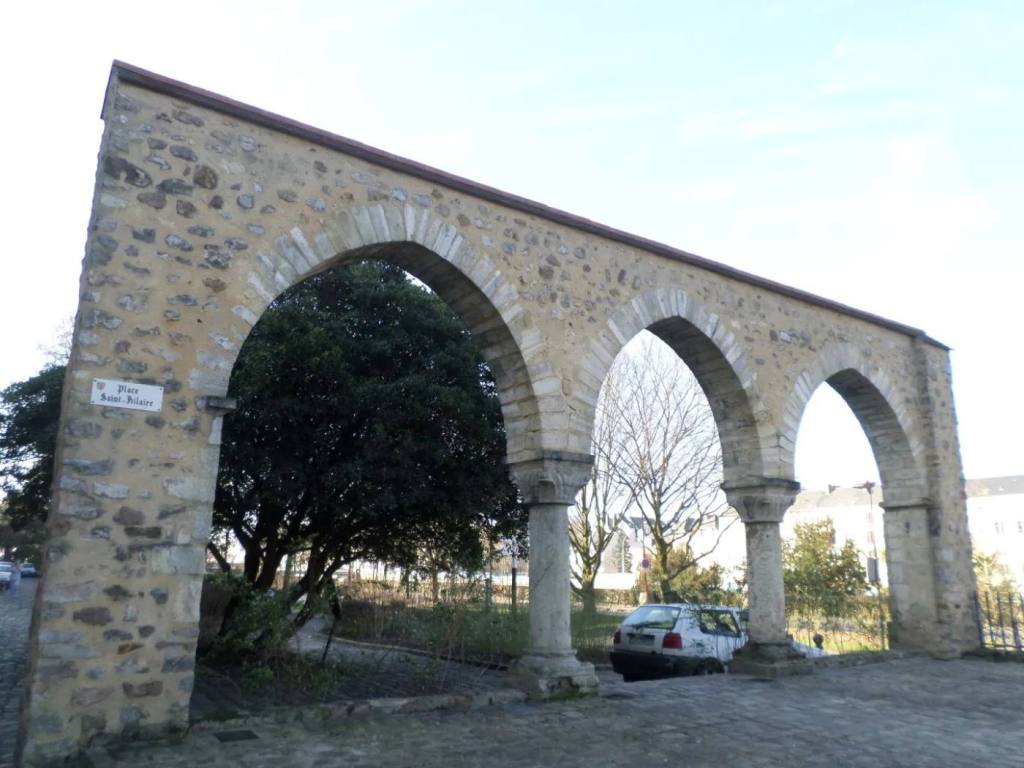
We cross the Sarthe river, and turn right straight for city center, we walk along the river to see the Sol de la Place or arch of place St Hilaire, and continue on to rue Gambetta towards place de la République.
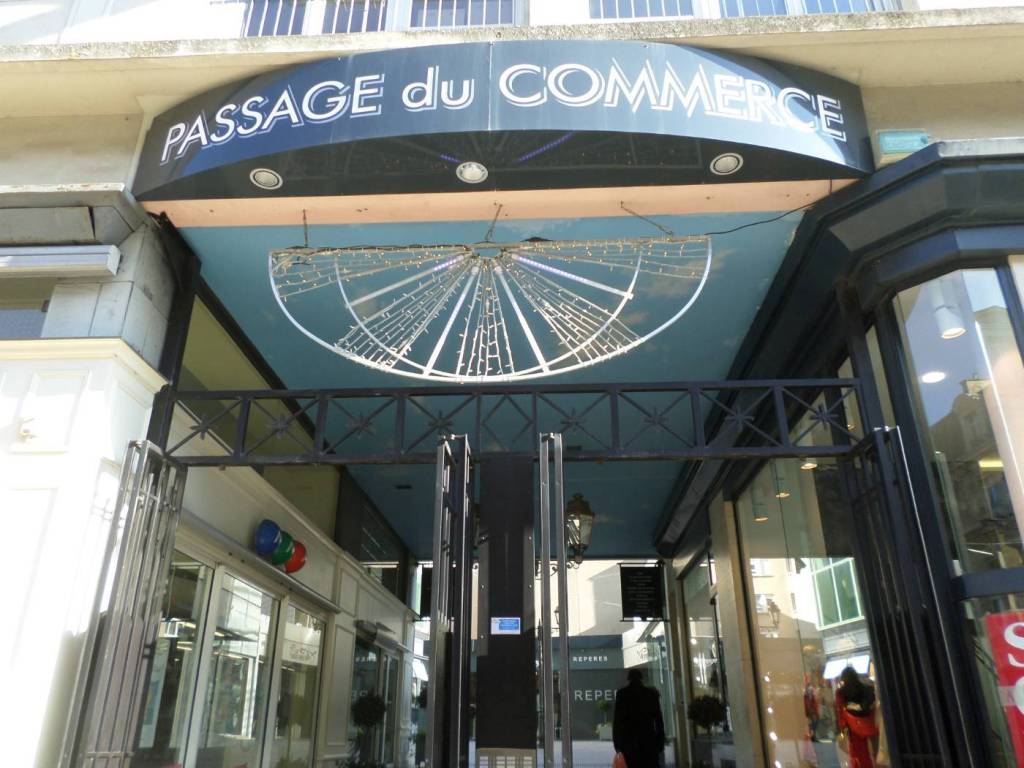
We saw all the wonderful stores there from a Monoprix, to a Galeries Lafayette,and a shopping passage du Commerce and to the side the mall or shopping center of Centre Jacobins with a C&A and FNAC stores amongst many. We continue near the prefecture govt building and walk all the way to the train station that I have used on several ocassions but never time to venture out of it.
We went to the Cinema Pathé , and the théatre des Quinconces, imposing buildings. Not to mention the cité Plantagénet with its old wooden houses and quaint old Streets, and the ramparts well preserve. After getting some goods supplies in breads and chocolates and terrine du mans. And we took the road from there to get back home in 3h15 hours. You can see a lot if well planned, and of course, we will be back, so much to see so little time. Having spent my college and thereafter marriage in Daytona Beach FL USA and the 24 hrs of Daytona ,Le Mans! has more in store and we did came back, see other posts in my blog!
By the Place Saint Nicolas see the statue of one for the l’Emprente des Vainqueurs or the Footprint of the Winners, These statues are a set of bronze plaques located in the center of the city of Le Mans and inserted on the pedestrian roadway to honor the winners of the 24 Hours of Le Mans, modeled on the Hollywood Walk of Fame. Launched in 1991, they include the name of the person(s) honored, the year concerned, the fingerprints, as well as a facsimile of their signature. The shape is inspired by a wheel in opposition to the stars of the famous American walk of fame, In 2011 for the 20th anniversary, 20 plaques were inaugurated in the streets of the Saint Nicolas district of Le Mans,
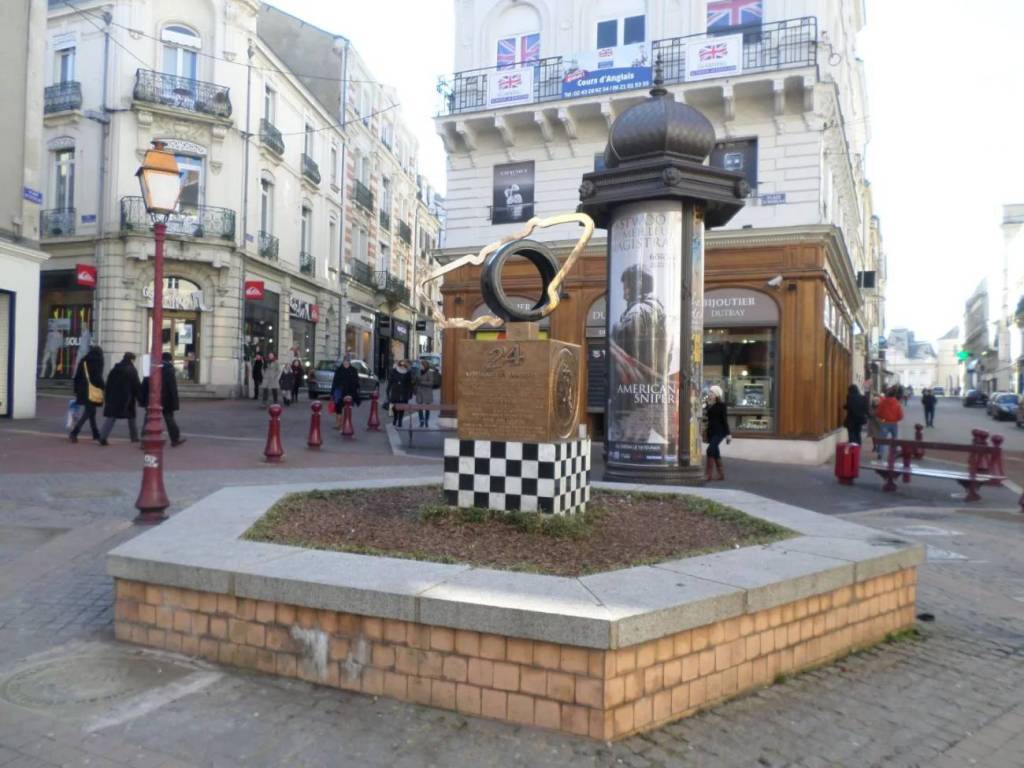
The neighborhood or quartier Saint-Nicolas has a dynamic shopping district, rich in many streets organized around the Place Saint-Nicolas (to the east) and the Place de La République (to the west), a rallying point for all locals and all tourists. The ideal area for shopping. The Place Saint Nicolas is a small charming square not far from Place de la République, you can find some buildings there with beautiful architecture, a view of the cathedral and as well the footprints of the 24 hours of Le Mans. The official 24hrs of Le Mans on the footprints: https://www.24h-lemans.com/en/news/last-year-s-winners-leave-their-mark-46831
By the Quai Louis Blanc between the Sarthe river and the Roman ramparts, there is a big parking even for camping cars and you have a look of the ramparts and the belltower the Cathedral Saint Julian,
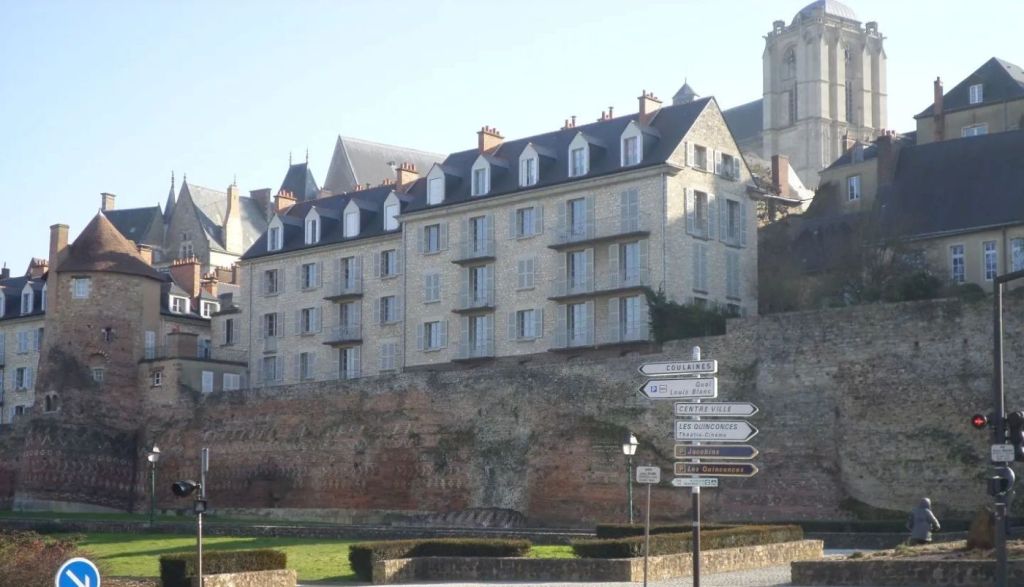
There are lots of other things to see here, at Le Mans. Do see my several posts on the City in my blog, There is the former Municipal Theater done in 1842, The old town is encircled by roman ramparts built at end of the 3C and well preserved. The most important witness to military architecture of France and the best preserve in Europe after Rome. The thermes or spas of Vindunum are now in the school of fine arts. There are several domus and the most visible is that one at the Halles or market, the forum is located under the Cathedral at the lowest point of the hill of Old Mans. The Place de la République is a big pedestrian square in city center, before it was called Place des halles, as it welcome the wheat market that was destroyed in the 19C. There is the place des Jacobins ,the second biggest in Le Mans by the old ramparts of old Mans and where the Cathedral is located. The Place des Comtes-du-Maine is there out of the need recently to have a central open space in city center , located by the avenue François-Mitterrand, the main road leading you to the train station gare Nord, where there is always great traffic! and has an underground parking. The place de l’Éperon is a nice area too with heavy traffic. The place Saint-Nicolas is in the heart of the neighborhood of same name , was an old area in the old town and was very commercialise; the rich built great mansions around here by the 19C.
You, also , have the nice Grabatoire palace or palais du Grabatoire a canons house built between 1538 and 1542 by the bishop of Le Mans. Here in 1612, Marshal Lavardin aka Jean de Beaumanoir, received the young Louis XIII ,and the governor care for the regent Marie de Médicis, that felled sick in the trip. You have the beautiful house or Maison de la Reine Bérengére housing now the museum of the Reine Béréngère housing the work of arts of the Sarthe region history and life in Le Mans. The wife of Richard the lion hearted never lived in the house, that was initially done as a salt stock in the 15C, the house is totally in wood with ornaments carvings and sculpture, columns etc. The house of Adam and Eve or Maison d’Adam et Eve was built in 1520, the name comes from an ornament on top of the entry door. The first floor (2nd US) has massive pillars. You have the house of the two friends or Maison des Deux Amis located in the rue de la reine Bérengère built in the 15C by a rich merchant. The house of the red pillar or Maison du Pilier Rouge was built in the 15C as well, with poles holding it on a floor of stones to protect it from humidity.
There are several nice mansions worth a detour me think. These are the Hôtel des Ursulines as it was the former school for girls from the 17C. It has a huge glass enclosure that today is the tourist office of Le Mans. The oratory chapel or Chapelle de l’Oratoire was built in 1683 next to the school of the Oratory, and today is part of the school complex of the Montesquieu. The Hôtel Nepveu de Rouillon from the 18C and today the resident of the craftsman workers of France or the Compagnons du devoir,heirs to the great builders of the middle ages. Built in the 11C the bridge or pont des Vendéens was attack in the war of the Vendée fand allowed the city folks to prepare the defense before their arrival; you can see some remains of this bridge in the neighborhood of Pontlieue,south side of the city. The current Pont de Pontlieue as here were the Vendéens bridge The nice mansion Hôtel Desportes de Linières, located at the place de l’Éperon, has a nice facade on the 9 rue des Boucheries by the market area. It was built in three levels with about 8 rooms per floor; the hotel sufferes degradation but finally restored to see the luxurious rooms decorated on the Italian style and full of marble. The nice Tessé museum or Musée de Tessé is a mansion from the 19C former episcopal palace. One of the great museums of Le Mans, and one of the first ones created after the French revolution. Today it is recognized to have Egyptian collections of great value as well as portraits from the 17C to 19C. The stock exchange or Bourse du Mans started in 1866 and finished in 1890 located on the south side of the Place de la République. Today , it houses the chamber of commerce and industry of the Sarthe.
The shop or Atelier Cosson built in 1873 at 10 rue du Crucifix. This mansion in brick and stones was built as the photography studio of Gustave Cosson , a famous local photographer. By 1980 on a new urban developement the street is eliminated ; the shop is dismantle stone by stone and move to the rue Montauban. Today ,this shop mansion Cosson is part of the House of the Attorneys. The tunnel des Jacobins is a section done on the hill of old Mans created in 1873 to avoid traffic in city center ;nice to take a ride on it! The abbey of Epau or the Abbaye de l’Épau is a former Cistercian abbey founded by the Reine Bérengère of Navarra in 1229. The tomb of the queen is in the Capitol room. The abbey received many cultural events and others such as the festival of classical music of Epau. It is a bit outside of town at about 4 km east on the left bank of the Huisne river, by the town of Yvré-l’Évêque.
You some small gardens/parks here such as the jardin des plantes, with some remnants of the old periods of explorations ,it has an English garden, and another French garden with a rosary and a music kiosk. There is the parc du musée de Tessé that with the Quinconces des Jacobins makes a nice green area in the middle of the city, and on the high ground you have the esplanade du Bicentenaire, another wooded park with a nice view over the Sarthe river below. The Jardins Pierre-de-Ronsard,has three gardens by the Chuch collegiale of Saint-Pierre-La-Cour. Below the tunnel, there is the square Dubois, not far from the old town area where the Plantagenêt Rose was created with a grenade color and petals of gold 22 karat in 2009.
A bit of history I like tell us that the city is known since the 2C BC under the name of Vindinon and on the gallo roman times the name of Vindunum was mentioned by the geographer Ptolémée. The city takes by the 4C the name Gallouis of Aulerques Cénomans,and the first mentioned as such under Mans is from the 12C in a novel Rou calling it Prez del Mans. A charter from 1264 gives the name of Mans. The placement of the le took place in the 12C on a change in language usages. By the 9C the city was a fortress against the invading armies of all groups, the Bretons were pushed back and the Vikings came in force along the river . The city was conquered by William the Conqueror of Normandy in around 1060 and even decided to stayed and to do a donjon with two elevator moats the grand and petit Barbet. Geoffroy le Bel received in 1129 the count of Maine as heredity title as well as the count of Anjou and Touraine. He reigned over the territory from 1128 to 1151 and the senator of Anjou and Maine marries in 1128 the daughter of the king of England, Mathilde (fr) the granddaughter of William, she not only gave to Normandy but also the hope of one day reign over England. Their son Henri II born at Le Mans in 1130 did becomes king of England in 1154 and managed the Plantagenet empire from Angers and Chinon, a more vast domaine than the king of France of which he was subordinate! The empire ends by 1189 by king Philippe Auguste and the city does not return French than in 1448 .The last count of Maine Charles V died in 1481 and the domains possession were given to the king of France, Louis XI, and for this Maine returns to the Royal domain. The battle of Mans in 1793 was the most deadly encounter of the war of the Vendée against the French revolution. The Vendéen army arrives at Le Mans in December 10, 1793 but rather disorganized were needed to take back to Laval. The dead are between 10k to 15K Vendéens sometimes with atrocities. The city was retaken by the Chouans, the Breton farmers fighting the French revolution in 1799 and later the Empire as well (been Royalists). By June 19 1940 during the battle of France the Nazis of the 38 corps takes the city. The city is liberated by the The city of Le Mans was liberated August 8 1944 by the 3rd Army of General George Patton; 15th Corp of Gen Haslings.
Le Mans is considered the first city to have done an European treaty of alliance between the German town of Paderborn ; this was called the light of Europe and was signed in 836. Its inhabitants can said to be the first city attached to the royal power of France in 1066. The city has many alias such as been called the Capital of Automobile sports, international automobile capital or the birthplace of automobile ( auto club race in 1906 but I know my Ormond Beach, Fla had world record racing in 1902). The first commercial available car in production was done here, the Red City for the color of its ramparts , the city of blood in gold for the color of its flag . The city of lights from the 19C as was one of the first ones to received electricity. The gate to the west for its car highways around it, the city of was from the 16C to the 19C production of wax here and candles; last factories closing in the 19C . The city of lace from the 17C to the 18C, and the city of leather makers from the 12C to the 18C.
The city of Le Mans on its heritage : https://www.lemans.fr/mes-activites/les-grands-evenements
The Le Mans tourist office on its heritage : https://www.lemans-tourisme.com/en/discover/cite-plantagenet.html
The Sarthe dept 72 tourist office on Le Mans: https://www.sarthetourisme.com/decouvrir/patrimoine-culturel/le-mans-la-cite-plantagenet/
The Pays de la Loire region on Le Mans: https://www.atlantic-loire-valley.com/visit-le-mans
There you go folks, a wonderful , gorgeous, with stunning architecture, a must to see in my belle France. Again, hope you have enjoy the post on curiosities of Le Mans !!! as I.
And remember, happy travels, good health ,and many cheers to all !!!


