
Let me update this older post of what it was an introduction to Blois and its castle. Hope you enjoy as I. This castle has been with the history of France and Europe for hundreds of years and many international events. I have written before on the town and the castle but think a deserves a single post as an introduction to the Castle alone. Therefore, heres is my take on the Château de Blois, part I !!! Hope you enjoy this post as I.
I actually came here searching for Houdin, yes the magician it has a nice presence here and we love it; eating just across from it while glancing at the castle. Of course, we came here several times so eventually we went inside the Royal Castle of Blois. It is a must for any visitor to this region of my belle France. The Château Royal de Blois, located in the Department of Loir-et-Cher no 41, Region Centre-Val de la Loire, and part of the Chateaux of the Loire. It was the favorite residence of the kings of France in the Renaissance. Located in the heart of the city of Blois, on the right bank of the Loire river, the Royal Castle of Blois gathers around the same courtyard a panorama of the French architecture of the Middle Ages in the classical period which makes it a key building for the understanding of the evolution of the architecture over the centuries.
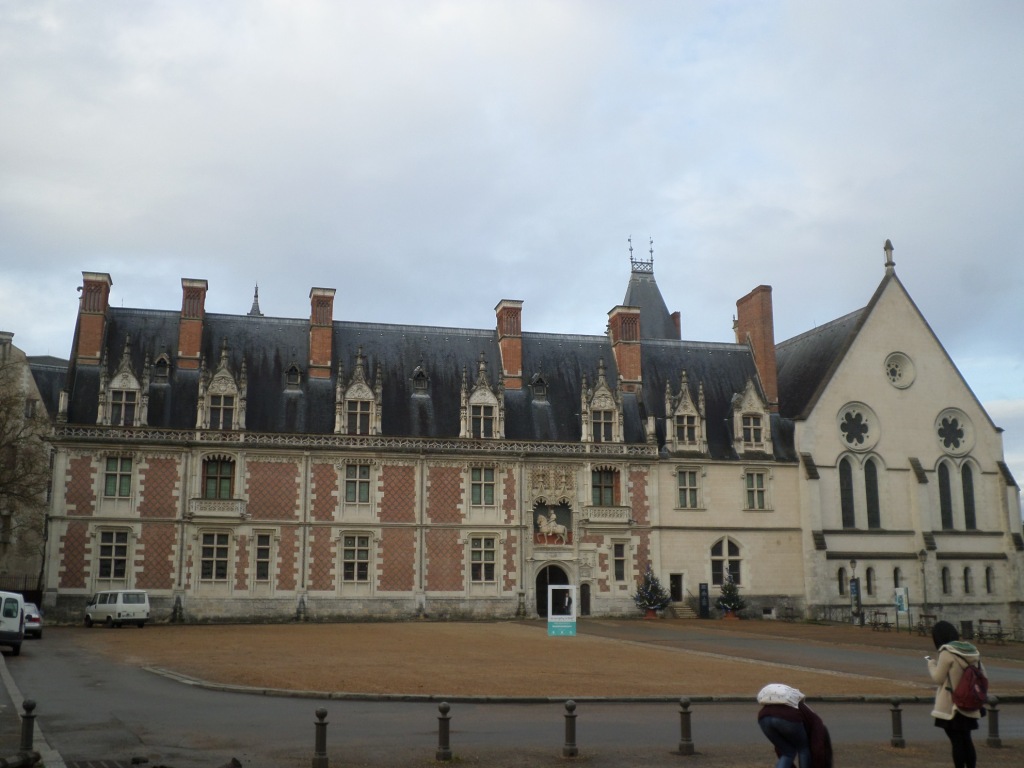
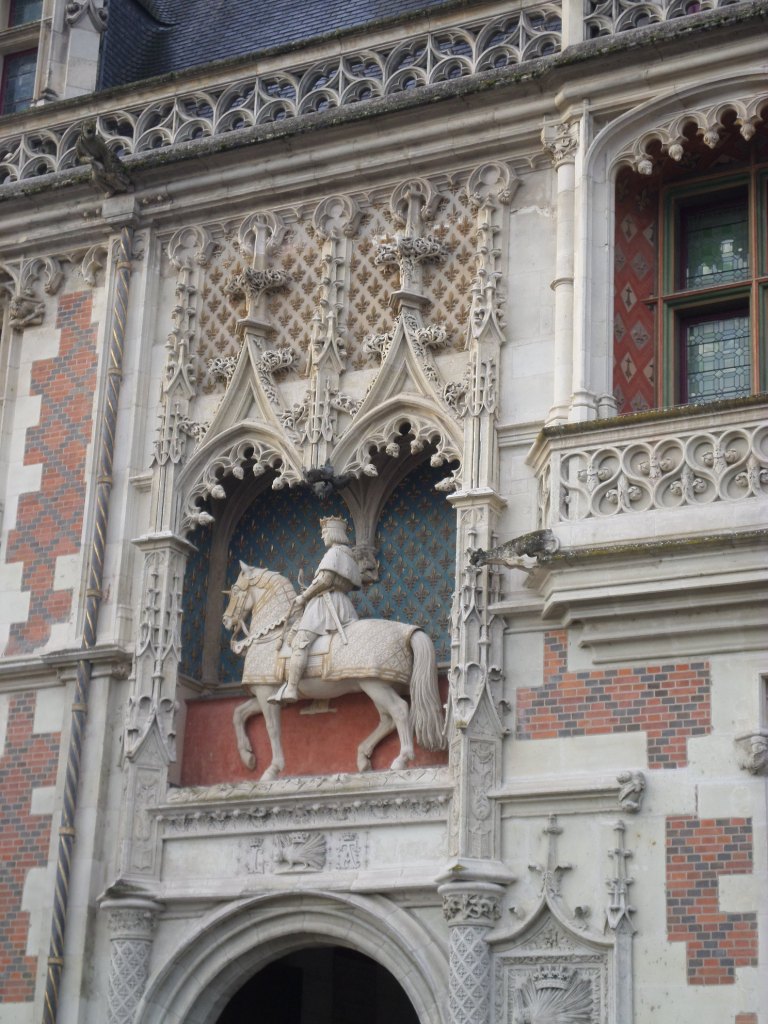
The Château de Blois, as it can be admired nowadays, is mainly made up of three wings where the Gothic, Renaissance and Classical styles mingle, even if traces remain of the medieval castle. State Hall built by the Count of Blois Thibaut VI in 1214. The Lapidary Museum, adjoining the State Hall, in the ancient cuisines of François I, brings together the 16C and 17C sculptures of the various wings of the castle. The circular tower of Foix, slightly indented, near the Gaston d’Orléans Wing, is a vestige of the 13C feudal fortifications. The castle is penetrated by the Louis XII Wing, remarkable for its red brick-chained bricks, a common construction in the Franco-Flemish style buildings. The entrance is surmounted by the equestrian statue of Louis XII of 1857.
The Louis XII wing contains since 1869 the Museum of Fine Arts of the city of Blois. The gallery’s eight rooms feature a selection of paintings and sculptures from the 16C to 19C. The gallery includes a set of French and Flemish tapestries from the 16C and 17C. The chimneys were remade to the emblematic of Louis XII and his wife Anne of Brittany, according to the famous book of Hours of the Queen; destined for the Count of Chambord. The Tour des Champs (tower of the fields), visible on the courtyard, adjacent to the wing Louis XII, and the gable near the State Hall.. It can be seen in several sculptures including the Louis XII Porcupine in bas-relief. The Chapelle Saint-Calais is located at the end of the Louis XII Wing, in the inner courtyard of the castle. Today there is no such private oratory of the king (built from 1498 and consecrated in 1508 by Antoine Dufour, Bishop of Marseille and confessor of the Queen) as the Gothic choir with vaults in liernes and supporting ribs on the vault.
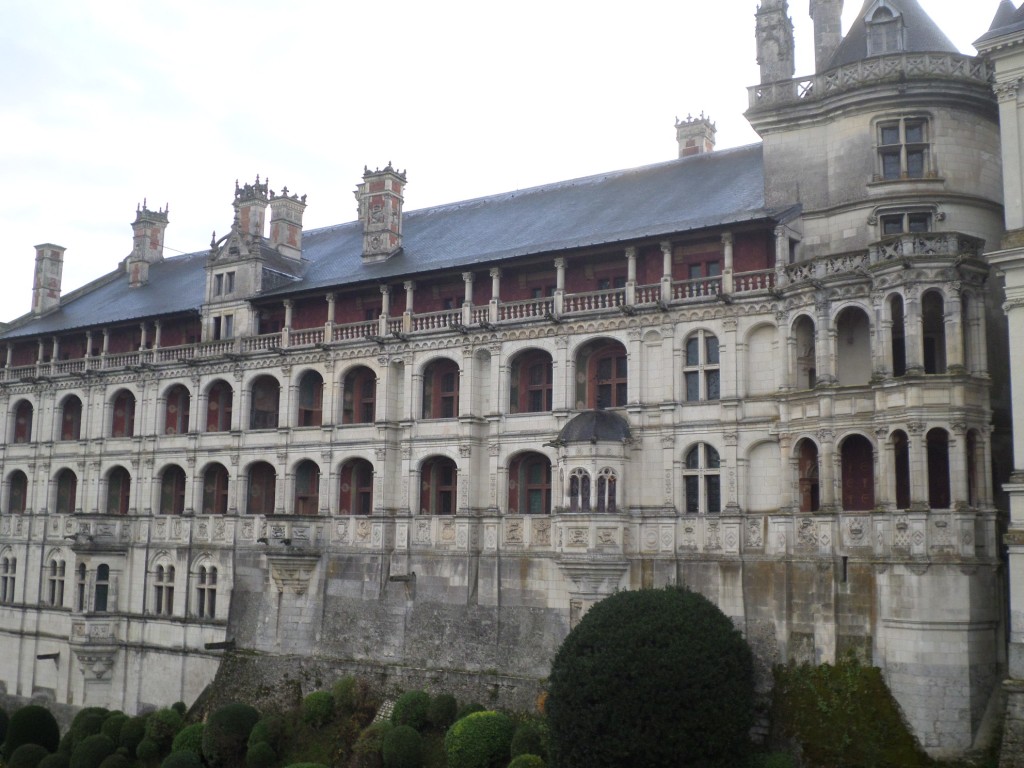
The Charles d’Orléans Gallery, next to the Saint-Calais Chapel, was once twice as long, but was, like the Chapel, partially destroyed in the 17C. In the Francis I wing, in Renaissance style, architecture and ornamentation are marked by Italian influence. The central element of this wing is the monumental staircase, an octagonal screw-type, of which three sides are recessed in the building itself. The staircase, searched like an ivory of China according to Balzac, covered with fine Renaissance sculptures, Italianate ornaments (statues, balusters, candelabras) and Royal emblems (salamanders, crowns, “F” for Francis I, “C” for Claude de France) , opens between the buttresses by large bays on the courtyard of the castle. Its curved, helically shaped vault, supported by outer rectangular buttresses, makes it a recurring symbol of French architecture in the Renaissance and heralds the innovations of the time on the architecture of the staircases, which became, more than a functional element, a major aesthetic addition. Accessible from the Queen’s Gallery, is the front of the lodges, built seven meters ahead of the former court-house, characterized by a suite of non-communicating niches. Despite its apparent homogeneity, the François I wing encompasses the State Hall, to the left of the dressing room façade.
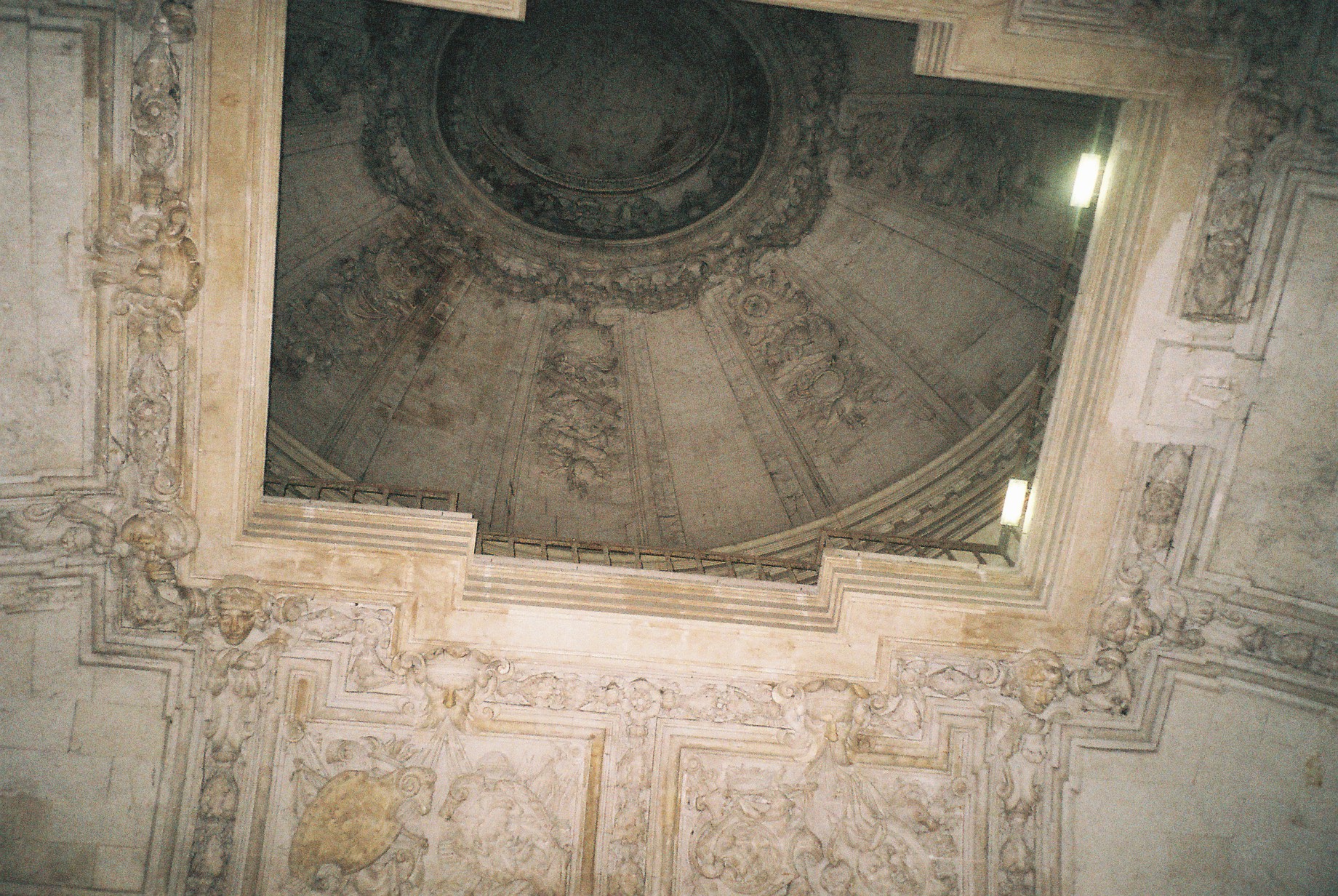
The Royal Apartments located in the François I wing have been restored, the first floor is the floor of the Queen’s apartments. The tile of the Queen’s Gallery is of Terracotta glazed on a 15C model, was restored at the end of the 20C. It is in the form of a network of blue, white and yellow geometric forms. You can see an exhibition of ancient instruments, the gallery is also adorned with busts of kings of France. Queen’s cabinet: On the first floor is the cabinet of Catherine de Medici or studiolo, in which wooden panels conceal four closets with secret mechanism (cabinets that are opened by operating a pedal hidden in a plinth), which gave it the name of the Chamber of Secrets. The Queen’s bedroom, formerly the gallery of the apartments of Francis I, became the Royal Chamber of Catherine de Medici who died there on January 5, 1589. The monogram of Henri II and Catherine de Medici composed of an H and two interlaced C is omnipresent in this room, especially on the chimney. The Queen’s guards ‘ captain’s room, formed by the two-room meeting, is adorned with two chimneys with Renaissance décor, on which are visible the salamander of François I and the ermine of Claude de France. One of them is decorated with golden niches. It is possible to see a bust of Francis I in plaster, done in 1850.
The oratory, panelled, is inspired by the library of the Constable de Montmorency at the château d’Écouen around 1550. The stained glass windows date back to the 19C. It also contains a triptych belonging to the Queen. The second floor houses the King’s apartments, in which the new cabinet (Henri III’s work office) is located; the Galerie Duban presents drawings, engravings and objects evoking the work of the architect, notably at the Château de Blois. The Guise room houses a collection of paintings presenting the main characters and tragic events related to the wars of religion. Many 19C historical painters were inspired by the assassination of the Duc de Guise, such as the nicest done of “The assassination of the Duke of Guise”, oil on canvas by Paul Delaroche. The Council room at the monumental chimney, adorned with a golden salamander, brings together rich furniture made in the 19C in the Renaissance style, reminiscent of the 16C princely luxury; the council Chamber is also adorned with several statues; also decorated with several paintings. The King’s room is lavishly furnished, its monumental chimney is one of the largest and most imposing of the castle. Painted and gilded with the effigy of Francis I (Salamander and Fleurs de lys) and Claude de France (Hermine), and also decorated with a mixture of Italian-style elements such as putti (small cherubs), garlands of flowers and fruits. The King’s Gallery presents a beautiful collection of neo-Renaissance earthenware from the 19C and 20C. The King’s Chamber is the one in which the legend wants the Duke of Guise to be dead, throwing himself at the foot of the king’s bed after being struck by eight swordsmen. The Gaston d’Orléans Wing is classic in style. This wing occupies the bottom of the courtyard, facing the Louis XII wing, and replaces the bass fish of the Bretons, the Pavilion of Marie de Medici and the Logis de Charles IV.
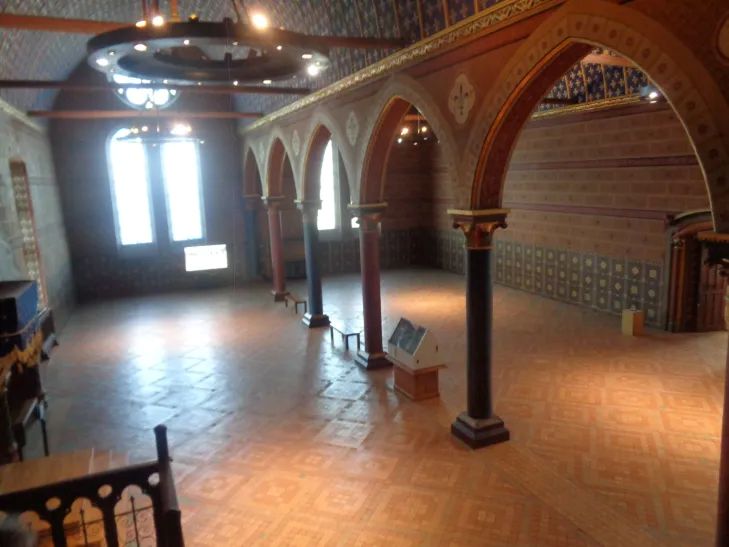
The salle des États Généraux or Hall of the Estates General is a large medieval hall, is one of the largest and oldest civil Gothic halls preserved in France. Today, in this hall, 2 giant screens with free access, present the evolution of the architecture of the castle through the centuries thanks to interactive 3D models. This large hall of the county palace was built in 1214 by Thibaut VI, last Count of Blois-Champagne. In this feudal hall, the Count held his audiences and celebrations, received tributes and dispensed justice. Because of its large dimensions, 30 meters by 18, or 540 m², it was covered by a framework made up of 2 large paneled naves, which rest in the middle on 6 pointed arches supported by 5 columns. The only Gothic window is on the west gable, the large mullioned windows were pierced in the 15C. The great medieval hall takes its name from the Estates General of the Kingdom of France which met there twice at the request of Henry III. These extraordinary assemblies bringing together the three orders of society (nobility, clergy, Third Estate) are convened by the king to deal with a political crisis, often a war, and to request military or fiscal aid. While in 1576, Henry III convened the Estates to take the lead of the Catholic League and levy a tax; in 1588-1589, he brought together the Estates in the hope of eliminating the Catholic League which he could not control.
The galerie Duban came upon in 1843, Félix Duban made the construction site of the Château de Blois a model for the restoration of other monuments in the Loire Valley. While the exterior restorations are faithful, the interior decorations are almost entirely created by Duban, who reinterprets those of the Renaissance. The architect uses photography, which had just been invented, to achieve historical verisimilitude. In this room, you will find the camera of Mieusement, a young photographer from Blois, who took more than 4,000 photos for the Commission des Monuments Historiques at the time. Copies of some of his photos are also on display, allowing you to discover the château in the 19C.
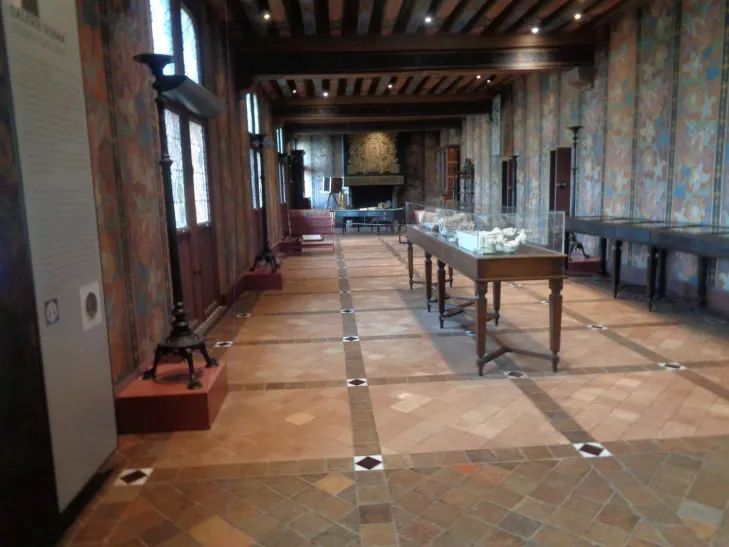
The salle des Valois tell us that from Louis XII to Henry IV, seven kings stayed at the Château de Blois, which was thus at the heart of French history for a century. Francis I centralized the royal administration, based on the principles of the sovereignty of the king and divine right. He outlined the absolute monarchy which was compromised by the Wars of Religion, since his son Henry II and his grandsons failed to establish a lasting peace. The works presented in this room refer to the collections of the Valois, in particular those of Francis I, patron of the arts, who over the years built up a sort of museum of the crown.
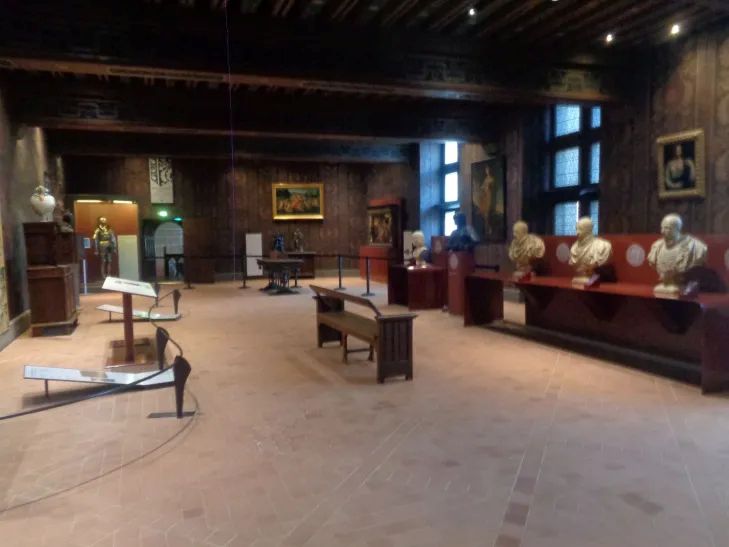
The salle Néo-Renaissance , this room presents furniture and art objects created in the 19C, in the Neo-Renaissance style. The restoration of many historical monuments inspired artists for their own creations. Many of these pieces of furniture appeared brilliantly at the salons or universal exhibitions of the time. The large vases exhibited were produced in Blois, which was a major center of earthenware production until the middle of the 20C, they take up decorative or heraldic motifs inspired by the castle.
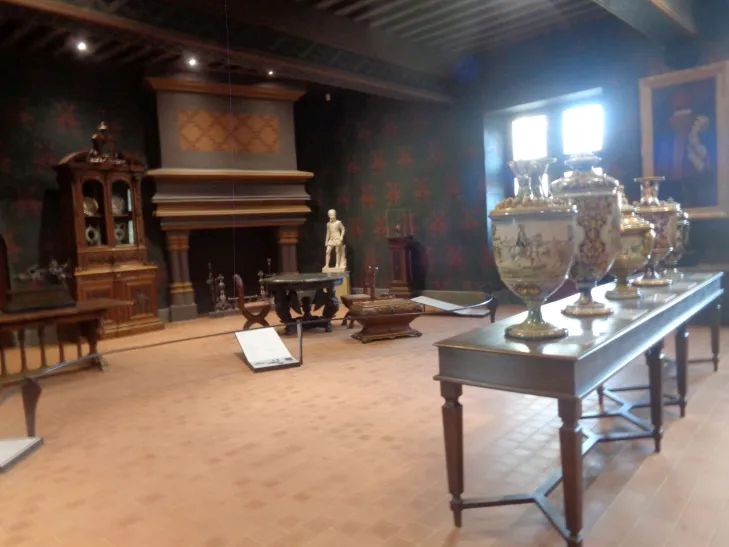
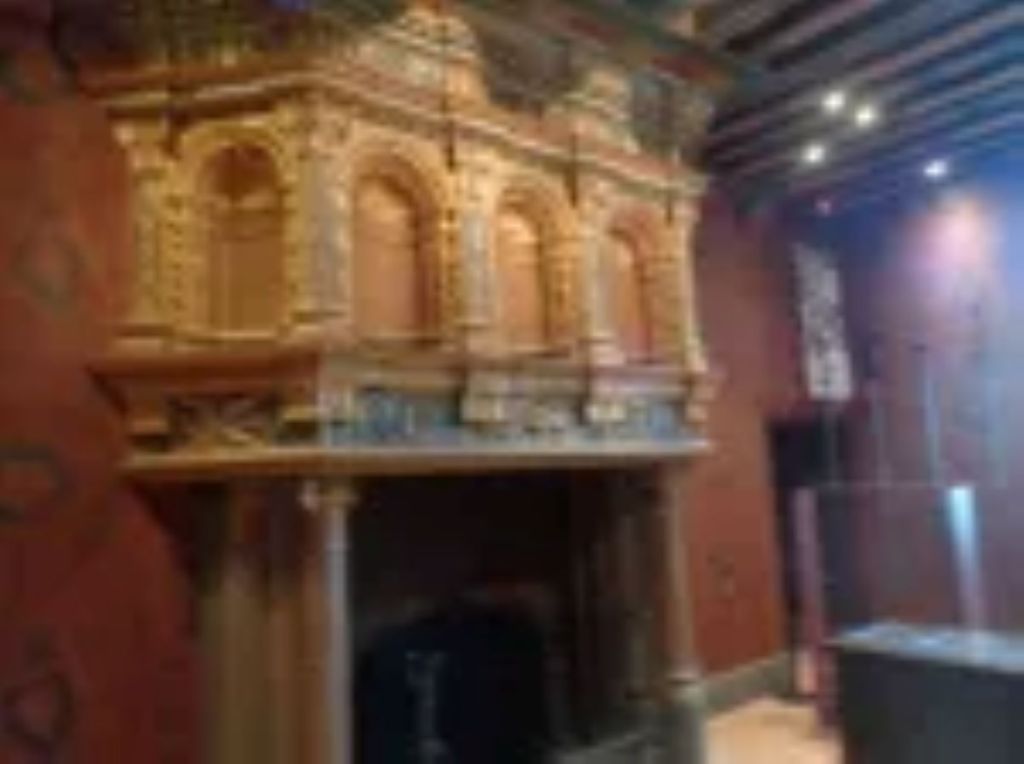
The chimenée or fireplace during the French Renaissance (from François 1er around 1515 to Henri IV around 1610) , During the 16C until the beginning of the 17C, following the Italian Wars, France, inspired by the so-called Renaissance art from Italy, looked towards Antiquity. A humanist culture, focused on mathematics and geometry, the Renaissance turned its back on the medieval eras. A decorative repertoire from Greek and Roman temples such as the Doric, Ionic and Corinthian orders, replaced medieval sacred imagery. The Renaissance period saw the construction of beautiful fireplaces in the interiors of castles; their jambs and mantels were decorated with sculptures and paintings of rare richness and elegance; Blois has several examples. Fireplaces then became real decorative objects which sit enthroned in the center of the room, combining luxury and comfort.
These are all in the Château de Blois aile François Ier wing.
Do not forget to walk outside into the Jardin de Diane on the high plateau with a wonderful view of the right side of the Castle.
The Offiical Chateau de Blois: http://en.chateaudeblois.fr/
The Blois Chambord Tourist office on the castle: http://www.bloischambord.co.uk/discover/our-castles/chateau-royal-de-blois-en
The Loire Valley tourist board on the castle: https://www.loirevalley-france.co.uk/loire-valley-chateaux/royal-chateau-blois
The Amboise Valley of the Loire tourist office on the castle: http://www.amboise-valdeloire.co.uk/discover/the-castles-of-the-loire/royal-chateau-of-blois
There you go folks ,a hugely nice castle that must be seen. Again, hope you enjoy this post on the Château de Blois , part I !!! as I. And remember, happy travels, good health, and many cheers to all !!!


