
Another dandy in wonderful nostalgic Tarn dept 81 of the Occitanie region of my belle France. We have come here several times and on my road warrior mode gone to many towns all wonderful and most already mentioned in my blog. One more nice one is Rabastens, and i like to tell you a bit more on it now. Therefore, here is my take on this is Rabastens !!! Hope you enjoy it as I.
We are in the area of the south west or Sud Ouest of my belle France, waving our way thru wonderful country. Here again wine and cathar history mingle, the cathars are gone but the wine remains in the appellation of Gaillac. The birth region of my dear late wife Martine, late father Pierre.
Lets talk a bit about Rabastens, it sits half way between Toulouse and Gaillac on the D988 or old N88 road, easily done and parking by the long promenade in city center close to Hotel de Ville. You can use the fast A68 to the village of Coufouleux ,exit or sortie 7 on road D12 ,where the train station is before entering Rabastens, only 800 meters (2640 ft) from city center. The train station is at gare de Rabastens-Coufouleux , which is a nearby village of Rabastens. The bus system is the TarnBus, and it covers the town bus No 702 from Albi or Gaillac. Even thus we always come here by car.
A little bit on the history I like: It is an old town as such in the area, been inhabited by Visigoths from which it takes its “ens”. The vestiges of a Gallo-Roman city in Las Peiras about 1 km outside town proved of the ancient times here. In the early 12C, the city was run by a co-lordship. The family of Rabastens is close to the Counts of Toulouse: Raymond de Rabastens is Bishop of Toulouse from 1200 to 1205 and Pierre Raymond is part of the Council of Raymond VI. In 1210 the co-lords gave up their rights of justice to the Earl of Toulouse, who protected the inhabitants. They attributes them freedoms and privileges. Rabastens’s loyalty to the counts of Toulouse, especially Pandian de Rabastens, is going to cost him a lot. Under the Treaty of Paris (1229), the city was forced to destroy its fortifications. The city becomes a consulate during this period. The war of the Hundred years by 1337 does a lot of damage and many perished under it force, by 1450 the end of the war, the new discovery of pastel or the teint in textiles gave the city a new birth, but then again the war of Religion of 1561 the city is a center of protestanism and suffer heavy damages. The peace in 1563 does not stop here what is started in Paris with the massacre of St Barthelomy. Peace returned, Rabastens knows at the end of the 13C prosperous thanks to its vineyard, then the most extensive of the Gaillac. Finally the cave or cellars of wine in 1953 gives the wine back to the city and its a source of prosperous times still today. The quality of Rabastens wine is recognized. The gabares, flat-bottomed boats, descend the Tarn with barrels of Rabastens to Bordeaux.
Early in the 19C ; Rabastens took its present appearance: the ditches were gradually filled to form the promenade of Lices, a suspension bridge is built on the Tarn in 1835 and the façade of Notre-Dame du Bourg is completed with the addition of a second tower. The artisan tradition remains with the weavers and shoemakers of the Middle Ages. They give way to cabinetmakers and furniture manufacturers.
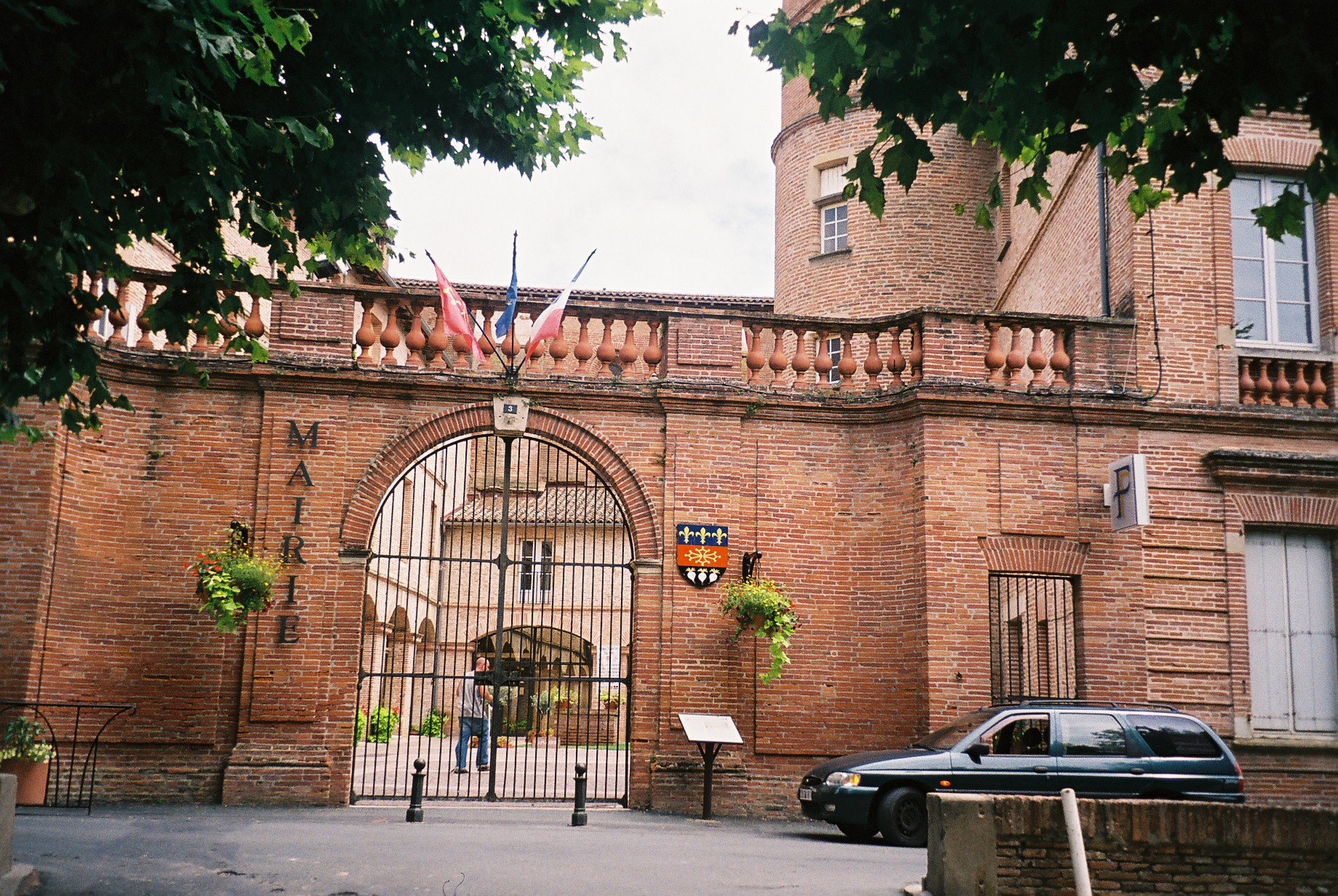
Some of the things to see and do here are the Hôtel de Ville or mayors’ office an old prayer house and tower of the 16C; and the Museum or musée du pays Rabastinois house in the mansion or hôtel particulier of the 17C, it contains collections of archeology, art and local history, and exhibitions of ancient and contemporary art. Located at Hôtel de la Fite, 2 rue Amédée Clausade.
The must church in town and listed on the route to Santiago or the road to St James de Compostela is Notre Dame du Bourg, (see post) it has wonderful stained glass paintings showing the religious life real or legendary of James the Mayor or St James. The oldest part dates from the 13C completely done in red brick.
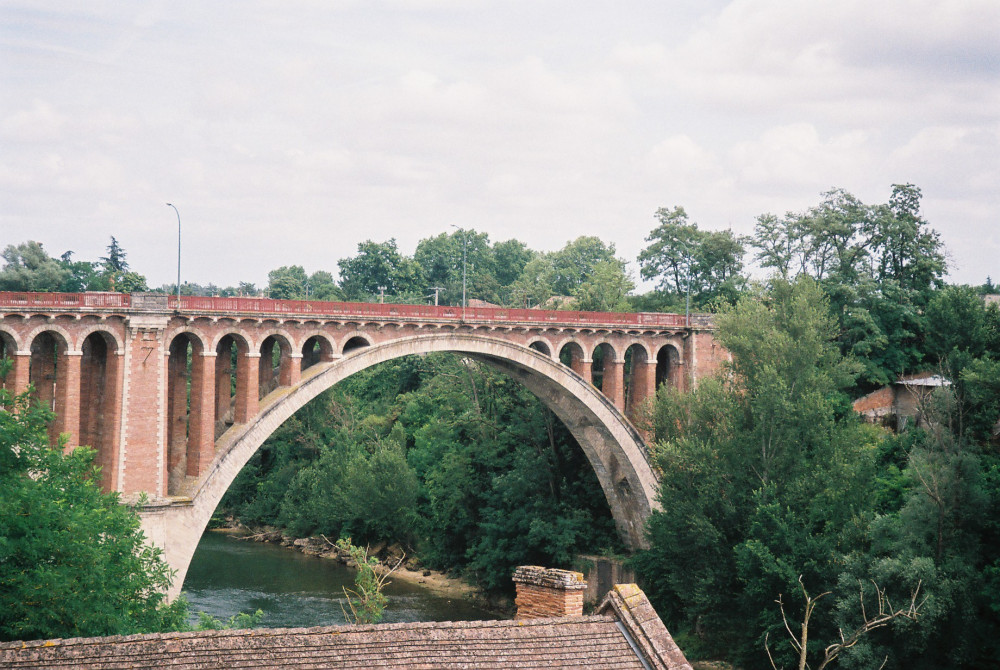
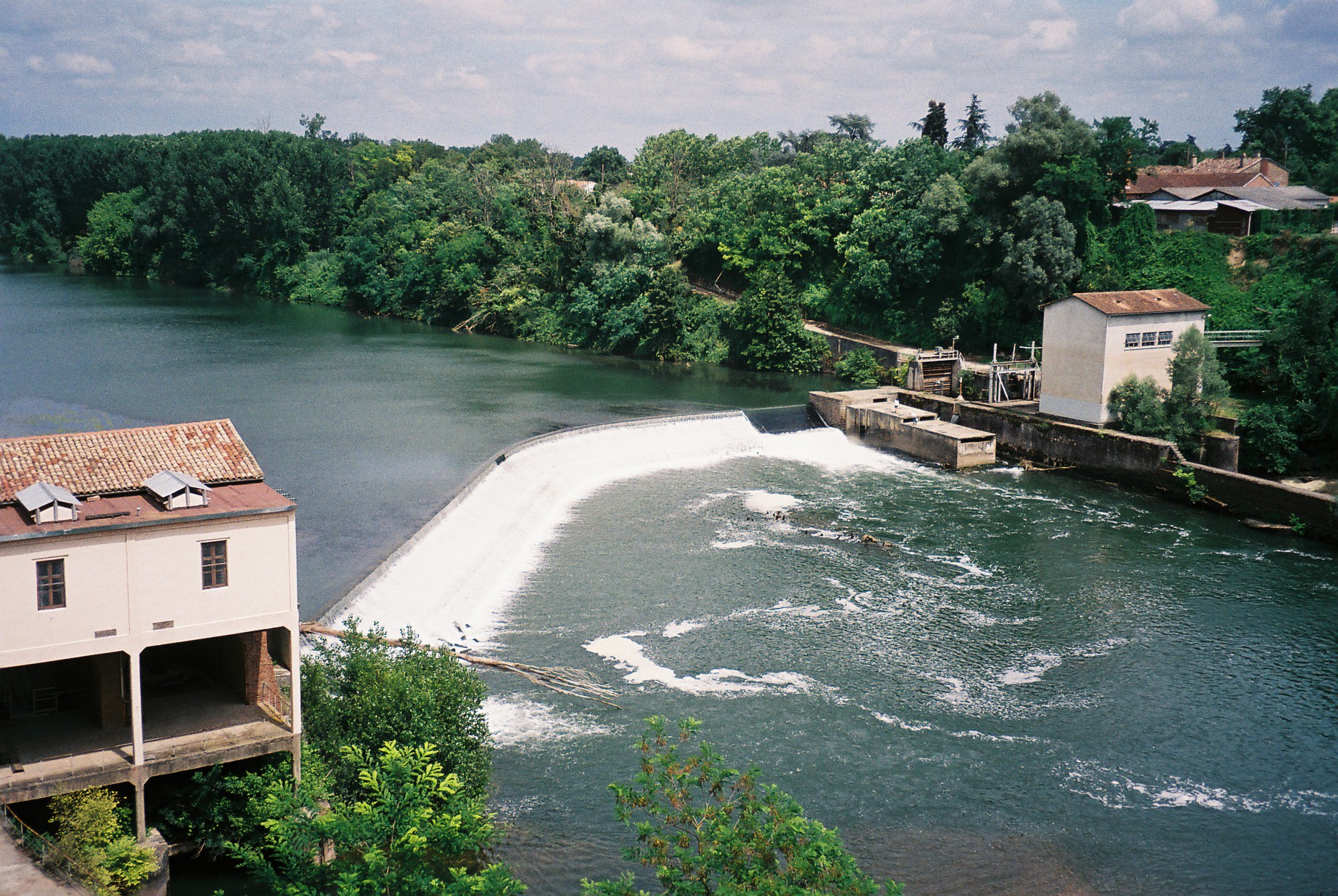
Coming into Rabastens on the road D12 you pass the bridge,facing it you see a seven-story hotel from the 18C that was the Hôtel de la Castagne. It owes its name to a park on which many chestnut trees were planted. Nowadays it has become a private college. This arched bridge, is 7.20 meters long, has a particularity since it was built in 1922 under the old suspension bridge, dated 1837, You see wonderful lock of Rabastens and the force of the Tarn river below, new picture found and it goes here!
You have a wonderful district or quartier du Bourg with old quaint medieval streets looking into the river Tarn, especially rue Gouzy, a lovely red brick bridge, and the gorgeous ramparts that show the fortifications of old at quai des remparts, and the district or quartier du Chateau; the oldest in town, limits of the quai des remparts, quai de la Libération ,and quai du descargadou. This is a great town to walk its ramparts and medieval streets especially in spring time. Lovely.
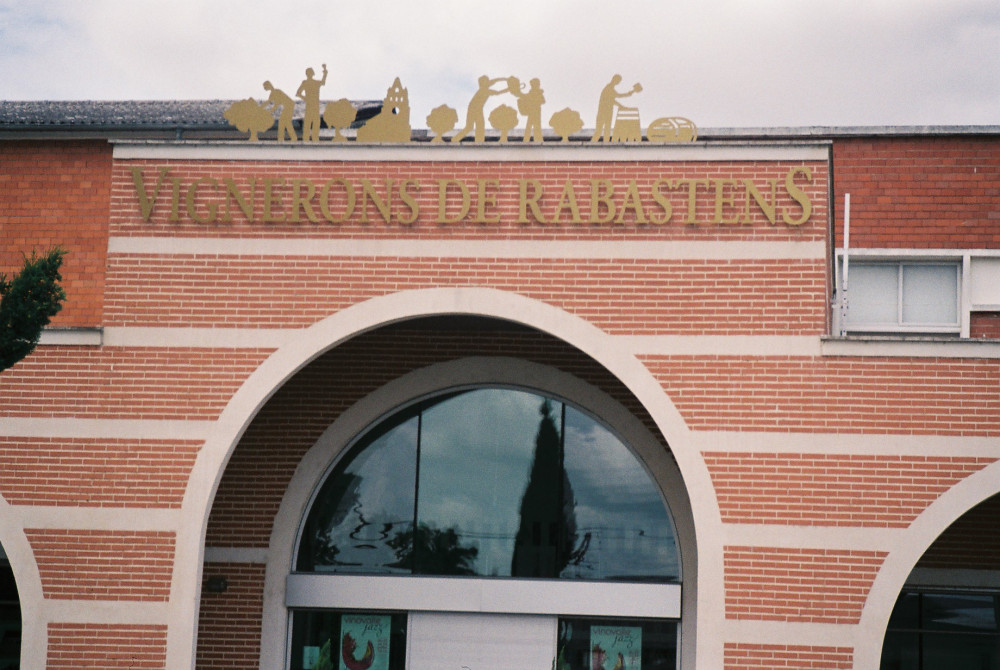
For shopping the best is the winery at 33 rue d’Albi, its actually a cooperative where many small winegrowers (about 150) pull their resources to make a delicious wine, well known in France. The
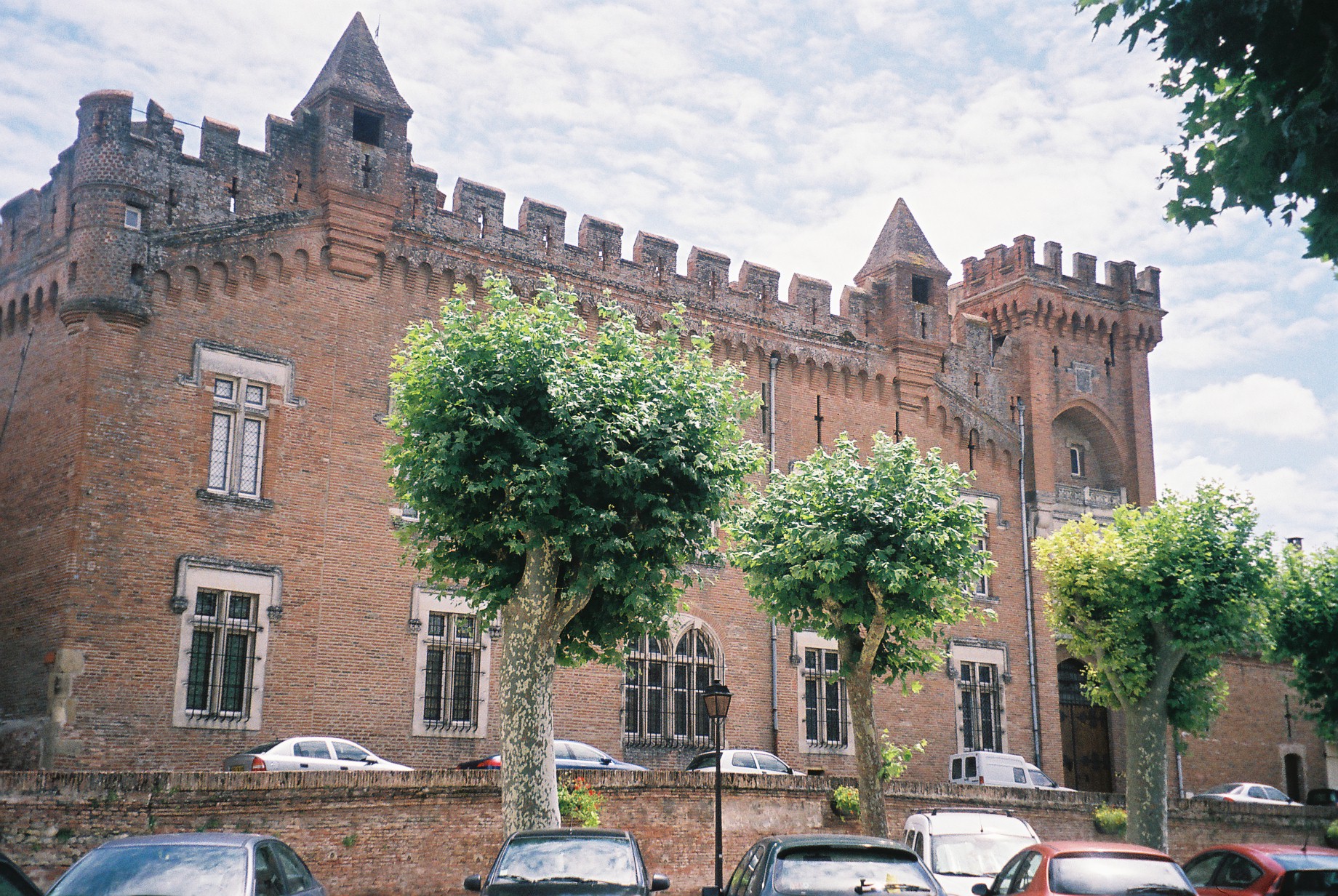
cooperative cellar created in 1953 energizes the economy of Rabastens. Other things to see are the City/ own hall, Old Priory. 16C turret. Museum of the country Rabastinois: Installed in the 17C mansion of the family La Fite de Pelleporc de Gourdas. The dovecote, located at the exit of the city, along the road to Saurs, surrounded by a park, the place is usually called the Pigo. The Hotel de la Castagnate (current Puységur free school) a former mansion of the Count Louis Pierre de Chastenet de Puységur.The Cave de Rabastens, lovely appellation Gaillac from indigenous grapes of the region like the Mauzac for whites. webpage: http://www.vinovalie.com/caves
The Vignobles Bastides local tourist office on Rabastens: https://www.tourisme-vignoble-bastides.com/en/towns-villages/rabastens
The city of Rabastens on things to see: https://www.rabastens.fr/ma-ville/rabastens-et-le-pays-rabastinois
The Tarn dept 81 tourist office on Rabastens: https://www.tourisme-tarn.com/decouvrir/incontournables/bastides-villages/villages/rabastens/
The Occitanie region tourist board on Rabastens: https://www.tourism-occitanie.co.uk/eglise-notre-dame-du-bourg/rabastens
Have a wonderful trip in a gorgeous country of the Tarn, and of course pretty Rabastens!! Always looking forward to be back when possible! Again, hope you enjoy the post on this is Rabastens as I.
And remember, happy travels, good health, and many cheers to all !!!

 Paris1972-Versailles2003