
And as said, having been in the area and seeing many familiar faces I dare took the plunge to really visit Lisieux instead of just passing by. As said, my belle France has an endless repertoire of monuments that a life time will not be enough. Let me tell you more on the Cathédrale Saint Pierre of Lisieux, part I !!! in the dept 14 of Calvados, region of Normandie, in my belle France. Another dandy of Lisieux you should not missed!
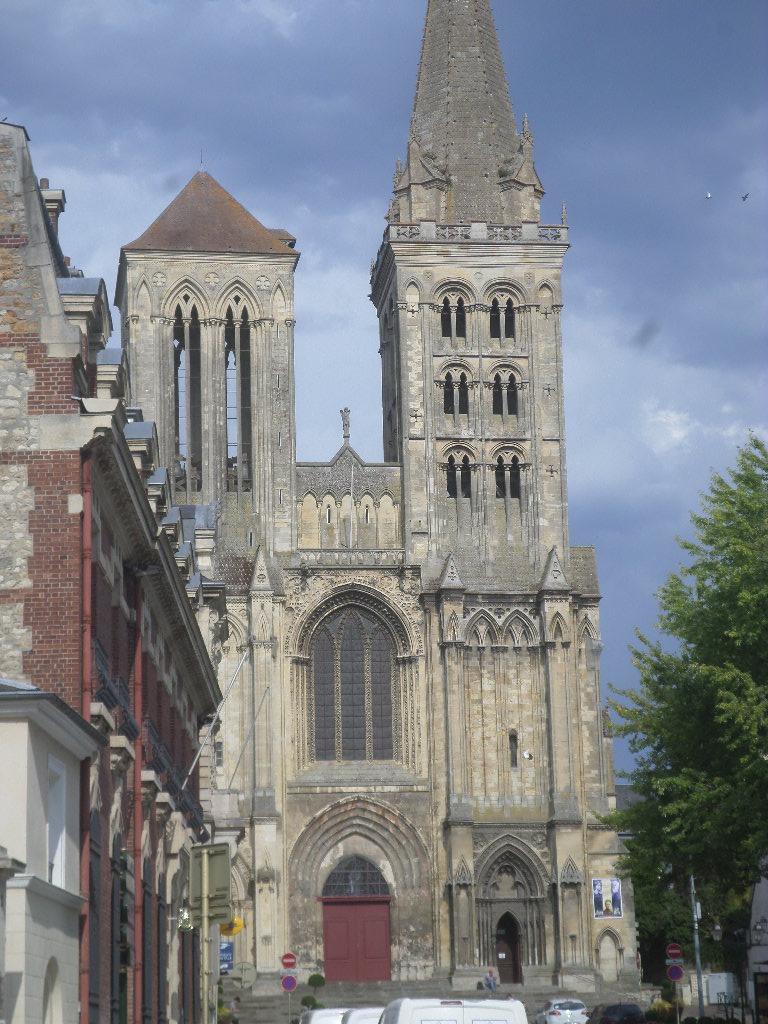
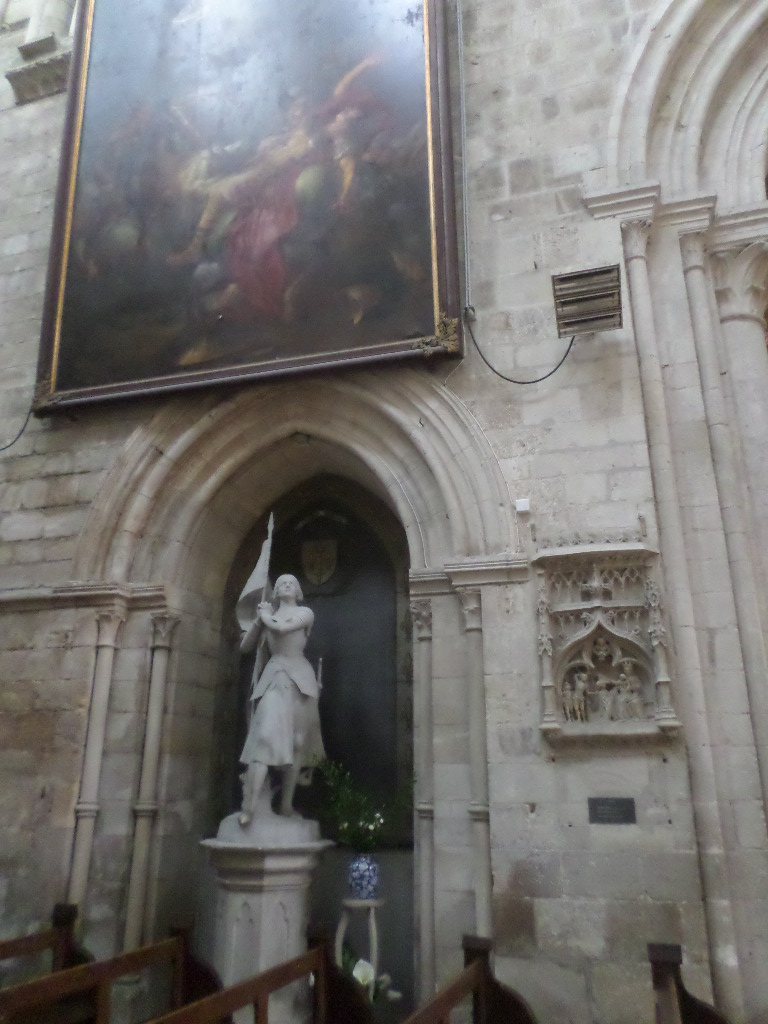
The Cathédrale Saint-Pierre is in the Norman Gothic style. For a while it was the mother church of the diocese of Lisieux before its integration into the diocese of Bayeux and Lisieux. Sainte Thérèse was very familiar with the St Peter Cathedral. It was there that she attended Sunday mass with her father, sisters and housekeeper. A statue and an inscription in a chapel in the Choir recall the exact place where the family was placed during religious services. It was here that the future Saint had the revelation of her mission: to save the souls of sinners. Thérèse’s father, Louis Martin, offered the high altar for the choir. Since the 20C, Sainte Thérèse has been the cathedral’s third patron saint, after Peter and Paul. As such, it appears on one of the stained-glass windows at the back of the choir.
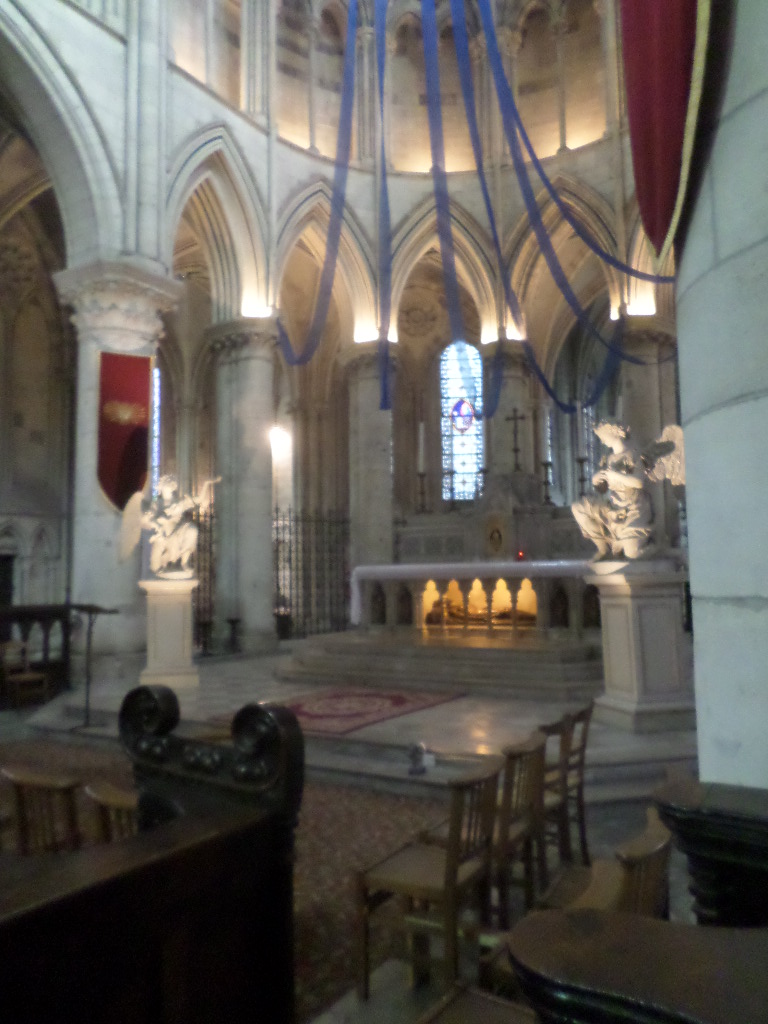
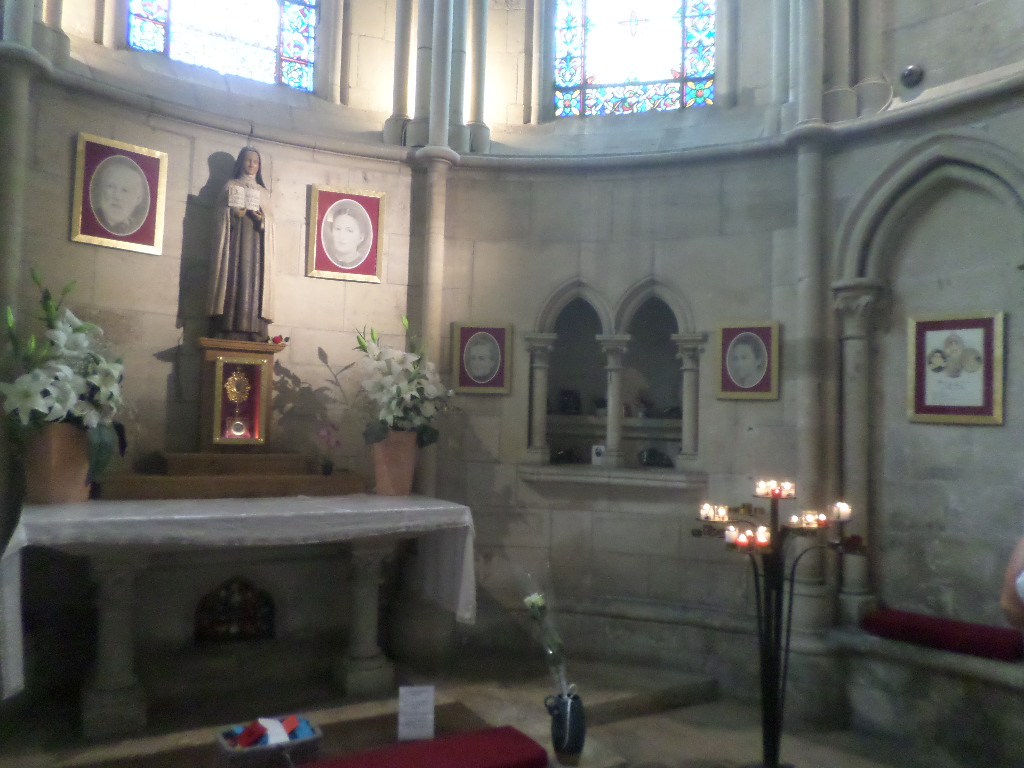
If the presence of a cathedral is supposed since the 6C, the church visible today was certainly built between 1160 and 1230, on the initiative of Bishop Arnoul. Which makes it one of the first Gothic churches in Normandy. The fairly austere nave is inspired by the Gothic style of Île-de-France while the last parts built in the 13C such as the chevet, the lantern tower or the western facade are in the Norman style.
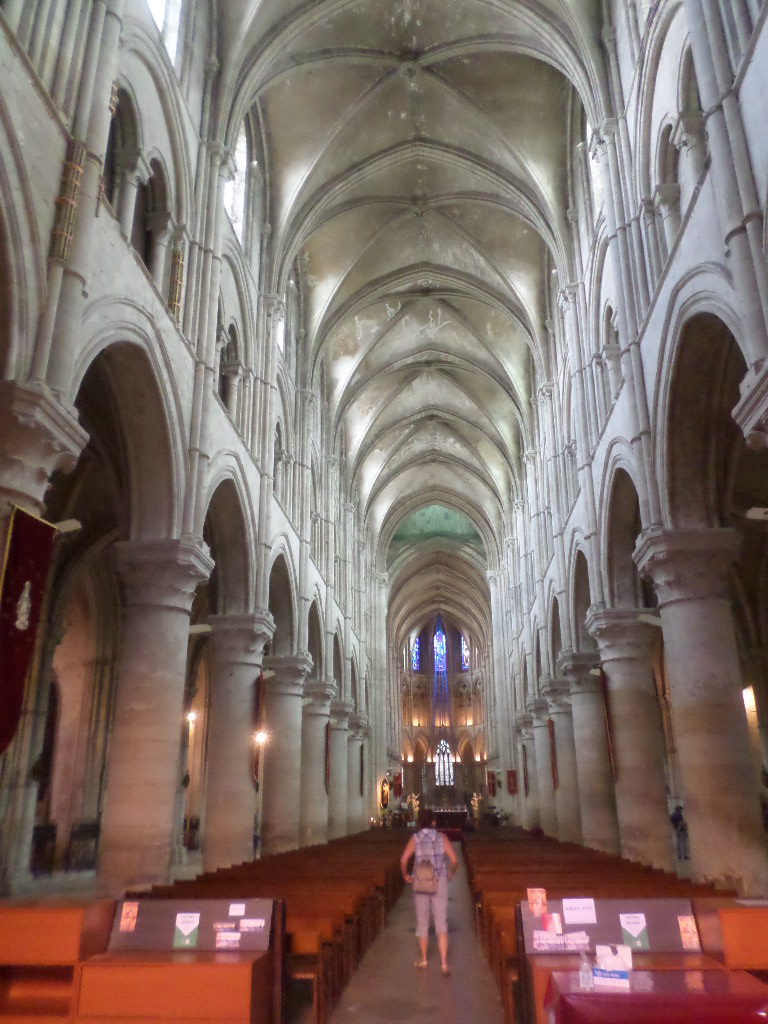
The current cathedral is not the original monument. In 538, is cited by the first bishop of Lisieux, Theudobaudis (Thibaut). The presence of a bishop supposes from this time of the High Middle Ages the existence of a cathedral. Nothing is known of this early church. It was not until the 11C that mention was made of a cathedral since Bishop Herbert and then his successor Hugh of Eu proceeded to rebuild it. The expansion of the area of the church forced the destruction of part of the city wall. It is probably during this reconstruction that we discover the relics of several saints formerly venerated in the choir: Saint Ursin, Saint Patrice and Saint Berthevin.
The Saint Peters’ Cathedral is one of the oldest Gothic monuments in Normandy. Its reconstruction took place around 1160 or around 1170. The builders began to reconstruct the building starting from the nave. This is why this part of the cathedral has a rather harsh appearance: arches supported by large columns, a first floor of false galleries with thick moldings and a last level of high windows. The result is a fairly heavy and dark nave. This first part was completed shortly before 1183 as indicated by the dating of the framework made in modern times by a dendrochronological analysis of the pieces of wood. The rest of the church was probably completely completed in the first quarter of the 13C.
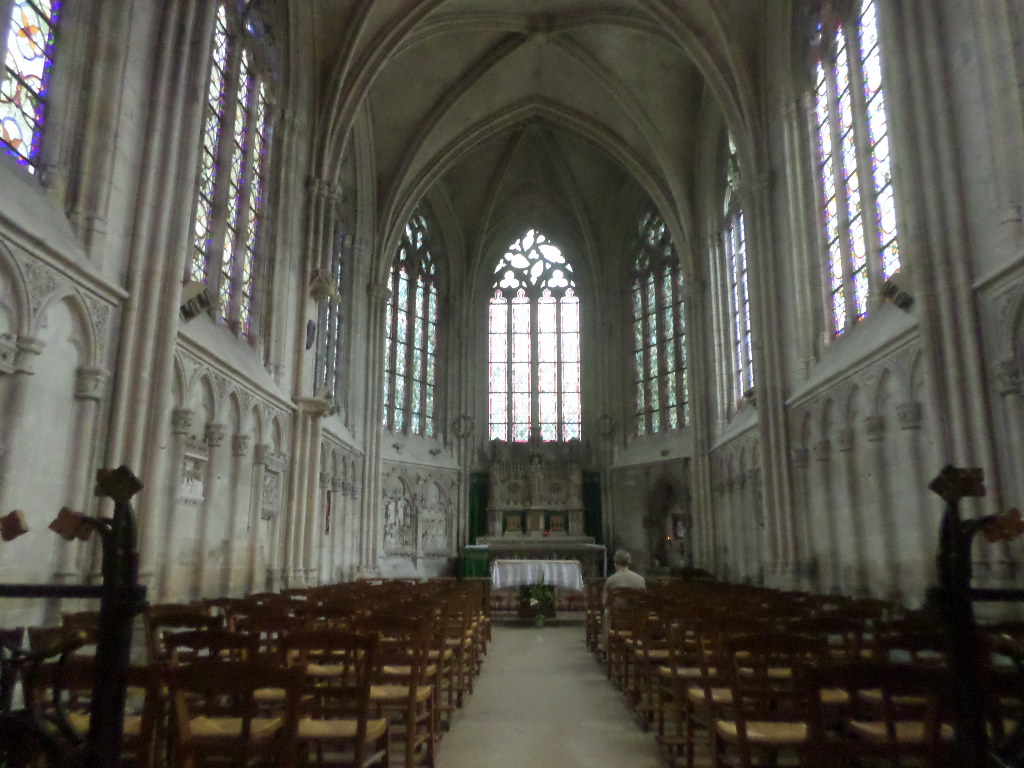
The former bishop of Beauvais, who became bishop of Lisieux, Pierre Cauchon , also made a point of making his mark in Lisieux even if he resided instead in Rouen or Paris. He rebuilt the Chapel of the Virgin,(behind the altar) and he is buried in the axial chapel of the choir, which he had built and where he still rests. Flamboyant in style, it is remarkable for its depth a bit over 17 meters and its nine large windows. Gothic attains its ideal there: the voids which outweigh the solids, the walls. Bishop Pierre Cauchon, whose name remains attached to the trial of Joan of Arc, was buried there in 1442.
Three towers dominate the building: the lantern tower, frequent in large Norman churches, and two facade towers. The slender northern one dates back to the 13C. Its neighbor was rebuilt between 1579 and 1600 after collapse. Ended by an arrow, it rises to 72 meters. Its style is difficult to define: Flamboyant Gothic with some Renaissance characters such as full-arched arches, fairly small openings, marked horizontality. Like many Norman churches, the external decoration of the cathedral of Lisieux is sober. For example, there are no carved statues on the facades of the portals. Only geometric patterns, foliage, small columns or arches animate the stone. Small sculpted faces are the only whimsical elements on the exterior.
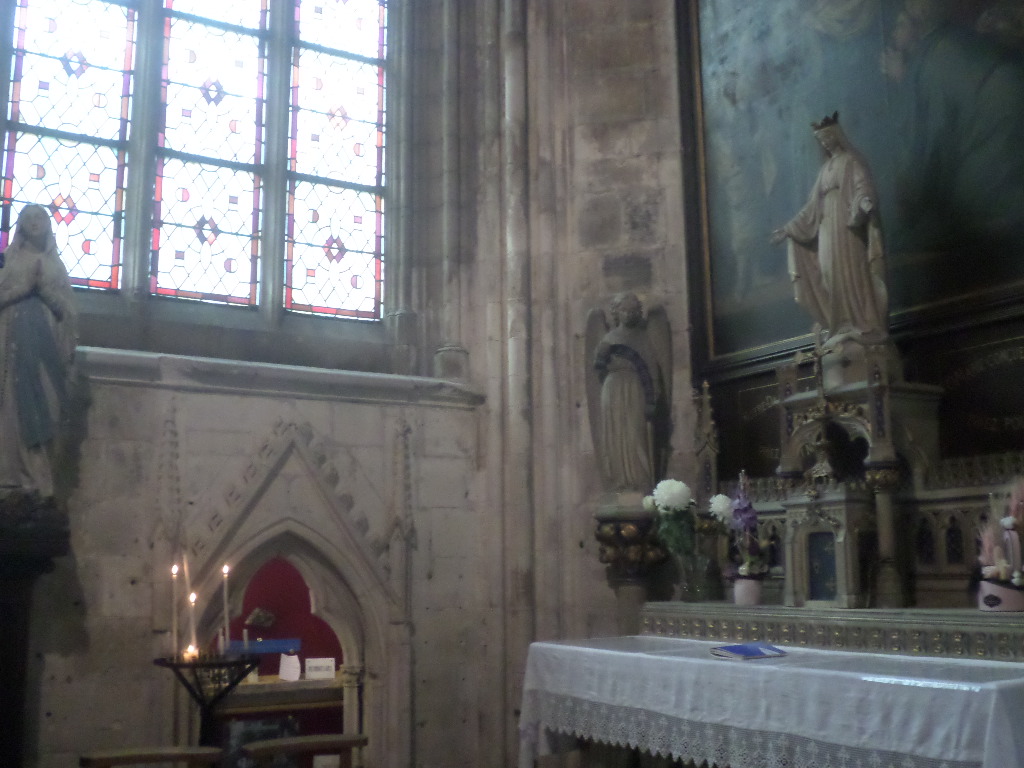
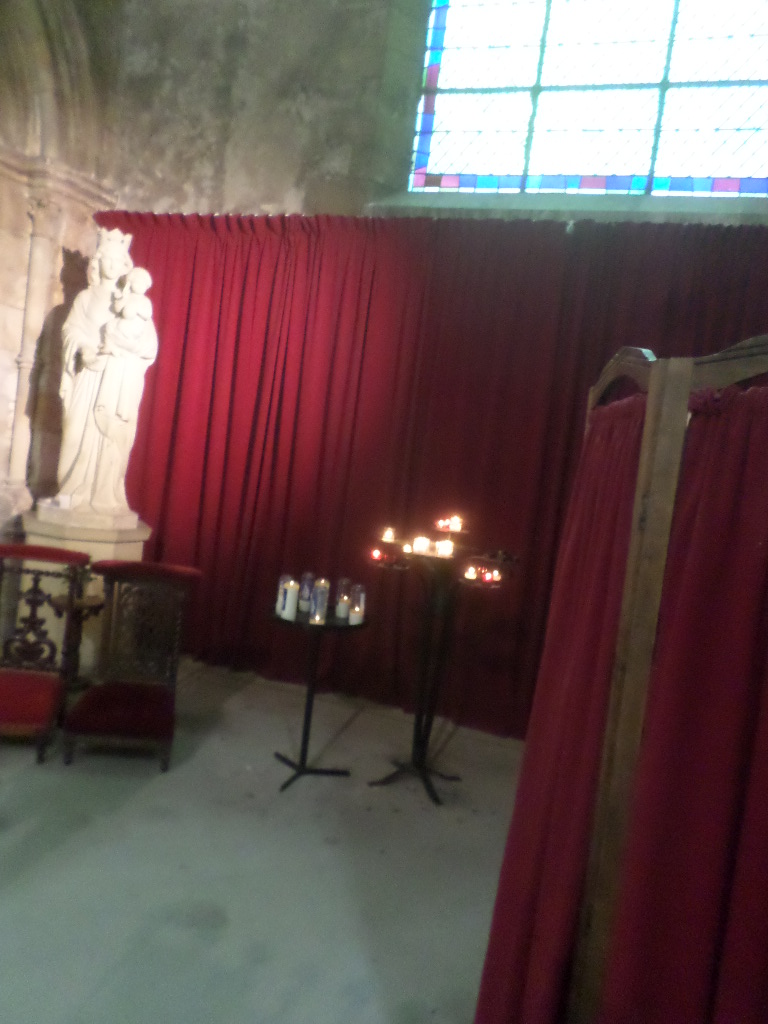
The chapels, distributed from the north aisles. The second bay houses a statue of Saint Peter seated on his throne. Chapels starting from the narthex are: Chapel of the Annunciation. It contains the 18C confessional where Saint Thérèse received the Sacrament of Pardon; Chapel of Sainte-Germaine .It houses a statue of the saint from the 19C as well as an Annunciation, oil on canvas from the 18C; Chapel Notre-Dame de Lourdes . It contains the funerary slab of Jean le Neveu, dean of the 13C cathedral chapter, as well as a Presentation of Christ in the Temple, oil on canvas from the 18C; Chapel of the Sacred Heart. It contains an Apparition of the Sacred Heart to Blessed Marguerite-Marie, oil on canvas by Guérin from the 19C; Chapel Saint-Expedit. It houses a fresco of the saint as well as two oil paintings on canvas: The Birth of Christ from the 18C and The Virgin of Pity from the 17-18C; Chapel of Our Lady of the Rosary. It received a paving from the Pré d’Auge and houses two oils on canvas: The Presentation of the Virgin in the Temple of the 18C and Saint-Pierre healing the sick with his shadow, painted in 1770 by Jean-Baptiste Robin.

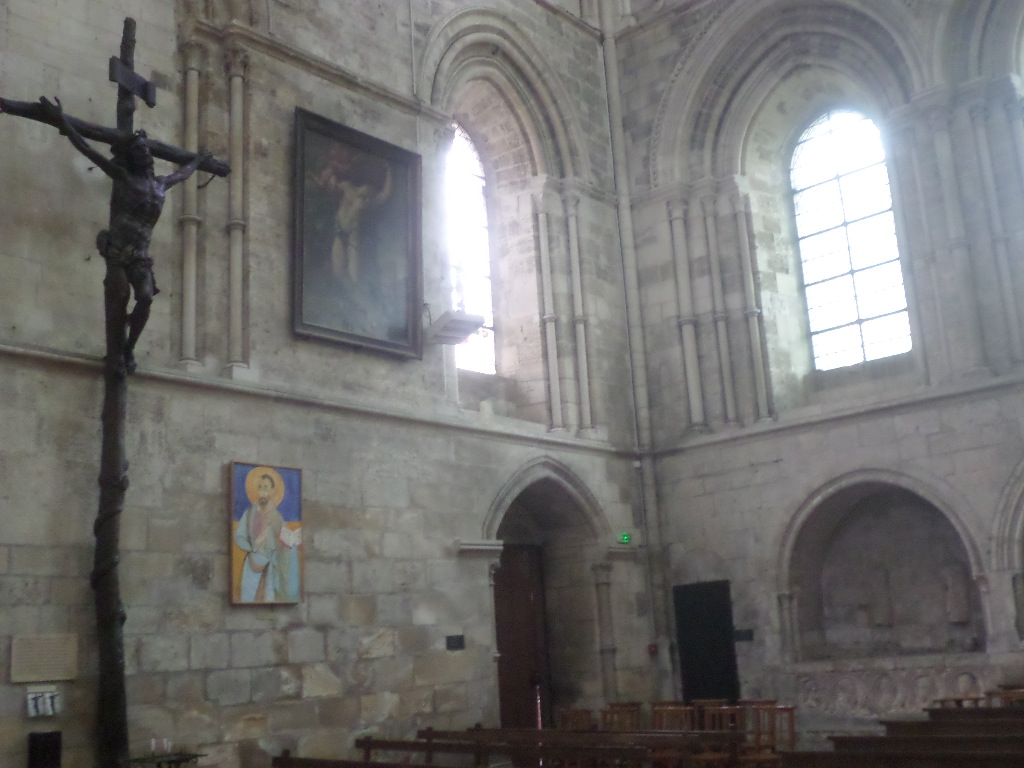
Chapels on the south aisle starting from the narthex are: the Baptismal font. It contains the marble baptismal font, a 19C Christ on the cross as well as The Preaching of Saint-Pierre, oil on canvas painted in 1770 by Larrieu; Chapel Saint-Paul. It houses an oil on canvas of Saint-Paul in front of the Areopagus, painted in 1770 by Jean-Jacques Lagrenée; Chapel Saint-Joseph . It has a statue of the saint made in 1884, as well as two oil paintings on canvas: Ecstasy of Saint-Jérôme, given in 1749 by a Lexovian canon and Death of Saint-Joseph from the 19C; Chapel of Remembrance. It hosts an engraving of the “True Effigy” of the Holy Face, given by Mr. Guérin, uncle of Sainte-Thérèse, and two oils on canvas: The Last Supper painted in 1785 by Descours fils and Sainte-Cécile by Philippe Guérin in 1804; Chapel Sainte-Anne. It houses a 19C statue of Saint Anne and the Virgin and two oils on canvas: Délivrance de Saint-Pierre, painted in 1770 by Jean-Joseph Taillasson and The Education of the Virgin from the 18C; Chapel of Notre-Dame du Perpétuel Secours. It contains two oils on canvas: Resurrection of Tabithe, painted in 1770 by Anicet Lemonnier and Apotheosis of Saint François de Sales from the 18C; Chapel Saint-Benoît. Sculpted columns from the pulpit of St Pierre Cathedral support the altar at the end of the 16C. It welcomes The Guardian Angel, an oil on canvas painted in 1875 by Édouard Krug; Chapel Notre-Dame du Carmel , former chapter room. It houses The Apotheosis of Saint Charles Borromeo, an oil on canvas from the 18C.

In the back of the Choir, the second level corresponds to a triforium. It is not openwork since there are no windows on the outside. The presence of this triforium confirms that the chevet belongs to the radiant Gothic style. The chevet participates in the Norman Gothic style. Very few stained-glass windows date back to the Middle Ages. The Saint Pierre Cathedral has a tribune organ and a choir organ. The tribune organ was built in 1871 by Aristide Cavaillé-Coll. The choir organ was also built by Aristide Cavaillé-Coll in the 1870s.

The city of Lisieux and its most emblematic sites to see:City of Lisieux and its emblematic things to see
The Catholic webpage on Sainte Thérèse de Lisieux on the Cathedral St Peter: Catholic Webpage of Sainte Therese de Lisieux on the Cathedral St Peters
The tourist office of Dept 14 Calvados on the Cathédrale Saint Pierre: Tourist office dept 14 Calvados on the Cathedral St Peters’
The Friends of the Cathedral of St Peter for those wishing to help or to read in French more about it: the Friends of the Cathedral St Peter
And there you go folks, another masterpiece of architecture and history in nice Lisieux. You should not missed this Cathedral and you will be glad. Again, hope you enjoy the post on the Cathédrale Saint Pierre of Lisieux ,part I !!! as I.
And remember, happy travels, good health, and many cheers to all !!!

 Paris1972-Versailles2003
A very fine looking church!
LikeLiked by 1 person