
Ok this is a novelty me think. Used to see them a lot in the movies and promotional tourist office advertising. Finally , saw the proliferation of tourist buses using the double decker style, and finally had a ride in London UK. Just for the memories but not my way of travel , my opinion. Nevertheless, here is my take on the double decker buses of London ! Hope you enjoy it as I
A double-decker bus is a two level bus. These buses are very popular all over the world, either for tourism often in a convertible version, or for public transport with a bodied roof, but the latter use is less common. Among the most famous are those from London UK
The bright red London double-decker buses are among the most iconic symbols of London and England. The most common are the Routemaster type. These buses have the particularity of requiring two employees, a driver and a controller in uniform, responsible for issuing and punching tickets. A mirror periscope allows the driver to keep an eye on the passengers on the upper deck. They are also equipped with a cord to ring the driver to stop, as well as a rear platform that allows passengers in a hurry to jump on the sidewalk at their own risk. They were In circulation since 1956, they ceased their service in 2005. The Routemasters were gradually replaced from the 1970s onwards by more and more modern models of double-decker buses having nothing to do with the Routemaster. These new buses no longer have the rear platform open for safety reasons. Double-decker buses were replaced on many lines by Mercedes Citaro articulated buses in the 2000s. The govt in turn replaced these articulated buses by a new model of double-decker buses in neo-retro style evoking the Routemaster. They are more accessible for strollers and wheelchairs, with a hybrid motor and see the return of the open platform at the rear.
The company that started all this the LGOC (London General Omnibus Company) started using motorized omnibuses in 1902, and manufactured them on their own in 1909. In London, a completely different model was put in place; the Transport Act led to the privatization of London buses, as well as the creation of a competing subsidiary of London Transport called London Buses, which however had responsibilities only in the choice of service levels, routes, frequencies, and tariffs, in partnership with the public service which managed the service proper. This scheme is still in place today, and London buses compete with many private companies. In 2000, with the formation of the Greater London Autorithy, responsibility for London Buses shifted from the state-owned London Regional Transport company to a branch of the City of London, Transport for London. However, in December 2016, the new mayor of London Sadiq Khan decided that the orders would be stopped after only 805 copies delivered. they manage a total bus fleet of around 9,300 vehicles operating across 675 routes; the current managing entity is the London Bus Services Ltd.
The double decker bus, I have ridden on these areas mainly along Gloucester and Knightbridge (these area came on business trips) to Earls Court (this area I have stayed with the family). Just for the experience only. The area is shown here on the London city planner: https://tfl.gov.uk/maps_/bus-spider-maps?Query=Kensington+and+Chelsea
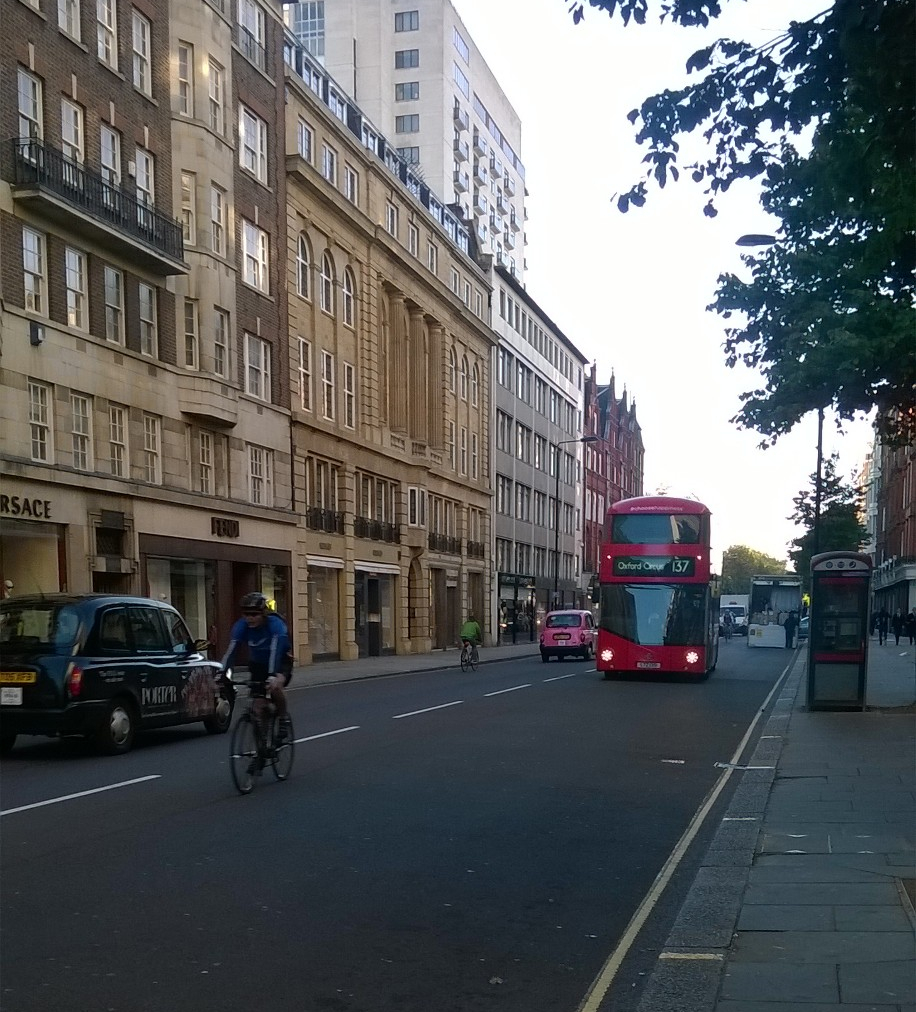
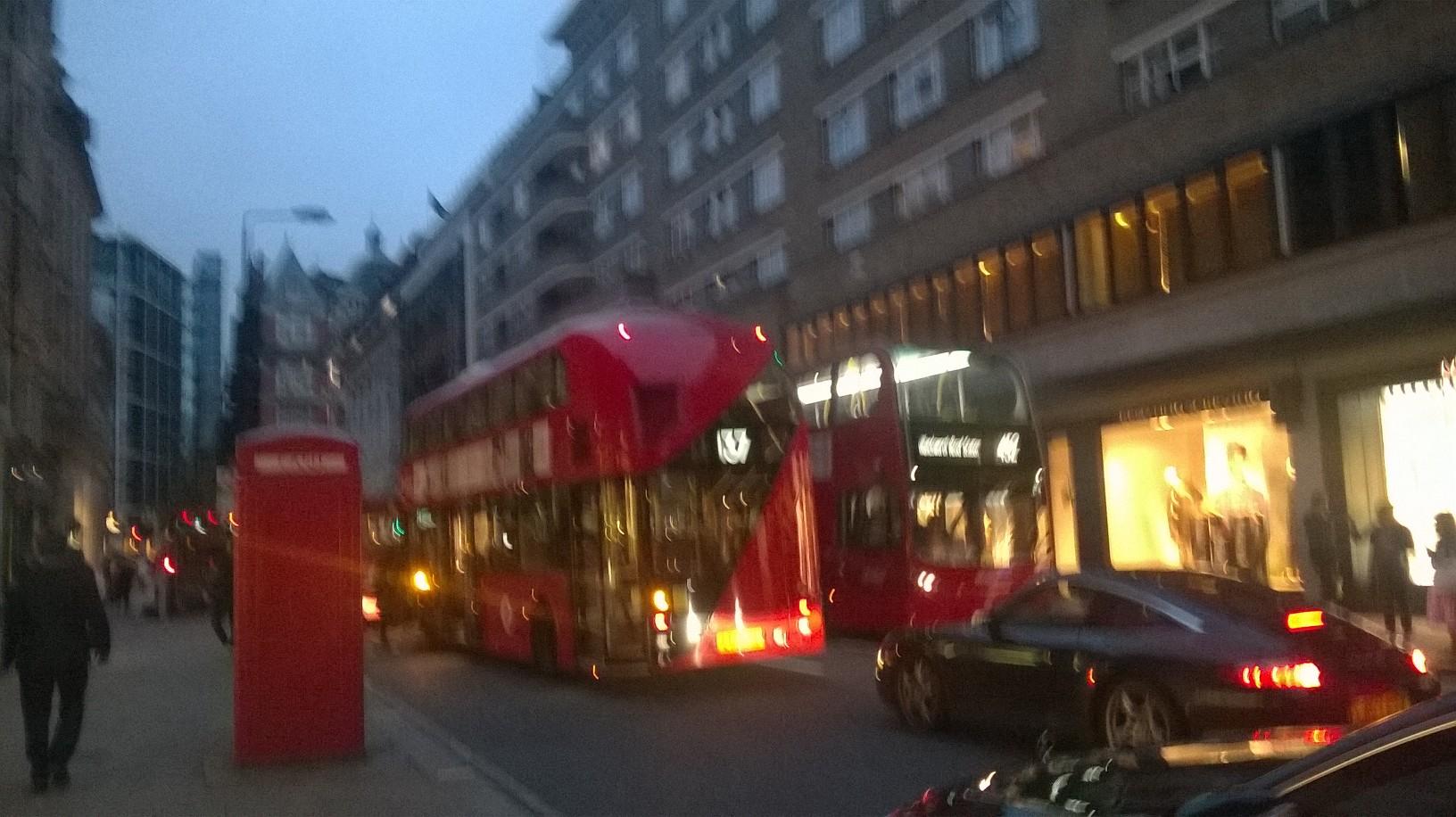
And to trace any journey see the the official London journey planner: https://tfl.gov.uk/plan-a-journey/
For the historical anecdote, let me give you a briefer on the Paris double decker history.
In 1853 in Paris, the first two-story bus, the Imperial bus, was invented. The first regular bus line was the AM line, which went from Montmartre to Saint-Germain-des-Prés on June 11, 1906. Soon, six lines were operated and 151 Brillié-Schneider P2s double decker buses crossed Paris, on the lines: C , departing from Porte de Neuilly to Palais-Royal, June 20, 1906 J, departing from Montmartre to Place Saint-Michel, November 1, 1906 I, departing from Place Pigalle to Halle-au-Vin, January 20, 1907 AL, which went from Porte d’Asnières to Gare Montparnasse, March 24, 1907 H, which went from Avenue de Clichy to Odéon, and A that went from Gobelins to Notre-Dame de Lorette, June 30, 1907.
In 1910, one of these vehicles overturned in the Place de l’Etoile (Arc de Triomphe) which caused the General Bus Company to challenge the double decker bus operation , the CGO then decided to suppress the imperial buses in 1911, and installed new rear axle and axle entry boxes, these buses taking the Brillé-Schneider P3 designation. It took 1966 for the RATP to regain the experience of the double decker imperial bus in Paris, two lines were chosen: line 94 which went from Montparnasse Station to Levallois-Perret and line 53 which went from Opera to Porte d’Asnières. But for various reasons this formula was permanently abandoned at the RATP in 1977, this type of bus is not well suited to Parisian streets lined with trees. Since 1977, there is no longer any Parisian line using Imperial buses as a public transport. However, since 2001, four special lines, consisting of a fleet of imperial buses exclusively, and operated solely for tourist purposes by the RATP and Cityrama, have been put into service, the Paris L’OpenTour lines. The The Paris OpenTour, often abbreviated to the OpenTour, is a regular double decker bus line established on May 19, 1998 with a tourist vocation. Imperial buses run through four circuits allowing for the service of, among others, Notre-Dame, Montmartre, the Eiffel Tower, the Champs-Elysées and the Montparnasse district. Of course these are tourist buses and never taken them. And voilà not even a photo!!
There you go folks, a bit of history of the double decker buses in London. My ride was uneventful along Gloucester Road and Knightbridge areas and just like a regular bus line. I think they have a place for tourist reason and tradition. Again, hope you have enjoy this post on the double decker buses of London ! as I.
And remember, happy travels, good health, and many cheers to all !!!

 Paris1972-Versailles2003